Article Written: 20 April 1453
Commonly and inaccurately referred to as the Lykian Empire, the Established Republic of Lykian Estates dominated Southern Canticula from the 1260s through the 1290s, and was led by President Restara Unjoy.

Canticula: 1226-64
Foundation
During the First Continental War (1221-1226), the nation of Prove experienced a revolution of the working class, who overthrew the incumbent-appointed presidential council and enacted numerous reforms to convert its existing offices into democratically-elected roles. In 1228, the first elections were held, which nominated a democratically-elected President to serve one four-year term, and Council Members to serve an unlimited number of two-year terms. And this began an unbroken cycle of elections to occur every two years.
1264
By 1264, however, the Republic of Prove faced economic issues as well as nationalist tensions, with two federal districts, Nomo and Lebmac, contemplating secession. Also happening was an evangelist movement led by those of a non-denominational doctrine of the Alconist Faith, known as the Syctraian Church. In accordance to this belief, one-hundred years after the death of the Lord Braeus Alconus, seven Holy Stewards built ships and traveled to the birthplace of Braeus Alconus in Southeast Canticula, where they crafted a written testament known as the Testament of Syctraia. Accordingly, the Testament of Syctraia, itself, was to be placed in a hidden chamber in the region. The seven Holy Stewards would then each choose a Holy Relic to hide in an unknown location as well. Eventually, the Supreme Being would conceive of a daughter named Lykia, who would not exist in human form but would call upon a mortal female of similar appearance to accomplish Three Duties: eradicate the entire Circlarian Realm of darkfire and its darkfire conjurers; eradicate heresy and doctrinal dissent and unite all peoples under one banner; and obtain the Testament of Syctraia along with the Seven Relics to present to the Point of Armna in the Gates of Lykia (mountain range along the Eastern border of Geljer). Completion of these Three Duties would open the Gates of the Holy City of Edom (located in the Gates of Lykia according to their beliefs), from which the Supreme Being and Braeus Alconus would emerge and bring to the world everlasting peace and salvation.
It was Restara Unjoy, her family, and her base of followers who believed that Restara was the one upon whom Lykia called to complete these Duties. And so she organized a campaign to obtain the most powerful position in the Provan Republic to carry out her deeds: the Presidency. With a desperate population at hand, Restara Unjoy, 25 years of age, implemented a campaign of charisma and promise to restore Prove to its former prosperity, leading her to win the final round of Presidential elections on 23 May 1264.
1264-1265
Immediately upon taking Office on 2 June 1264, Restara Unjoy pushed presidential ordinances cracking down on dissenters and darkfire conjurers. In the months that followed, she would establish a special task force known as the Ordinators of Peace, who would implement stringent search, surveillance, and investigation measures to bust darkfire trade rings. And in doing so, the new Unjoy Administration identified darkfire organizations based in the Five Eastern Coastal States of Yeopart, Frawcord, Strawtep, Raisek, and Yarol. President Unjoy responded to this by demanding that the Five States take aggressive and stringent measures of their own to eradicate the darkfire rings or to face an invasion. With such measures violating a set of humanitarian principles known as the Doctrine of Humankind, co-signed by the Five States in 1213, the Five States responded with a refusal and prepared for war.

Canticula: 1265-67
On 6 February 1265, President Unjoy launched a full-scale invasion upon the Five States. All territories fell within 24 hours, except for the State of Yarol, who resisted for another 18 days before finally surrendering. President Unjoy sent forces to occupy the territories as they became officially incorporated under the Provan Republic, now renamed the Lykian Republic.
Those in the occupied territories who conformed were assigned to paid work projects at various locations throughout the Republic, and were made to travel frequently. Those who resisted the Lykian Occupation were sent to labor camps for unpaid labor. Neither of these groups was granted the right to vote; such a right was reserved only for Provan-born citizens, the wealthier of whom began settling in the new territories.
President Unjoy had ambitious agendas ahead, and, with the discovery of henshale deposits in the former Five States, permitted henshale drilling companies to erect henshale derricks all throughout the newly-occupied territories, frequently uprooting farmland. The worst place impacted by this was the former nation of Yarol.
In May, the Lykian Republic sent a memorandum to the government of the Red Desert Federation, informing the Executive Consul Abor Rajam that darkfire cartels were found to be based in the territory and requested the government to permit Lykian troops to enter and eradicate the issue. When the Consul refused, the Lykians took no action; however, on 11 May, the Executive Consul died under suspicious circumstances, and was replaced by Interim Consul Maris Corsta, who submitted to another request by the Lykians for a similar measure of intervention. At the end of the month, the Lykians convinced the Red Desert Federal National Assembly to vote in a measure to hand all practical administrative control to the Lykian Republic. The Lykians proceeded to dissolve the Red Desert Federation and its government, and incorporate the territory into its own. The local inhabitants were subject to the same bounds as those of the Five Coastal States.

Canticula: 1267-87
1267
These actions were observed and noted by the Chokian Republic and the Ten Midland River States, who immediately signed a mutual "Pact Mandating for Lykian Non-Intervention." However, the Lykians exploited an exemption clause in the Pact and began convincing outcasts from the unofficially-recognized Redschni Royal Family to rally Chokian laborers into supporting Jon Dow, a front-running candidate of the Chokian National Labor Party, who was running for the 1265 Chokian Presidential election. Dow won that election with the help of the Lykian-backed agenda, which involved the spread of misinformation touching on voters' resentment toward the National Chokian Diplomatic Party, which was more progressive in terms of social issues but catered more toward business owners. With a base in ultra-nationalism, the new President Jon Dow, at the beginning of his tenure in 1266, began pushing policies to impose taxes on the Redschni Royal Family, which violated the Compromise of 1066, as well as forcing them to pay tolls to use public Chokian roads, to which Redschni property entrances connected. President Dow further enforced this by building toll gates at Redschni property entrances. Seeing that these actions violated the 1066 Compromise, the Midland River States united and ordered President Dow to withdraw such policies, or, as dictated in the 1066 Compromise, face international intervention from the Midland River States. Facing the prospect of invasion from the Midland River States, President Dow accepted a non-disclosable offer from the Lykian Republic for the Lykians to dispatch ten Secret Troop Reserve divisions, one to confront each Midland River State, in the event of such an act; and this was permitted by the exemption clause in the Pact. And facing the prospect of retaliation from the Chokian Republic, the Midland River States, unaware of the Lykian assistance offered to the Chokian Republic, accepted a separate offer from the Lykians, also permitted by the Pact, for the Lykians to dispatch Secret Troop Reserves for each of the Ten States. For both the Chokians and the Midland River States, each secret Lykian division was equipped with a new and revolutionary high-flying aircraft known as a U-Plane, which was capable of dropping a weapon developed in the First Continental War and mastered by the Lykians: the Red Desert Bomb.
It was the Midland River State of Johsonjon who initiated armed conflict and broke tension between the Chokian Republic and Midland River States on 3 June 1267, by launching a military offensive upon the Chokian State of Redschni in order to protect the Redschni Royal family by forcibly removing the toll gates and the other measures of President Dow's enforcement. The Chokians responded by authorizing their Lykian Secret Reserve to send over a U-Plane which dropped a Red Desert Bomb upon the Johsonjon capital on 4 June. The State of Ansohnjon responded that day by authorizing their Lykian division to detonate a Red Desert bomb on the Chokian capital to which the Chokian Republic responded by having its Lykian division strike Ansohnjon with a Red Desert bomb of its own. On 5 June, the State of Morstrah struck the Chokian city of Ghues with a Red Desert bomb, to which the Chokian Republic responded by hitting Morstrah with a Red Desert bomb. The Midland State of Neehs, on 6 June, hit the Chokian capital with another Red Desert bomb attack, to which the Chokian Republic responded with striking Neehs and the remaining six Midland States with each a Red Desert bomb on its capital. Before its capital was leveled by a Red Desert bomb, the Midland State of Chufsa, on 7 June, dispatched its secret Lykian division, which dropped yet another Red Desert bomb on the Chokian capital.
By 8 June, every capital city of the Midland River States was devastated by a Red Desert bomb detonation, and the capital of the Chokian Republic had been hit three times. The Lykians held a Conference in the Chokian city of Sugek between June 8-9, 1267, during which they, the Chokian Republic, and the Ten Midland River States, signed the "Great Jurisdiction and Intervention Compromise," which allowed the Republic and the Ten States to implement their national governments with two caveats: first, they were mandated to display Lykian flags, titles, and national symbols while not being allowed to display their own; and second, any laws or policies they passed could be overridden for practical purposes by the new Lykian administrators, who promptly established garrisons and bases throughout their territories.
Upon hearing news of this, the Kingdom of Gyrosak declared war upon the Lykian Republic, but had not received news of the Red Desert bomb. The Lykians promptly dispatched a U-Plane which dropped a Red Desert bomb on the Gyrosakian capital; and on 11 June, the Kingdom of Gyrosak immediately surrendered, dismantling its monarchy and ceding it territories over to direct Lykian control.
The Canticula Peninsula nations of Paolina, Rewen, Yecourt, Tennur, Gamroa, Tymol, Lesterre, and Furthing responded to news of the Lykian takeover of South Canticula by implementing emergency measures to quickly build up their defenses. On 13 June, the Lykians released a statement ordering the nations to cease building up their defenses by 13 September or face military confrontation. On 13 September, after the Peninsula nations refused, the Lykian Republic, under direct orders of President Unjoy, launched a naval offensive. Over the next five days, the waters between the Peninsula and the former Chokian Republic served as the site of one of the most intense naval battles in Circlarian history.
President Hichere of the Republic of Lesterre, in boosting his defenses, violated a mutual pact signed at the end of the First Continental War by calling upon the nation of Furthing to supply military aid. Citing quid pro quo consequences, opposition within the Lesterran National Assembly tried the President for violating such a pact and removed him from office. During the naval confrontation, Lykian representatives approached the new Lesterran President, President Charles Picarre, and convinced him to sign a diplomatic compromise that allowed Lykian forces to establish on Lesterran territory a base and a Lykian Government Consulate, headed by a Governor-General, which would allow the Lesterran government to function independently as well as display national symbols and flags. Furthermore, the Lykians allowed Lesterran currency to be used freely. The caveat was that every policy and action that the Lesterran government considered was required to be approved by the Lykian Consulate and Governor-General in order to be implemented. This agreement was signed on 18 September; and on 19 September, the Lykians ordered a cease-fire and called a Peace Conference with the remaining Peninsula Nations to be held in the capital of Paolina. During this Conference, the Lykians stated that they would deploy Red Desert bombs on each of the capitals of the remaining Peninsula nations and rebuild them under direct Lykian occupations unless the nations agreed to follow suit with the Lesterran. The Peninsula nations immediately agreed to the compromise, and so Lykian Consulates were established in the remaining Peninsula nations. On 21 September, the Lykians signed a non-aggression and non-intervention pact with Furthing, granting Furthing complete independence on the condition that Furthing did not interfere with Lykian business in the remainder of the Peninsula or South Canticula.
1268-96
The Lykian Republic did the same to the Chokian and Midland River territories as to the territories of the Red Desert and the Five States. Numerous industrial complexes dotted the landscape while local inhabitants were either sent to unpaid labor camps or placed on back-to-back working assignments. Meanwhile, these workers did not have the right to vote. In contrast, numerous wealthy Lykians built luxurious settlements and affluent gated communities throughout the new territory; and these settlers enjoyed universal suffrage.
In Prove, President Unjoy dissolved organizations and political parties opposed to her, either by force or effective coercion. And so she was able to secure re-election in 1268 despite violating constitutional clauses limiting a President to serve only one term. She then appointed allies within her ranks to overtake the National Election Commission, responsible for implementing free and fair elections, and begin an internal investigation on the electoral system based on trumped-up charges of system-rigging. And the new Commission leaders invoked an investigative measure to freeze electoral functions of the Commission so that elections could not be carried out until the end of the investigation. Such an "investigation" would continue until the end of President Unjoy's tenure in 1296.
Much of the land in Southern Canticula was agrarian before the arrival of the Lykians save for national capitals and major cities. When the Lykians arrived, they brought mass-industrial development, which included mass-agriculture, mass-irrigation, mass-drilling, and a breakthrough invention in aviation: the gyroplane. The gyroplane was initially conceived by a Great Northerner named Kaul Morton. However, Morton's idea was seen as ludicrous back in the Edoran Regiondom, and never received adequate funding. Drawing inspiration from the story of Jacob Weller, Morton emigrated to the Lykian Republic, where President Unjoy, in 1265, provided him with the much-needed funding. Morton constructed his first fleet of gyrocraft in 1267 and carried out his first few experiments, amazing observers with the revolutionary aircraft's ability to travel at high speeds and altitudes. Sadly, during his fifth flight, Morton's aircraft, running on hydrogen fuel, crashed and killed him. Nevertheless, the Lykian government continued the gyroplane experiments, making standard improvements in safety and efficiency. And by the 1270s, the first fleet of bulky gyrocraft went into commercial service, connecting Lykian hubs in occupied territories.
During the 1270s, the Lykians signed an arrangement for deep-trade with the island-nation of Vantacula, the Easternmost Meredythian Island. Such an arrangement would continue until 1280, when the Lykians attempted to coerce the Vantaculan government into investigating deep-trade corruption incidents. When the island-nation refused, the Lykians revoked deep-trade arrangements and declared war. In June 1281, they succeeded in defeating the nation of Vantacula and incorporated it under direct Lykian control. However, as a mark of international diplomacy, they ceded half of the island to the Congress of Circlaria, who then handed the territory to the Federal Estates of Retun.
Trade emerged between the Lykian and Retunian Republics, with numerous formal trading agreements springing up in 1285. However, a ring of tradestone stagmarcators, led by John Waysworth, was exposed and subject to investigation by the Lykians, who accused the Retunian Republic of trade stone conspiracy and ordered Retunian businesses to vacate the island. The Retunian Republic, led by then-Prime Minister Arthur Cummings, sent defense units to the island, where military confrontations arose between the two superpowers. As the fighting got more intense in February 1287, the Furthish joined the Retunians. However, President Unjoy, on 6 February 1287, ordered the Retunian Republic to be hit five times with the Red Desert Bomb. On 16 February, the Retunian Republic gave a truce to the Lykians and withdrew from the Eastern half of the Meredythian Islands.
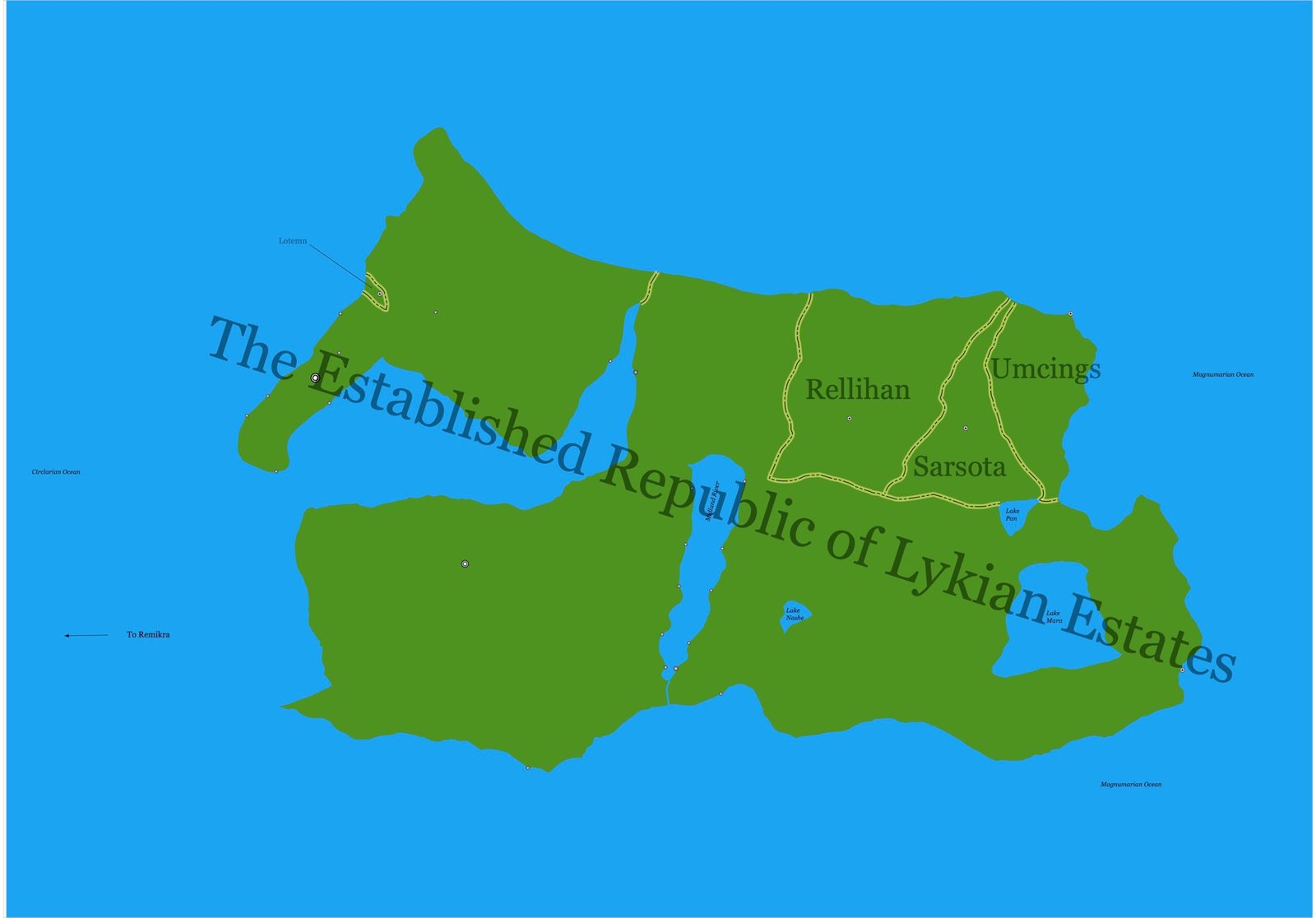
Canticula: 1287
On 18 February 1287, in retaliation for having violated the mutual non-aggression pact signed in 1267, the Lykians invaded Furthing, prompting the nations of Vasilca and Remstruhs, allied with Furthing, to declare war. And thus, the Second Continental War was begun. When the Lykians invaded those two nations on 21 February, the nation of Munnicale, in conjunction with Rellihan, Sarsota, and Umcings, who had previously formed a mutual pact known as the United Three, declared war on the Lykians.
With Red Desert bombs and a seemingly endless supply of tanks and infantry in its arsenal, the Lykian Republic seemed unstoppable in their conquest of the North. However, upon the borders of the nations of the United Three, the Lykians encountered stiff opposition. First, they encountered buttresses, trenches, turrets, tanks, and anti-aircraft missiles having been built on an industrial and unprecedented scale. Second, the Lykians encountered "air mines," free-floating mines "attracted" to Lykian aircraft and designed to get caught in their engines and explode the aircraft from within. These devices were targeted especially toward Lykian U-Planes carrying Red Desert bombs.
And that was when the United Three noticed several weaknesses in the Lykian front. First, in occupying the territories of the Peninsula, the Lykians took care to not interfere with two pieces of internationally protected territory: the Primary Administrative District in the city of Cenofan, which was the site of Congress of Circlaria, and the nation of Lotemn, which existed with its own national government but was the only piece of Congress of Circlaria territory on lease-by-taxation. Second, the occupied nations of Furthing and Lesterre had, since even before the arrival of the Lykians, harbored robust underground communities that even the Lesterran government could not subdue. These underground communities had strong ties to international sea guilds and councils. Third, the Chokian Mountain range, spanning all of mainland Canticula and dividing it into its Northern and Southern regions, was effectively impassable for the Lykian forces. Indeed, Lykian aircraft would have been able to fly over the range, but before the occupation of the North in 1287, the lack of non-hostile landing places in the North would have made an aircraft operation unnecessarily expensive. Furthermore, North Canticulan forces had long erected anti-aircraft artillery in these mountains and were able to hide them.
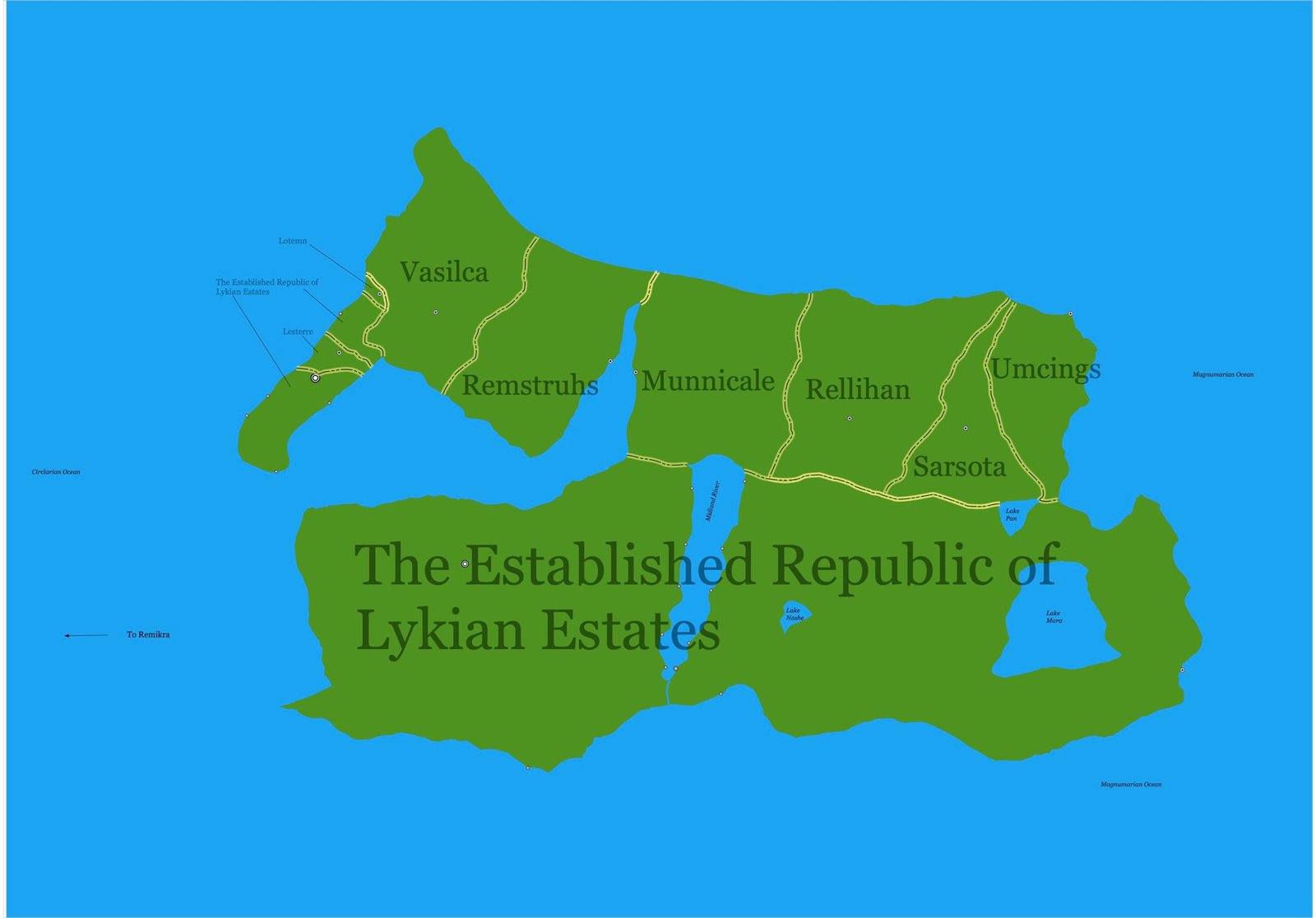
Canticula: 1289
These three weaknesses presented an opportunity for the United Three. With expressed permission from Congress of Circlaria, the United Three nations arranged a hidden meeting place in the Primary Administrative District where they were able to collaborate with underground leaders from Furthing and Lesterre as well as several sea guilds with expertise in making assassin and military weapons. This assembly began what would be known as the United Coalition of Canticula, or the UCC. After a month of careful planning and deliberation, the UCC launched its first plan on 1 March 1289, which authorized all the workers in Furthing and Lesterre to cease their jobs and carry out a general strike against their Lykian occupants. The Lykians responded with massacres and mass-arrests, but were countered by underground militants led by the UCC. The UCC counterattack succeeded and liberated the nation of Lesterre on 10 March; but the resistance measure failed in Furthing, which promptly fell under tighter Lykian control.
However, the UCC had also planted resistance operations in the occupied nations of Vasilca, Remstruhs, and Munnicale. The Lykians had withdrawn a significant portion of its forces from these three nations to counter the resistance in Furthing and Lesterre, leaving occupational forces in the North thinned out. UCC-backed resistance operations in these three nations were launched, beginning on 11 March; and within three days, the nations of Vasilca, Remstruhs, and Munnicale had driven out the remaining Lykian forces. With the liberation of Lesterre, the Lykians attempted to keep an open supply route by cracking down on Furthing. However, the UCC, despite not being able to liberate Furthing, was able to disrupt the supply chains enough so that any Lykian attempt to maintain a supply chain in Furthing came at a steep cost. The Lykians, as a result, attempted to retake Northern Canticula in April 1289 by pushing through the Chokian Mountain range.
And this was countered by another UCC strategy: the neurovirus. Back in 1281, a team of missionaries from Middle Remikra had discovered a remote Chokian Mountain village in Southern Rellihan which had been wiped out by a neurovirus pandemic. For each person afflicted, the disease would infect its victim and destroy brain tissue, killing its victim within two weeks. Scientists in North Canticula had since been studying the virus by keeping specimen samples; and the United Three, with expressed permission, borrowed these samples to engineer biological warfare against the Lykians. They deployed this strategy in the Chokian Mountains, infecting wysps (native animals in Canticula) with the virus so that they would be able to infect the Lykian trespassers.
This strategy was very effective in deterring the Lykians, but would precipitate issues in the years that followed.
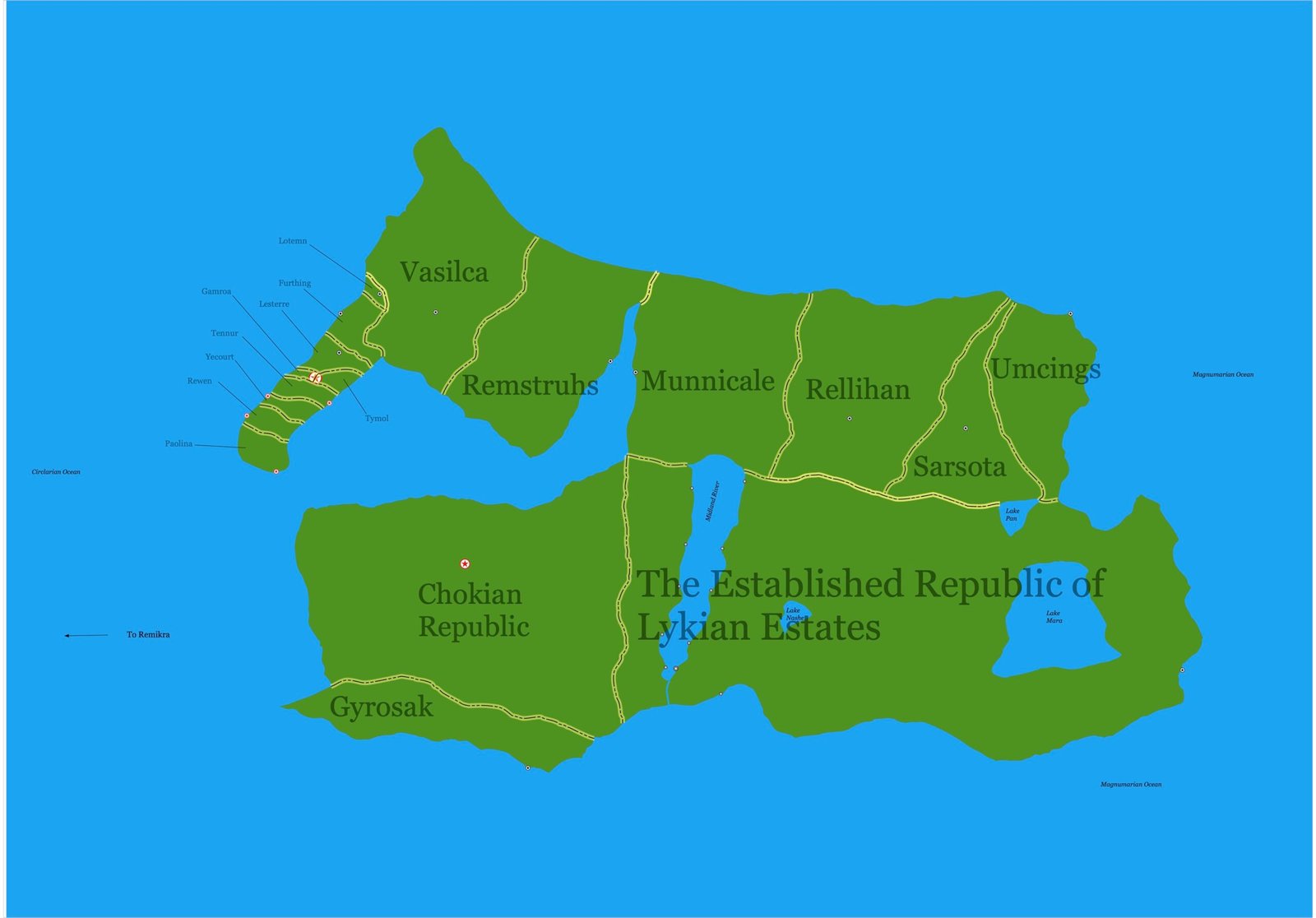
Canticula: 1290
With Vasilca and Remstruhs protected by the Head Bluffs in the Northwest, President Unjoy on 17 April officially withdrew all Lykian efforts to retake the North and instead refocused Lykian forces on Furthing, which was experiencing its most brutal warfare since the First Continental War. On 1 May 1290, Lesterre, the sea guilds, the United Three, and newly-liberated nations of Vasilca, Remstruhs, and Munnicale, all now apart of the UCC, joined forces and pushed the Lykians out of Furthing. Three days later, they pushed the Lykians out of Gamroa, Tymol, Tennur, Rewen, and Paolina. And on 24 May, these five newly-liberated Peninsula nations joined the UCC and fought to liberate the nations of Gyrosak and the Chokian Republic, a sweeping agenda which succeeded on 17 June.
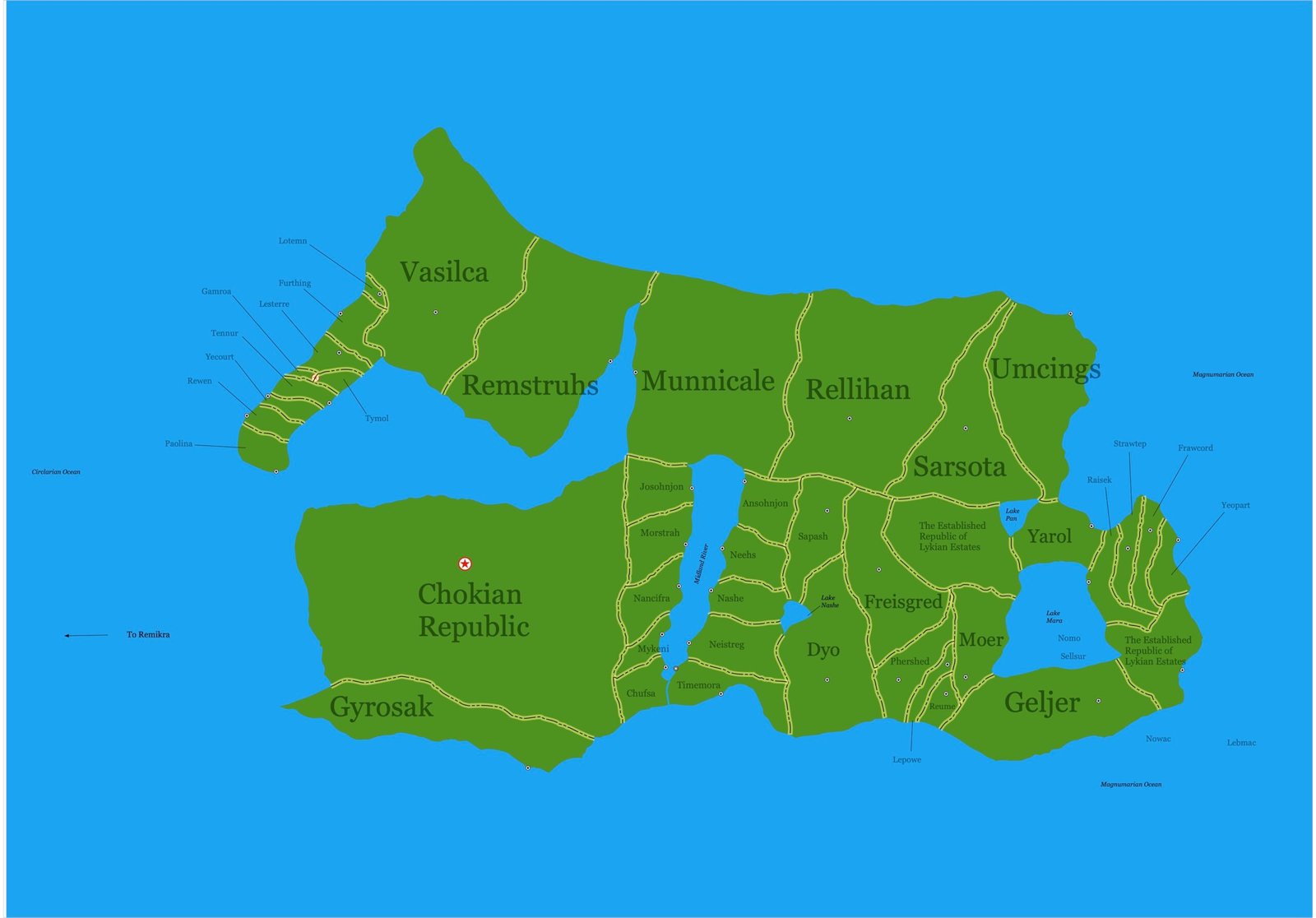
Canticula: 1291
In January 1291, the UCC, which now included Gyrosak and the Chokian Republic, launched the January Offensive against the Lykians, with such an offensive liberating all of the ten Midland River States. In April, the UCC, now including the Midland River States, launched what would later be called the May Offensive, which liberated the territories of the former Red Desert Federation. The reason why it was called the May Offensive was because it involved two attempts by the UCC to liberate the territory, with the second attempt being more successful. During the first attempt, the Lykians had established a measure of resistance involving concealed guerrilla agents meshing in with and swaying local populations with works of oathcrafting. This led the UCC to realizing that a reformation of the entire Red Desert Federation was an idea to be abandoned in favor of liberating and then temporarily administering the former states of the Federation as separate entities. With this in mind, the UCC launched its second wave adding reinforcements to UCC forces already deployed and pushing Lykian forces back into occupied territories ranging from the Plateau of Bellesh to the Five Coastal States.

Canticula: 1292-93
And then the UCC launched its third offensive, known as the September Offensive. This liberated the Five Coastal States. By October 1291, the Lykian Republic encompassed only its own territory Southeast of Lake Mara as well as the swath of territory Northwest of Lake Mara and covering the Plateau of Bellesh. In a desperate effort to regain power, President Unjoy conformed to calls made by the island-nation of Rakara to re-establish diplomatic ties with the Federal Estates of Retun, who had been neutral during this conflict after 1287. However, talks failed between the two nations during a Conference held in October 1291, and Lykian investors withdrew from Lykian markets placing economic strain on the Republic. Aware of the economic strain, the UCC launched another Offensive beginning in 1292, which installed a blockade in Lake Mara and cut off occupied Lykian territory in the Northwest from the Provan capital. Facing economic downturns and supply-chain severances, President Unjoy signed an agreement with the UCC surrendering the territories encompassing the Plateau of Bellesh, so that the Lykian Republic occupied only its original Provan borders.
In 1294, the Chokian Republic invaded its own province of Redschni in an attempt to seize Redschni Royal lands for public ownership. Seeing this as a grotesque violation of their terms, the UCC intervened with swift military action and dissolved the Chokian Republic into its individual states, rendering them entities governed in a military and authoritarian fashion similar to the states in the former Red Desert Federation. The Lykian Republic observed this and, sensing division in the UCC, saw this as an opportunity to retake the Chokian territories. The challenge for the Lykians, at this point, was that government coffers were strained from economic bailouts the Lykian government had to make during the 1291 economic downturn. So the Lykian government attempted to raise funds for increased defense spending by leasing gyroplane patents to Lykian businesses for high royalty fees.

Canticula: 1294-Present
By this point, however, companies from the Edoran Regiondom and the Humerian Kingdom had invested into re-designing gyroplane models that were different from the Lykian patent, and were cheaper and more efficient. These businesses began making deals with the Lykian businesses with such deals involving the production of gyroplane models for no royalty fees, driving the Lykian government initiative out of business. This prompted the Lykian government to issue ordinances banning such international gyroplane business deals. However, opposition to this arose in the central Lykian Districts of Nomo, Sellsur, Nowac, and Lebmac, all four of whom declared autonomy from the Lykian Republic in solidarity on 2 December 1296. President Unjoy, refusing to recognize this action diplomatically, sent brutal military intervention into the territories. The four new nations sent a call for help to the UCC, who launched its Final Offensive against the Lykian Republic on 17 December 1296.
Immediately, Lykian forces were pushed out of the four new nations, who joined the UCC and pushed Lykian forces into the city of Prove, itself, where a stalemate battle raged with the Lykian government holding its ground around the Presidential Palace until the Great Breach on 3 January 1297.
During the Great Breach, UCC forces stormed the Presidential Palace, where they discovered that President Unjoy had taken a secret underground cable train cab out of the city to a location under a guest house ten miles away. UCC forces were unable to locate her whereabouts from that point forward.
Afterward
Restara Unjoy went into hiding following the Great Breach, and, while in hiding, sent an official announcement of resignation to UCC leadership. The original Republic of Prove was restored; however, the four nations of Nomo, Sellsur, Nowac, and Lebmac would remain autonomous to this day. In hiding, Restara Unjoy conducted numerous business deals and avoided prosecution as a war criminal. However, her sphere of influence, although more integrated than when she ruled the Lykian Republic, was much smaller, as most of her life from that point forward was spent on the sea and dealing with sea guild entities.
In 1356, Restara Unjoy settled on the Retunian territory of Elsa Island, where she resided in a long-term guest house under the identity of "Mara." She had gained quite a following from Retunian neighbors, unaware of her true identity, for being intellectually, business-wise, and spiritually gifted. Restara Unjoy passed away here on 10 February 1358; although her death and final whereabouts were not fully disclosed until ten years later.