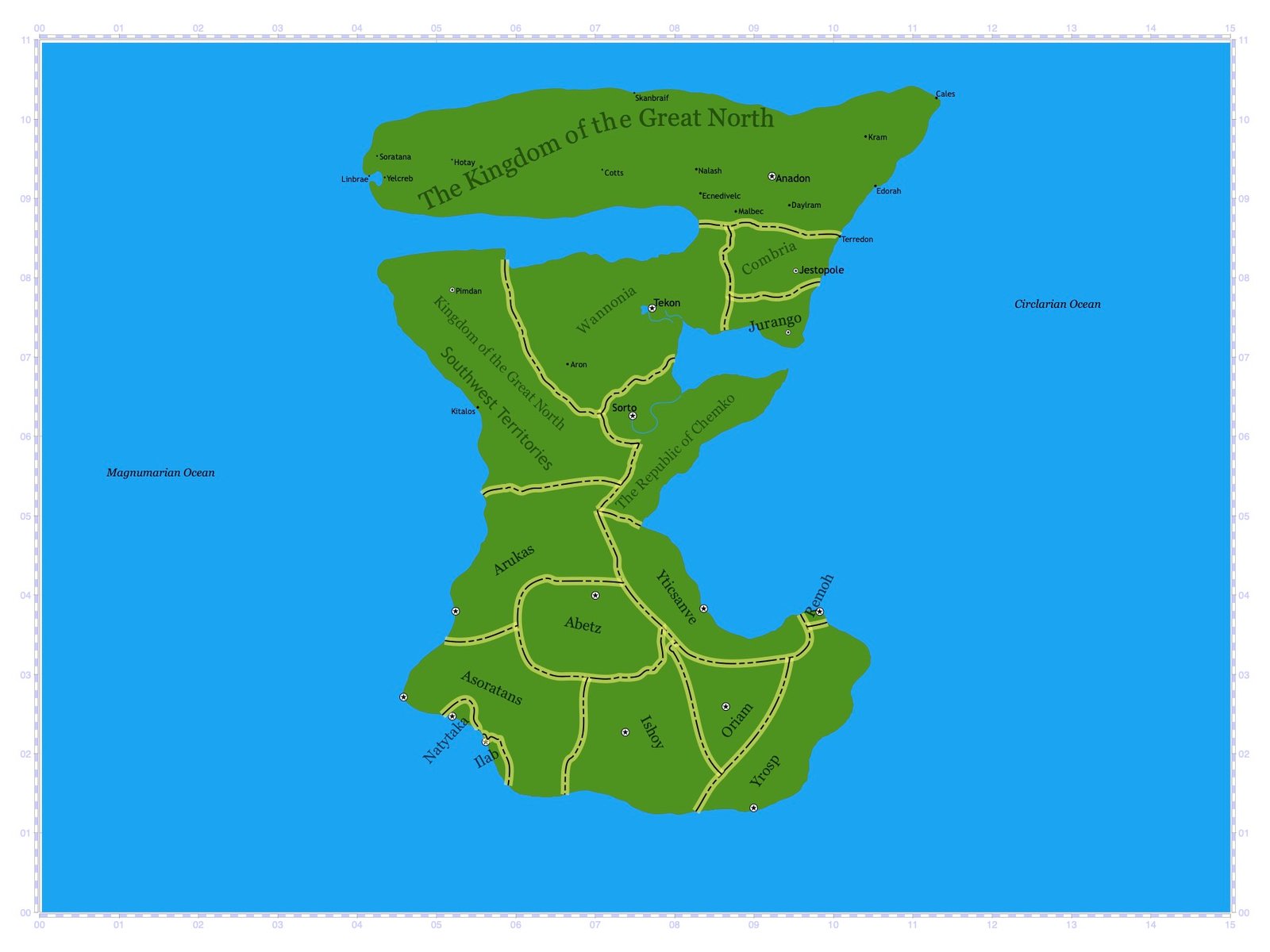
Remikra Timeline
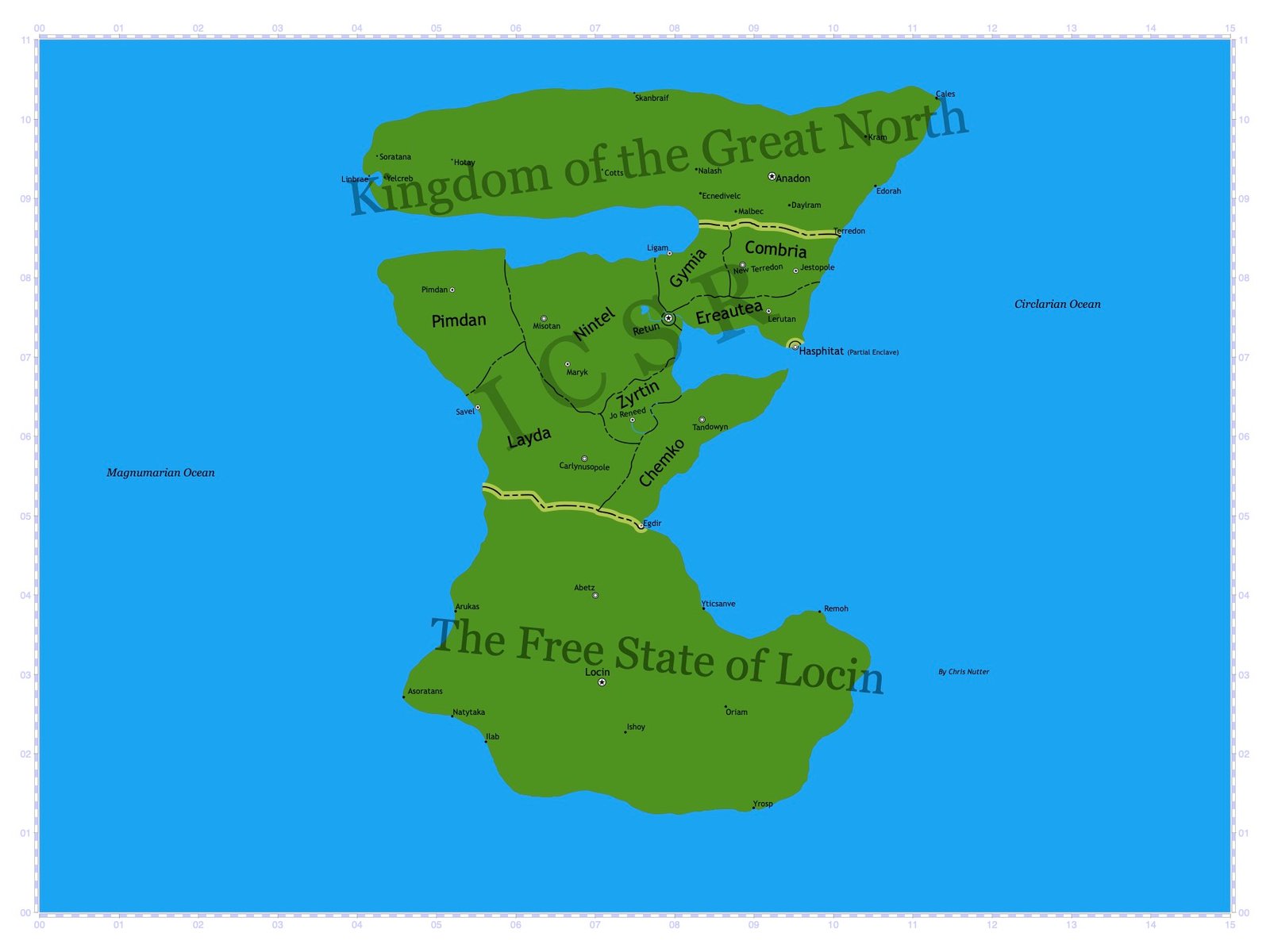
Most Recent: 1489 to 1500
During the month of October 1488, numerous reports began to emerge of CAD Virus cases in the Sayleronian Maritime State; and on 13 October, the Sayleronian Maritime State declared a pandemic emergency. This was followed by a similar declaration by the government of the Independent Commonwealth State of Retun (ICSR) on 24 October following numerous cases in Middle Remikra...Read More

Beginning: 1025 to 845 BCE
Spanning previous millennia was the existence of the Circlarian Empire, which brought about the rise of a prosperous society that almost achieved global status. It was around 1025 BCE, according to present-day scholars, that the Magnum Plagam Collis, a supervolcano near the present-day island of Vantacula, erupted, triggering cataclysmic events across the Circlarian Realm and plunging the entire globe into a volcanic winter for the next few years...Read More
835 BCE
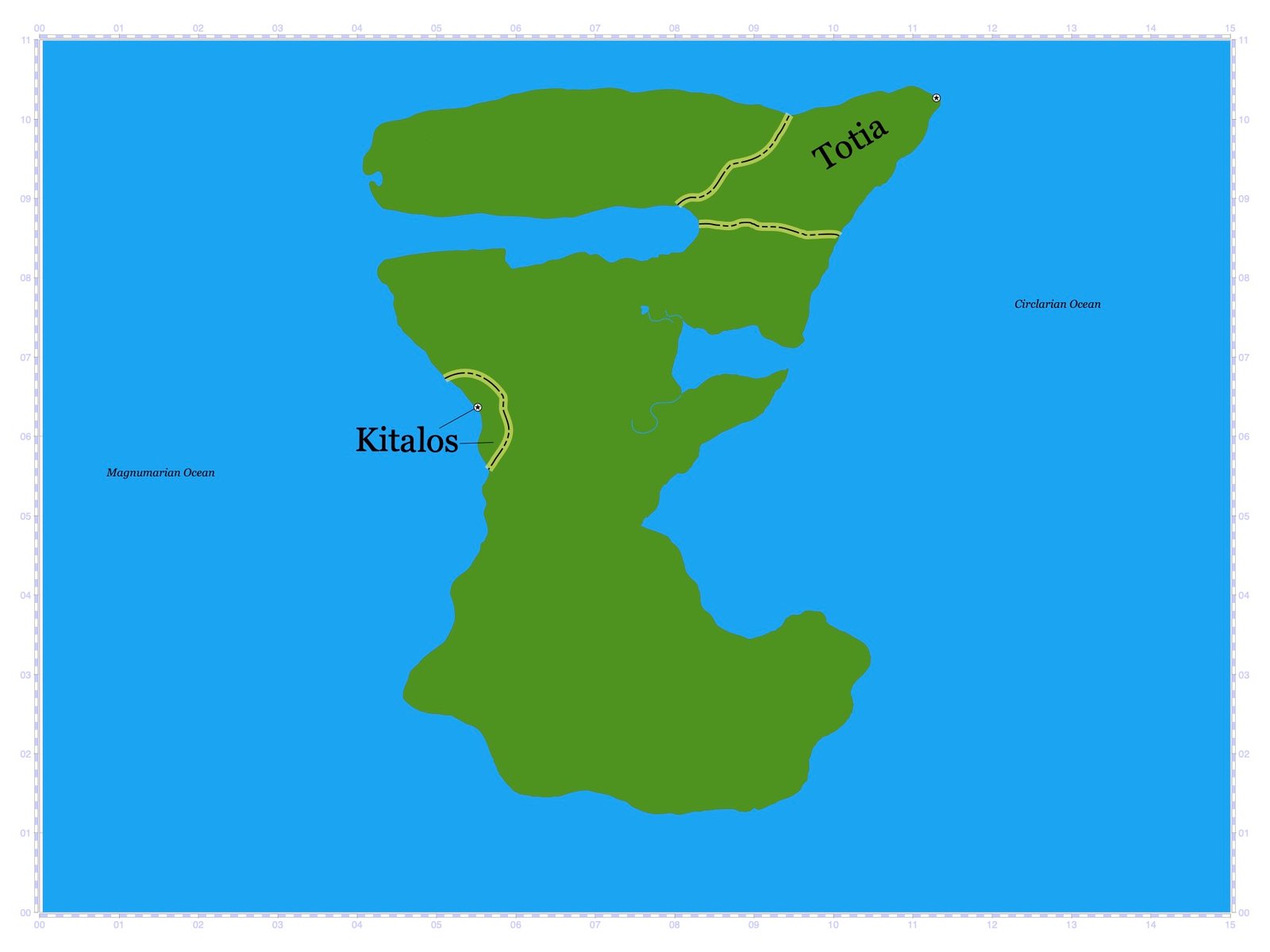
Nearly two centuries later, new generations of people from each of the two city-states, Totia and Kitalos, were keen to explore the other Remikran lands outside their bounds. Pushing such explorations was the notion that the population was growing, increasing demand for food, which could not be met with the limited space in the underground crops...Read More
830 BCE
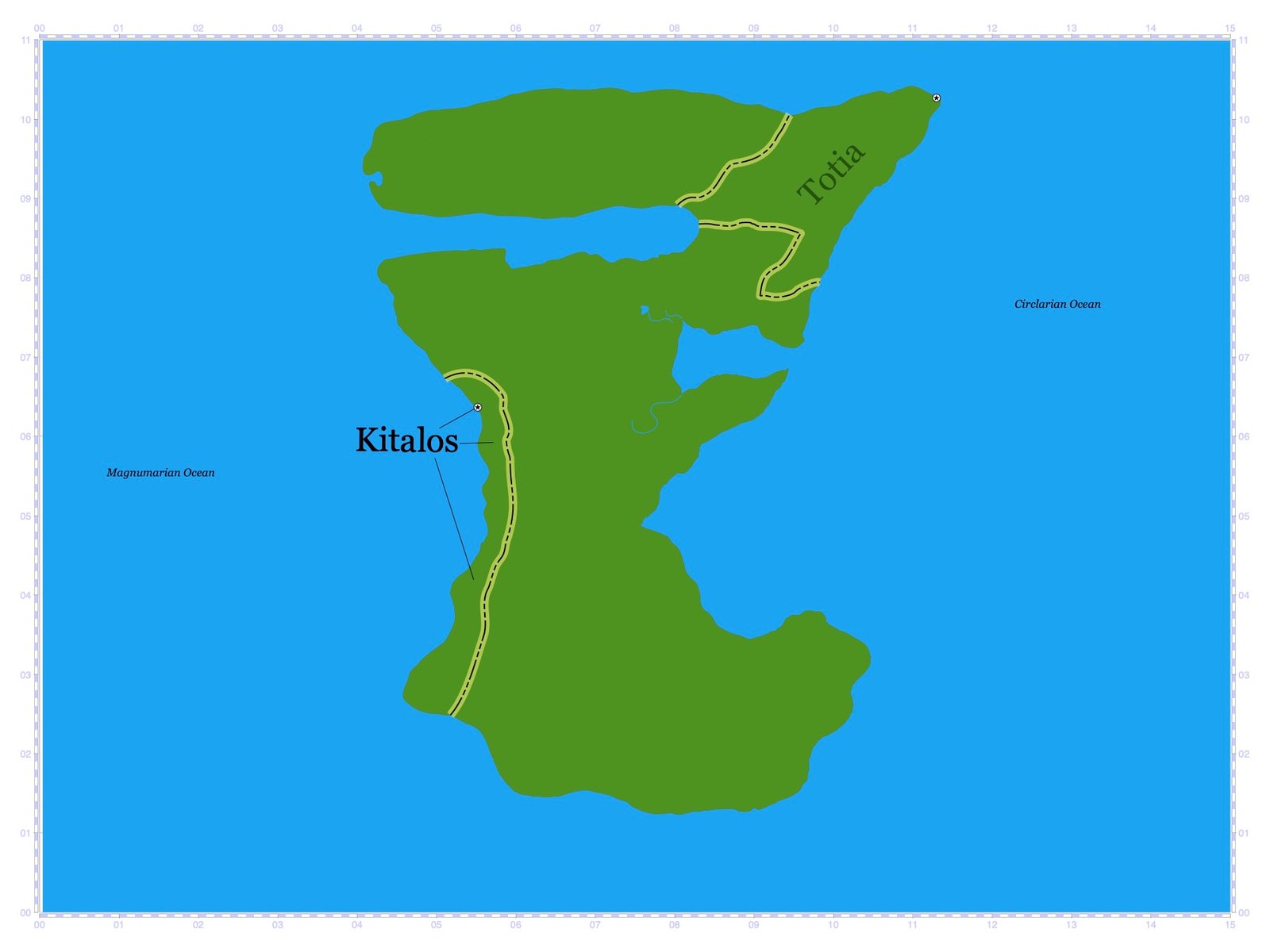
Within the span of about five to ten years, large numbers of people from Kitalos and Totia began to settle further into Remikra's interior. While the Totians did so by force, the Kitalans used mostly trade and diplomacy. In this era, both entities stayed within a few hundred miles of the coastlines, as the rate of territorial expansion made travel by ship the fastest route of navigation...Read More
825 BCE
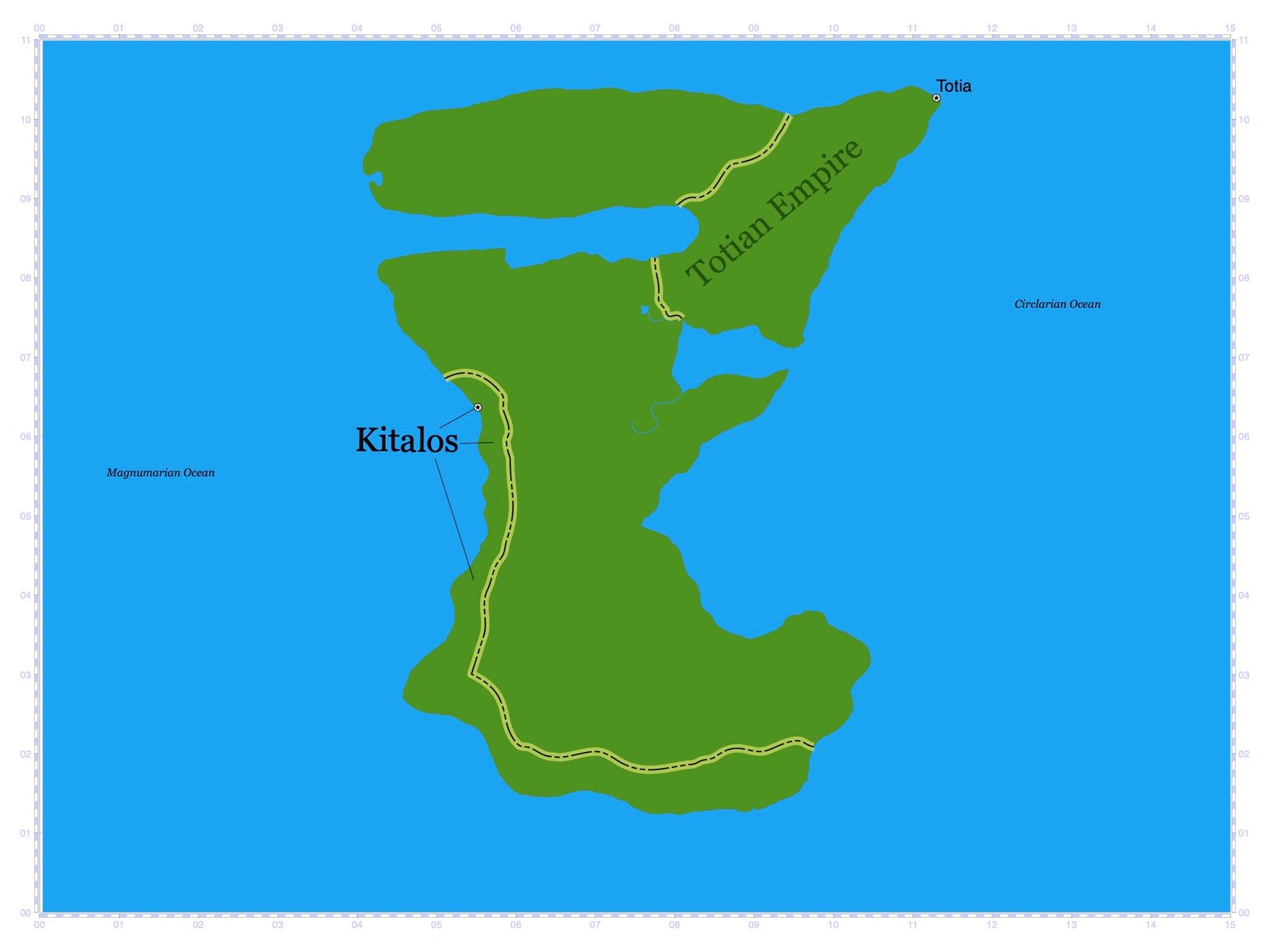
The Totians and Kitalans continued their ventures, as more land was explored and attained. And despite an indirect chain of trade formed between them by the indigenous nomads, the two states were unaware of each other, with each thinking that it was the sole civilized society in the post-Ashen world...Read More
805 BCE
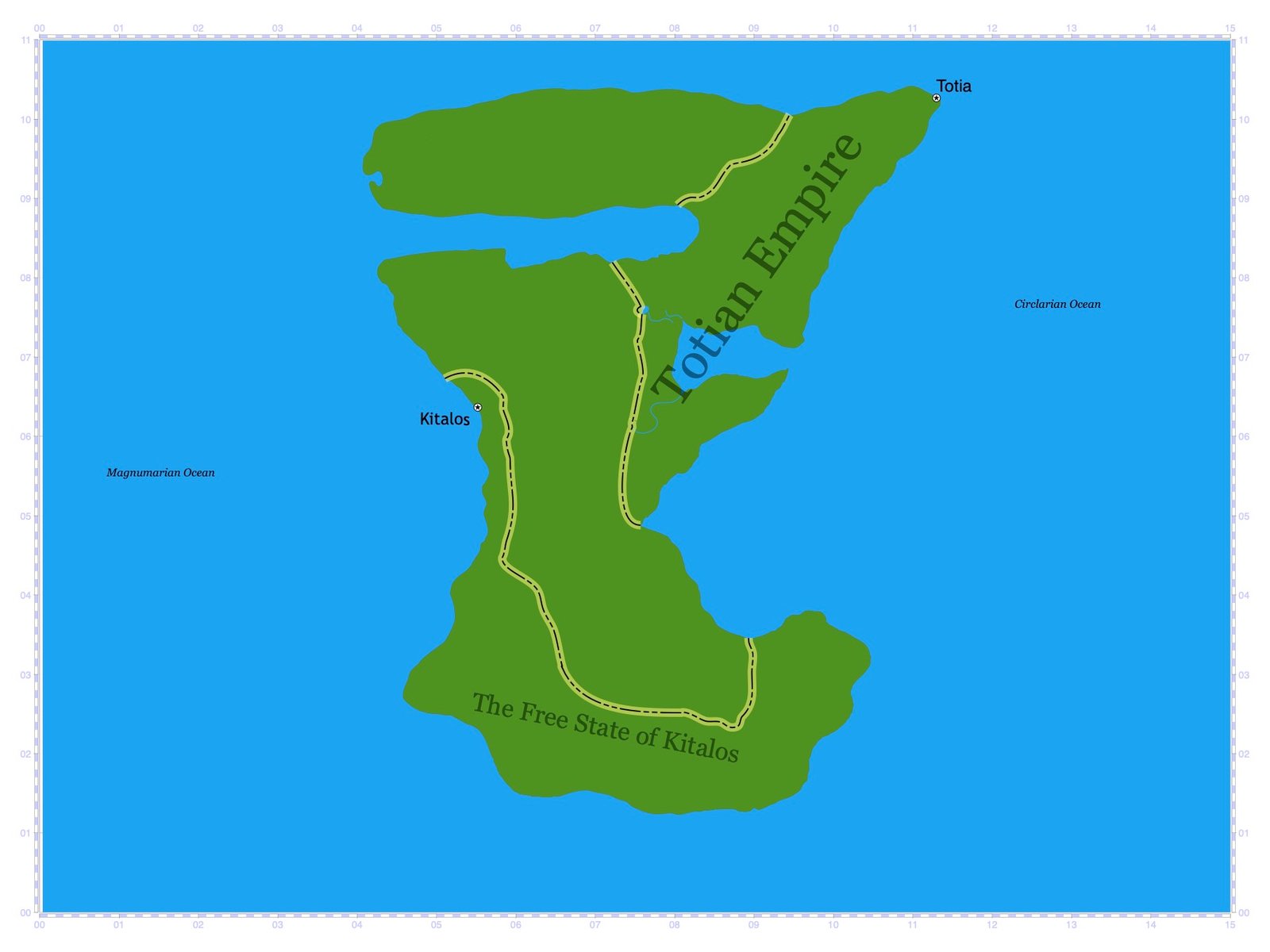
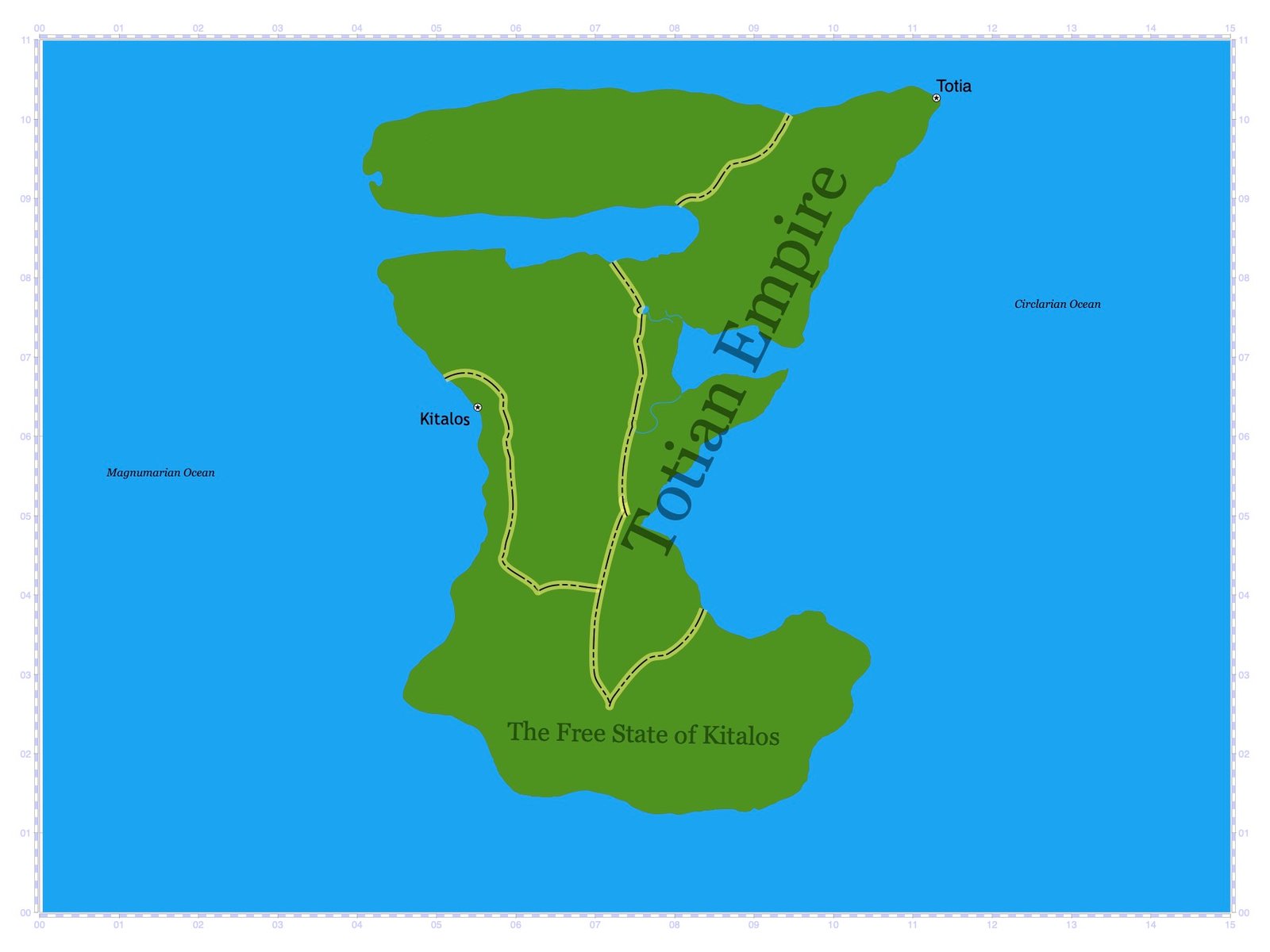
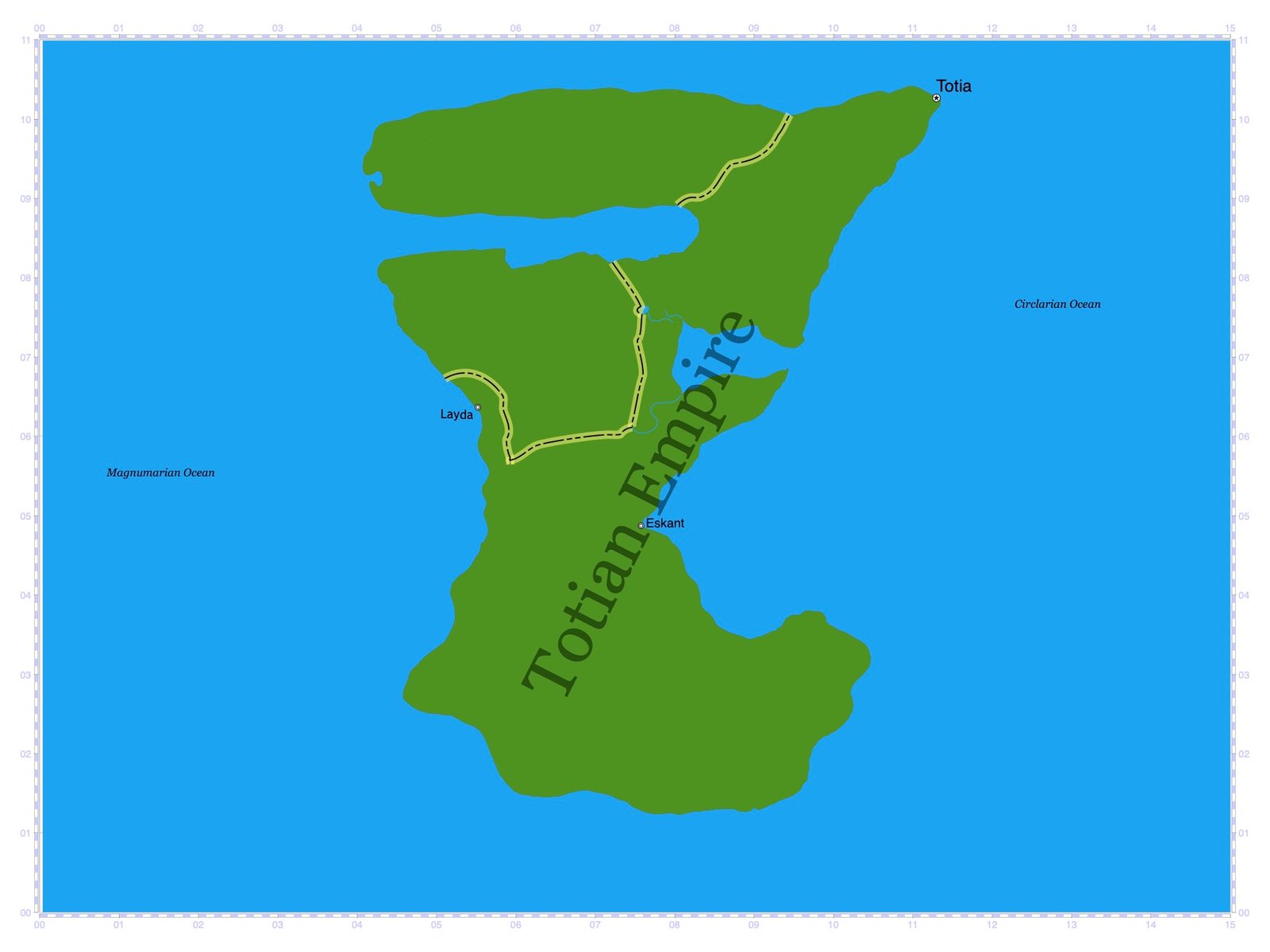
With its government seat in the cold, hard North, the Totian Empire extended South along the Circlarian Coast, stopping just short of present-day Egdir, where a natural boundary existed between the fertile lands of the Chemkan Peninsula and the Interior Desert of the South. During its expansion, Totia easily defeated nomadic groups who challenged them while other nomadic groups integrated into Totian society...Read More
785 BCE
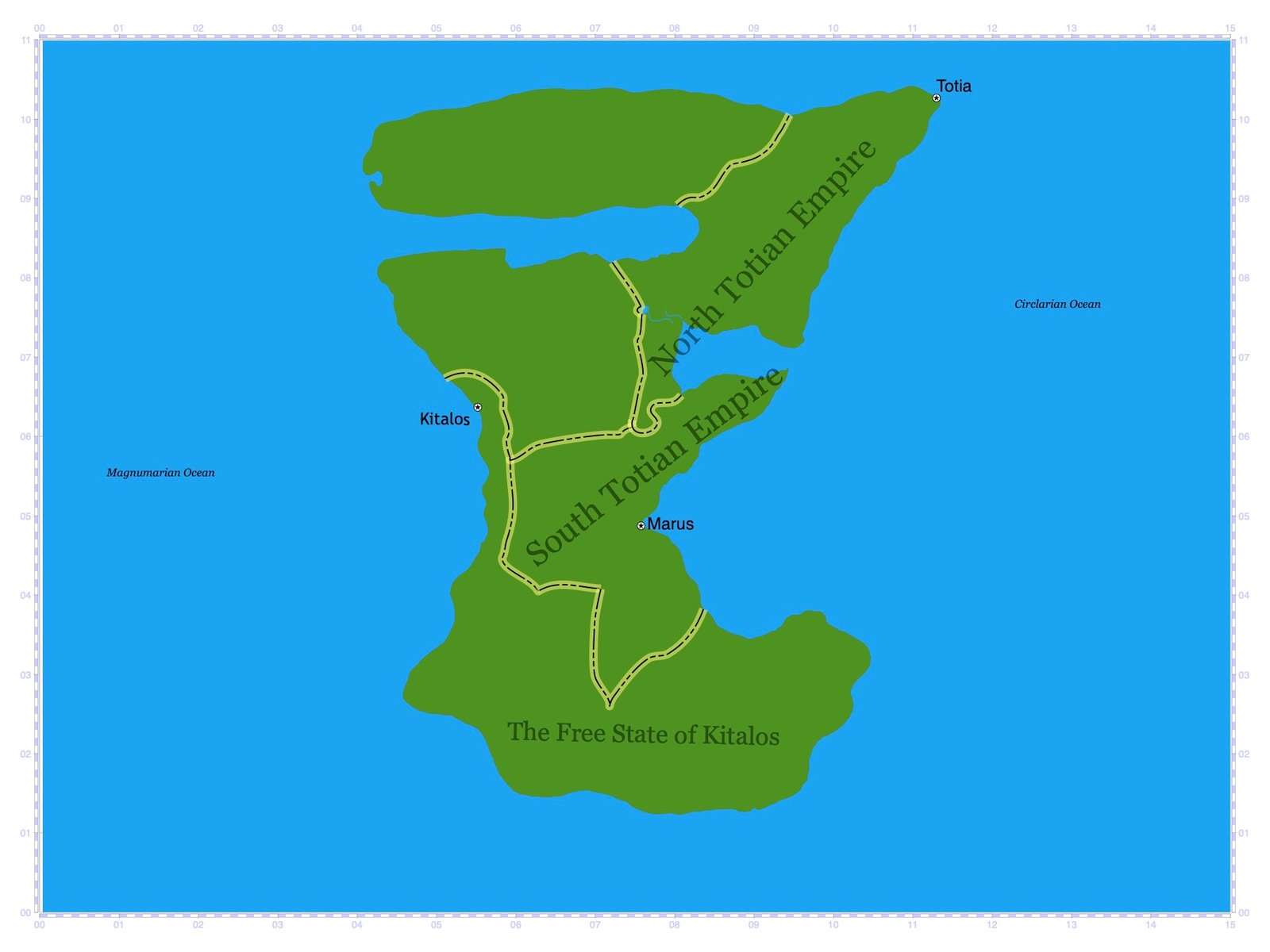
Born in 821 BCE, Morstaris Kestaven was raised by a lower-class farming family in a region of the Totian Empire lining the boundary with the Moorlands in the North, under the tight leadership of Bryan. It was when he disobeyed orders at the age of six that Kestaven was subjected by Bryan to be whipped and forced to carry a favor to Zacharias, a fellow Watch officer. Zacharias, in contrast, was a much more tolerant person and won Kestaven's admiration in very little time...Read More
775 BCE
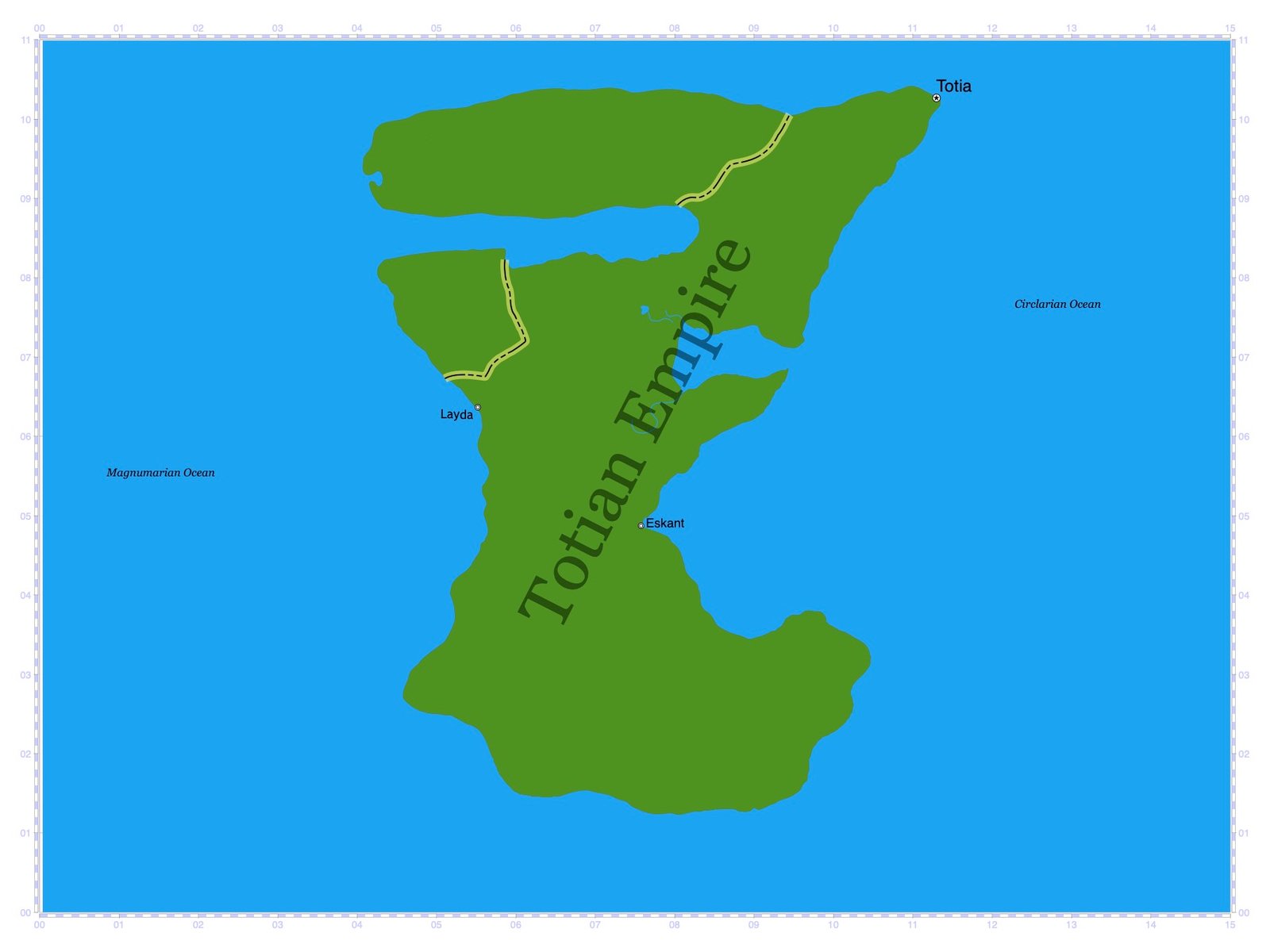
Although information is rather sketchy on the matter, it is known that Estrayon spent most of his early life in a Totian village situated along the East Coast of the Inland Sea a couple hundred miles from present-day Retun. Despite growing up with a lower-class farming family, Estrayon learned through unknown sources to be a spellcrafter and mathematician...Read More
765 BCE
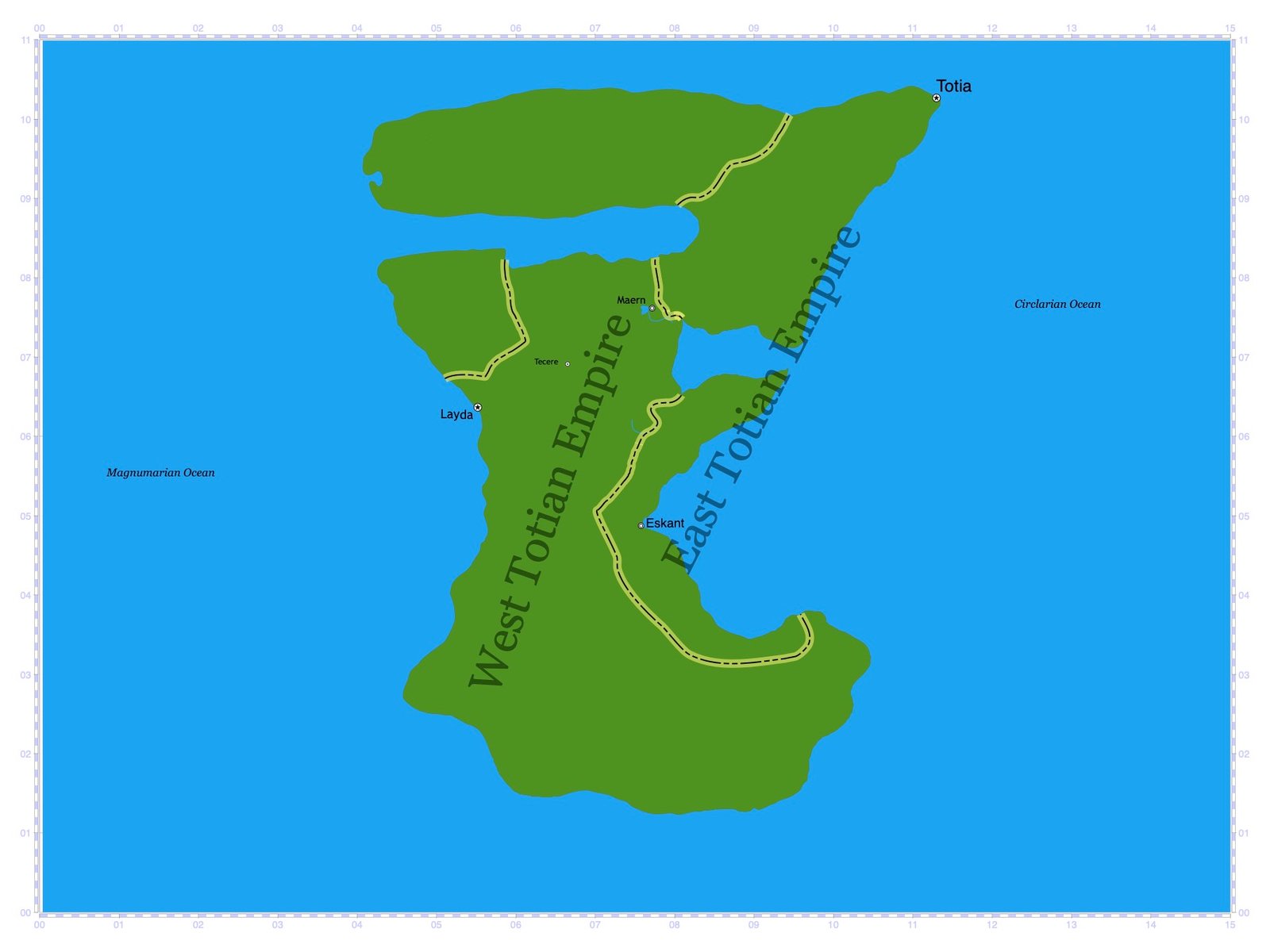
Disorder ensued in Layda in 775 BCE, as working-class uprisings began, led by the rebelling figure, Teschitarian. The local Legion was constantly dispatched to bring order to the city streets. But in December, 773 BCE, Teschitarian's forces united and massacred the Legion, killing many of the Totian soldiers, including the Legion General Maclarain...Read More
760 BCE
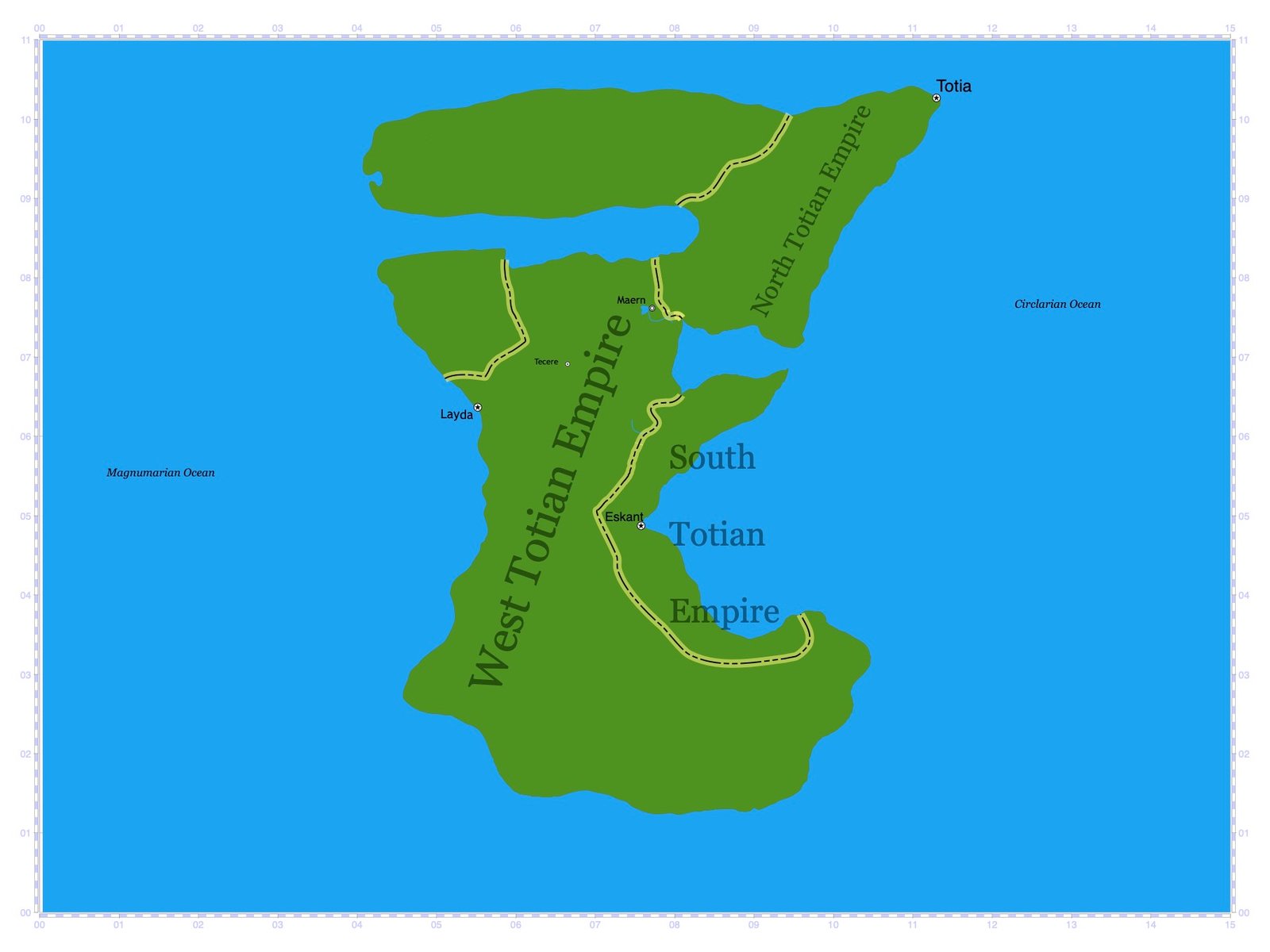
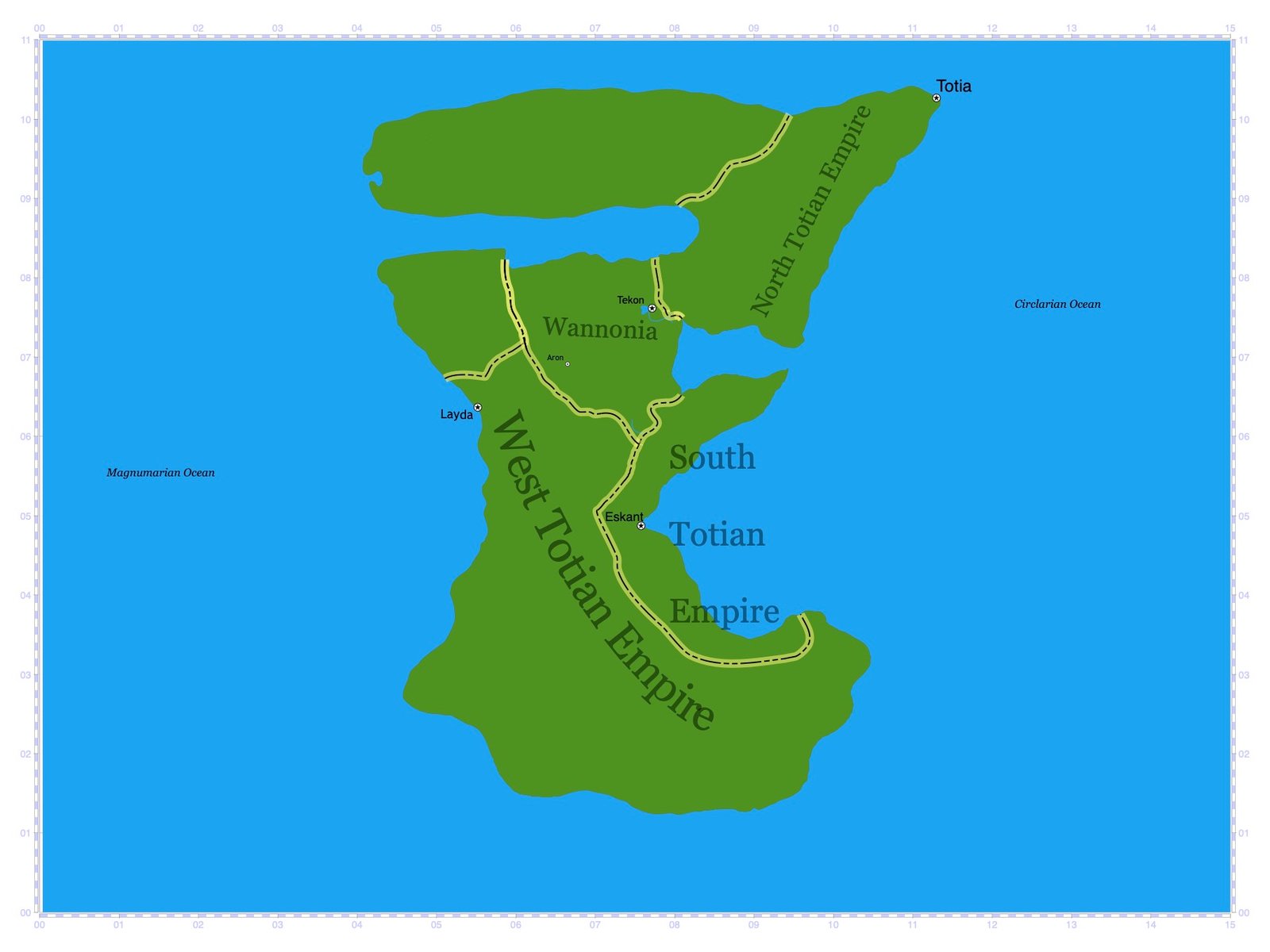
Estrayon had been sent by Emperor Kestaven in 762 BCE to govern the Southern portion of the East Totian Empire from the city of Eskant. Upon arrival in Eskant, Estrayon discovered that a spellcrafter named Manys had been arrested and put on trial for copying inscriptions from scrolls smuggled from the Citadel Library in Totia, and was set to be punished. Estrayon examined the situation and observed that Manys had done so to supplement education to prospective spellcrafters who could not afford either the journey to the North or the costly tuition...Read More
712 BCE
By April 737 BCE, there were numerous established settlements along the West Peninsula of Canticula. There were seventeen total, with nine claimed by the West Totian Empire and four each by the North and South. It was in the summer of that year, however, that the Cantacians, a nomadic group after which the continent of Canticula was named, attacked the settlements. The West Empire held onto five of the nine settlements; however, the North and South were driven out...Read More
702 BCE
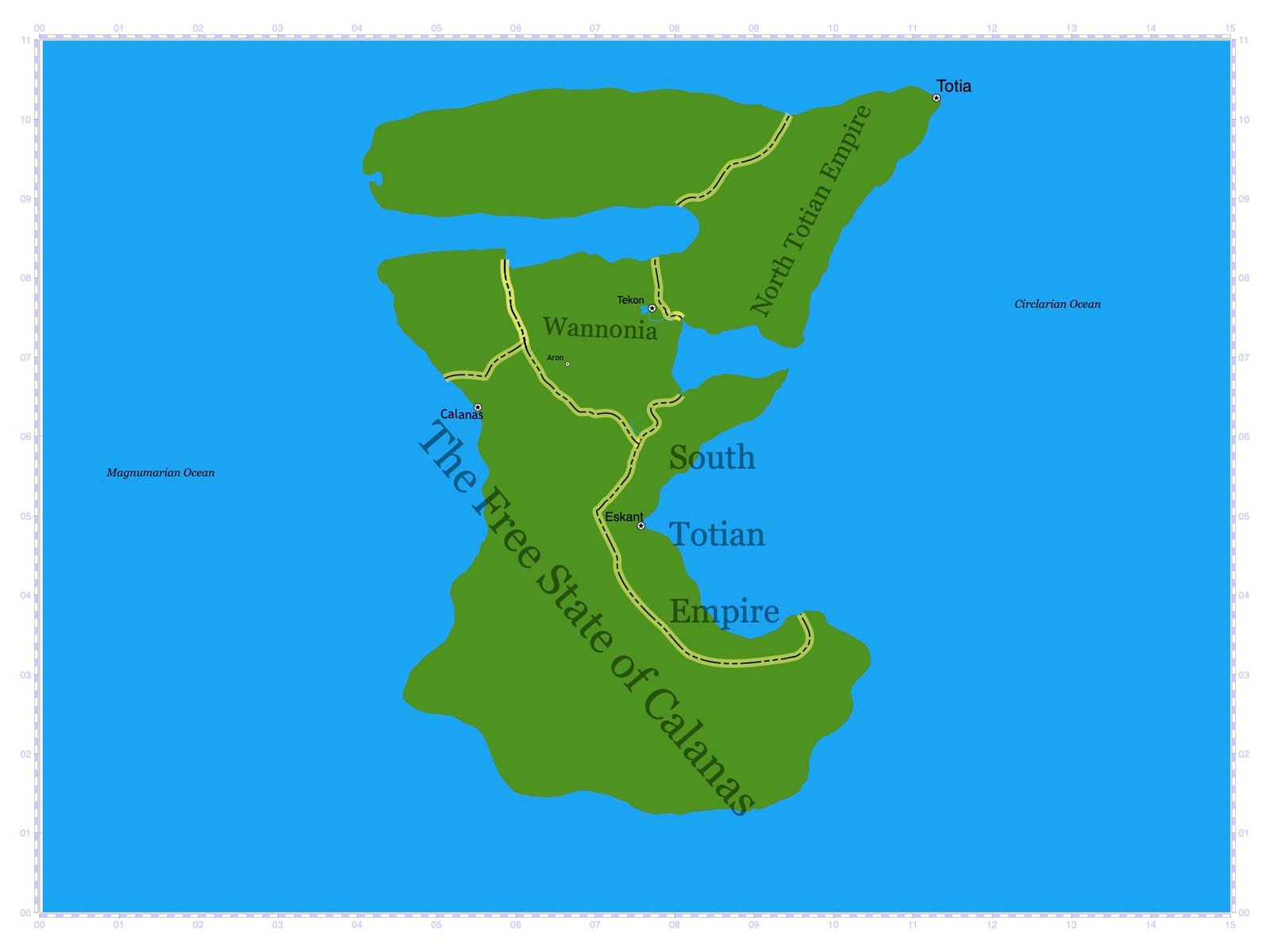
In the first three years, conflict between new nation of Wannonia and the West Totian Empire remained in a gridlock. But in 709 BCE, Tisdero sent a large wave of Legion troops to burn crops throughout the farmlands. Such an assault proved successful, bringing them near the gates of both Tecere (renamed Aron) and Tekon...Read More
690 BCE
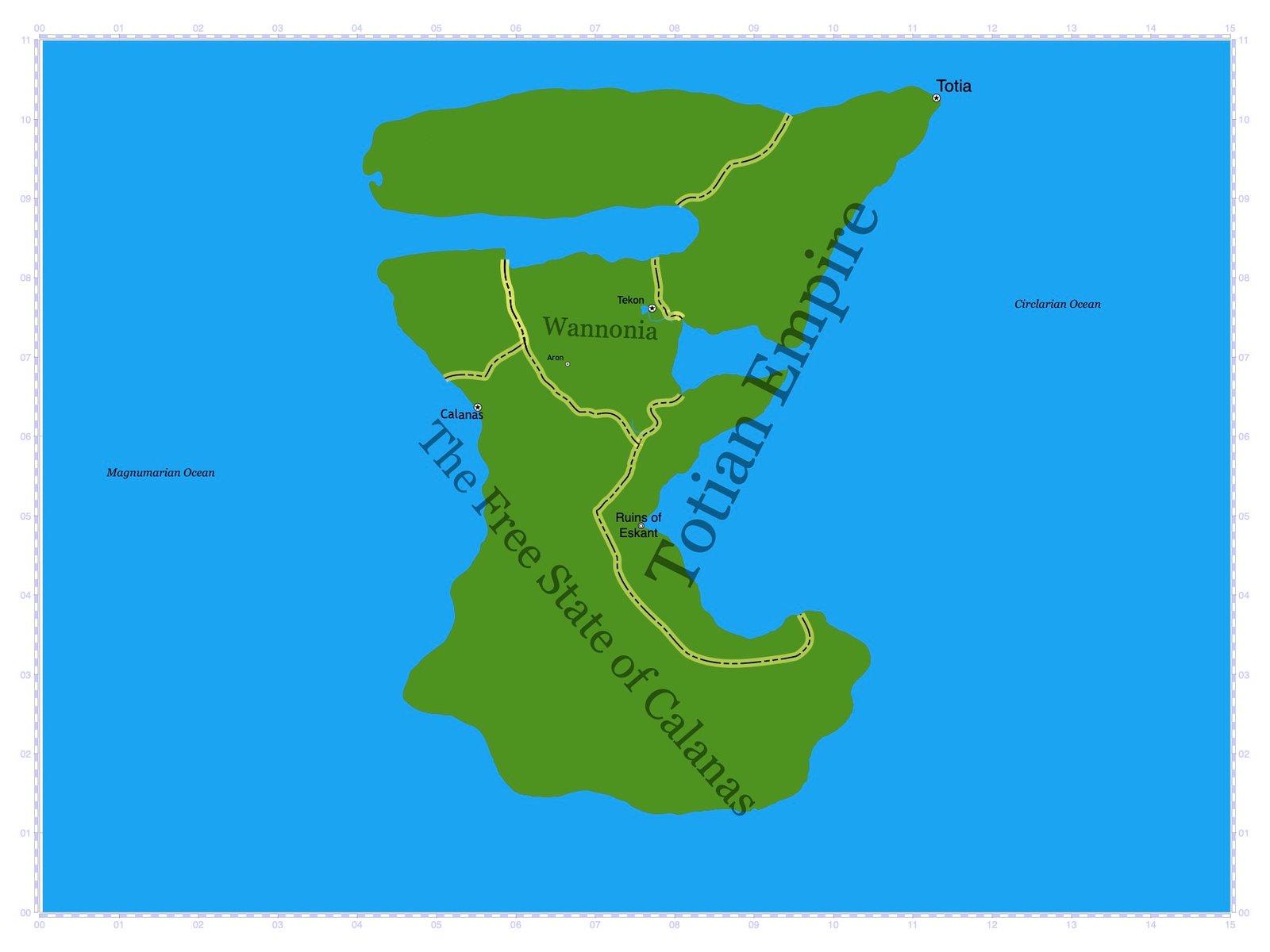
Born in 716 BCE, Kylan grew up with his family in a farming community in the Corren Mountains. This region was governed, officially, by an official of a Northern Legion; however, the dwellers here sought true leadership from an old, wise man known as "the Beholder." From a young age, Kylan gained favorability from "the Beholder," inspiring him to pursue tasks that would earn him exceptionality in the values of hard work, commitment, and wisdom...Read More
680 BCE
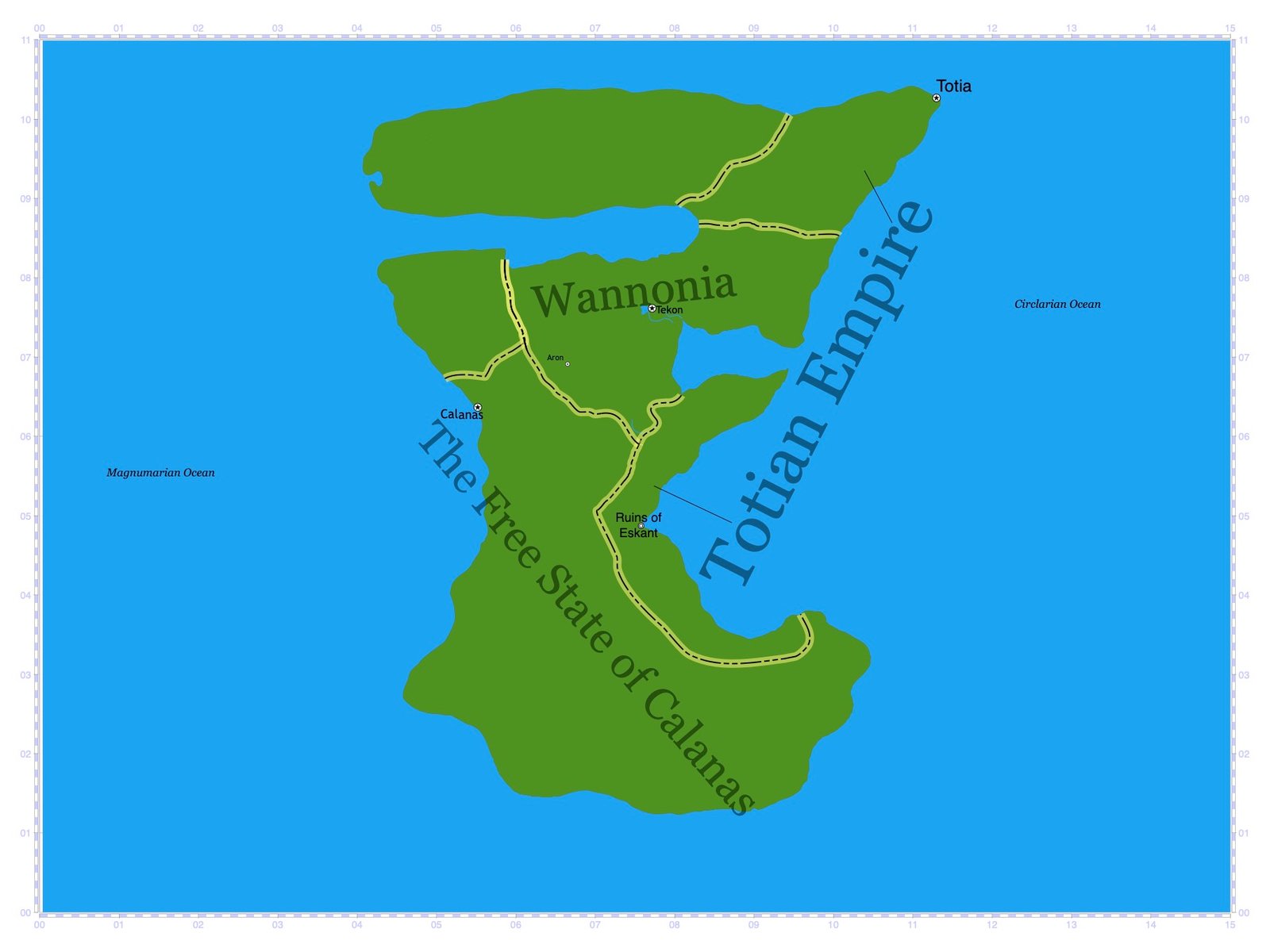
Emperor Kylan sent to each capital city, Tekon and Calanas, an assassin and a spy-messenger to coordinate with the other Totian soldiers stationed unseen in enemy territory. To Tekon, he sent the assassin, Kos, and the messenger, Calor. To Calanas, he sent the assassin, Sayre, and the messenger, Rous. During this time, Kylan ordered the construction of dozens of Legion fortresses along the border of Wannonia as well as the border of Calanas...Read More

670 to 480 BCE
Throughout the 690s and 680s BCE, there was an explosion in the Chemkan population. With such a growth came a solidified doctrine of Chemkan religious beliefs, which dictated that there was one God who was a nameless, faceless, and genderless deity, and who existed in the form of reality itself. Instead of temples, the Chemkans practiced the use of individual shrines and individual worship. According to them, death made transformed an individual to becoming a part of the God, or reality, such as he or she was before birth...Read More
432 BCE
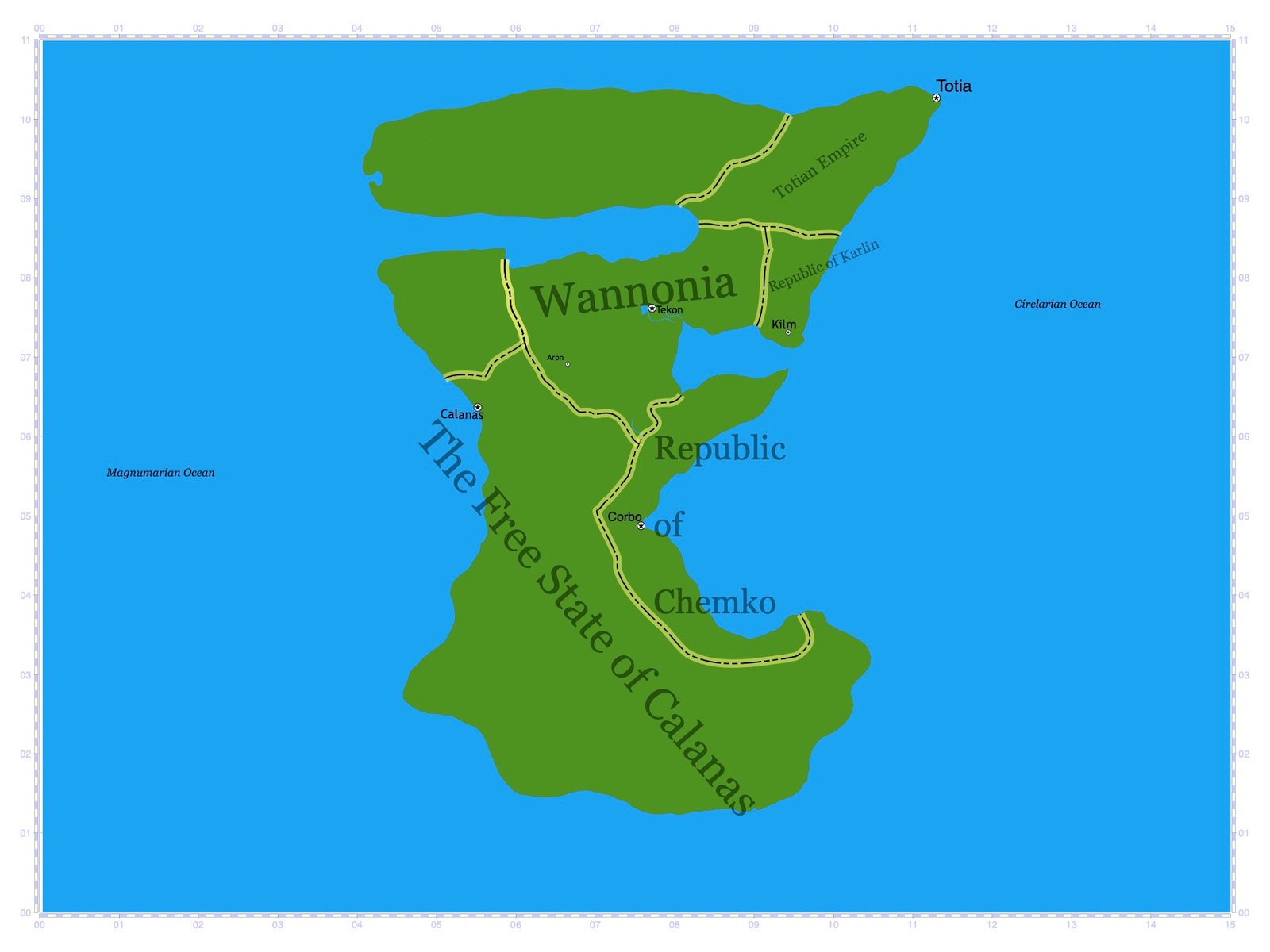
Between 551 and 524 BCE, Emperor Termis Korladi I ruled over Wannonia with peace and order. His Legions were well-funded and well-staffed, providing consistent protection across the Remikran and Canticulan territories. Roads, canals, and other forms of infrastructure were continually expanded and well-maintained. Under Korladi I's economic policies, guilds could trade freely and make independent business decisions...Read More
12 BCE
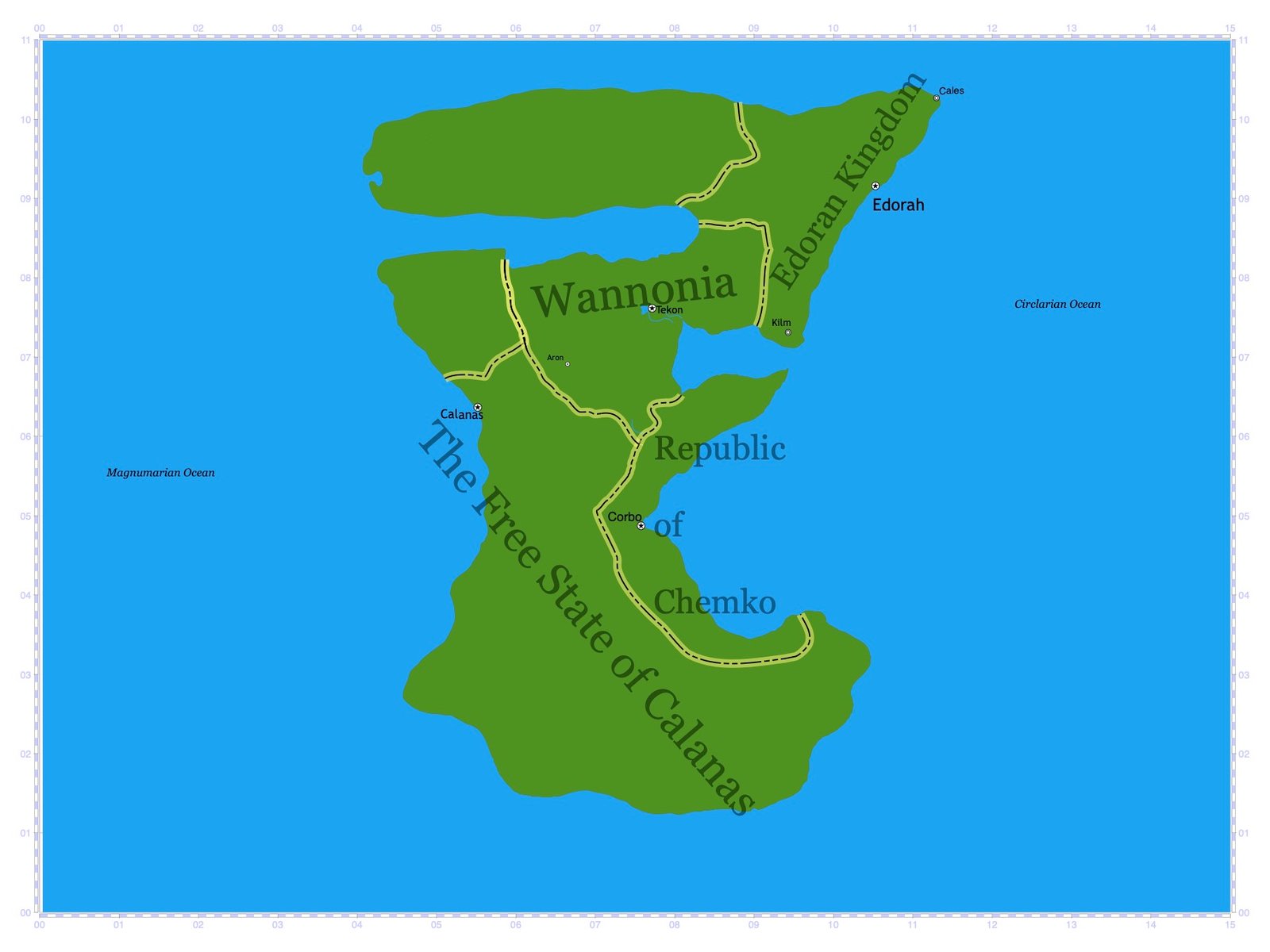
Like in Wannonia, the economy in the Republic of Karlin consisted of conventional guilds, ones that operated under government authority, while a limit was placed on wealth acquisition and asset ownership of each guild, of which excess would warrant large taxes whose funds were transferred to second-rank guild members to form other conventional guilds. The difference with Karlin was that its government was democratic, headed by an elected Senate. Because of this, everyone had a voice in government decisions, everyone including the guild owners...Read More
100 CE
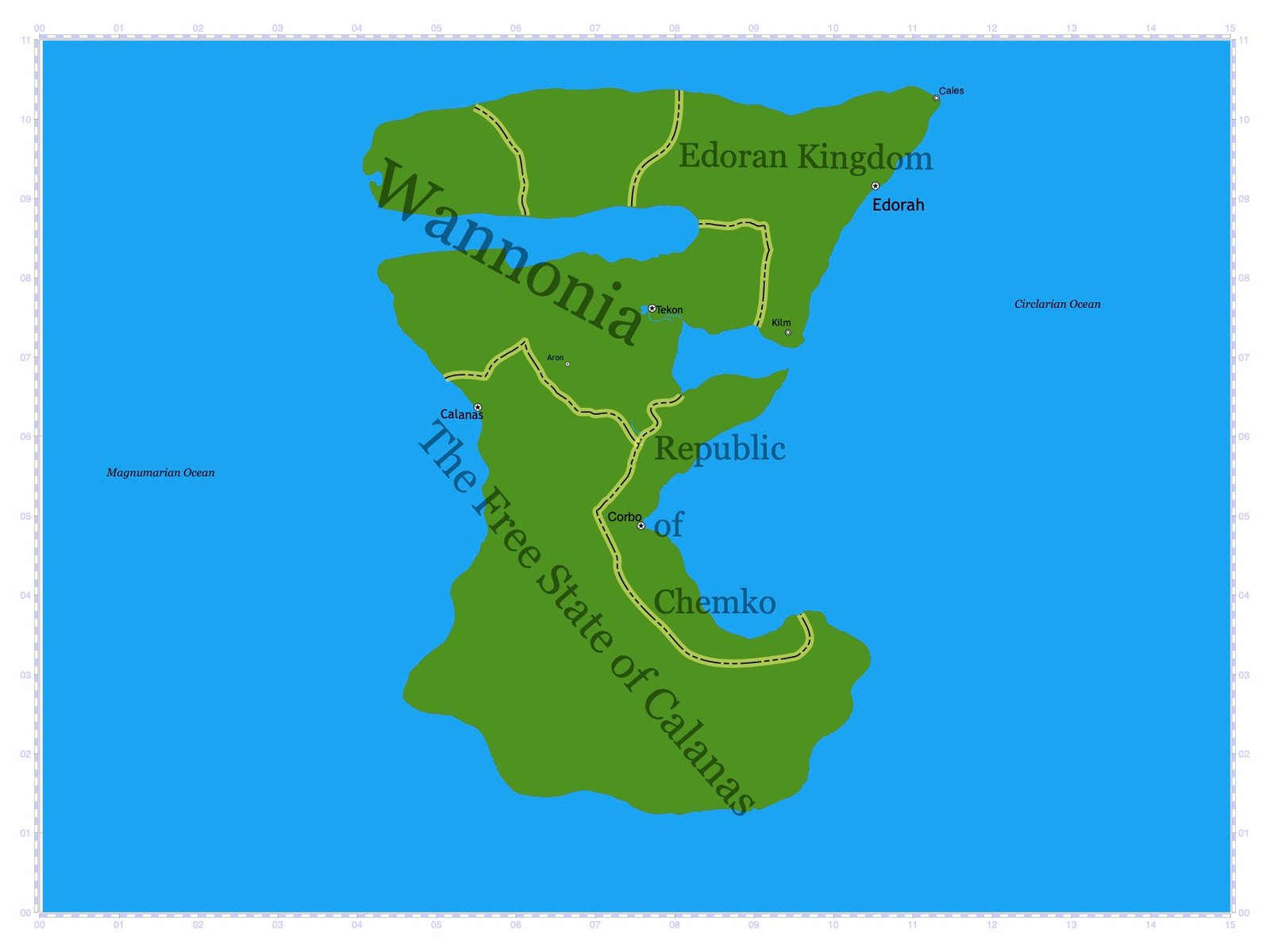
To both Wannonia and the Edoran Kingdom, the quest for the remaining uncharted lands of Northern Remikra became an increasingly attractive prospect during the first century of the Common Era. Of the wide number of resources discovered, the four most important were metals, wolf and bear hides, spellfire quarries, and silver pines. And such existed in abundance in the North...Read More
112 CE
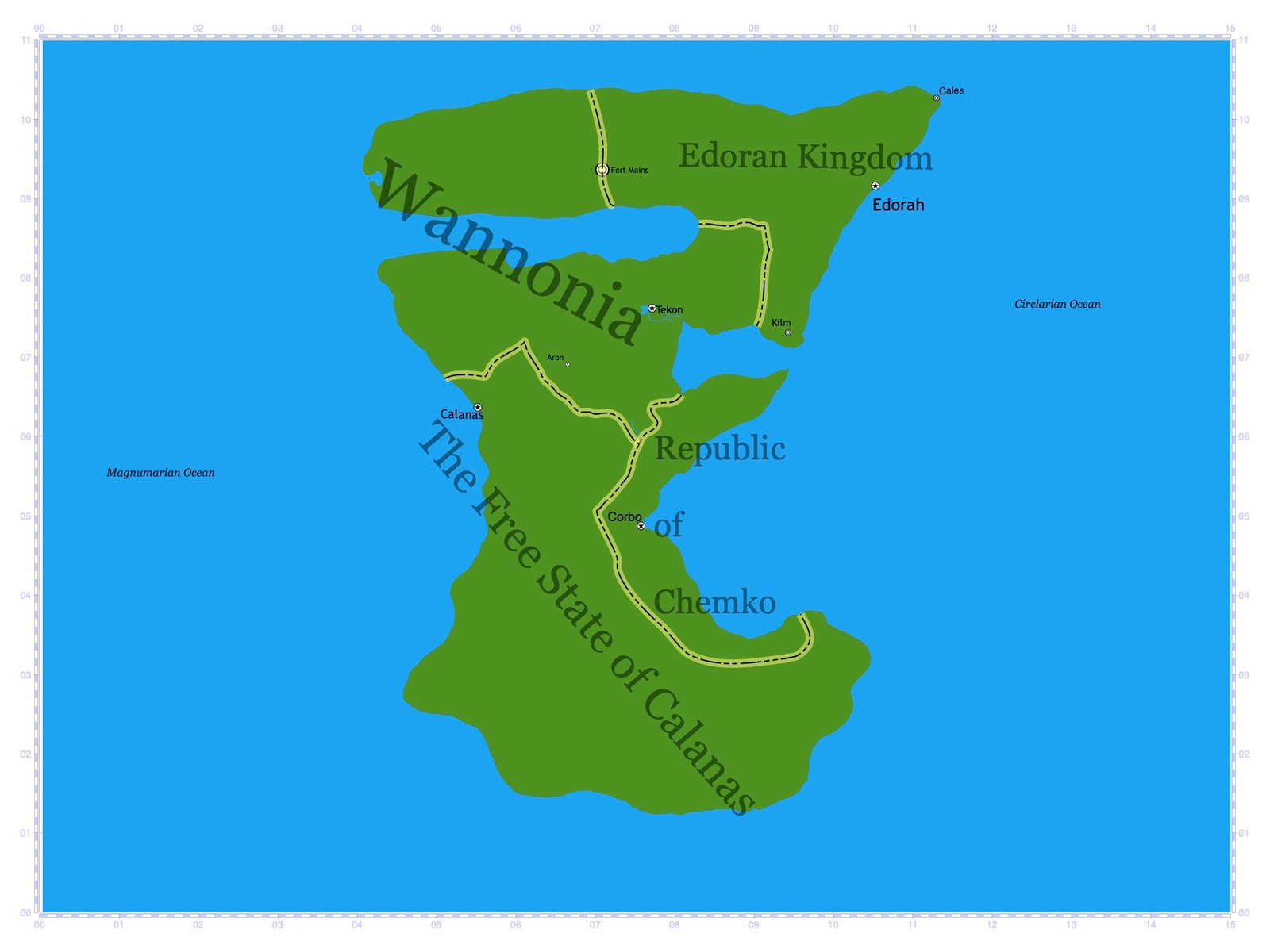
Throughout the 60s CE, Moorlanders captured by Edorans during the conflict in the North faced a choice: die, or convert to Alconism to work as a serf in the Edoran Kingdom. With the latter choice, Moorlanders were seen as equals among the other serfs, where they were given a job and a place to live. However, those two assets were not choices of each Moorlander but assignments given by the presiding lords. Furthermore, like all other Edorans, Moorlanders were subject to taxation...Read More
115 CE
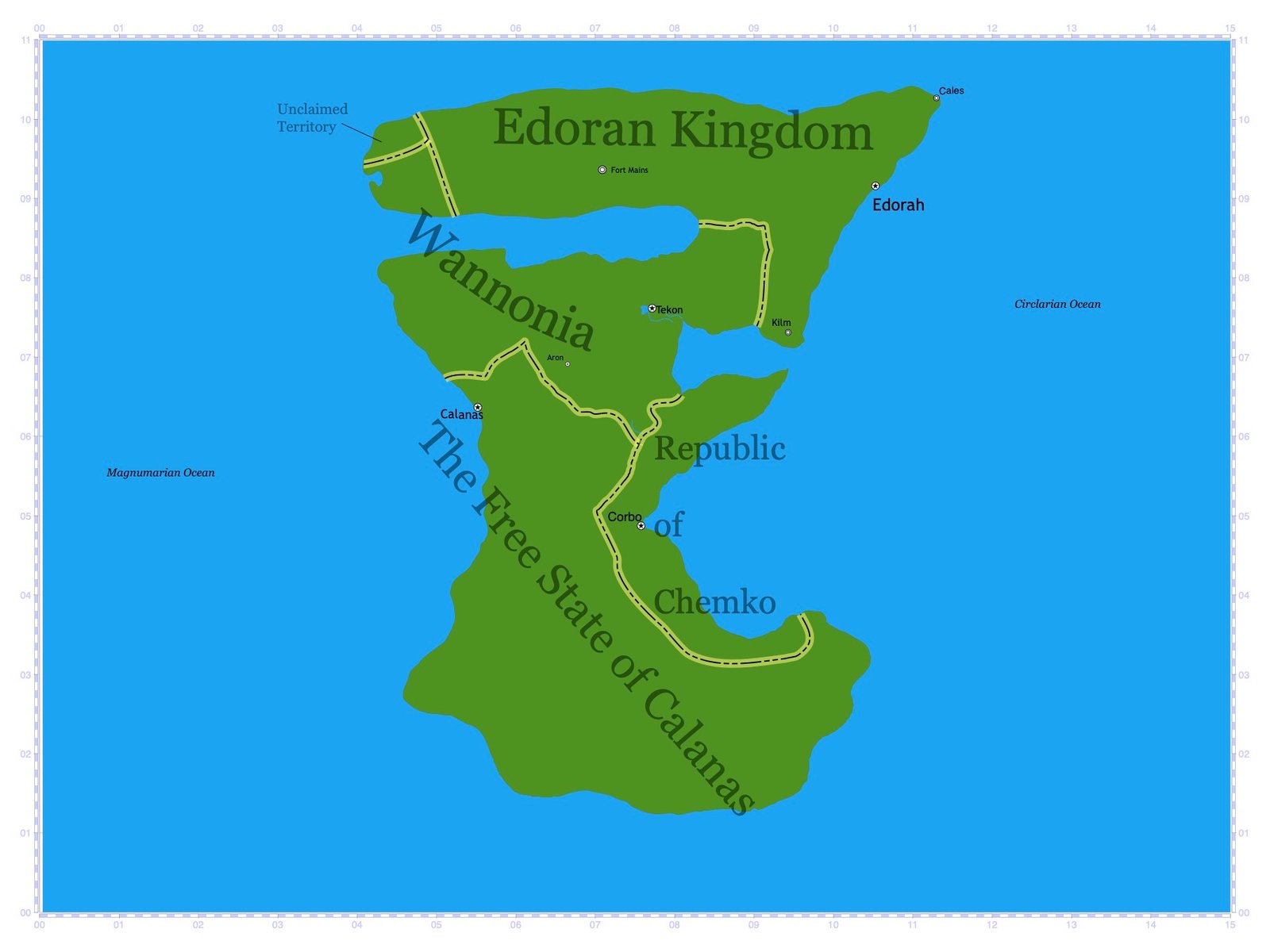
Such gridlock was broken when Zyron, a spy for Wannonia, went inside Fort Mains undetected. There, he heard information about the Edoran Commander, Gerald Commonwell, who had designed and still possessed plans for the Edoran catapults. Zyron also learned of the location of Commonwell. The Wannonian spy returned to Tekon and reported this to Emperor Kamon II, who, in November 113 CE, dispatched an assassin named Milon, who went to Commonwell's location: in the King's Castle in Edora proper...Read More
123 CE
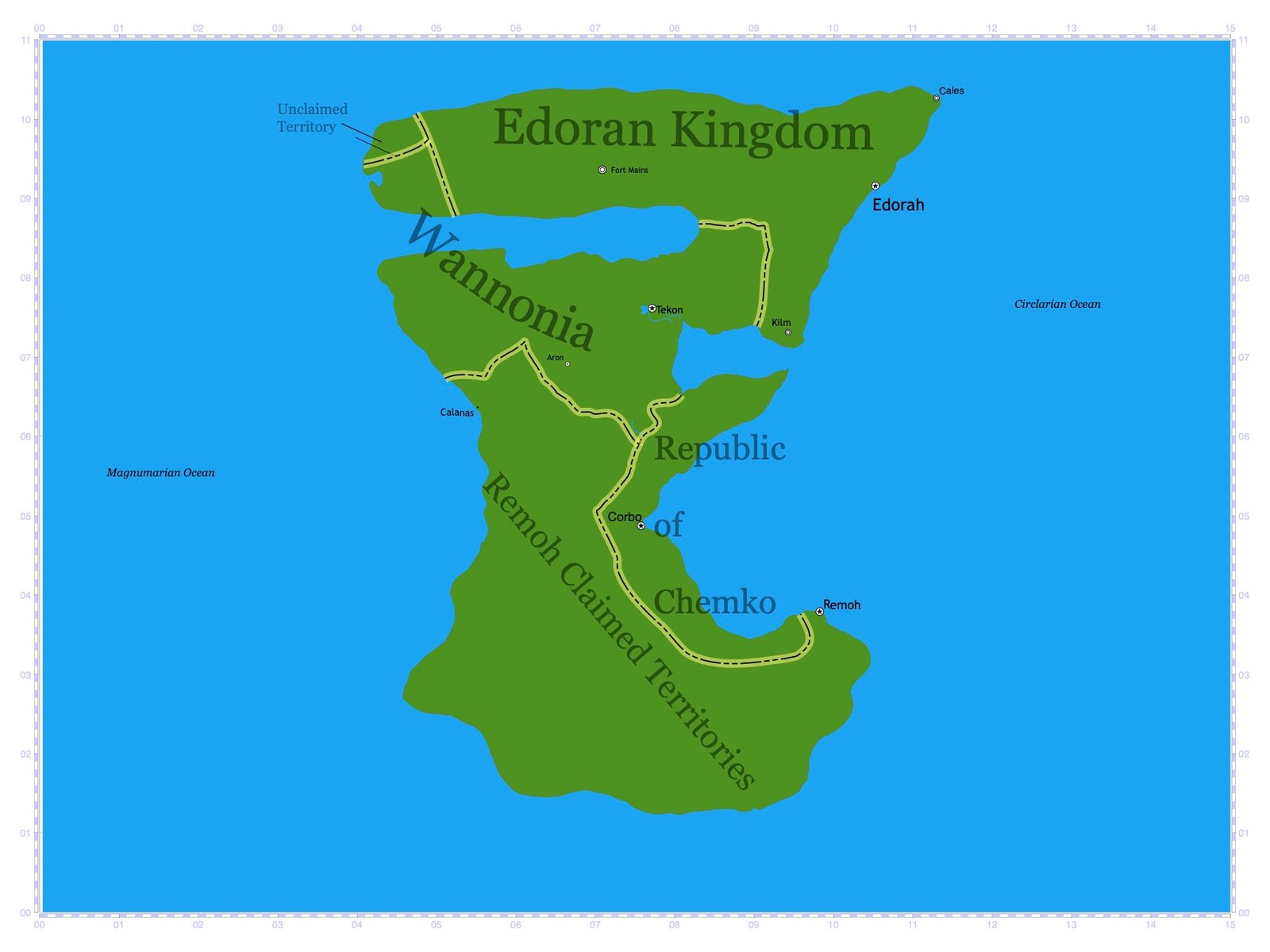
In 698 BCE, the Calanasian Council voted to grant all slaves universal pardon and abolish all forms of future slavery. Furthermore, involuntary labor, as a form of criminal punishment, was limited in time duration and was to be handed only to the wrongdoers when convicted. All labor in the Free State of Calanas was, from that point forward, carried out by either private/family deals or by guilds and their members...Read More
130 CE
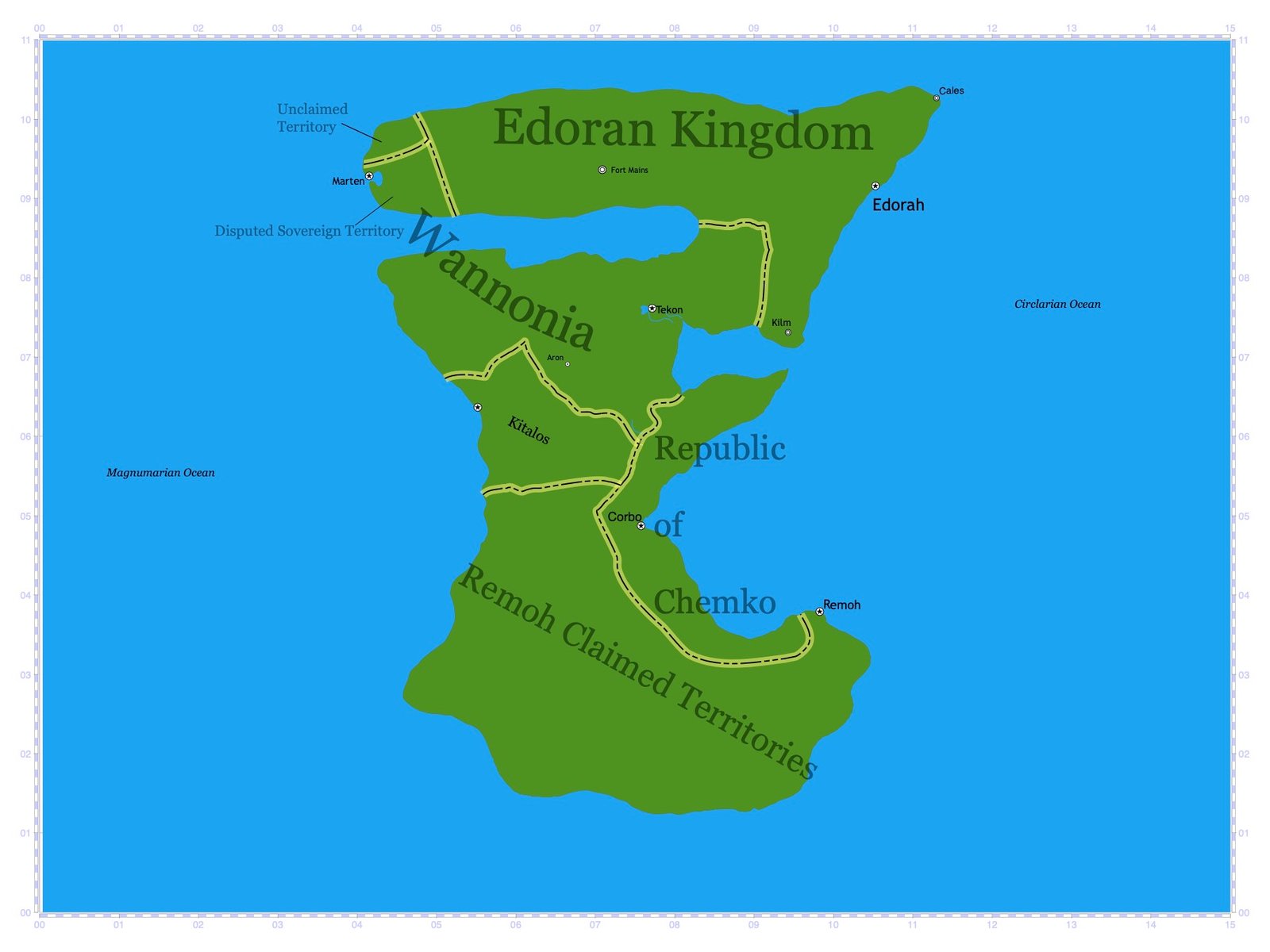
Escaping the fall of Calanas, Calanasian refugees fled to four areas: the Calanasian countryside, the Pimdanian Mountains, the sea merchant routes, and Wannonia. In the Calanasian countryside, or the Magnumarian Shield, woods and grasslands prevailed, as the area was quite remote further East, inhabited mostly by wildlife like deer. Fruits and grains were still plentiful during this time, making it easier for refugee encampments to move to other locations in the event of Remohan encounters...Read More
131 CE
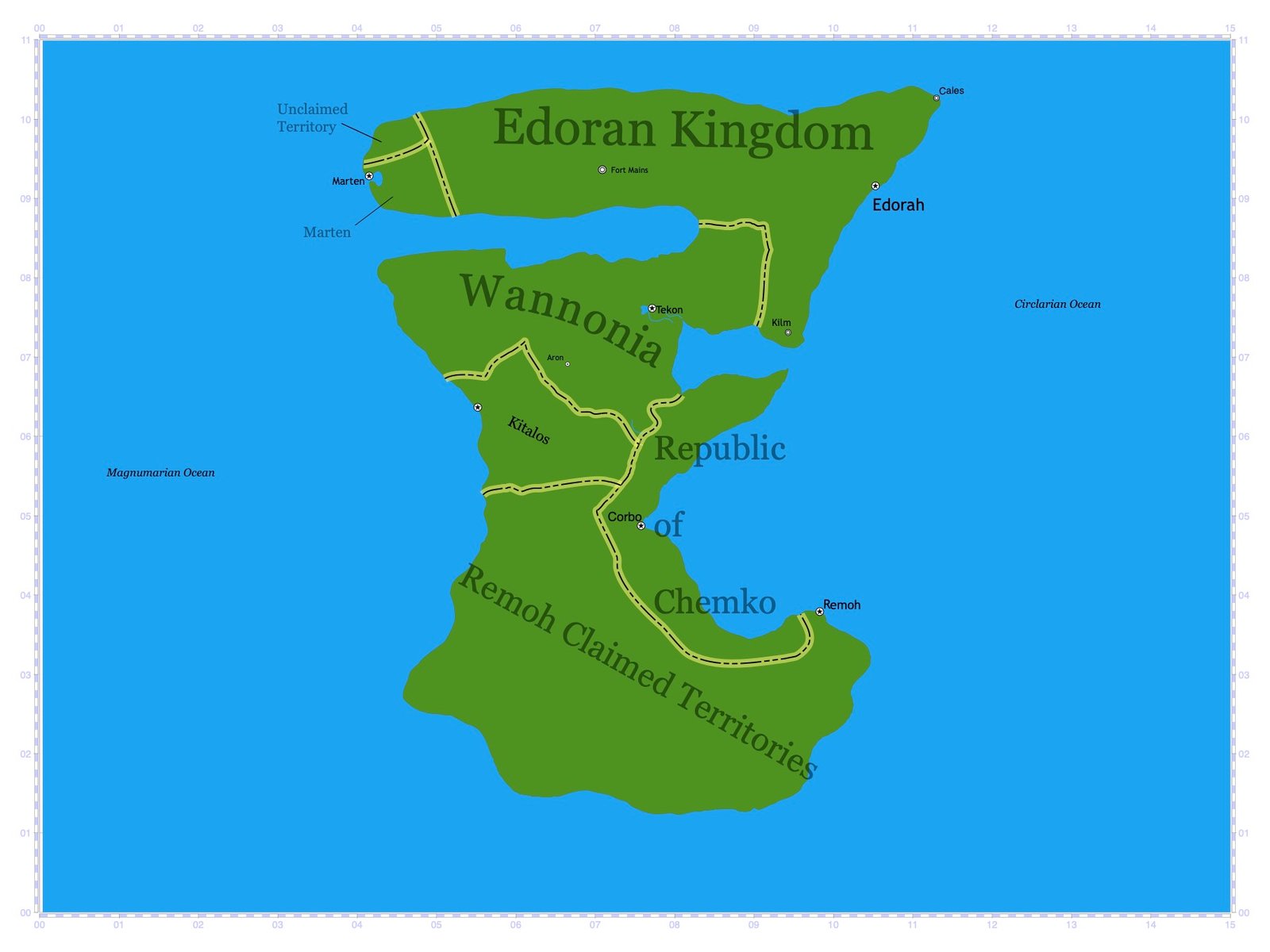
Karmaye was a messenger between Wannonian Emperor Murstallar I and the battle theatre in Marten, both communicating with the Legion Generals and leading a group of spies. In 130 CE, Marten was under siege, where the Wannonians regularly rotated divisions of Legion soldiers to keep a strong front around the enemy. The spies working for Karmaye sought out weak spots in Martenian defenses; and the Legions struck at these...Read More
137 CE
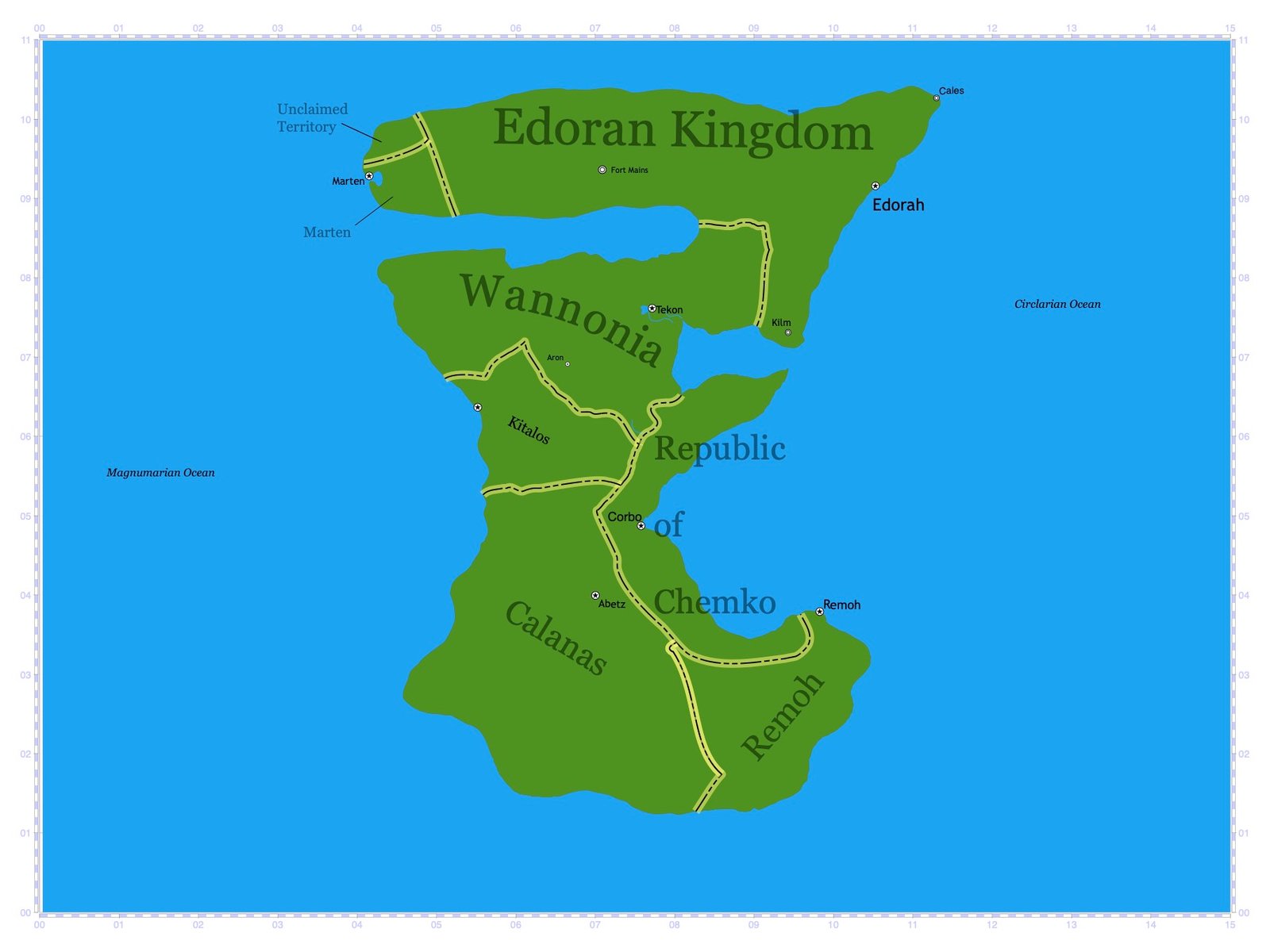
In November 130 CE, King Solon of the Remohans died, and was succeeded by his son, Solonmake. Solonmake, a young man of great ambition, made some observations. First, he realized that the Remohan people were mostly poor and starving, having barely any resources. In a moment of enlightenment, he discovered that whoever had dominance over Remikra had a surplus of food and resources at their disposal; and after further searching, King Solonmake discovered the dominating power to be the Empire of Wannonia...Read More
217
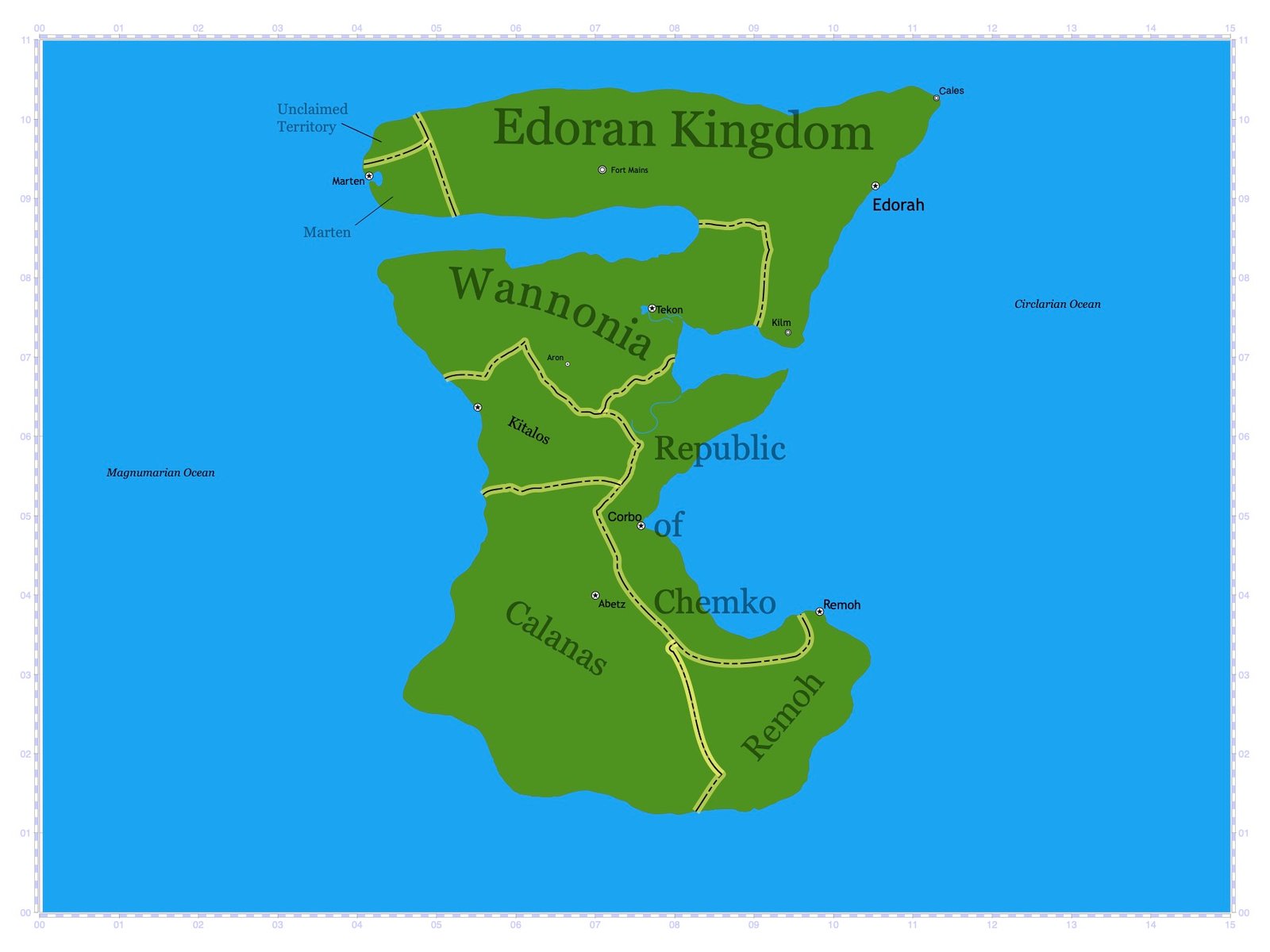
Murstallar II, who ruled until May 169, raised taxes on large guilds as well as tightened limits on wealth acquisition and the purchasing of other guilds. He also lifted trade tariffs, which helped to resolve tensions with the Edorans in a peace treaty in the year 137. As a result, peace and prosperity reigned throughout the nation of Wannonia, especially along the coast of the Inland Sea. After Murstallar II's death in May 169, his son, Murstallar III succeeded the throne...Read More
225
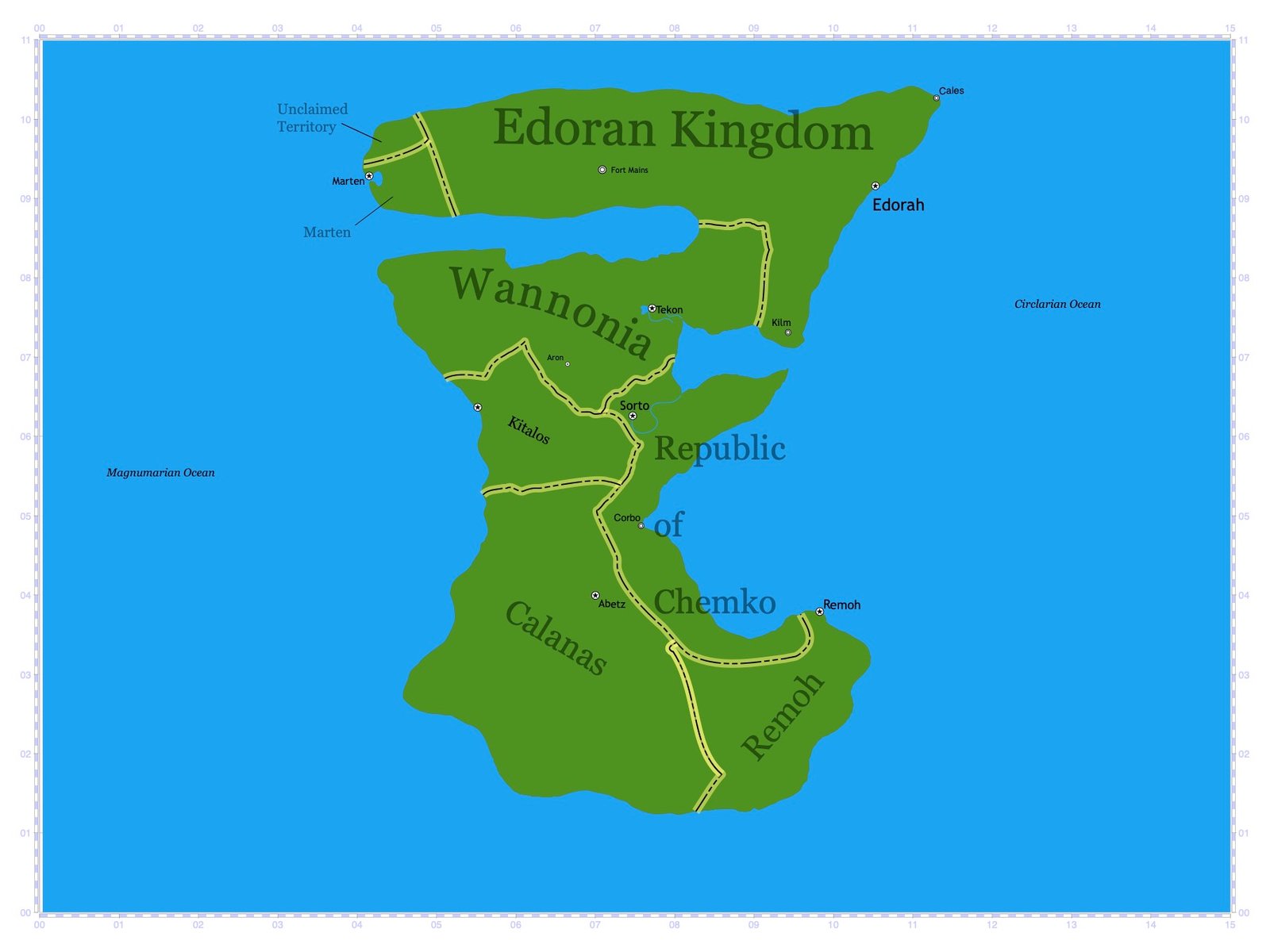
In the years following the Chemkan Senate overthrow, guild owners and corrupt former Senators were scattered throughout Chemko. Biman, a former Senator and ship guild owner, established a network, in the early 220s, to bring together all of the scattered members, and subsequently met with Estaren, a notorious sea pirate at the time, on the Meredythian Island of Zenan...Read More
241
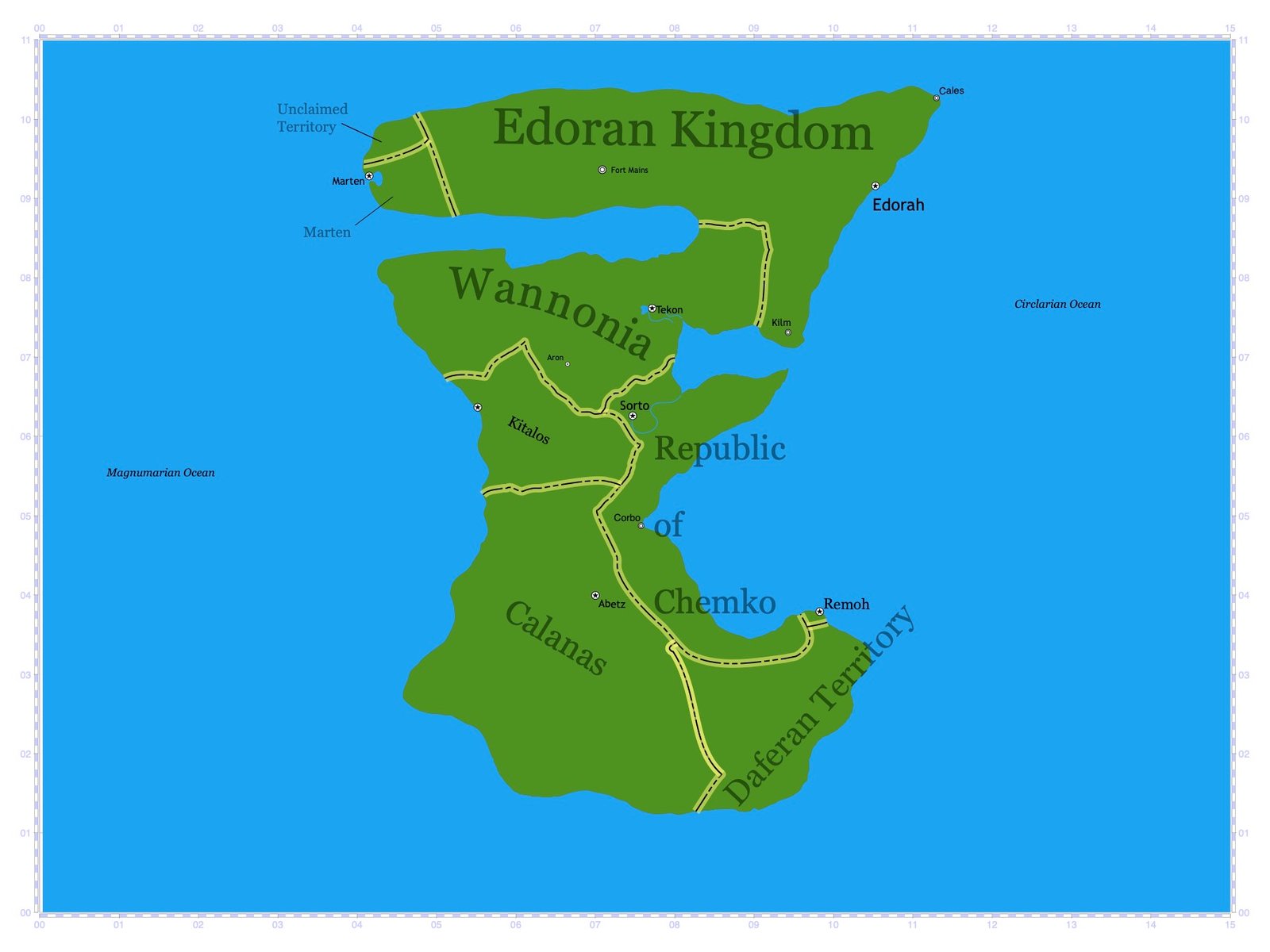
In April 224, Emperor Murstallar IV died. With no son to succeed the Imperial Throne, such an Office was taken by his oldest daughter: Alexia I. As the first Empress of Wannonia, Alexia I inherited a system in which one superguild occupied the flaxweed industry. Promptly, she enacted policies to break up such an entity, fearing that it would become its own government, but compensated by allocating more land, collectively, to the new smaller flaxweed guilds...Read More
245
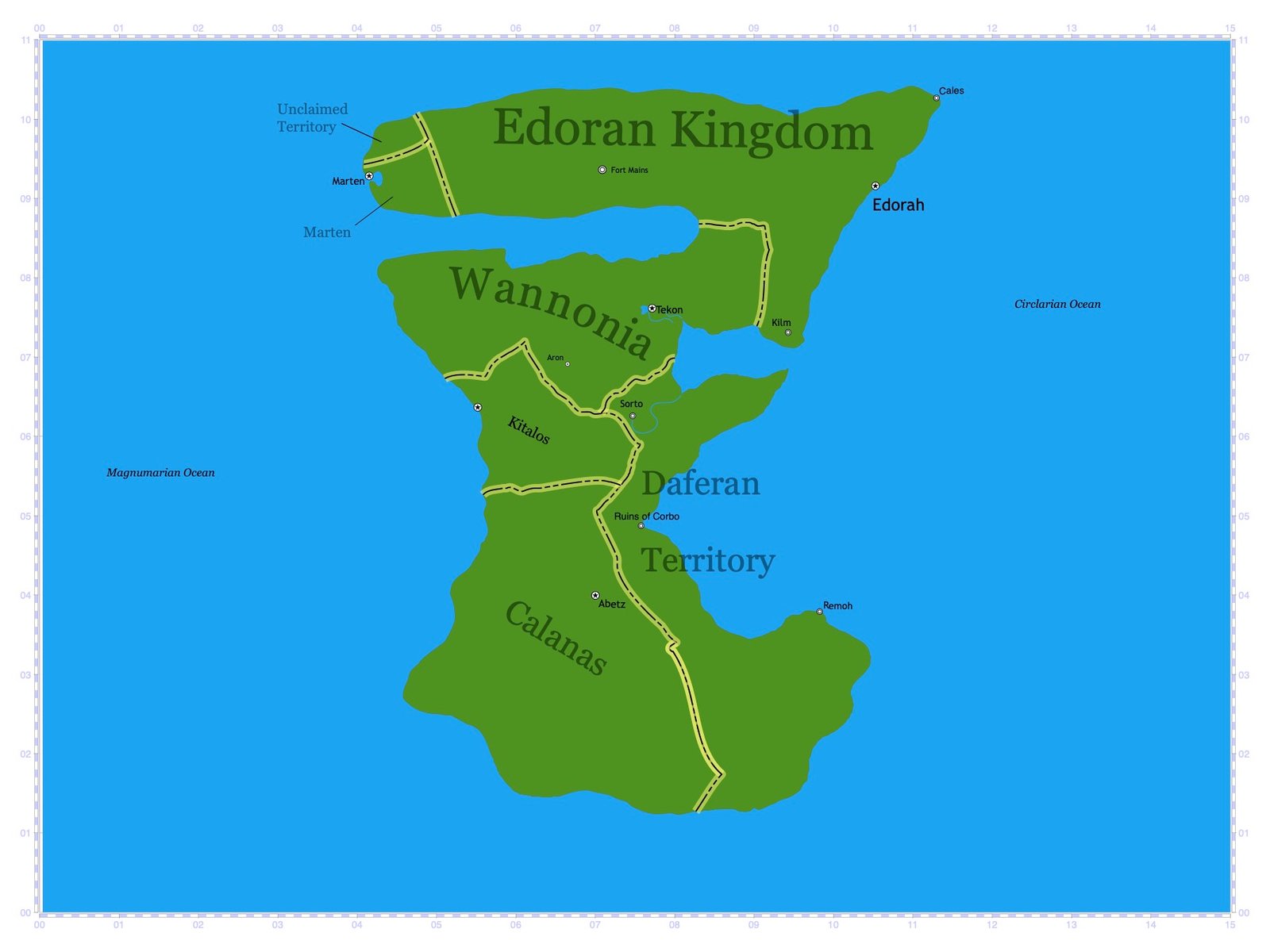
It was during the conflict of 241-42 when Kumoran realized that the forces of his rival, King Durantakis of Remoh, were better organized. Remohan city walls seemed impenetrable as Remohan archers inflicted heavy casualties upon the attacking Daferans. Before long, Chemkan reinforcements arrived, forcing the Daferans to retreat away from Remoh and its surrounding lands by about twenty miles...Read More
251
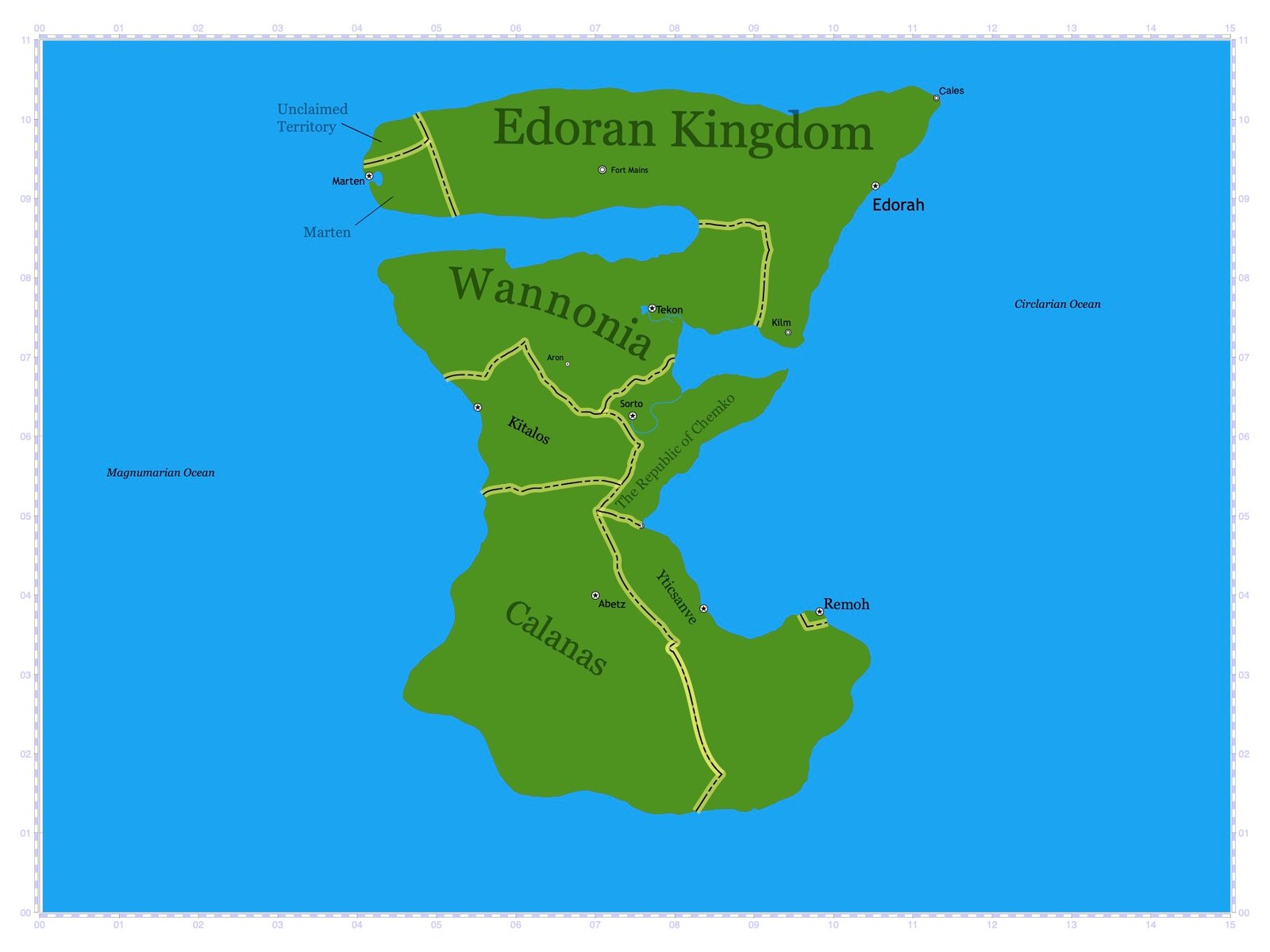
With the first assault on the vast territory of Wannonia, King Kumoran of the Daferans first encountered a well-garrisoned border wall protecting Wannonian territories. Second, there were plenty of Legion troops stationed in the lands behind such a wall. Such circumstances effectively brought the first Daferan wave into Wannonia to a virtual stalemate. However, King Kumoran believed that a more brilliant plan would help him to conquer Wannonia with ease...Read More
271
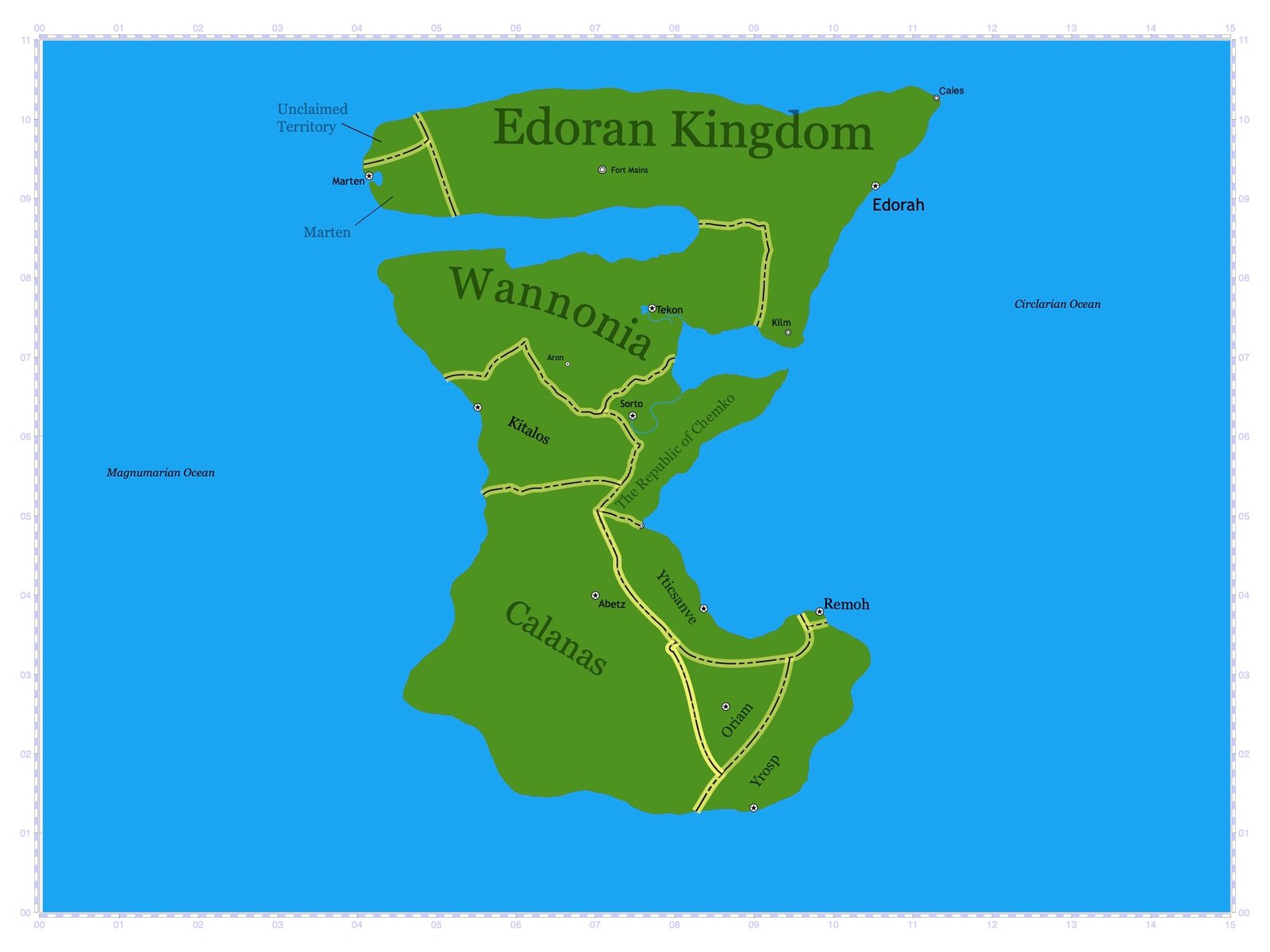
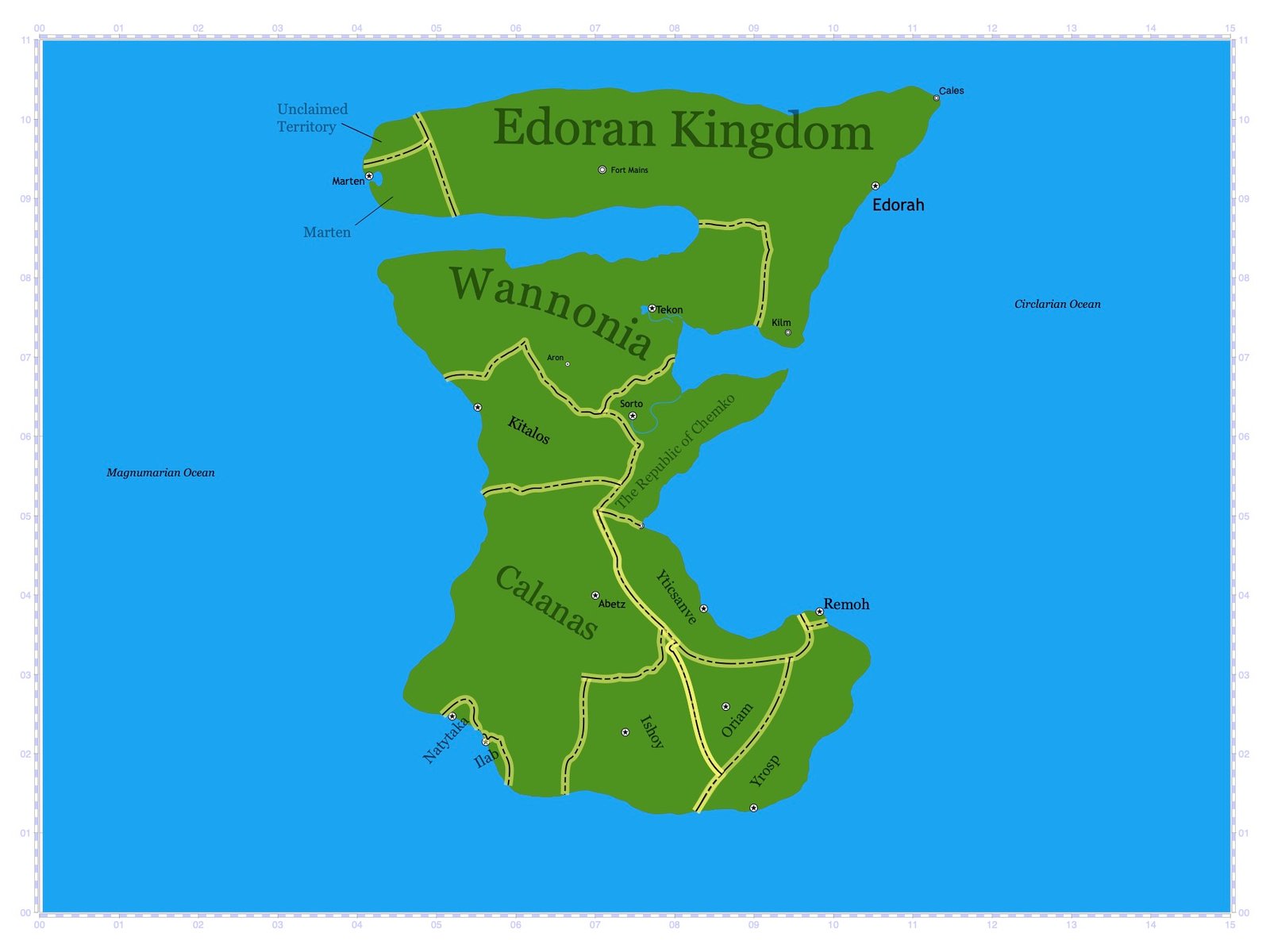
Throughout most of the 250s and 260s, Wannonian Legion divisions were stationed in reserve throughout the Southern Remikran region to regulate affairs abroad in adherence to the peace treaties. In March 267, though, Empress Alexia I died and was succeeded by Alexia II; and Alexia II was driven out by usurpers, led by a figure named Ramon, who promptly declared himself Emperor. Emperor Ramon withdrew the Wannonian Legion divisions from the lands abroad...Read More
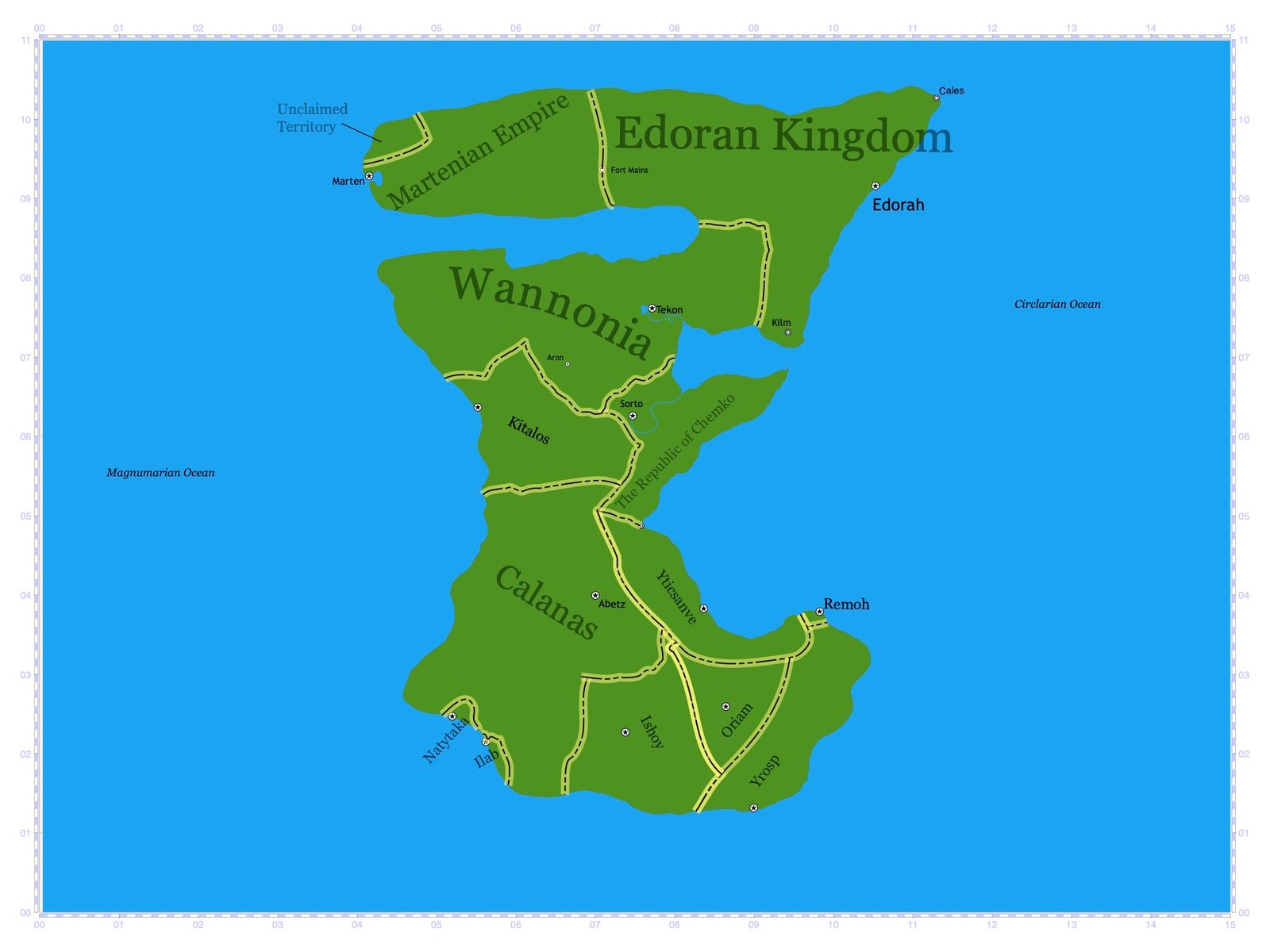
302
Over the next century and a half, the Martenian Throne was handed from King to King in relative peace. King Fredon ruled until his death in May 156, when the Throne was handed to his son, Fredon II, who ruled until his death in September 196. In that month, the Throne was handed to his grand-nephew, Stanley I, who ruled until his death in April 261, after which the Throne went to Stanley II...Read More
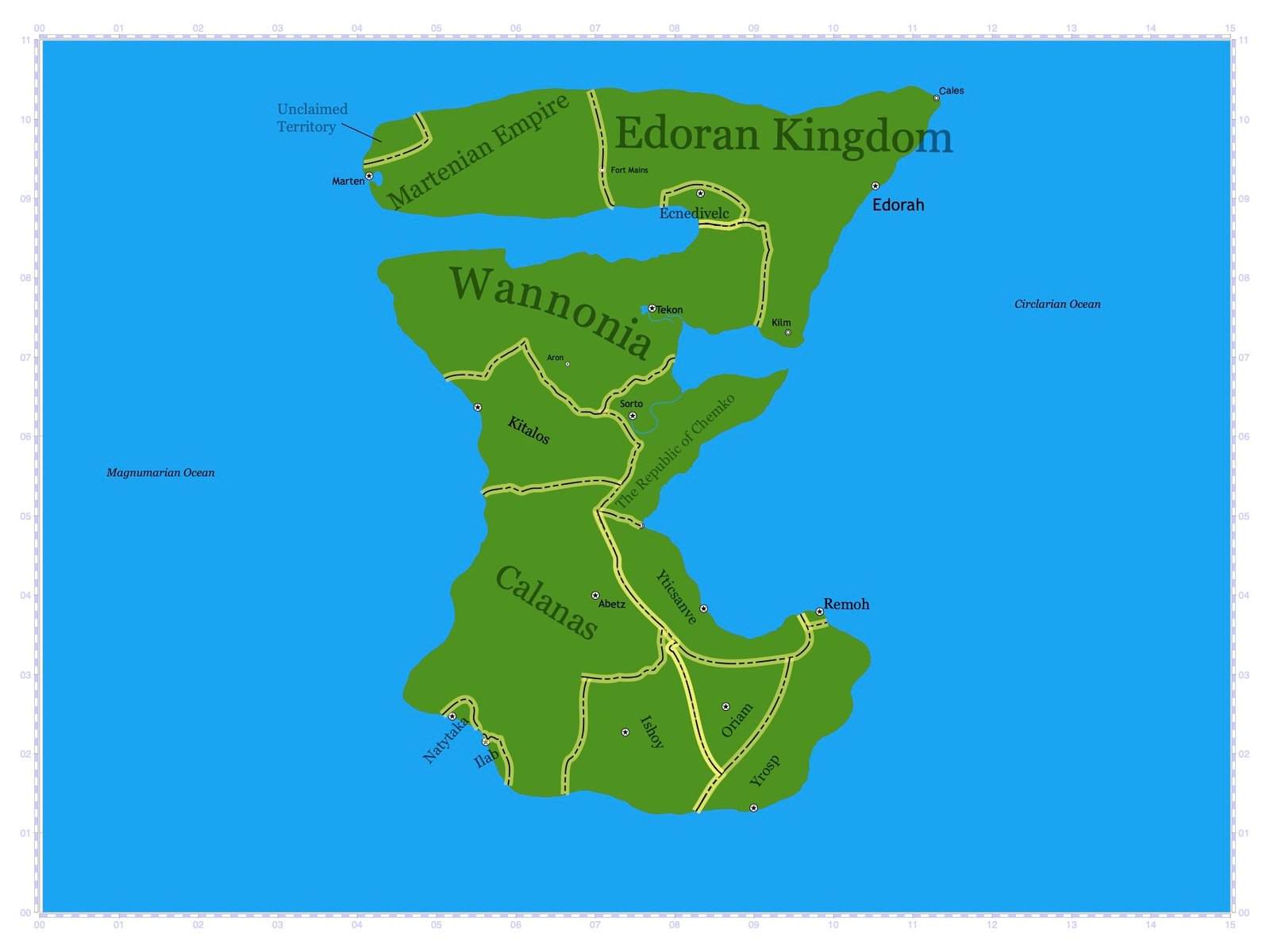
308
From 103 to 133, King Richard II ruled over the Edoran Kingdom. He was then succeeded by King Richard III, who ruled until 169, King Richard IV, who ruled until 201, Queen Rebecca I, who ruled until 247, and Queen Rebecca II, who ruled until 289. Queen Rebecca II was succeeded by King Paul I...Read More
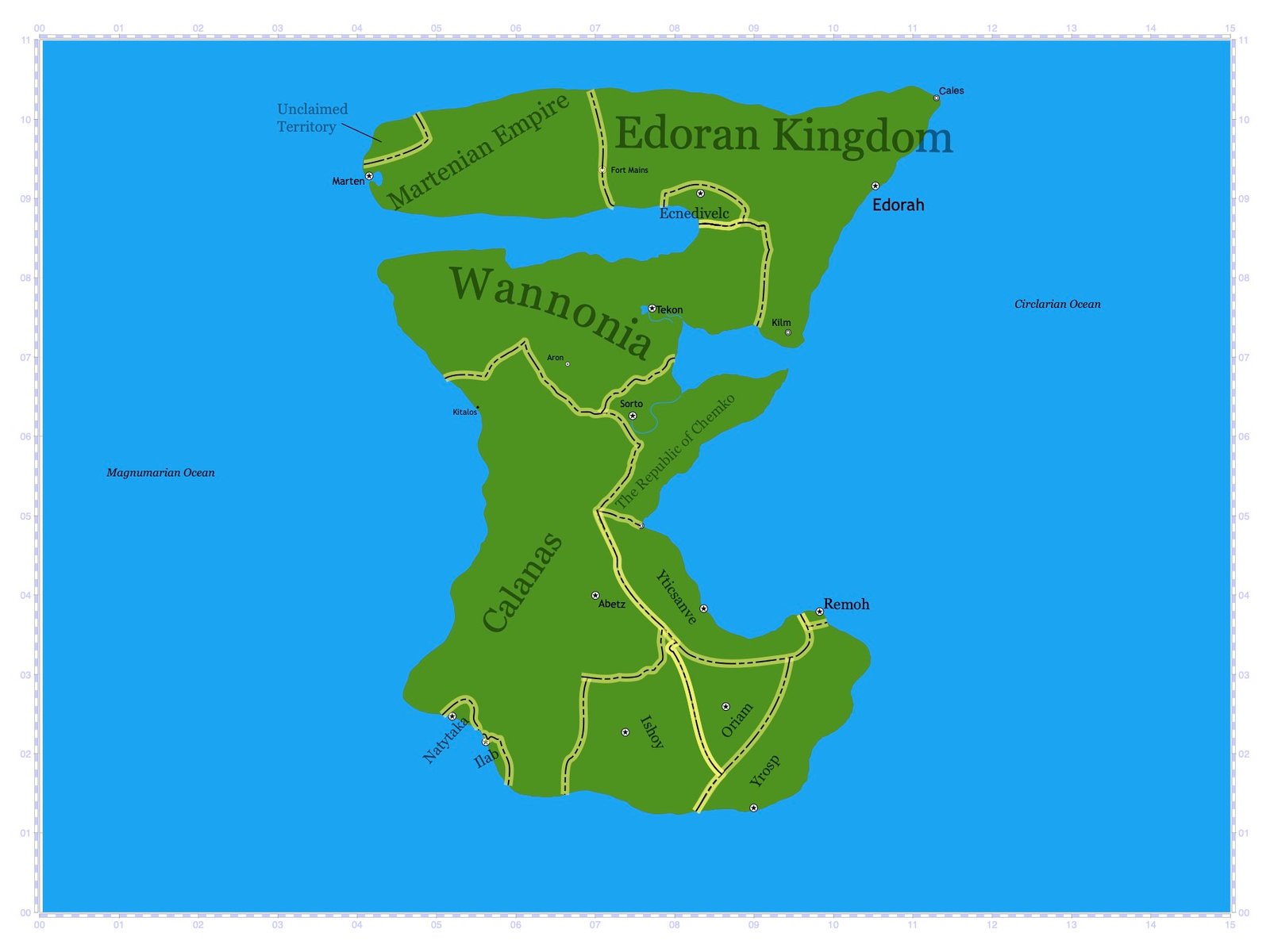
312
Queen Hanna I ruled the Kingdom of Kitalos from 137 to 171, succeeded by Queen Hanna II, who ruled until the year 200. It is unclear whether or not the Hanna line, related to the Quesonas in Calanas, were of blood relation to the Kistani family. What is known, however, was that in 200, after the death of Queen Hanna II, came the peaceful succession of King Tomon I, who was of the Kistani royal family. Ruling from 200 to 212, Tomon I was succeeded by Tomon II, who ruled until 249...Read More
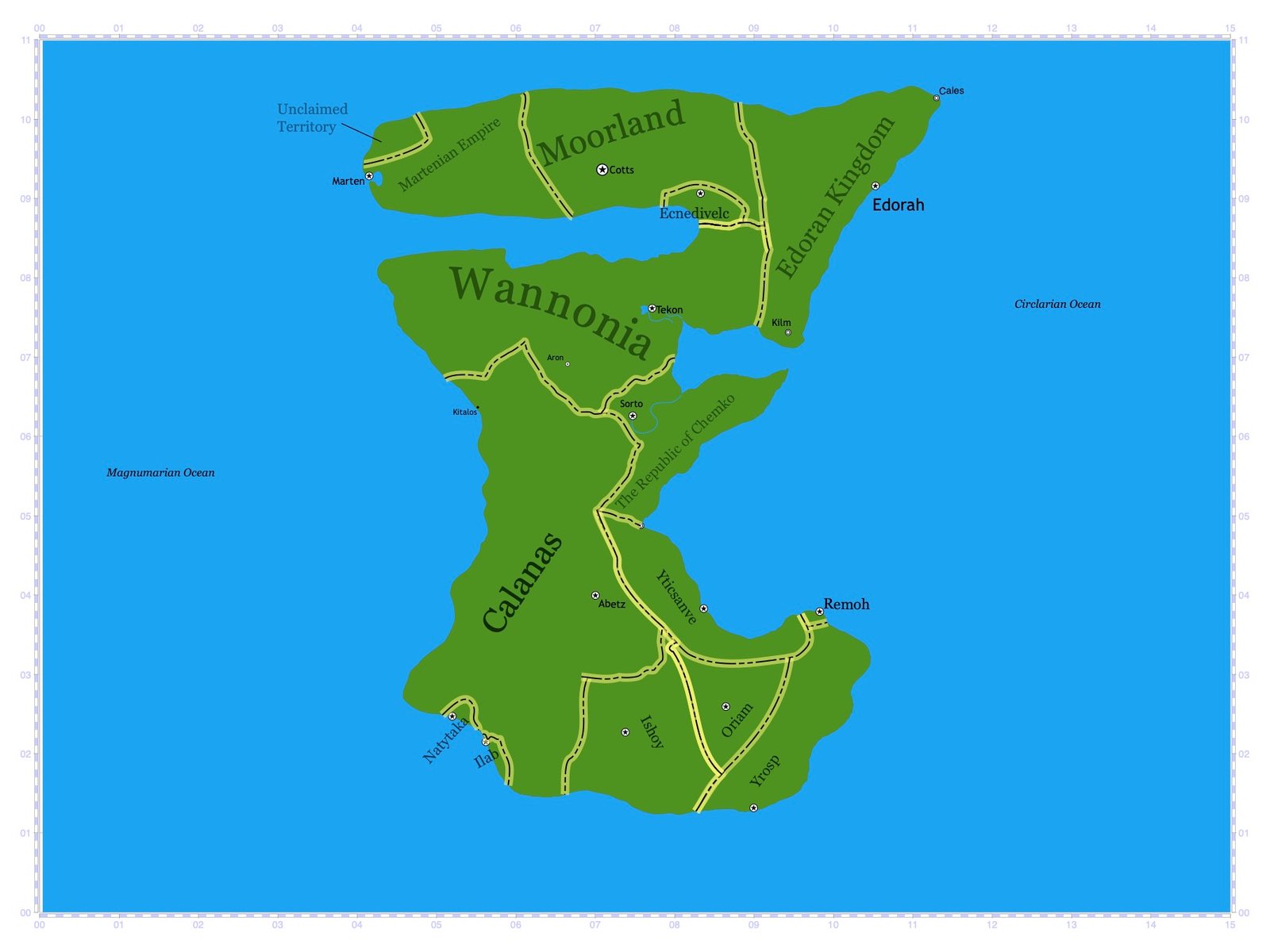
317
Between 308 and 309, as the Kingdom of Ecnedivelc formed while Edoran forces withdrew from Fort Mains, escapees from the tyranny of King Ecnediven joined the ranks of Temor's increasing army. Such an army served, initially, to defend the Fort, as less and less casualties were inflicted upon the Moorlanders and more were inflicted upon the Edorans. Eventually, the Edorans withdrew completely from the front; and, on 4 March 309, Temor crowned himself King of the Moorlanders...Read More
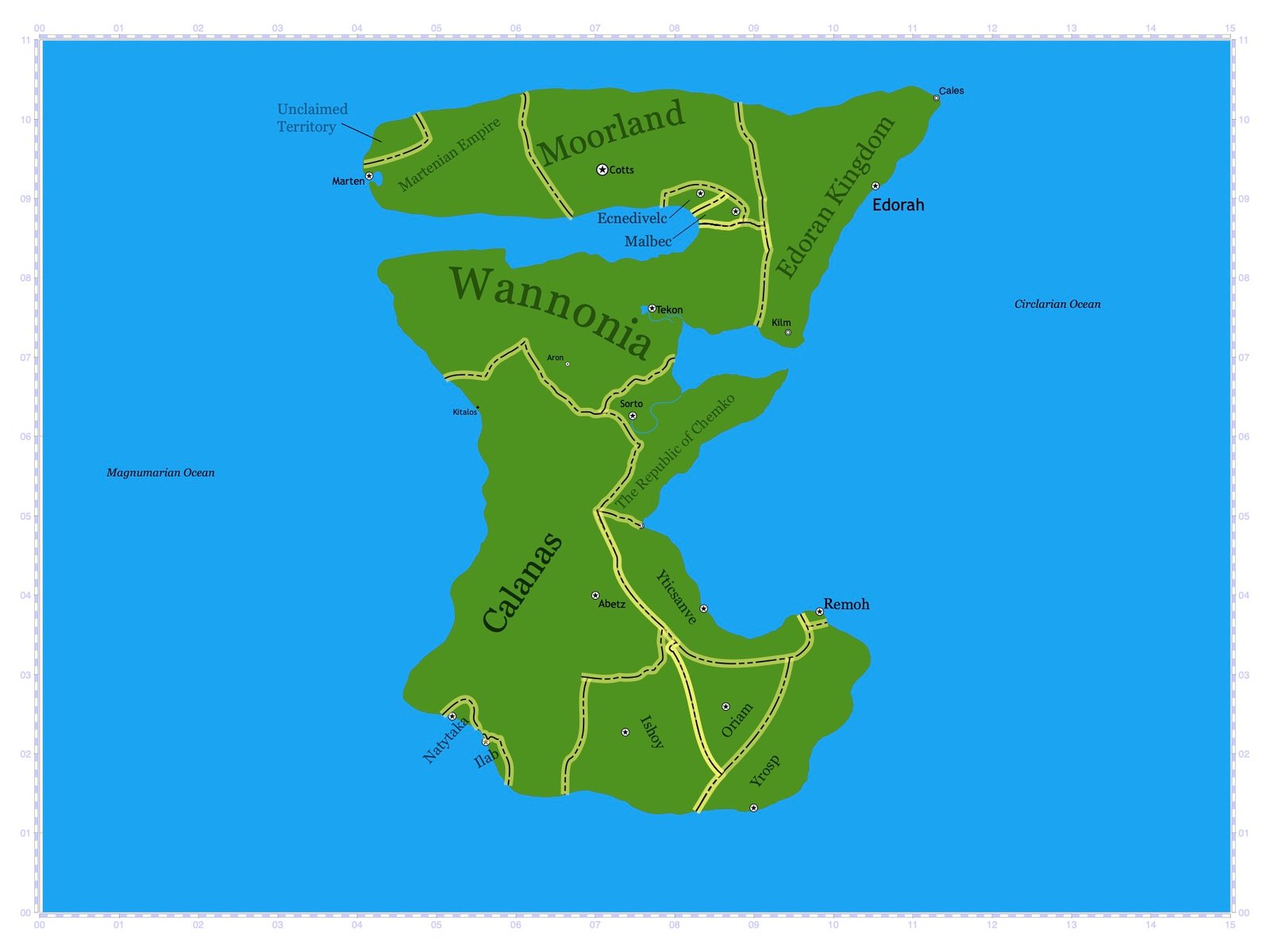
323
The Kingdom of Moorland covered mostly flat plains as well as coastline in the South and in the North. The vegetation was mostly grasslands while the climate alternated between mild summers and frigid winters. People of the Moorlander and Moorlander-Khap ethnicities comprised of most of the population while the Moorlander Vernacular and West Aerdn languages dominated written and spoken communication. King Temor was initially raised alongside Edoran norms...Read More
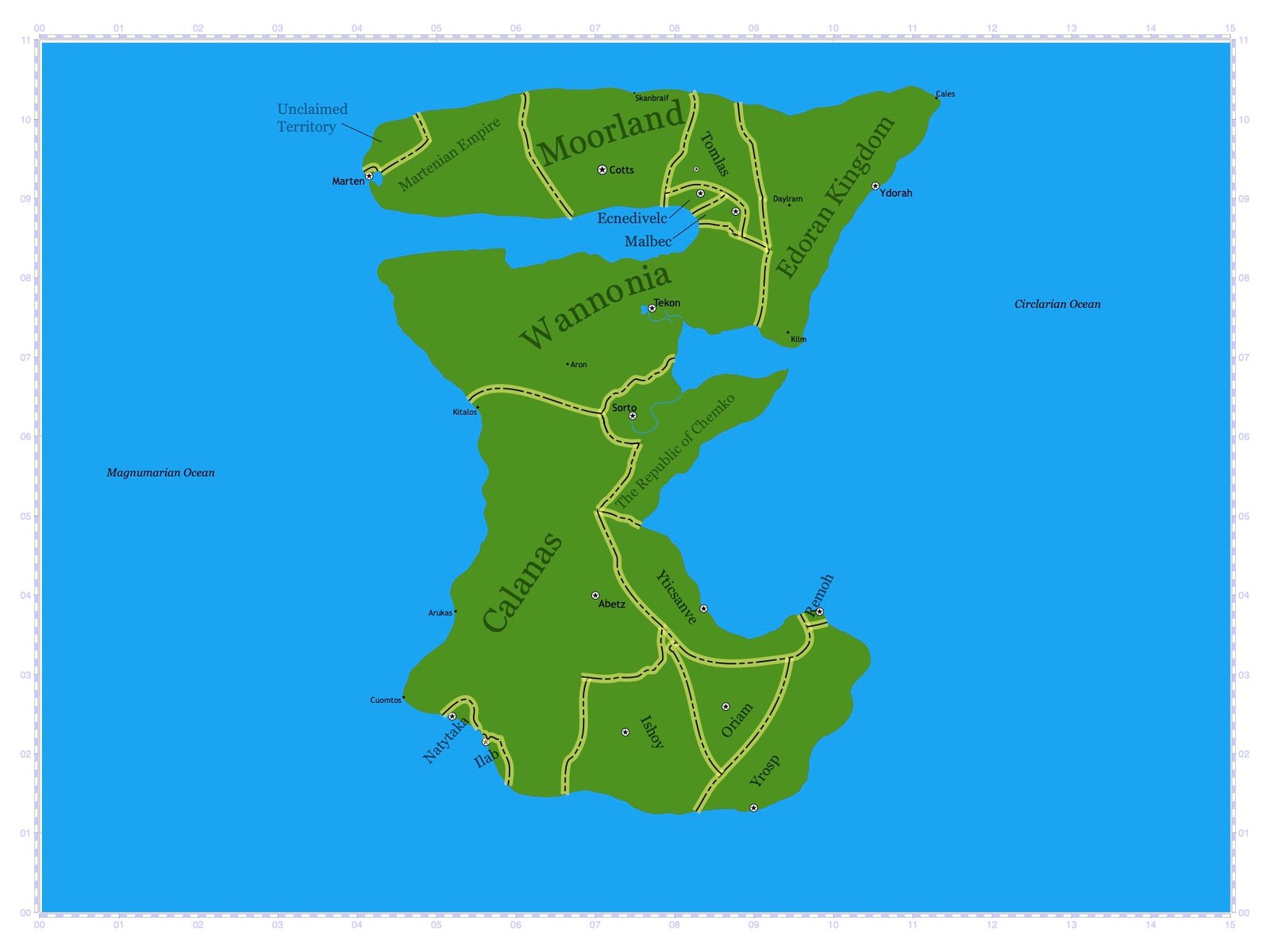
341
During this time, there was still a Fundaesian population. These people, residing in the Correns, hunted deer and gathered berries, as tribes moved around in camps and traded with each other through barter. They became more civilized over the years, however, and utilized more sophisticated methods of spellcrafting. With such skills and movement of goods, Fundaesian merchants occasionally came into Edoran villages to trade; although, they did not adhere to Alconist beliefs...Read More
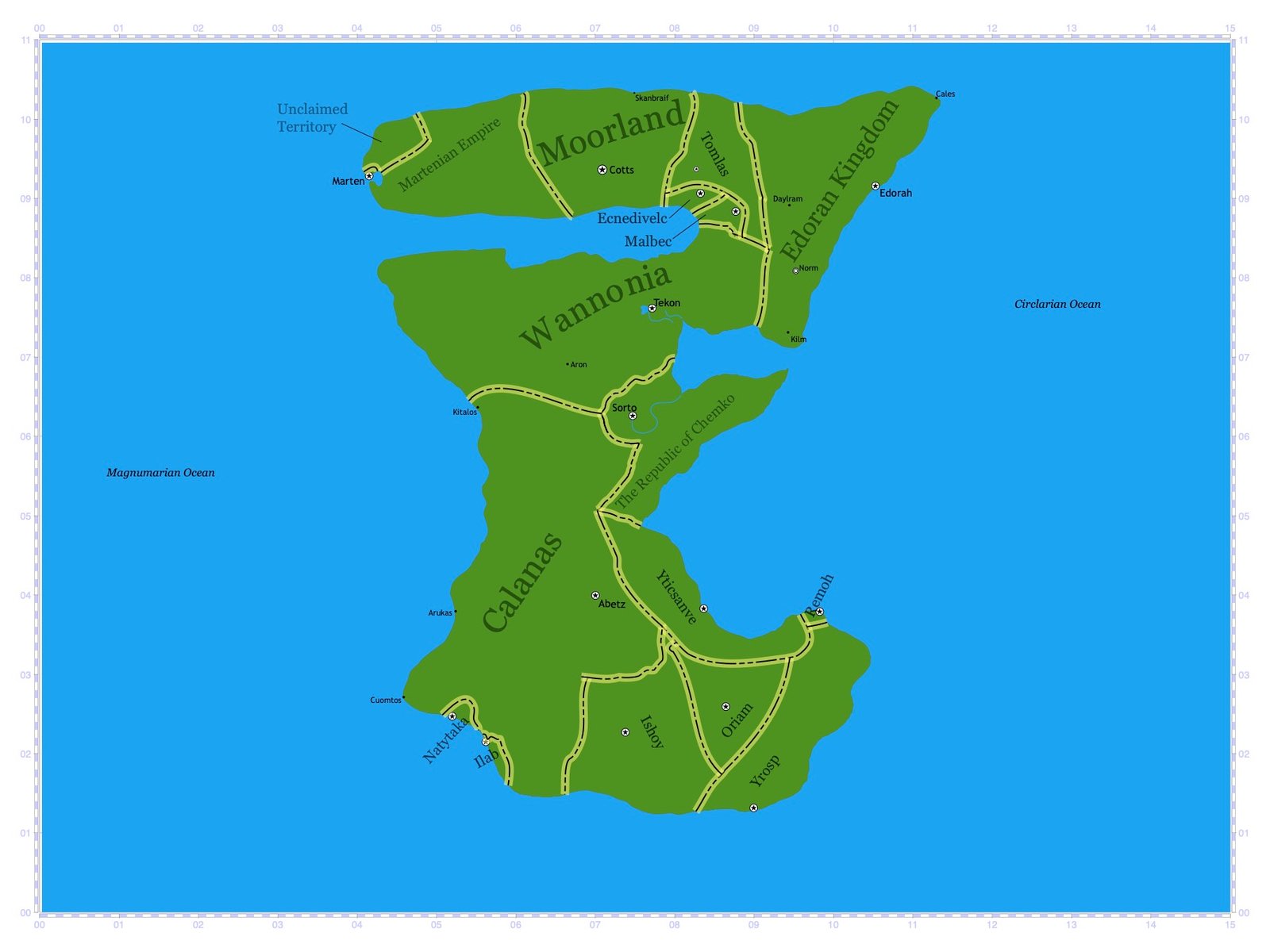
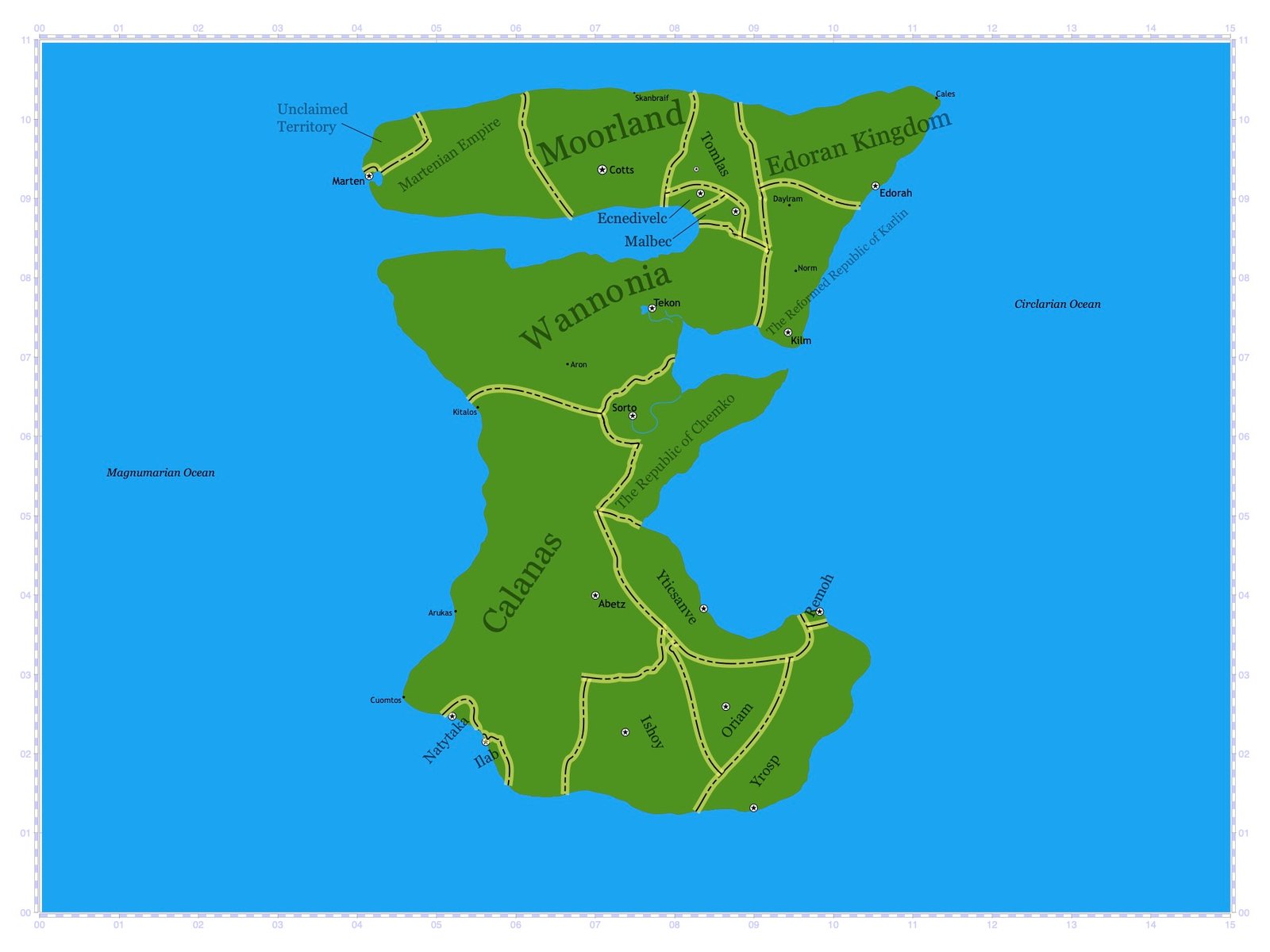
492
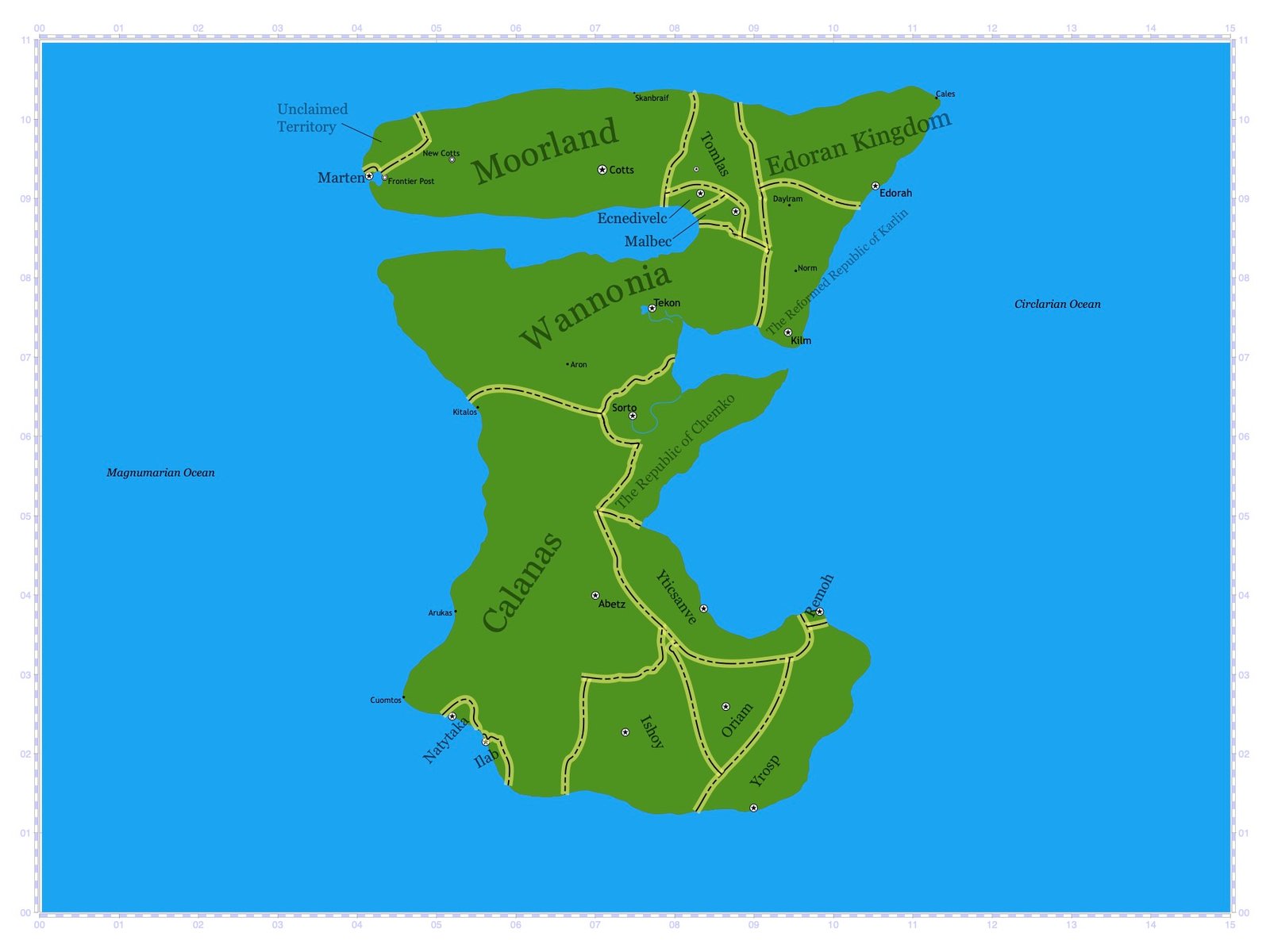
Bisected by the Deepnarrow River, which ran Northwest to Southeast through the city in an S-shape, the center of Kilm, in the fifth century, consisted of a large multi-tiered Palace built over the River, underneath which existed docks to serve passing merchants. South of the River lay the West and South Cantons of the growing city, while the North and East Cantons lay to its North. Medieval Kilm under the Edoran Kingdom was governed mutually by five Lords, each from their respective House in their Canton...Read More
499
For centuries, the inhabitants traded "pine-gold" a material made of brown pine wood. Accordingly, taps were drilled into each brown pine tree to drain the sap, while special file tools ground wood shavings. The sap and shavings were then mixed into pots and cooked over the fire. After that, such a mixture was either poured onto a cool stone surface for crafting of floor or wall decor, or poured into cooling molds to create pottery or statues. The Isle natives, in the end, made gold profit in selling cut trees, while it was the Wannonian guilds who produced the makes...Read More
522
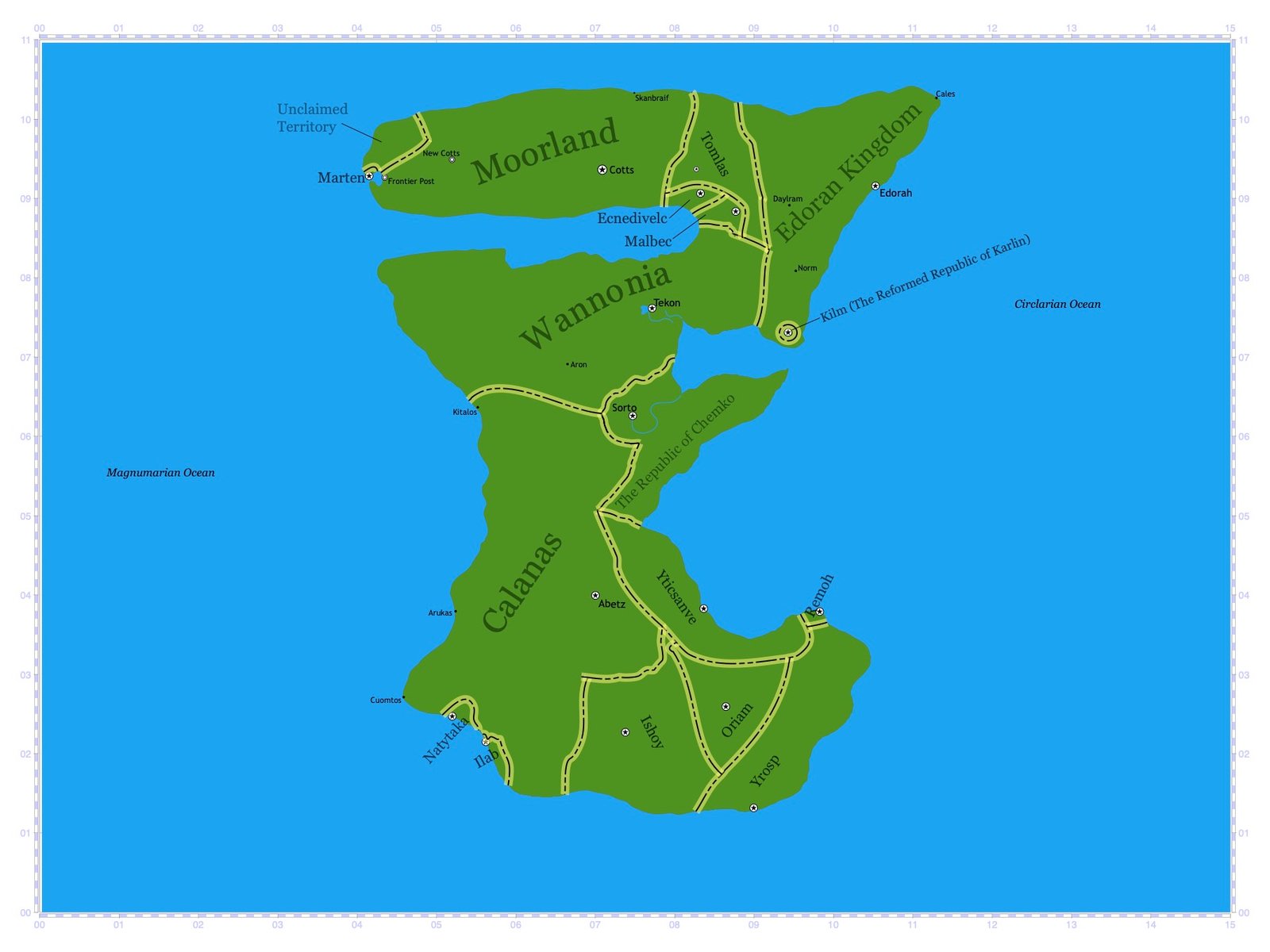
In the Northern regions of this new country lay the Corren Mountains, where there were mostly pines and small patches of grassland. Cool, mild summers alternated with frigid winters. In Combria, the Combrian Mountains did not reach such great heights. And pines mixed more commonly with deciduous trees, as milder summers and winters dominated the climate. South of the St. Eschel River, mountains turned into rolling hills, as there were deciduous trees and evermore grasslands. The summers here were warmer; and so were the winters...Read More
532
In September 523, Edoran forces surrounding the city of Kilm began launching eagle-riders who dropped spellfire bombs upon Karlinian grain crops, putting their food source in jeopardy. In response, Timan Yates decided to send a message to the Emperor of Wannonia for help, utilizing four secret recruits: Edmund Wellings, Peter Lyte, and Marstan Tegor, who were messengers, and one spellcrafter, Merryl Nors. In equal shares to each of these four, Yates promised land and ten gold pieces for their success...Read More
533
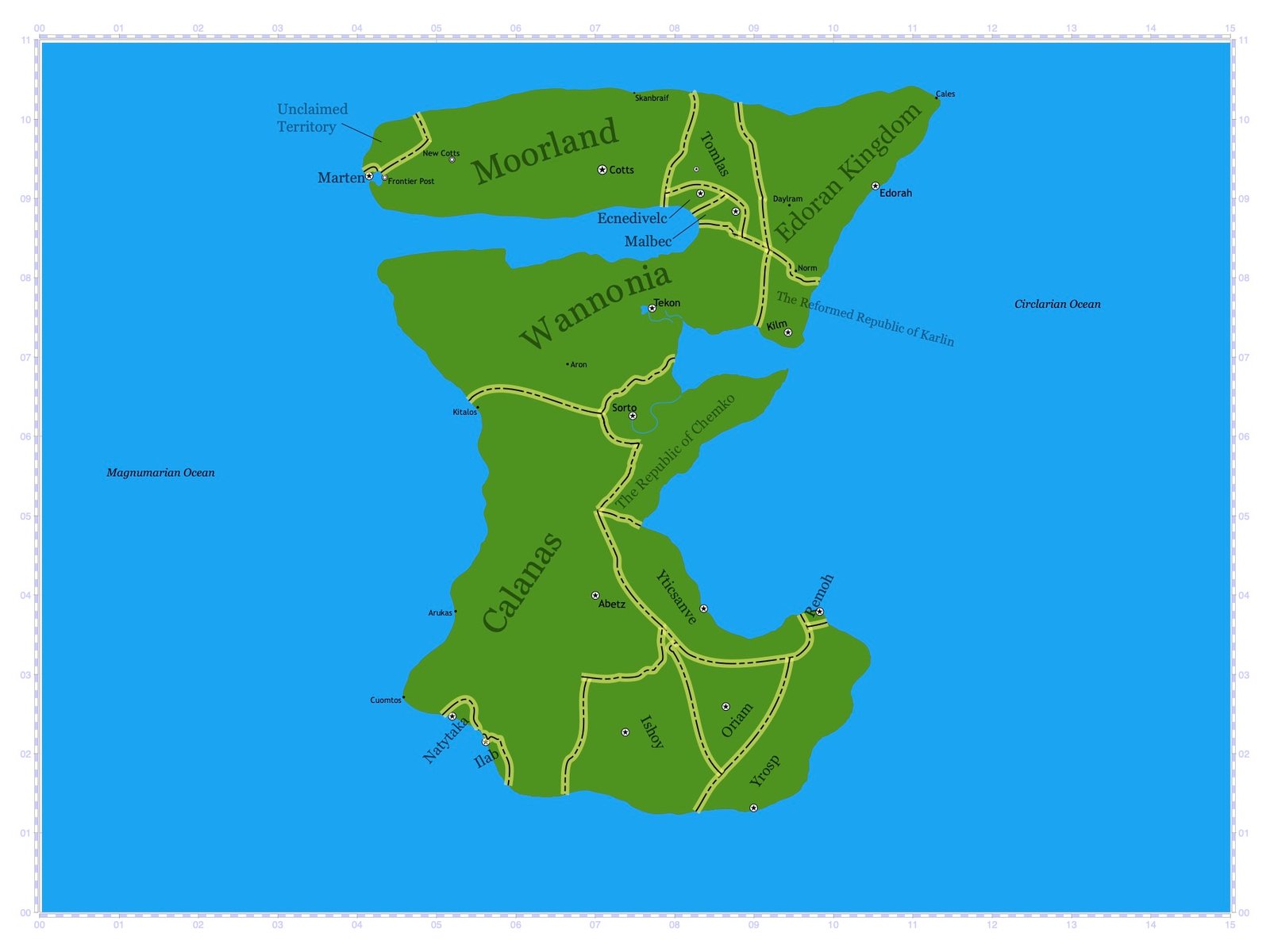
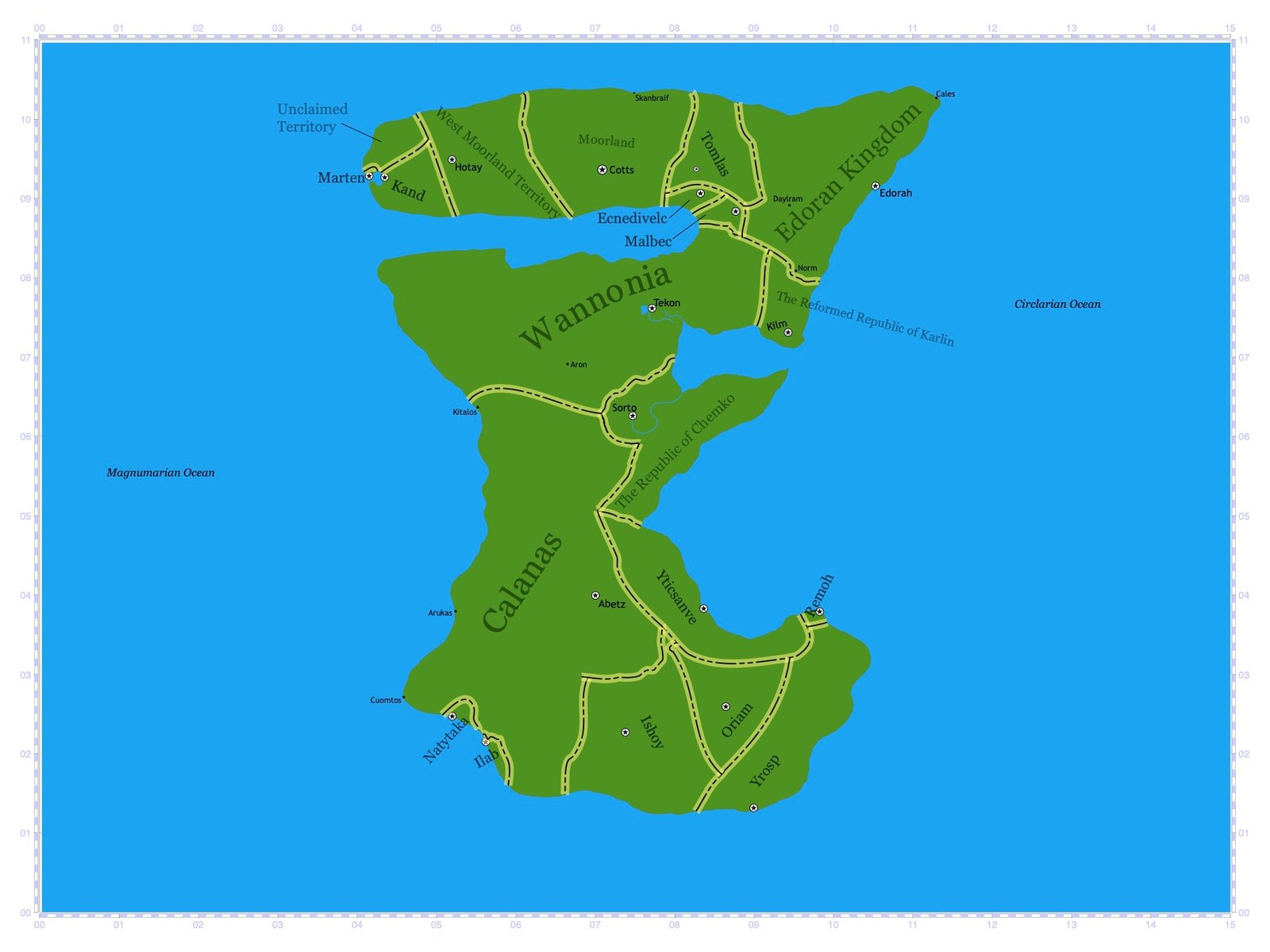
In December 499, Fotoram, King of Moorland since 478, signed a treaty with Martenian Emperor Petrician, establishing peace between the two countries. To reinforce the terms of such, King Fotoram established New Cotts, a fortress-city in the West, to counter enemy attacks, as well as an unnamed frontier settlement on the West Coast for agents spying on Marten. It was during the first decade of the sixth century that Moorland became more of a firmly established civilization, as Cotts and New Cotts became centers of trade...Read More
535
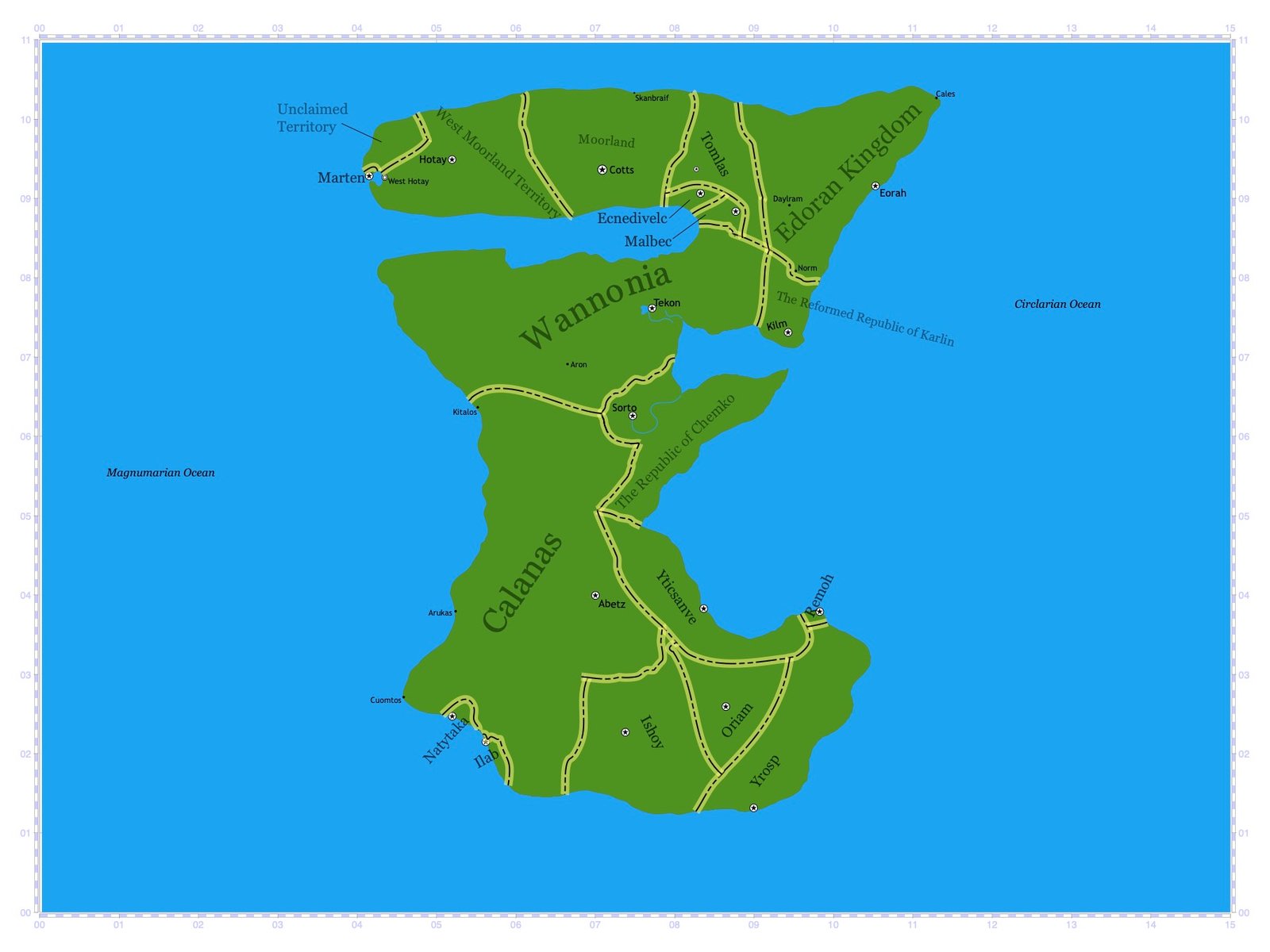
The two sisters, Hotay and Kanda, were born to a family working for the Moorlandish guilds. The mother drove a cart transporting metallic resources, while their father crafted such metals into sharp edges, to be made into blades. Early on, the sisters were taught the Alconist faith and were made to do petty chores around the palace of Estemor, the owner of the Fighters' Guild. Later on, they were expected to work in the grain fields until reaching adulthood, then taking on the same occupations as their parents, or what would be determined by the guild leadership...Read More
536
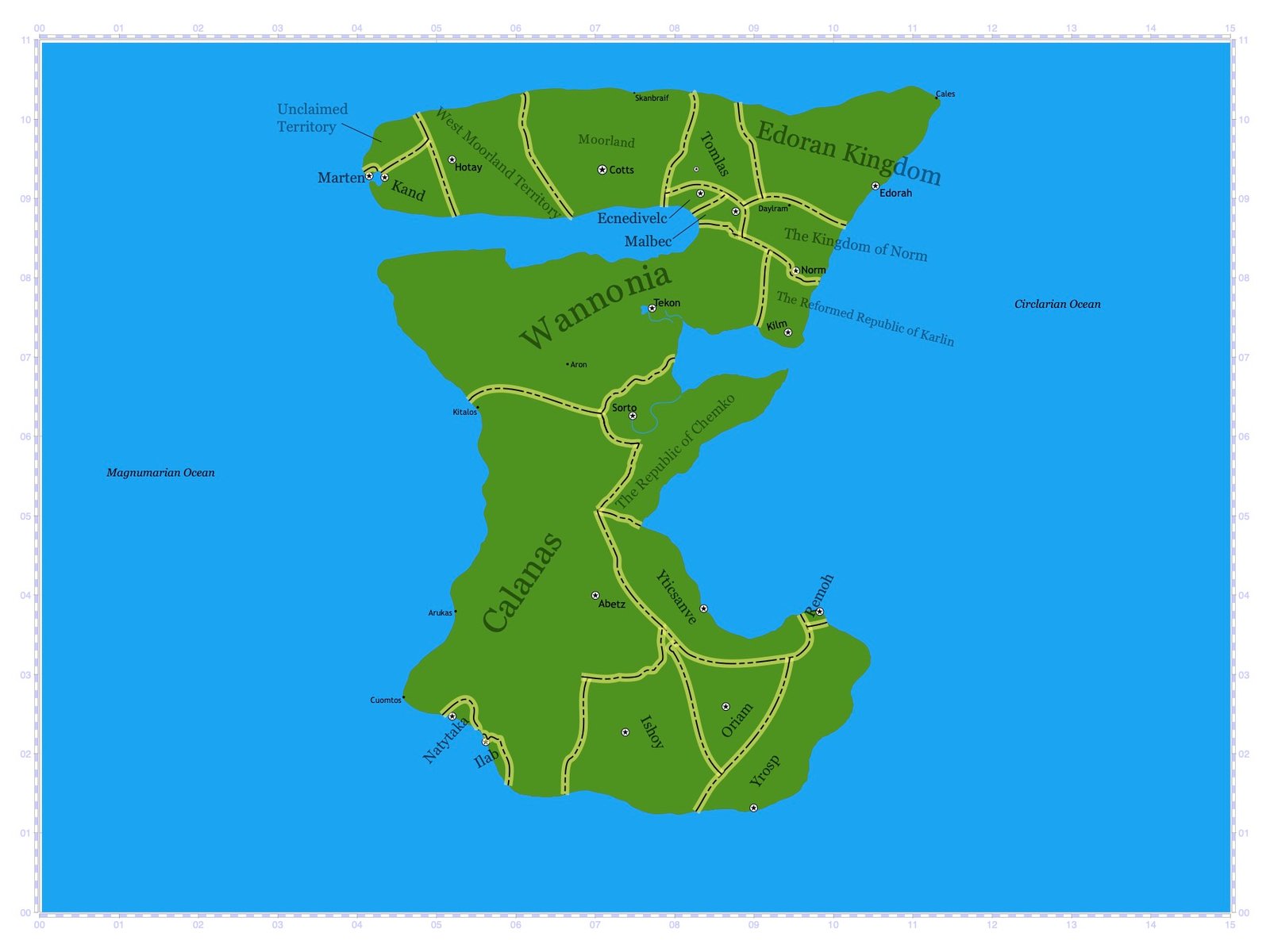
In 534, a Great Schism emerged in the Early Edoran Church, as bands of clerics and ordinary people gathered, expressing grievances, including the selling of blessings and prayers, politics and bureaucracy within the ranks of clergy, and corruption and scandals not being addressed. The leader of this movement, Father James Smith, gathered a petition and presented it to the Clergy. When this was ignored, Father James led a peaceful rebellion, which was dispersed by the King and the Edoran Church authority...Read More
667
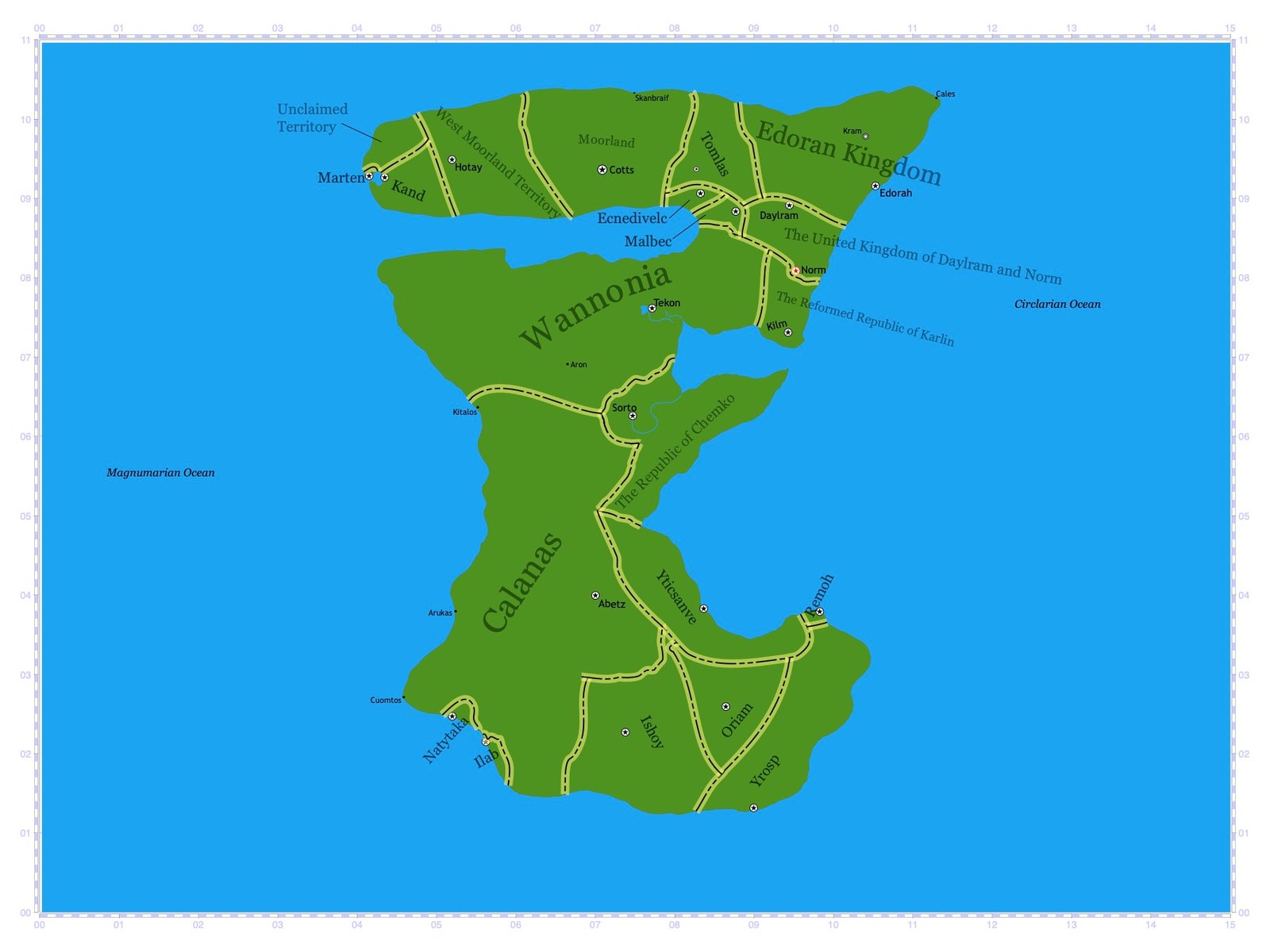
Under the Church of Norm, there was no clerical class or money paid for prayers and blessings; all liturgy and scripture was translated to Edoran from Karlinian Aerdn; and "illegal spellcrafting" was condemned as witchcraft, although those indirectly involved received an opportunity for redemption. Any Norman could join the Clergy, as, in fact, every Norman was encouraged to do so; those voted in became preachers and leaders; church services were held once per week: on Sundays; and money was collected only from those who donated voluntarily...Read More
703
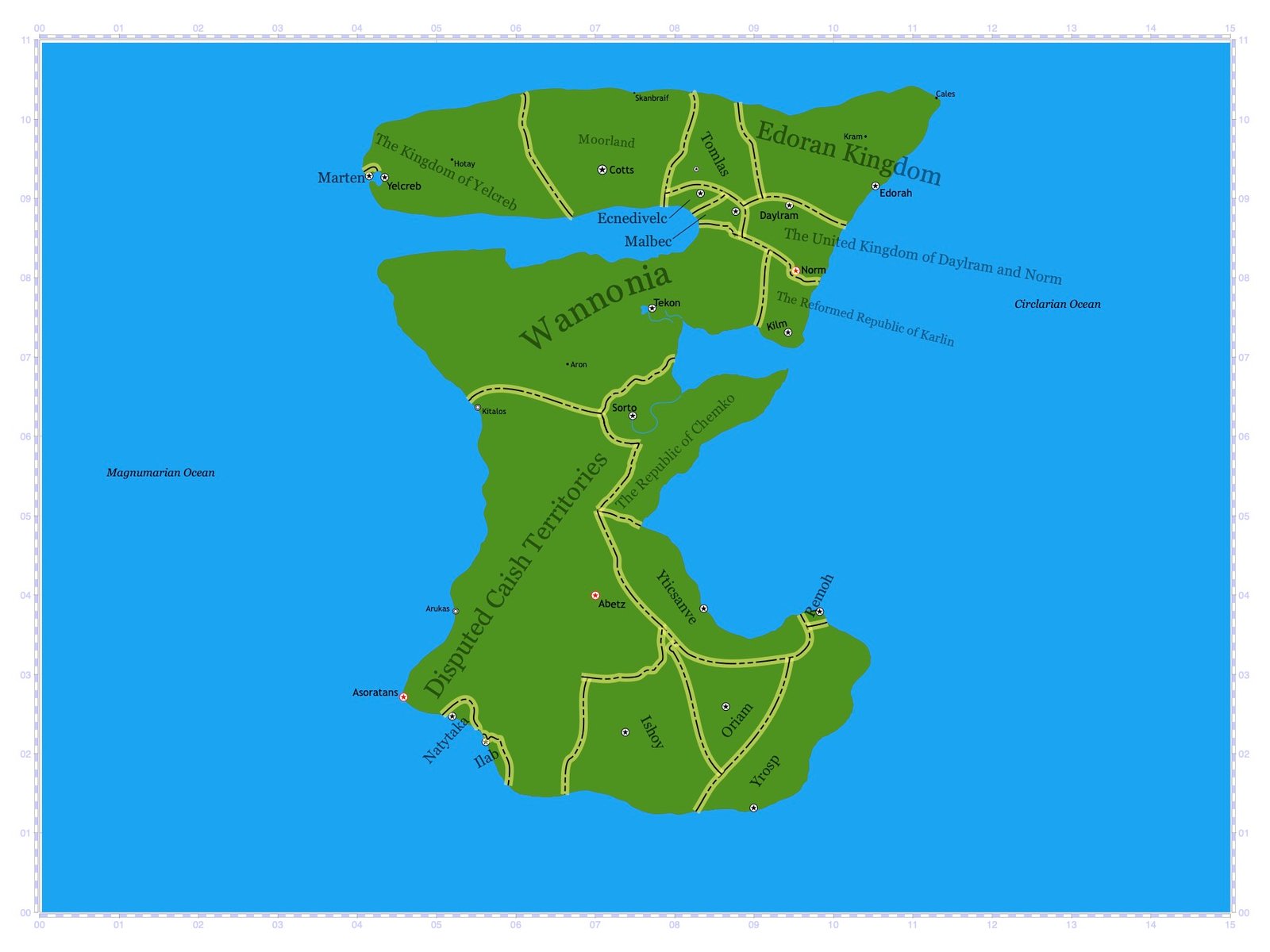
Early on, Wannonian courts ruled that the Wannonian government could not require people to join trade guilds. As a result, Wannonian guild owners traveled to the Calanasian capital of Abetz, where they promised large sums of money to Quesona XIII, the incumbent Queen, if she would pass laws forcing Calanasians to join. At the time, Plague resulted in a lack of workers to work the crop fields in Calanas. In 672, the remaining workers rose up against the owners, demanding higher payment...Read More
714
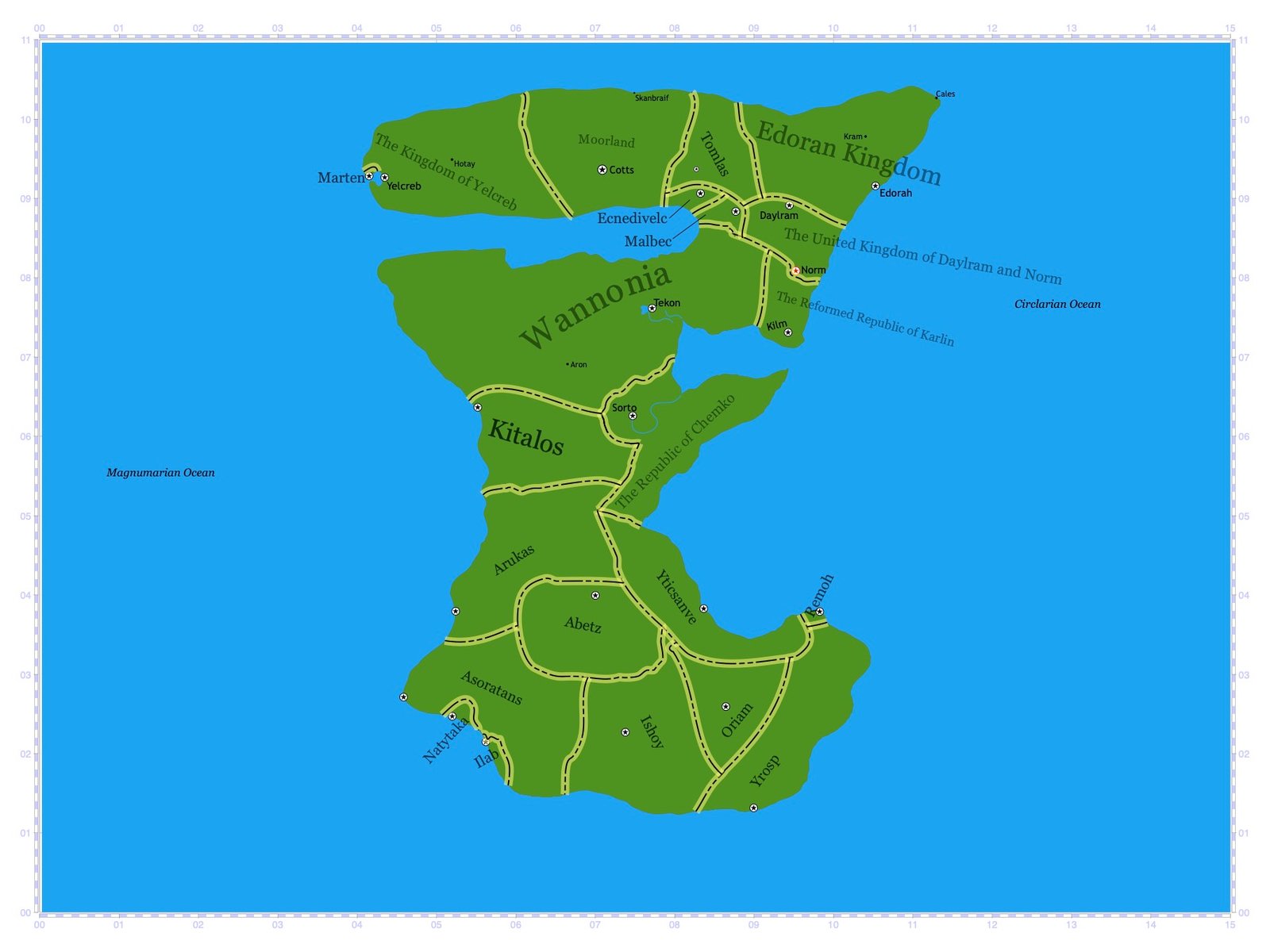
Such a gridlock came to an end when Queen Mestana recruited an even larger army of archers, blade-wielders, and spellcrafters. One of the archers, acting as a sniper in June 705, assassinated Tolomae. This triggered a controversy in the upcoming election, as the Council was split evenly between Mestana supporters and Tolomae supporters, and Tolomae was set to gain the majority vote. In the wake of Tolomae's death, Mestana-sympathizers betrayed the remainder of Council and joined Mestana's army...Read More
775
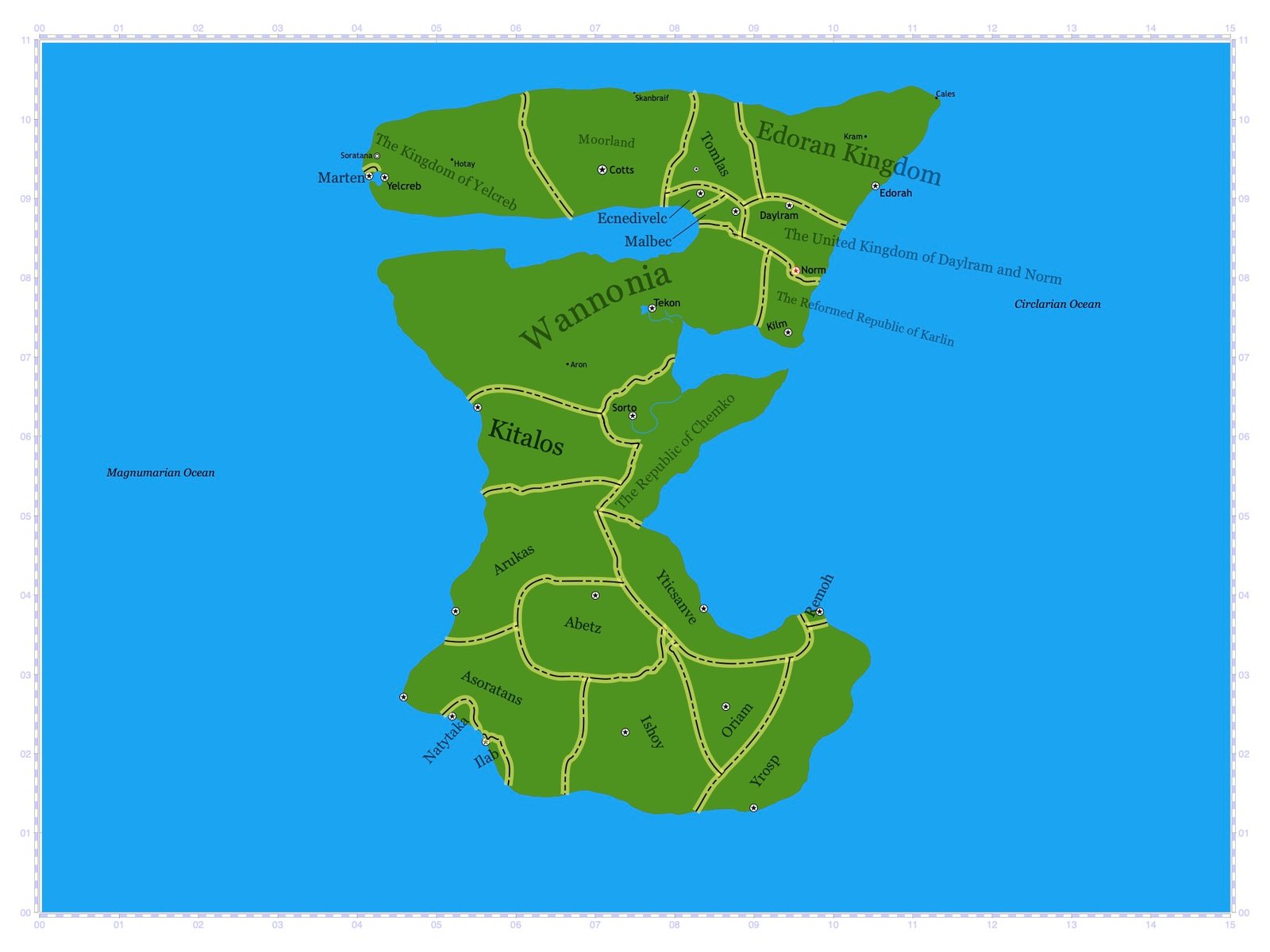
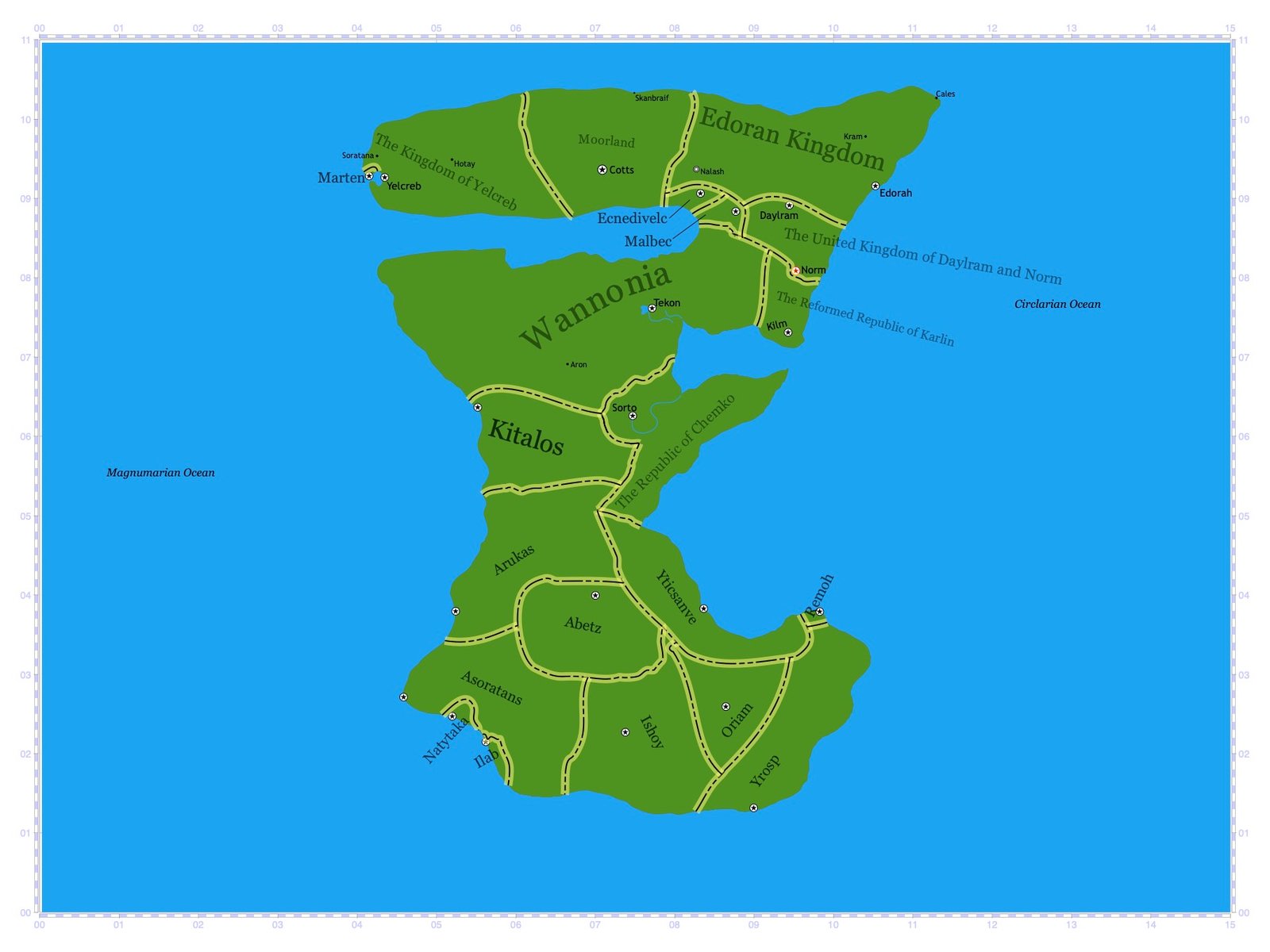
As the 700s continued, the Edoran economy grew. Trade with the sea guilds increased tremendously along the coastlines, while land merchants traded with the Kingdom of Daylram and Norm, as well as Wannonia, Tomlas, and even Ecnedivelc and Malbec. The Crown slowly but steadily increased taxes on goods as the Edoran Kingdom continued to prosper...Read More
777
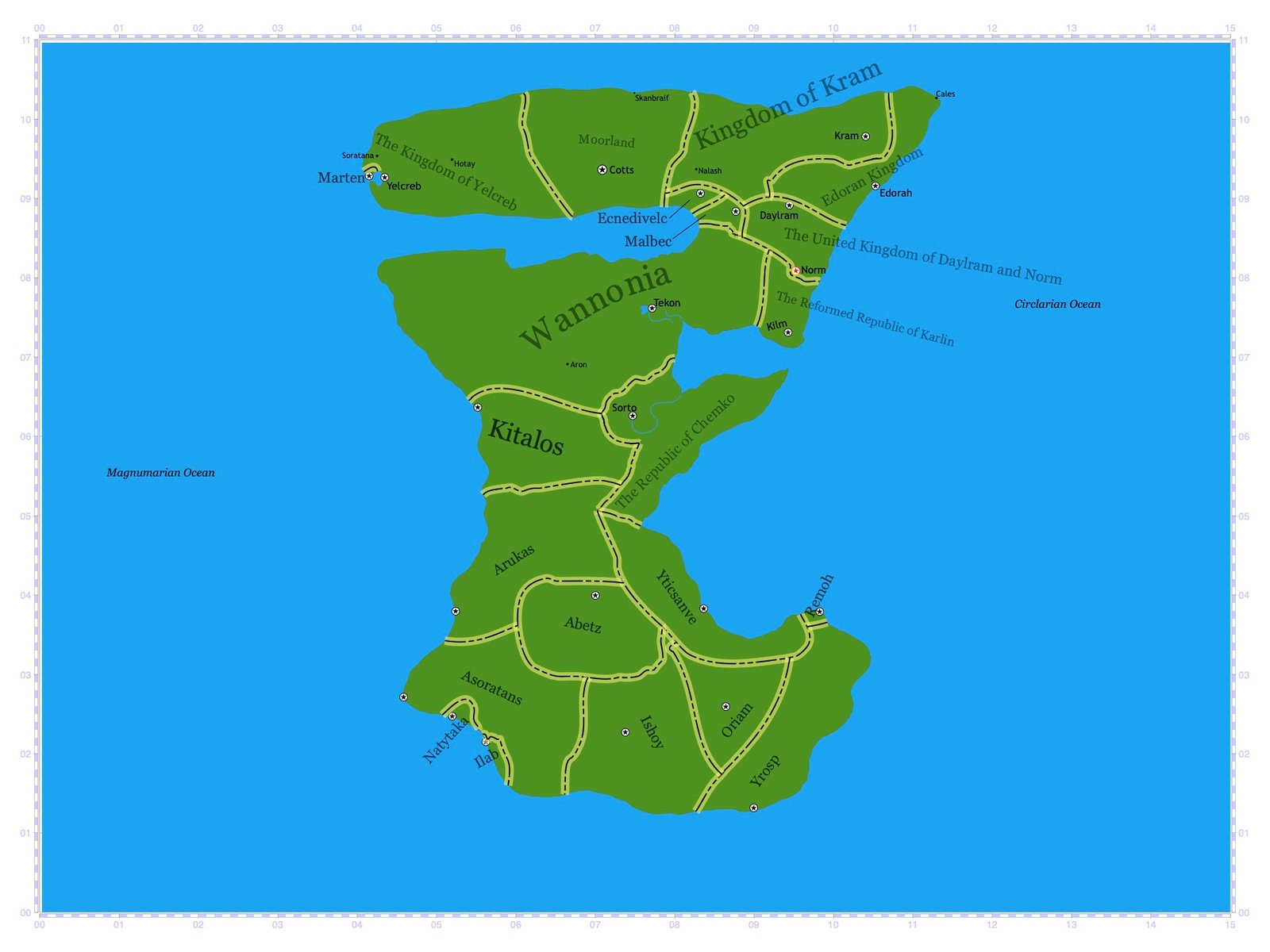
With the defeat of the Tomlassans in September 771, Edoran settlers began moving in, as the region was ruled by Sir Peter Brewer, the Governor of Kram. The population here consisted mostly of farmers, who were unhappy with the Edoran Crown over high taxes and lack of representation. Two separate petitions, in the years 772 and 773 respectively, were filed by the farmers, demanding more rights. However, both of them were ignored; and soon, protests and resistance emerged in the region...Read More
859
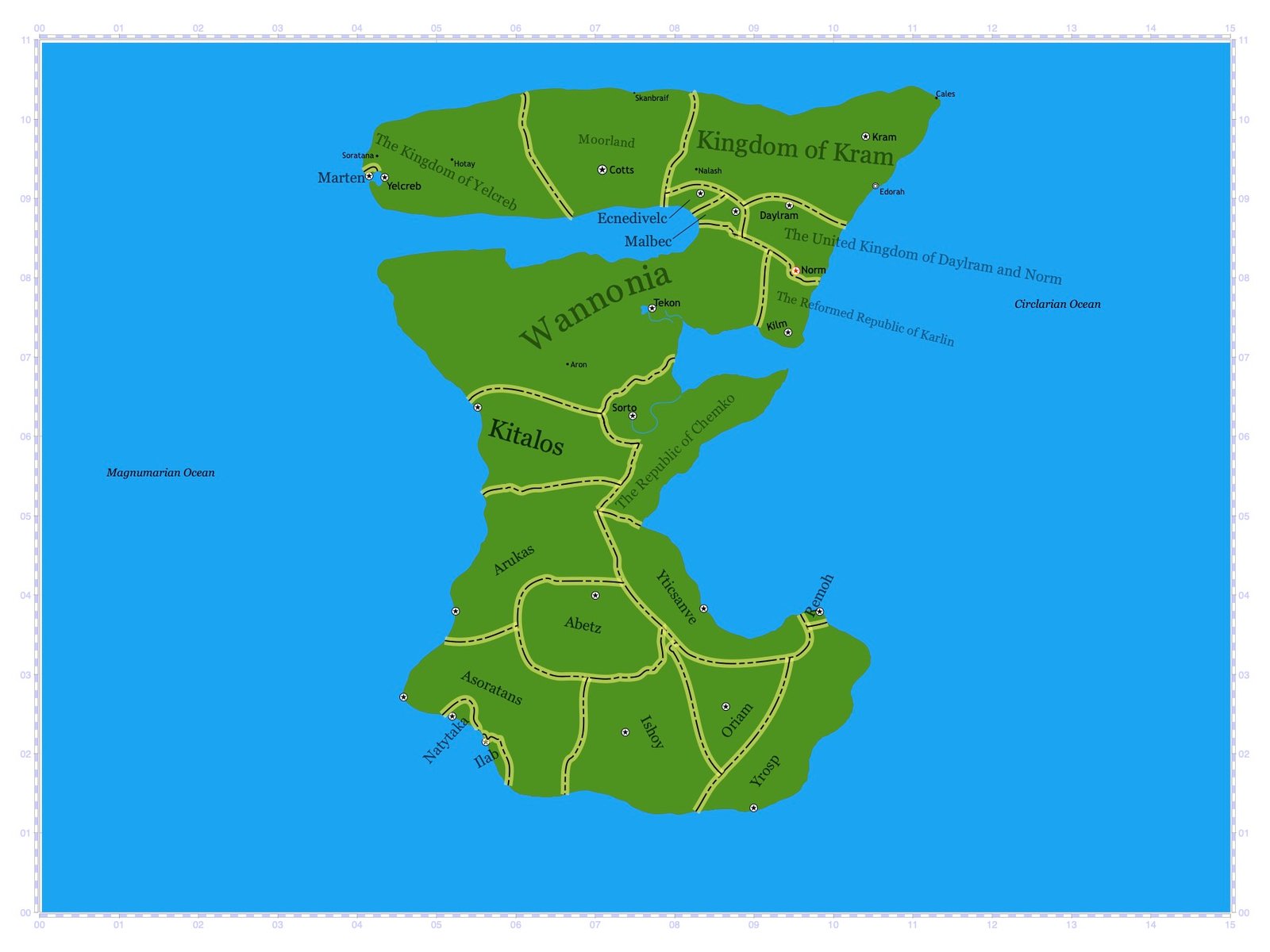
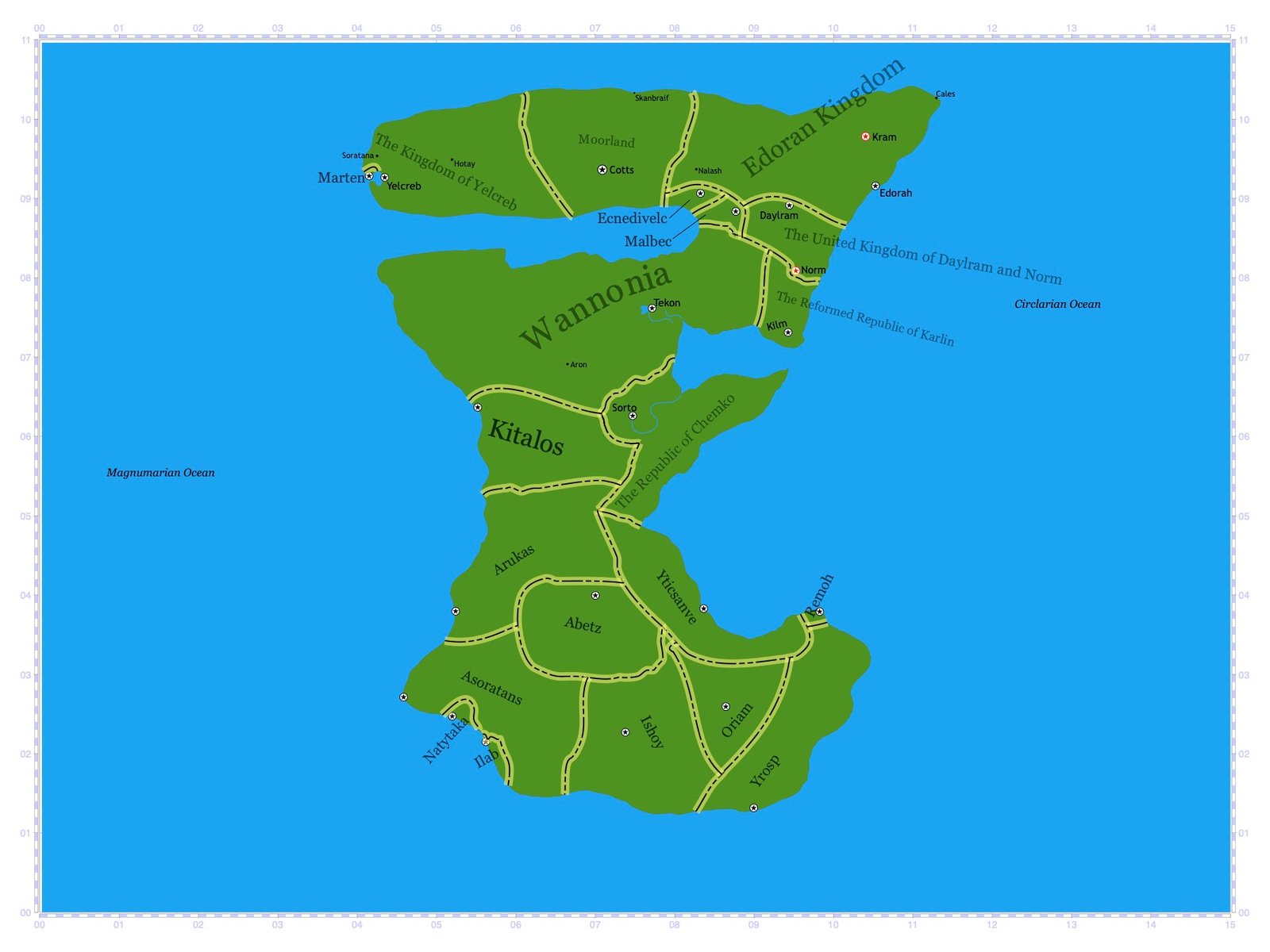
After the toppling of the last of the Edorans, King Paul I emancipated all guilds from any affiliation with the Crown, allowing them to function independently but only to pay taxes. This resulted in the emergence of a middle class, and the expansion of sea trade. Guild members and their families began traveling abroad...Read More
894
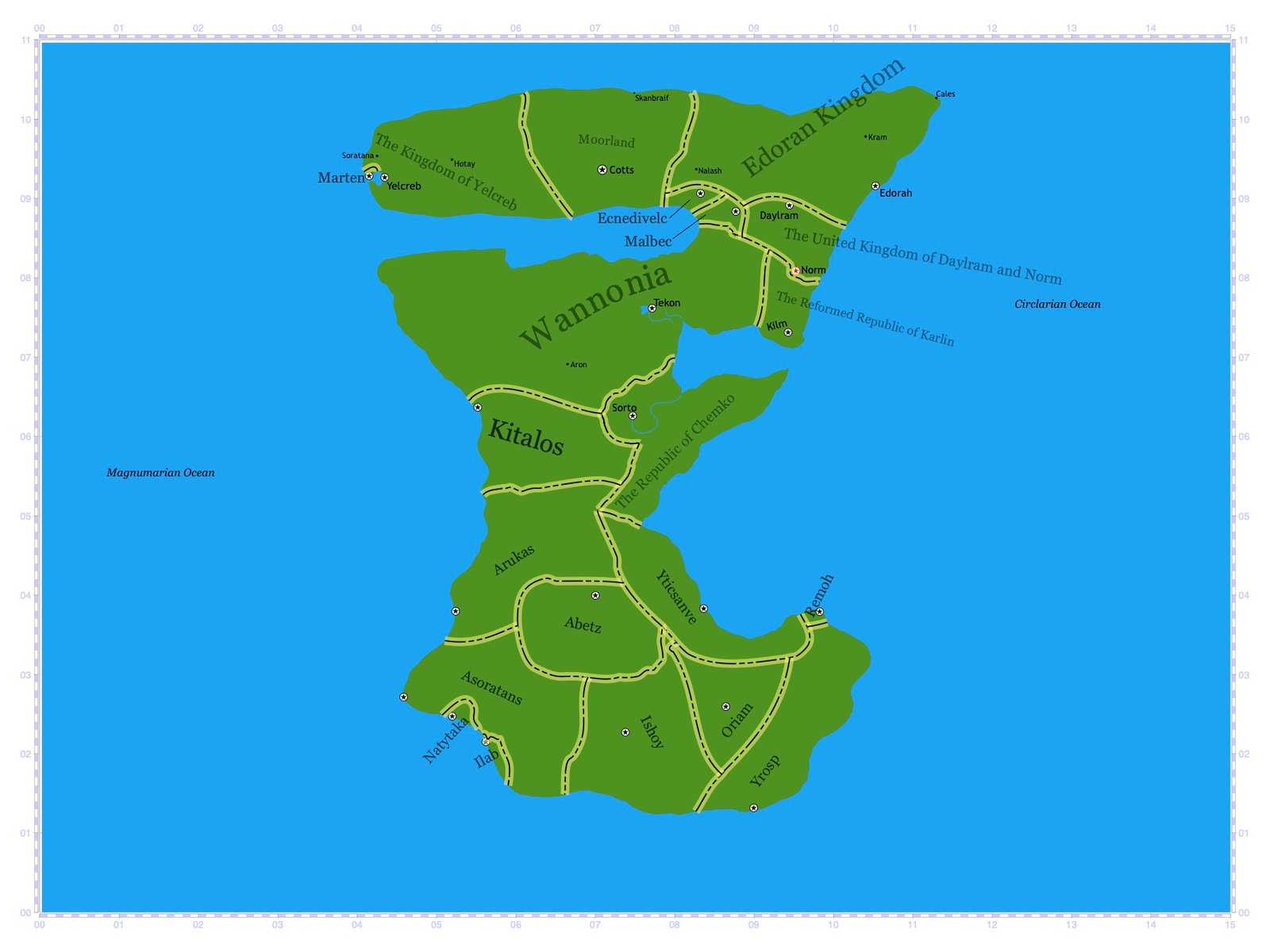
Every six years, during the second week in the month of May, Edoran Parliament would have seat elections. Each seat was either a Lord or a representative from a particular county, with the former assuming a more leader-like position. Every term, the new Parliament would vote in a Majority Leader. Until 894, Parliament was situated in the city of Kram...Read More
946 to 952
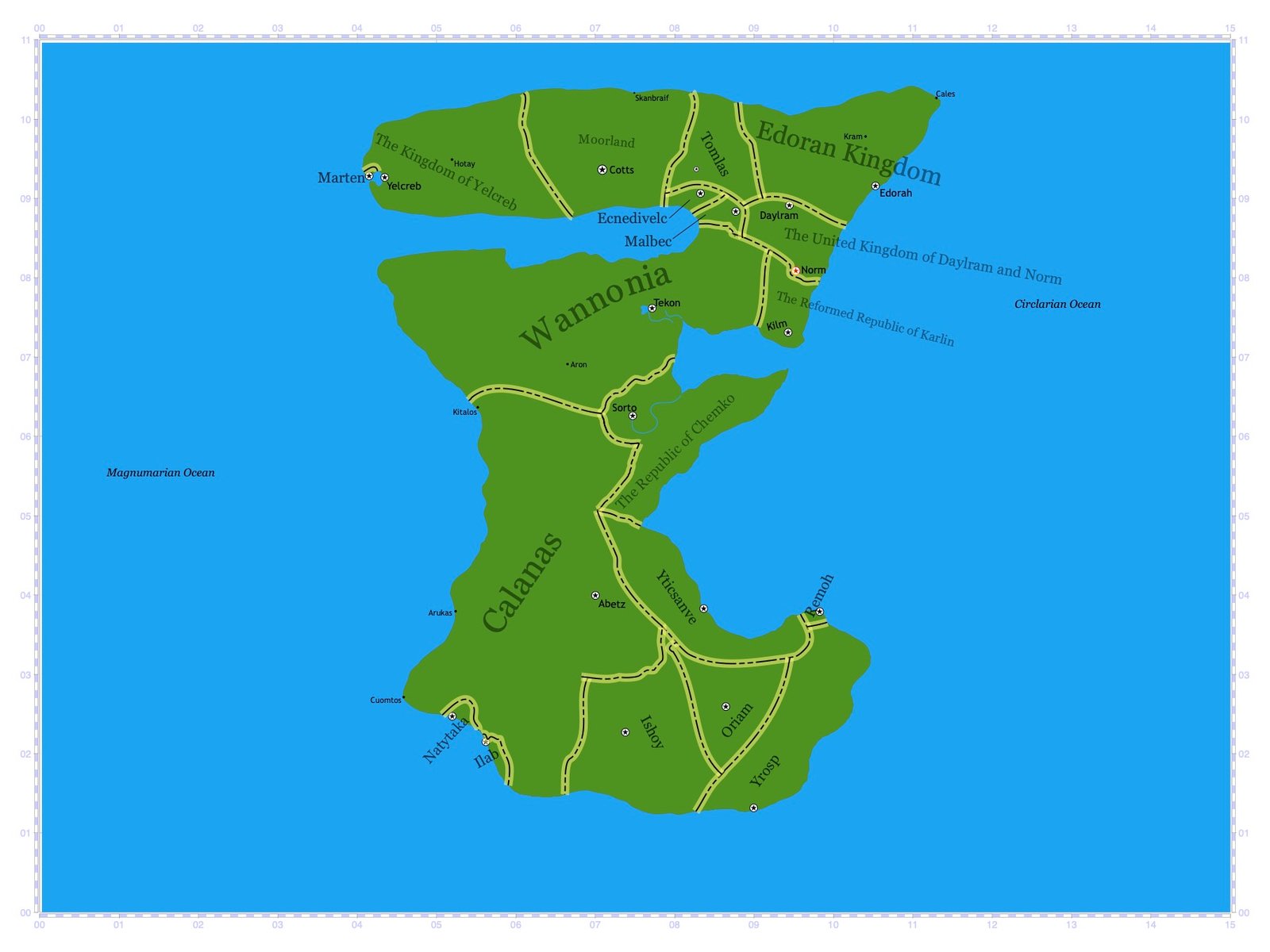
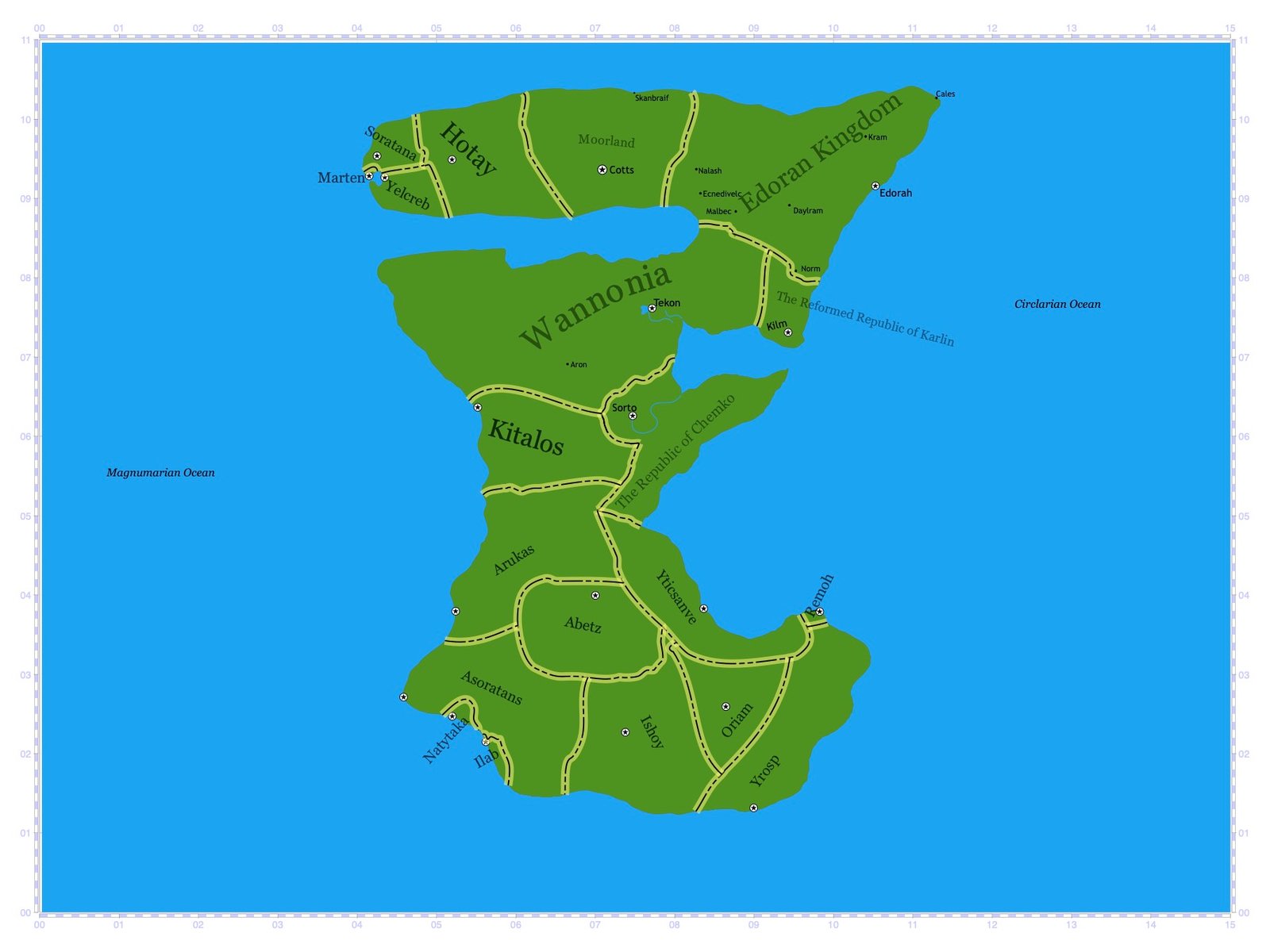
Jon Kerpilng was born in the 890s to parents unknown, but grew up with the Spellcrafter Guild in Hotay as an orphan. In young adulthood, he met a woman named Tormaea, who he was determined to marry, but very soon, Kerpilng would learn that she was interested in another partner. Upset with this, Kerpilng was determined to become the Guild Leader and dominate her and the other man of interest, both of whom were also members of the Spellcrafter Guild...Read More
953 to 982
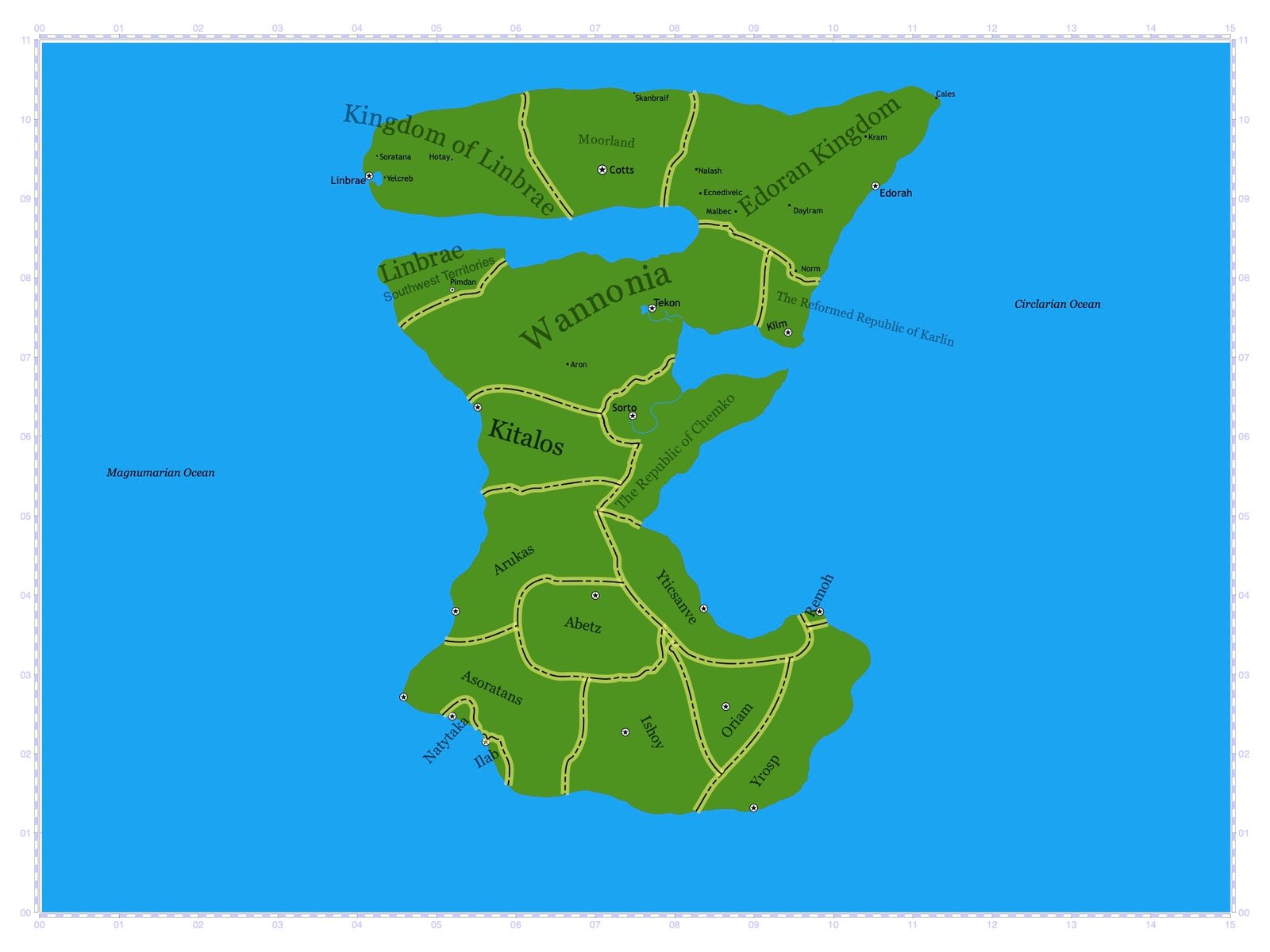
During the war with Yelcreb, while many of them fled the country to join the ranks of the pirates, many Linbraeans, not wishing to be associated with those who joined the pirates, found settlement in the mountainous terrain in Northwest Wannonia. Here, they encountered the Lynds, who, during this time, were marginalized by Emperor Radion I's agenda to accept only Wannonian trade merchants in the cities and along the routes. As a result, the Lynds were forced to remain in the mountains, where there began to develop a distinct culture and community...Read More

985 to 991
The 980s saw the rise of a political movement, known as the Reawakening, in the nations of Moorland and Wannonia. In Moorland, such a movement involved a calling to regain land to the West and the Edoran territories once under the Kingdom of Tomlas to the East, territories lost to the Kingdom of Moorland over the years. In Wannonia, political propaganda from the previous two decades was based on the prophecy of St. John, the supposed right hand of Braeus Alconus, who was said to, one day, bring great gifts to the nation...Read More
991 to 997
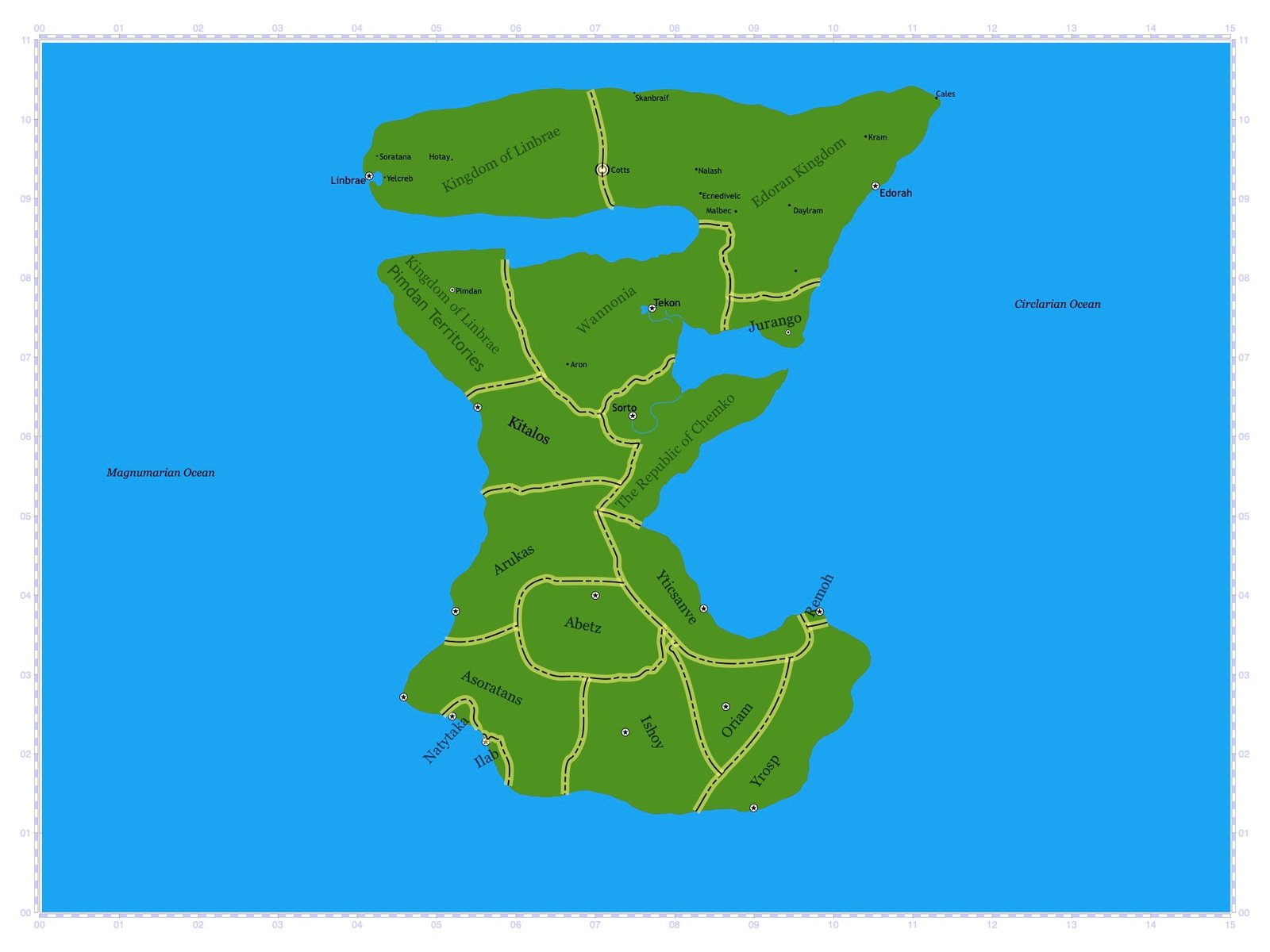
With the Wannonians thinly spread over their newly gained territories, the Edorans and Linbraeans hid in the Wilderlands, where they built makeshift fortresses. Within these compounds arose factories that mass-produced multi-celled compound aerovehicles. Similar operations were carried out along the Southern Coast of the Kingdom of Moorland, the region least-manned by the invading Central Alliance. In quickly-built cliff-hanging facilities were produced even more aerovehicles...Read More
998 to 1026
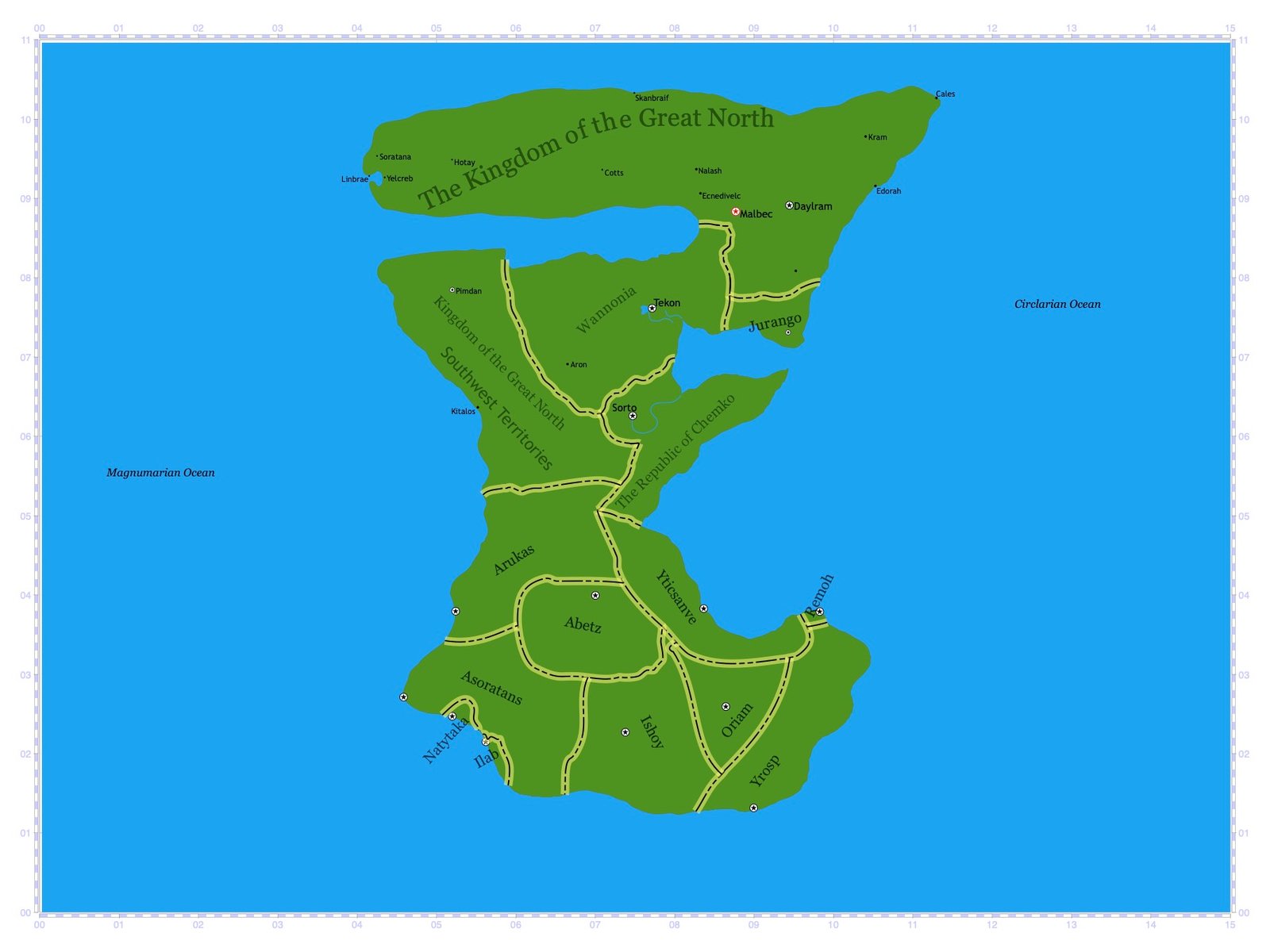
Philip Downing was born in the year 970 to a family of Edoran Nobility. After serving five years in the Edoran Navy and as a top commander in the Edoran takeover of Kilm from the Wannonians in the Four-Nations War, Downing was given honorable discharge and the title "Emeritus General." Mary Stellion, born in 971, was raised with a prominent family in the Gold-keepers' Guild in a small village near Soratana...Read More

1073 to 1085
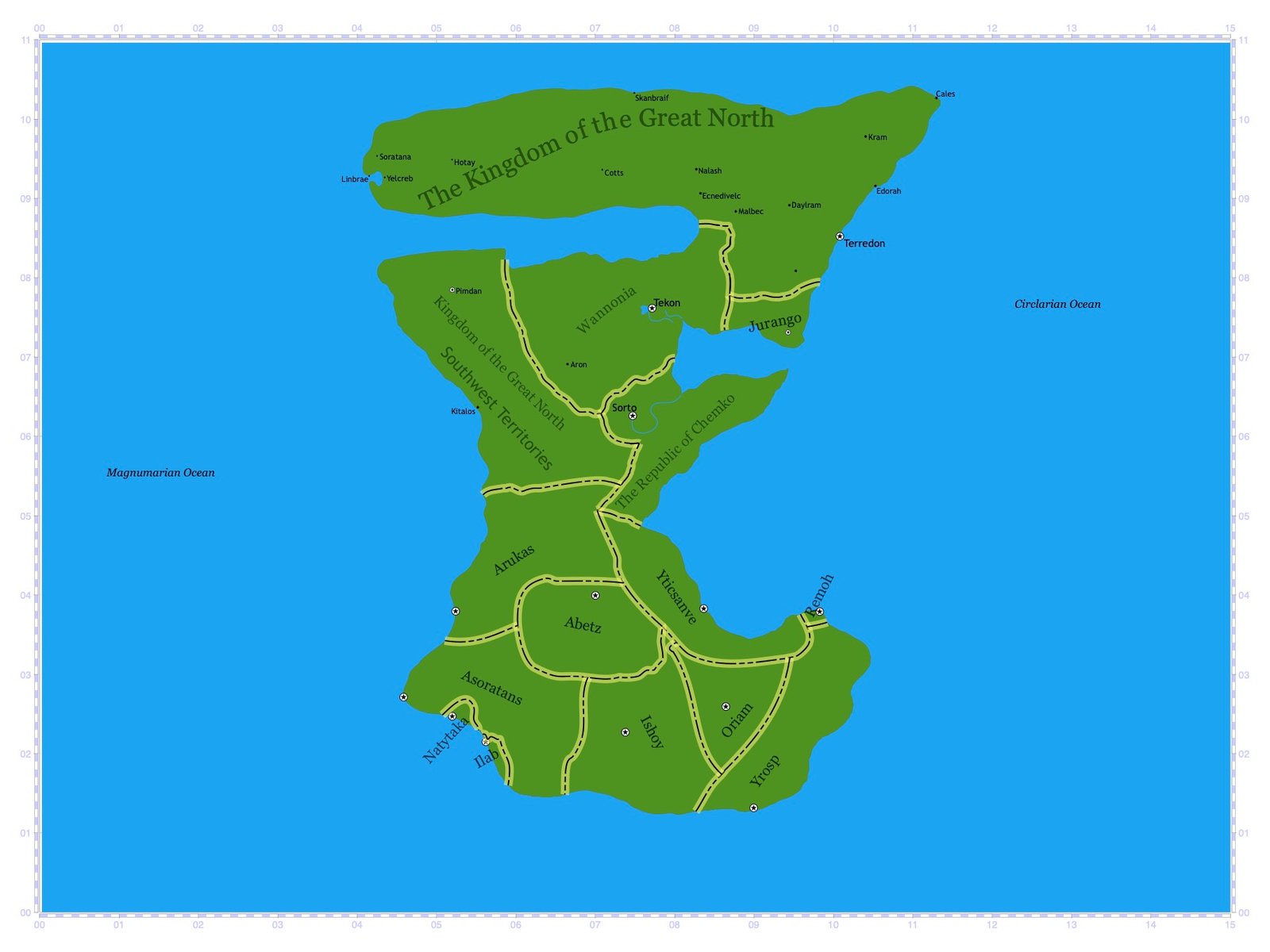
Slated by Queen Alexandra for construction to begin in the year 1061, the city of Anadon was dedicated to the Queen's daughter, Ana. The oldest daughter of Alexandra, Ana was destined to be the next Queen, as she was arranged to marry Paul, who would then become the King. However, Ana was not keen for this way of life, bemoaning the lack of freedom of choice; and, in 1069, she fled the Kingdom with a pirate, to whom she would eventually be married...Read More
1086
Between 1077 and 1086, Pasiek experienced a great deal of growth, as the Fort Norm site was converted into a facility housing hubstone shale burning processes, and hubstone shale mines emerged. Soldiers having fought in the recent conflict stayed in Pasiek, as peace followed, and families moved in with them. The population continued its growth, leading the Great Northern government to hire laborers for the construction of more brick structures. Before long, the city saw the emergence of factories, shops, houses, and even a market district...Read More

1167
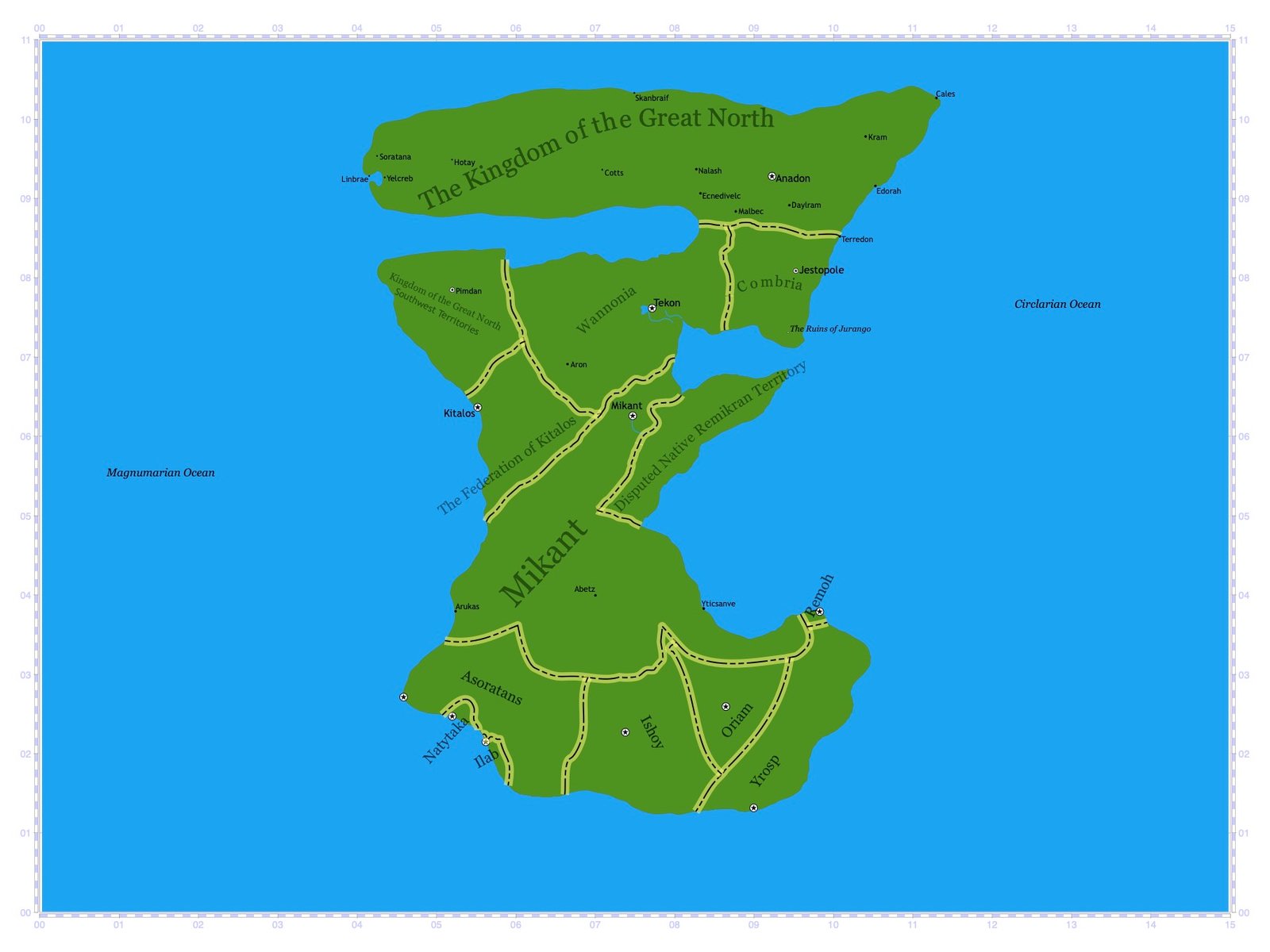
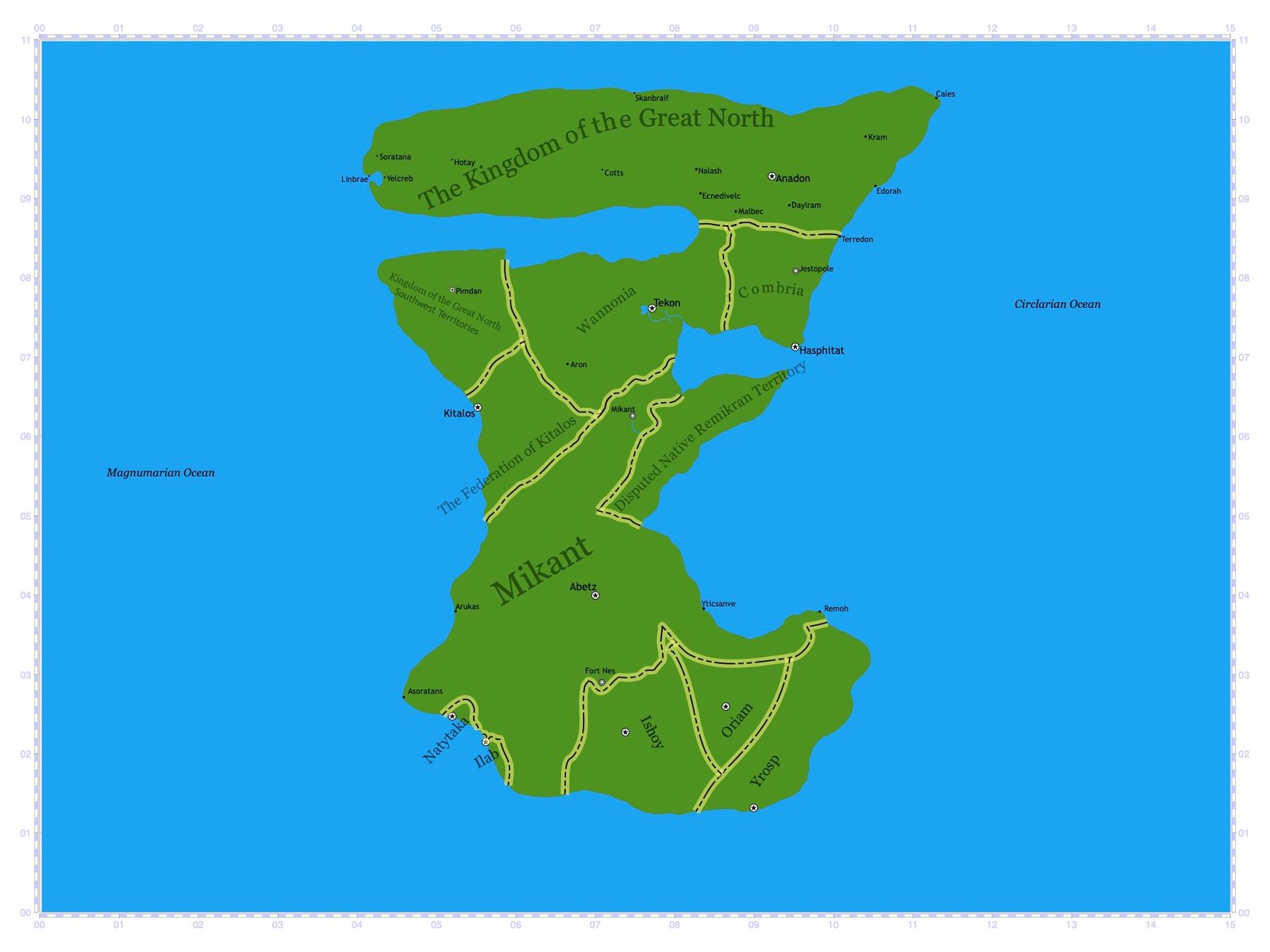
Between 1142 and 1143, Wannonia began enhancing its border wall with Combria, while Combria continued the building of theirs. Both sides during this time recruited more soldiers and erected more bases throughout their territories. In 1144, tension nearly broke, but ended with the meeting of Combrian President Chadwick and Wannonian Emperor Clastye I, who both signed a mutual peace deal to demilitarize the walls and bases...Read More
1194
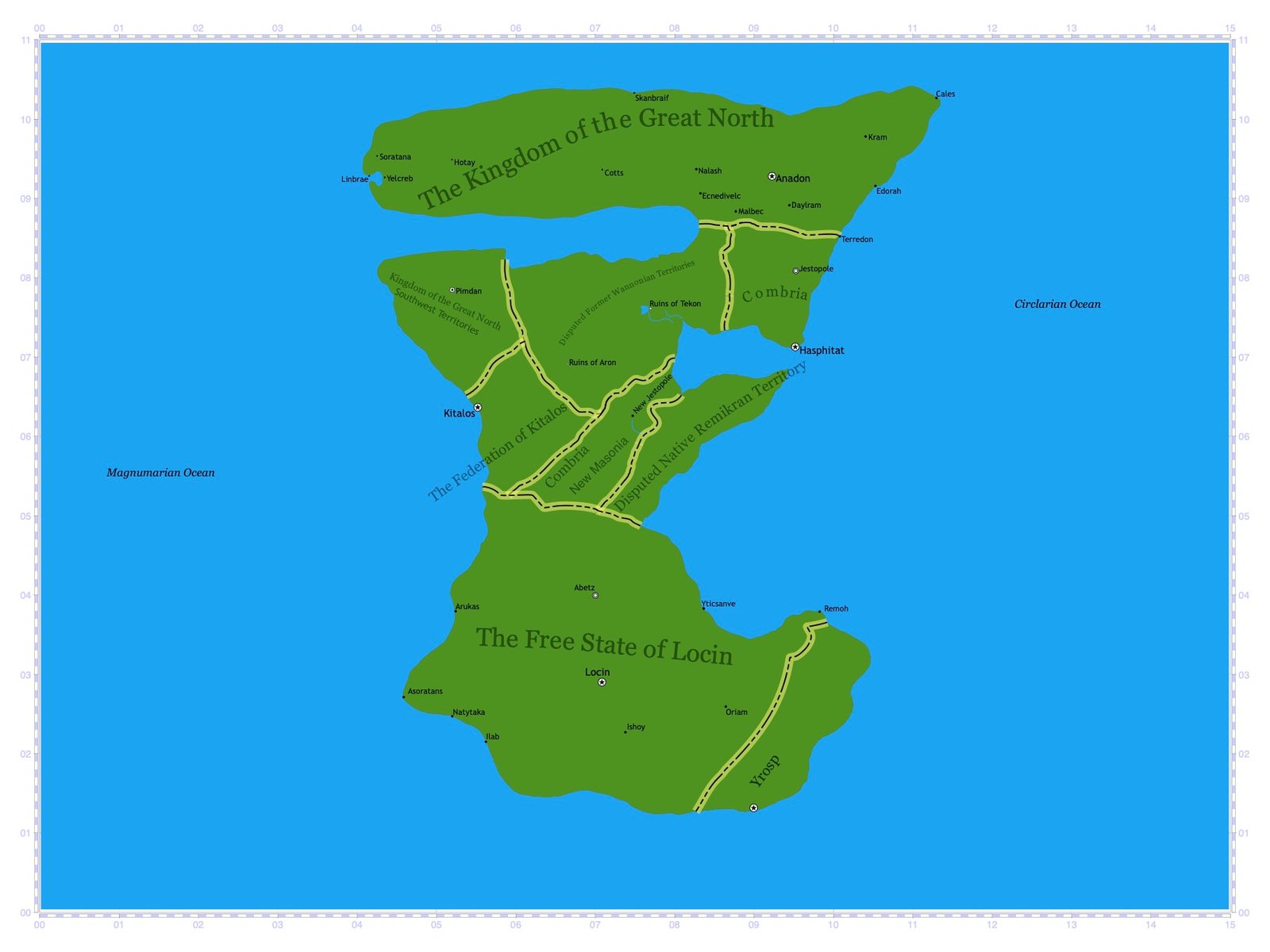
The Great Blight was parasitic to the flaxweed crop, consuming each plant's water and nutrients, and in turn, starving and drying it. Eventually, the plant would die. And during the entire process, the fungus, when having reached full maturity, would release floating spores, which would spread to other plants. It was by this that farmers in the Southern and Western regions of Wannonia lost entire flaxweed crops, leading to lack of food and income. They attempted to rid the invasive species via burning...Read More
1206
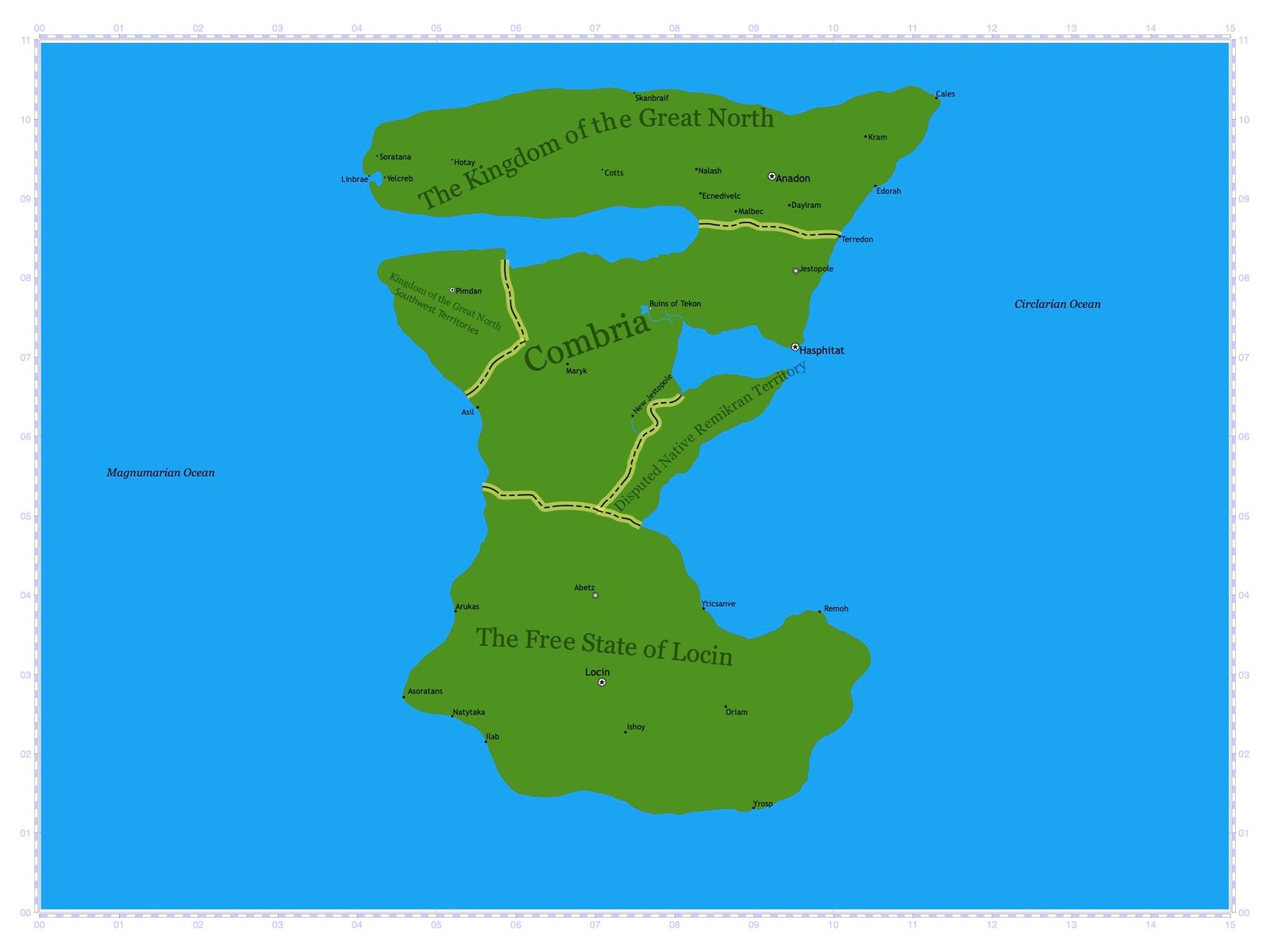
Throughout the 1180s, militant groups scavenged the former Wannonian territories for resources. Seeing the fall of Wannonia in the 1170s and the resulting vacuum in power as an opportunity, bandits from the Southwest migrated into the region and dominated it. Initially, they existed as multiple factions, but toward the end of the decade, the bandits came under the leadership of one man, Desteran Korabi, and named themselves the Korabians...Read More
1236
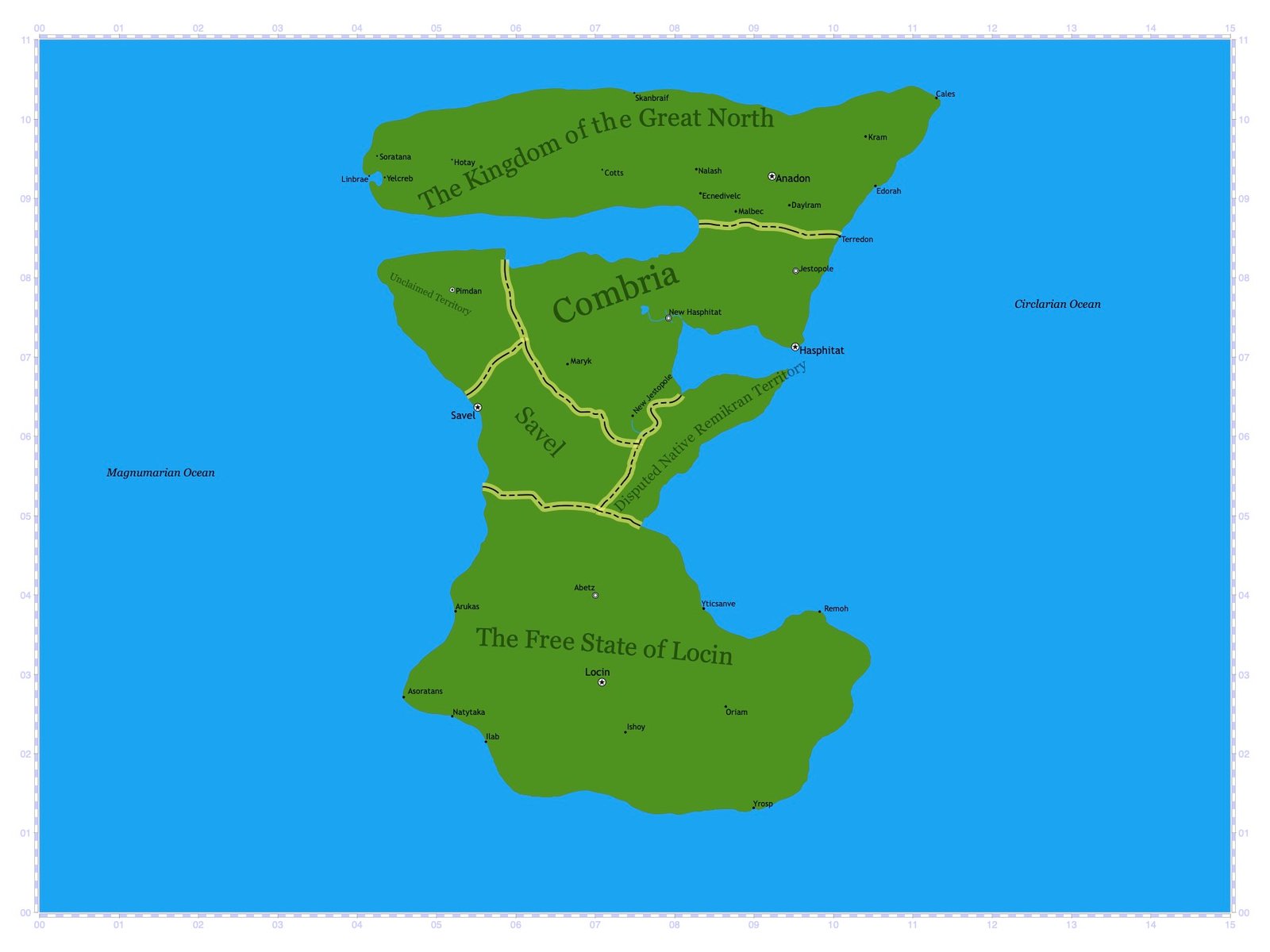
From the late 1000s to the early 1200s, trade had been flowing between Remikra in the West and the Motanian Empire in the East. Notable crossroads such as the Midland River States, the Canticulan West Peninsula, and the Circlarian Coast of Remikra became very prosperous as a result. With the occurrence of the Meredythian Forum in 1206, peak prosperity was achieved, as financial figures began predicting even more growth in the years to come...Read More
March 1238
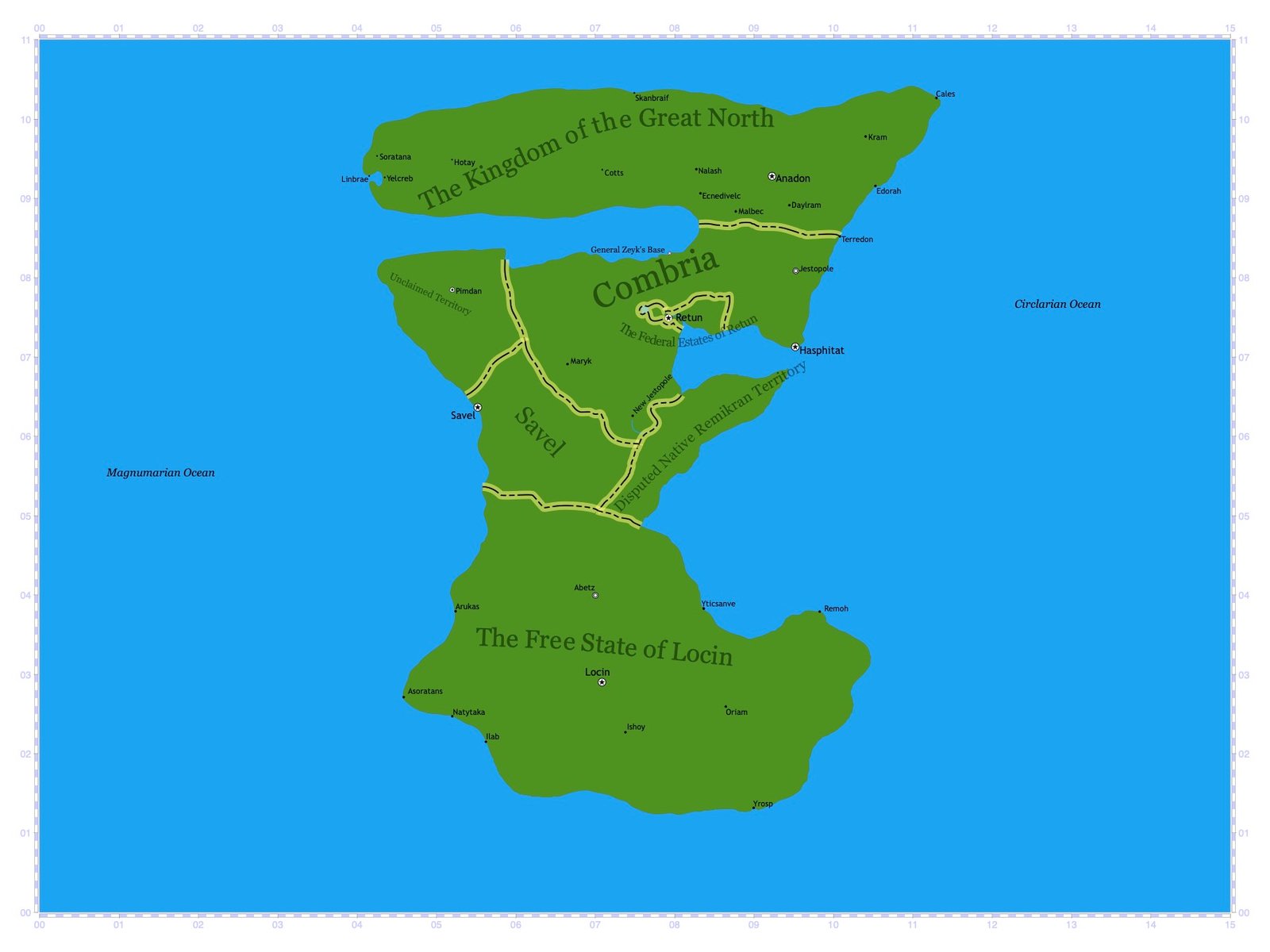
At the helm of the Basin Project were its original creators: the engineers, Thomas Reyshack and James Shawtun. They had proposed the idea, originally, in the 1190s, but were rejected on the basis of such a project being an unnecessary expense. In light of the Homestead Revisions, though, they, again, proposed the idea in 1227, and were approved. And thus, construction on the Basin Project began in 1231 with tree clearings and the excavation for the man-made Basin River...Read More
June 1238
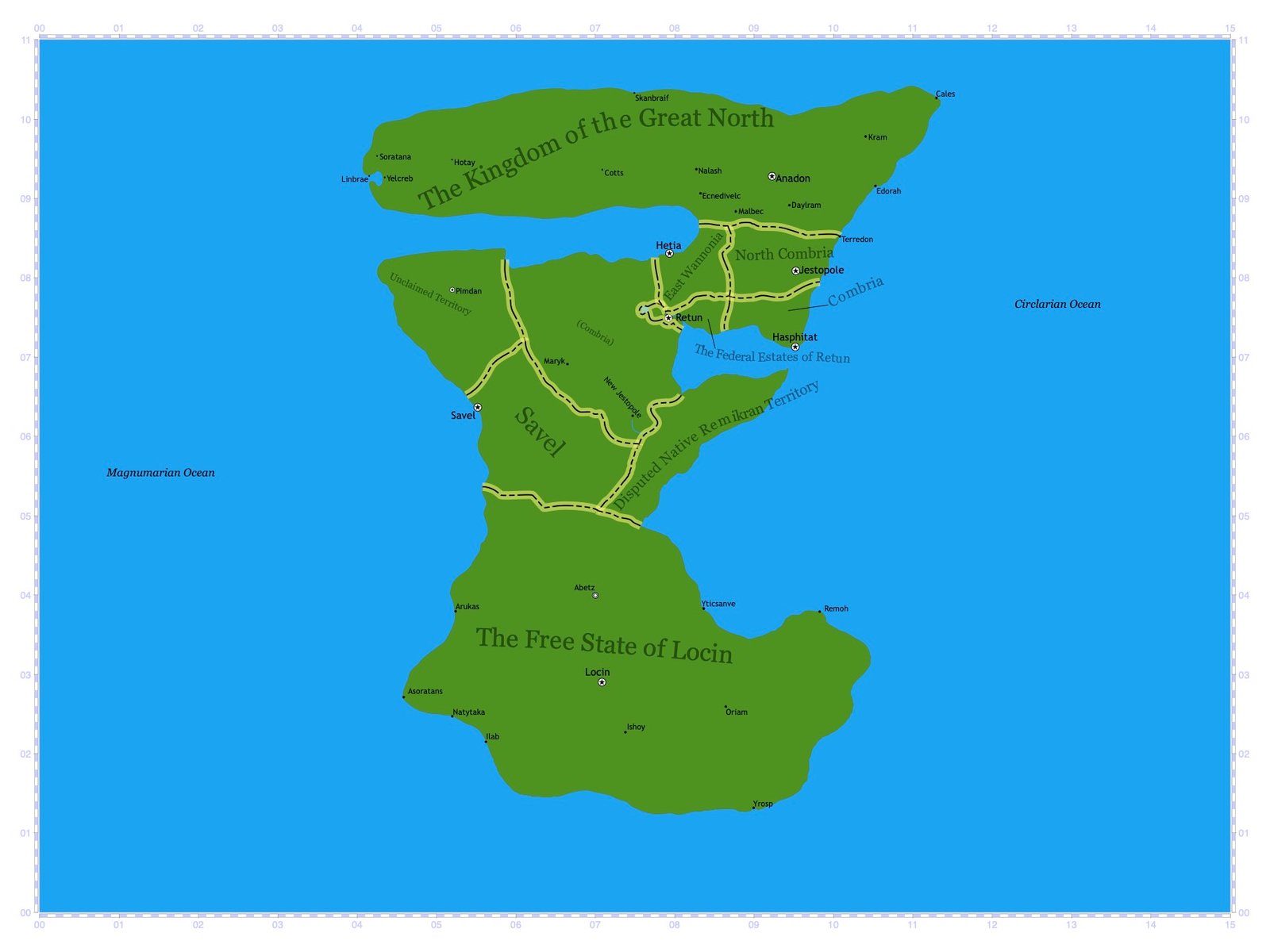
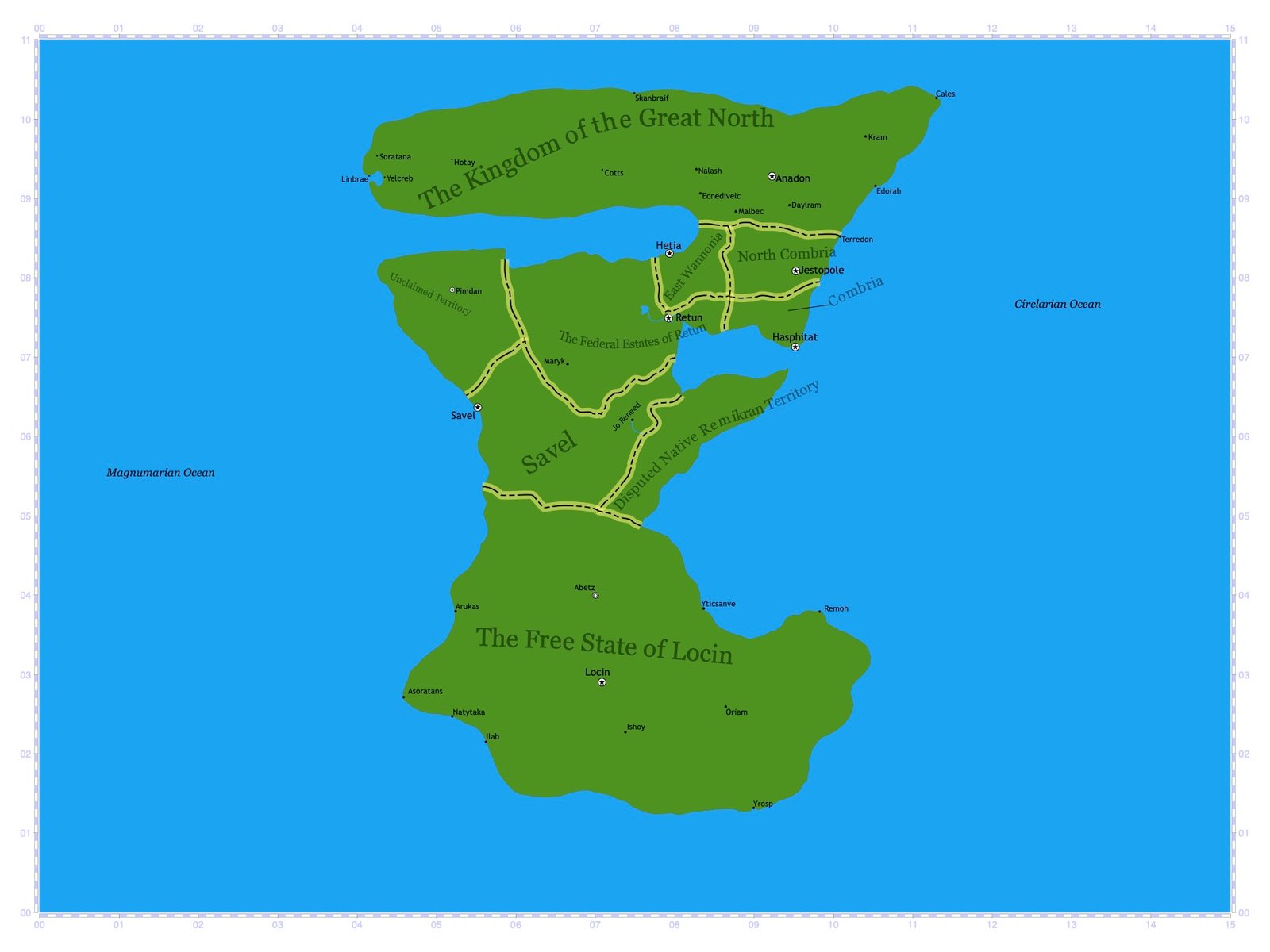
After Chadwick's departure, the Leon and Kontacet families in Jestopole volleyed for power. The Kontacets wanted to restore the economic and social balances present during the days of President Jeson while the Leons carried a nationalist movement to make Combria an independent nation, to make Jestopole the Combrian capital, and ultimately conquer Hasphitat...Read More
November 1238
In the wake of the assault on 7 June, President Henry dispatched reinforcements to restore order in North Combria. However, this counterattack was overwhelmed by the Hetians, who had advantage over the battlefield with their numerous small-unit divisions, better methods of concealment, and better accuracy with their infantry. As a result, Henry's forces sustained high casualties...Read More
November 1239
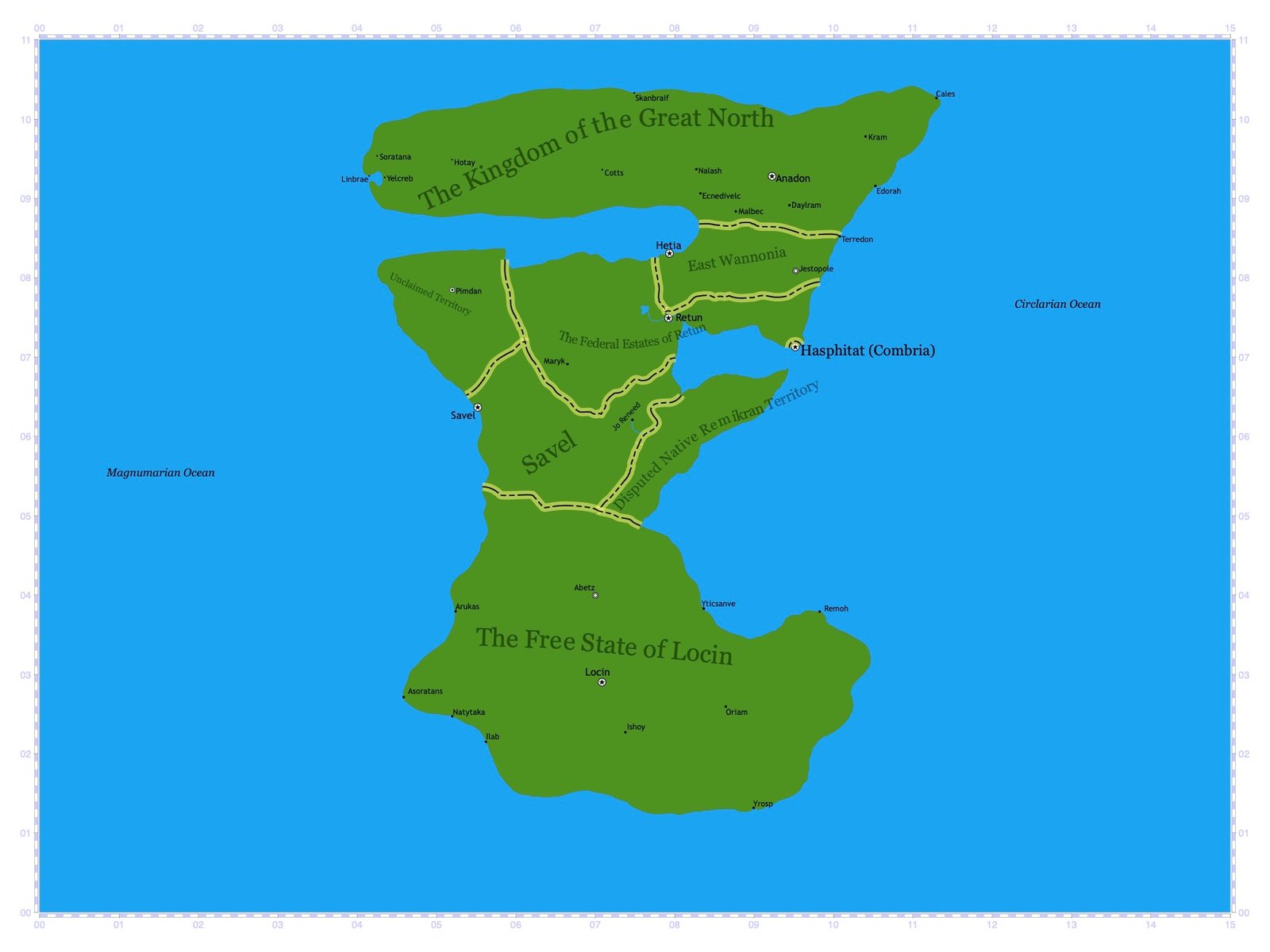
Between February and April 1239, in an attempt to invade East Wannonia by surprise, Richard Marren commanded North Combrian Navy and Infantry divisions to secretly station themselves around the city of Hetia. From that point, the plan was to fire upon the city and conquer it, assassinating General Zeyk in the process. The North Combrians would then drive outward and force remaining Hetian forces to surrender...Read More
January 1243
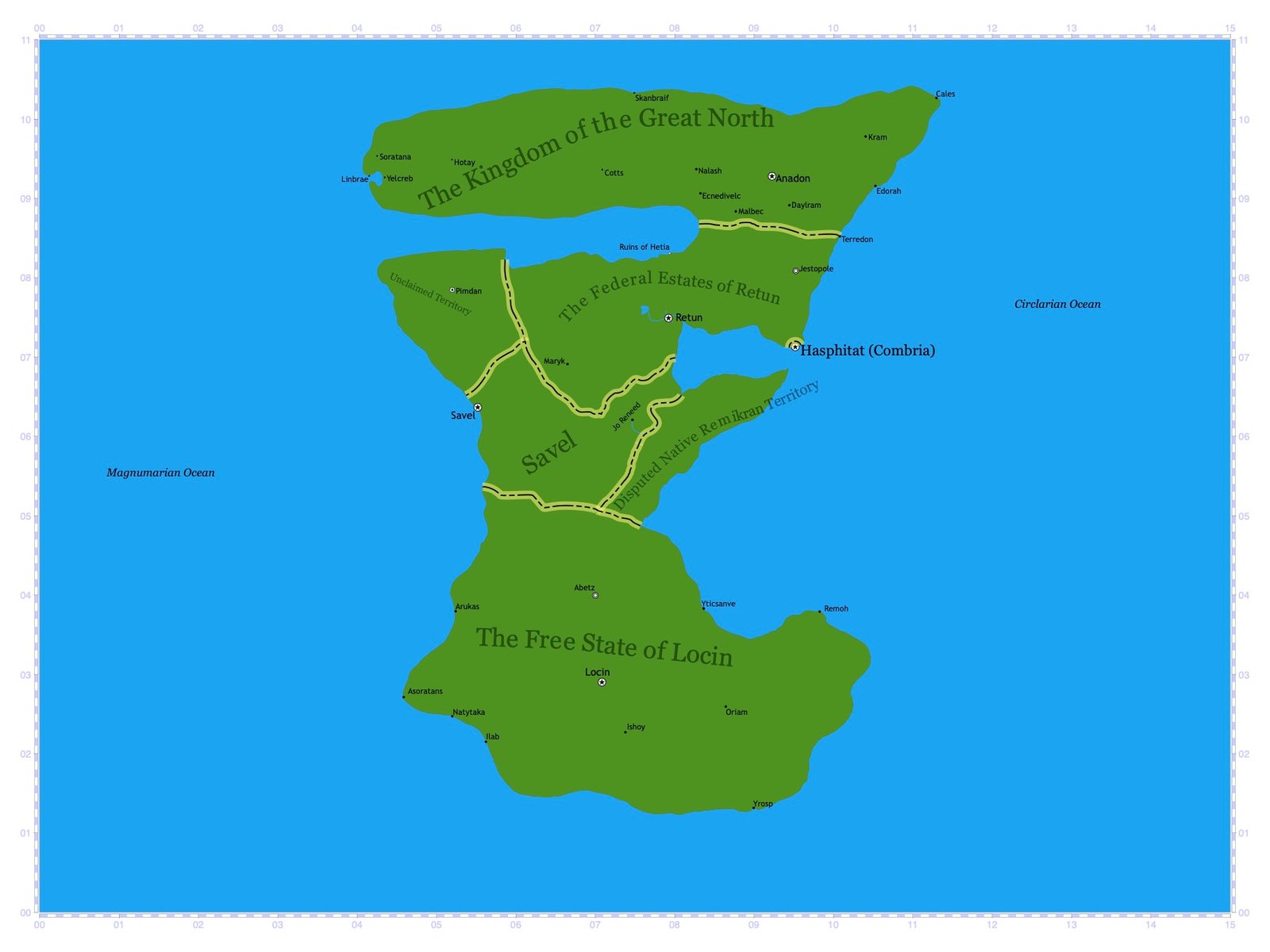
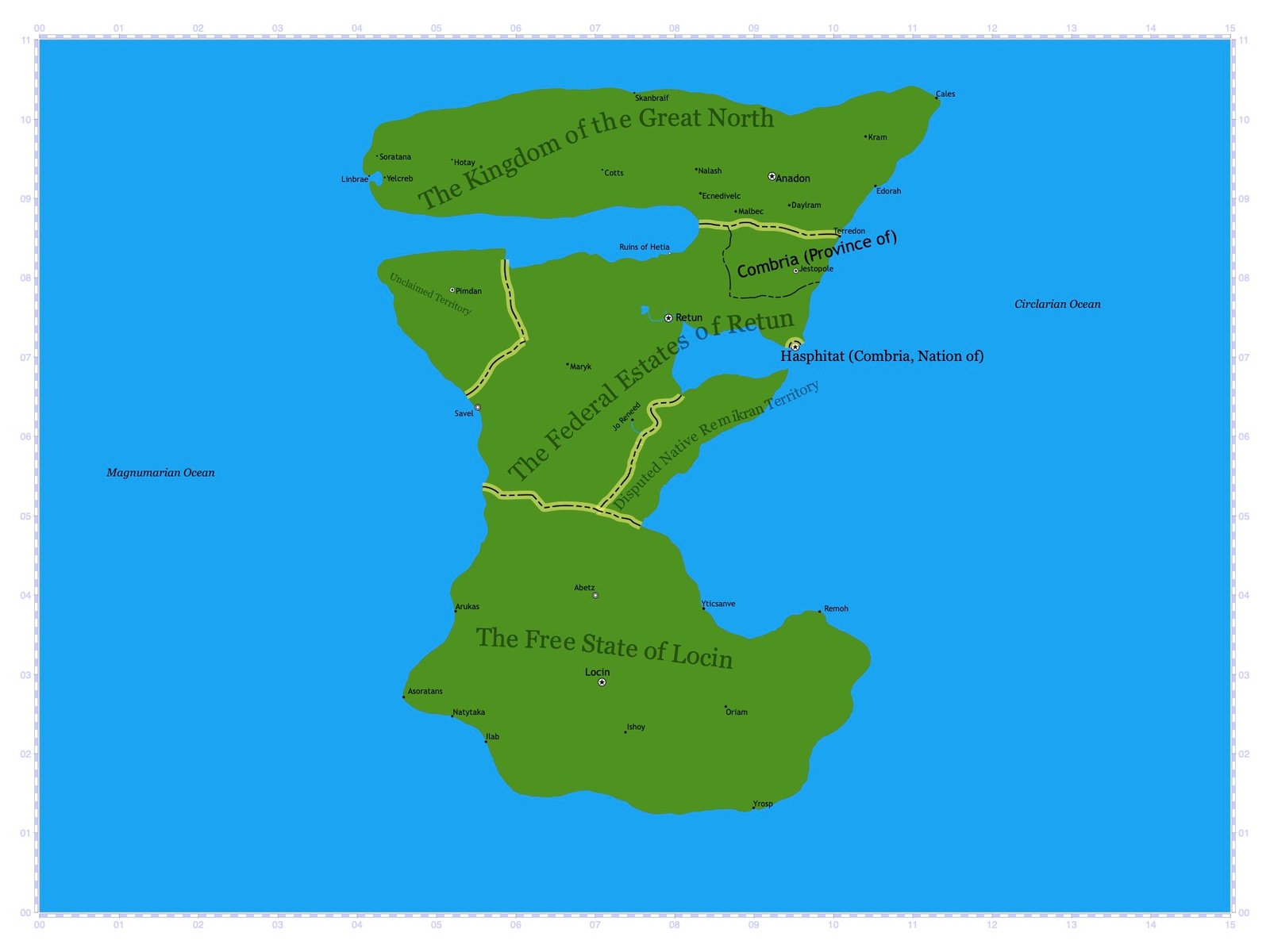
General Zeyk's grudge against the Federal Estates originated in 1238, when he desired for a part of Hasphitat and its surrounding territories because of its wealth and resources. He believed that the new Republic would help to divide the affluent region, but also believed that he could later implement a hidden agenda to claim the Republic, itself, and re-establish Wannonia proper. Arnold Stone, however, knowing Zeyk from the past, according to personal sources found afterward, declined the offer of diplomacy...Read More
February 1244
Born in 1208 to a married couple working as businesspeople in Jestopole, Jason Kellerton and his family moved to Kilgram in 1213 to live closer to relatives. In 1238, East Wannonia overtook the region, forcing the family into hiding, while Kellerton staged an underground resistance movement. As part of a hidden strategy, Kellerton and his followers joined the ranks of East Wannonian forces, only to attack them from within. This proved a major setback to East Wannonia, as Kellerton then joined the Federal Estates in the Battle of Hetia in 1242...Read More
March 9, 1244
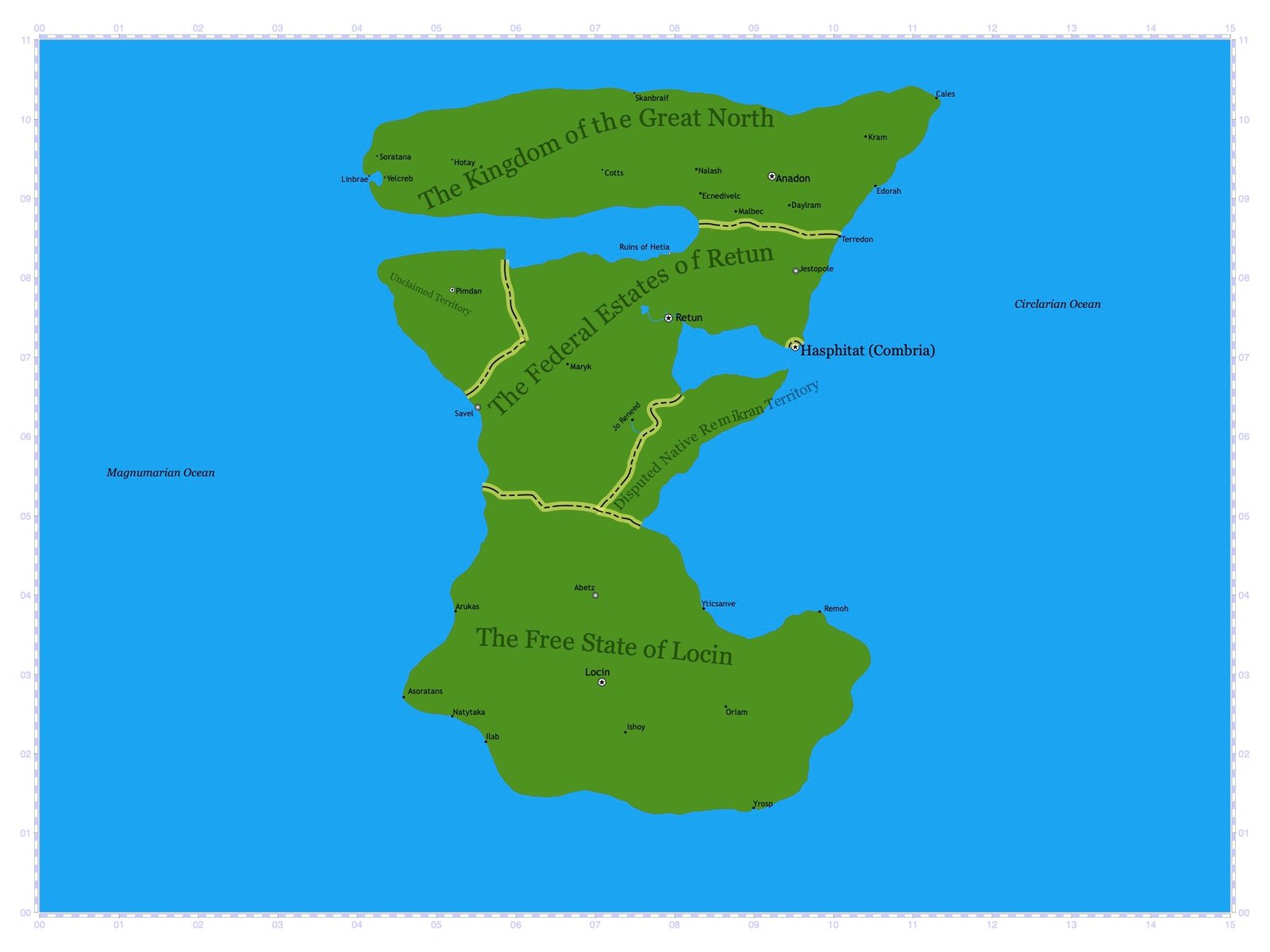
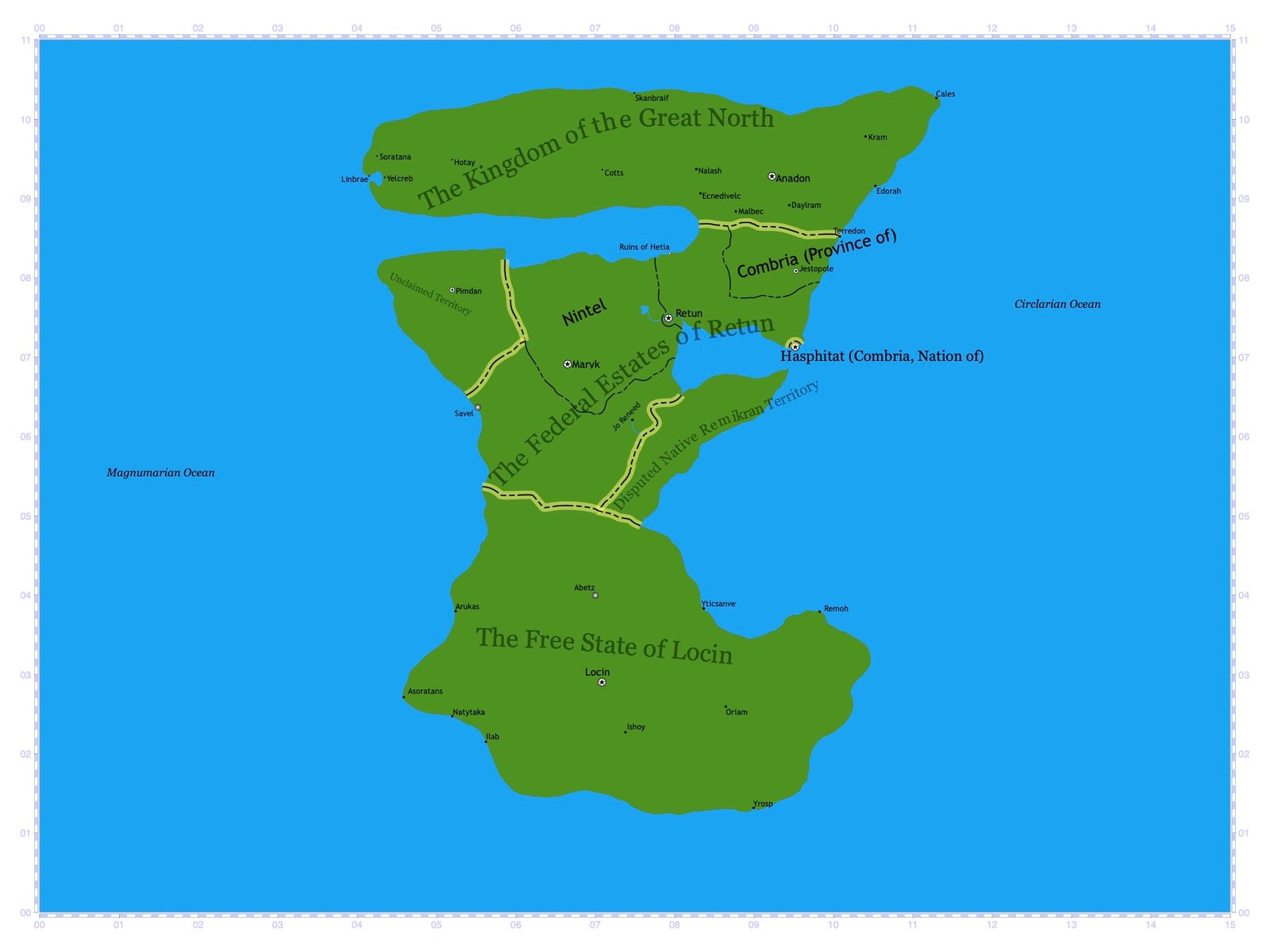
In January 1243, the Federal Estates Council began a debate on the Cable Rail Restoration Act, where it aimed to refurbish the existing cable rail network, some of which sustained damage during the war, as well as expand the cable rail network to Maryk. However, it was the latter of the provisions that drew the most grievances, especially from Nintelian land owners...Read More
March 17, 1244
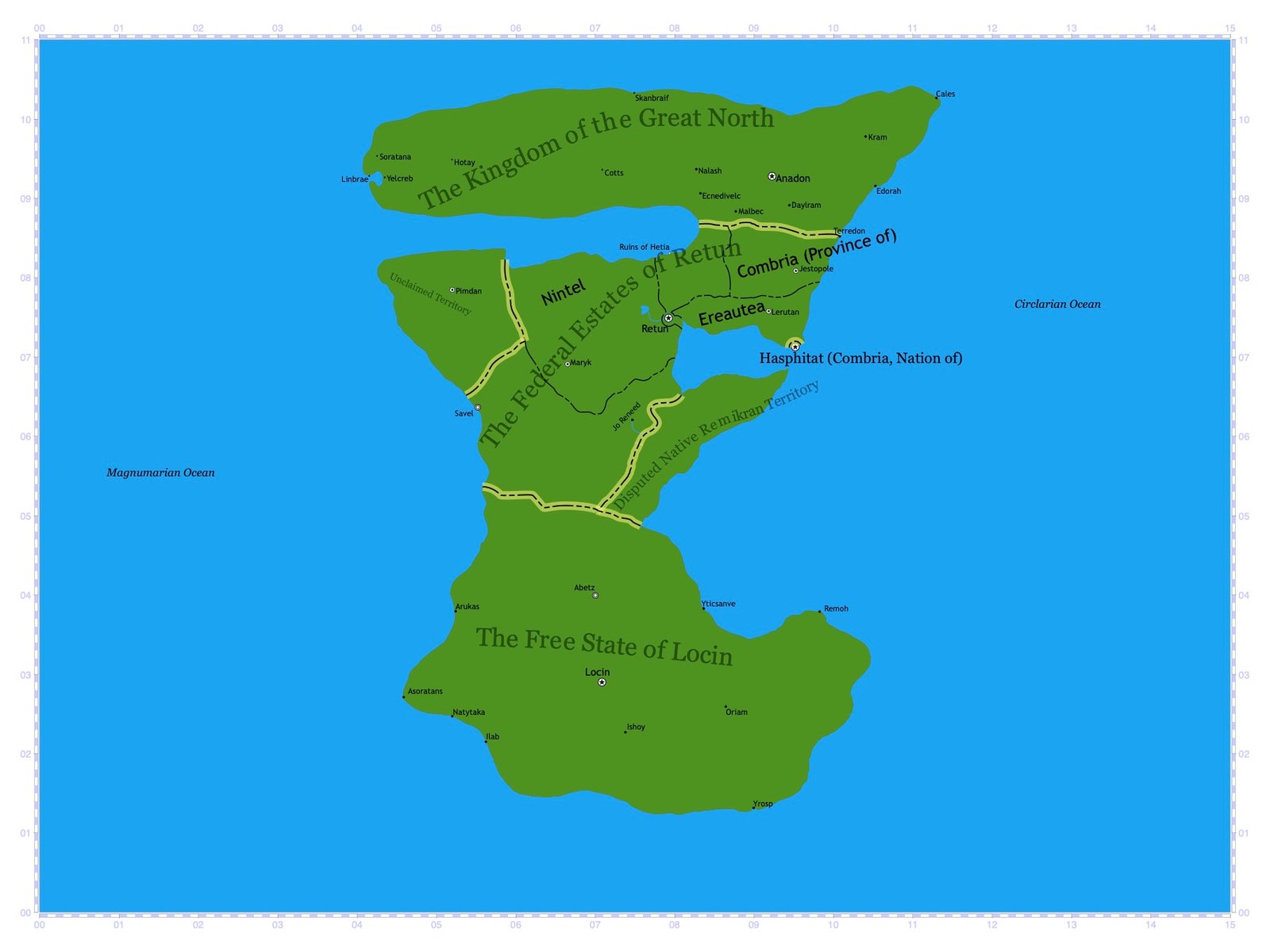
By the mid-1240s, Middle Remikran society had developed into two distinct cultures: the Coastal Culture and the Inlander Culture. Coastal culture, predominant along the coastal regions of Middle Remikra, was comprised of individuals known to be flashy, outspoken, and open to global trade. They were also known to draw and fiercely adhere to government and urban political boundaries. In contrast, those of the Inlander Culture living in regions like interior Combria, interior Gymia, and the Central Plains of Nintel, were modest and survival-oriented...Read More
May 1244
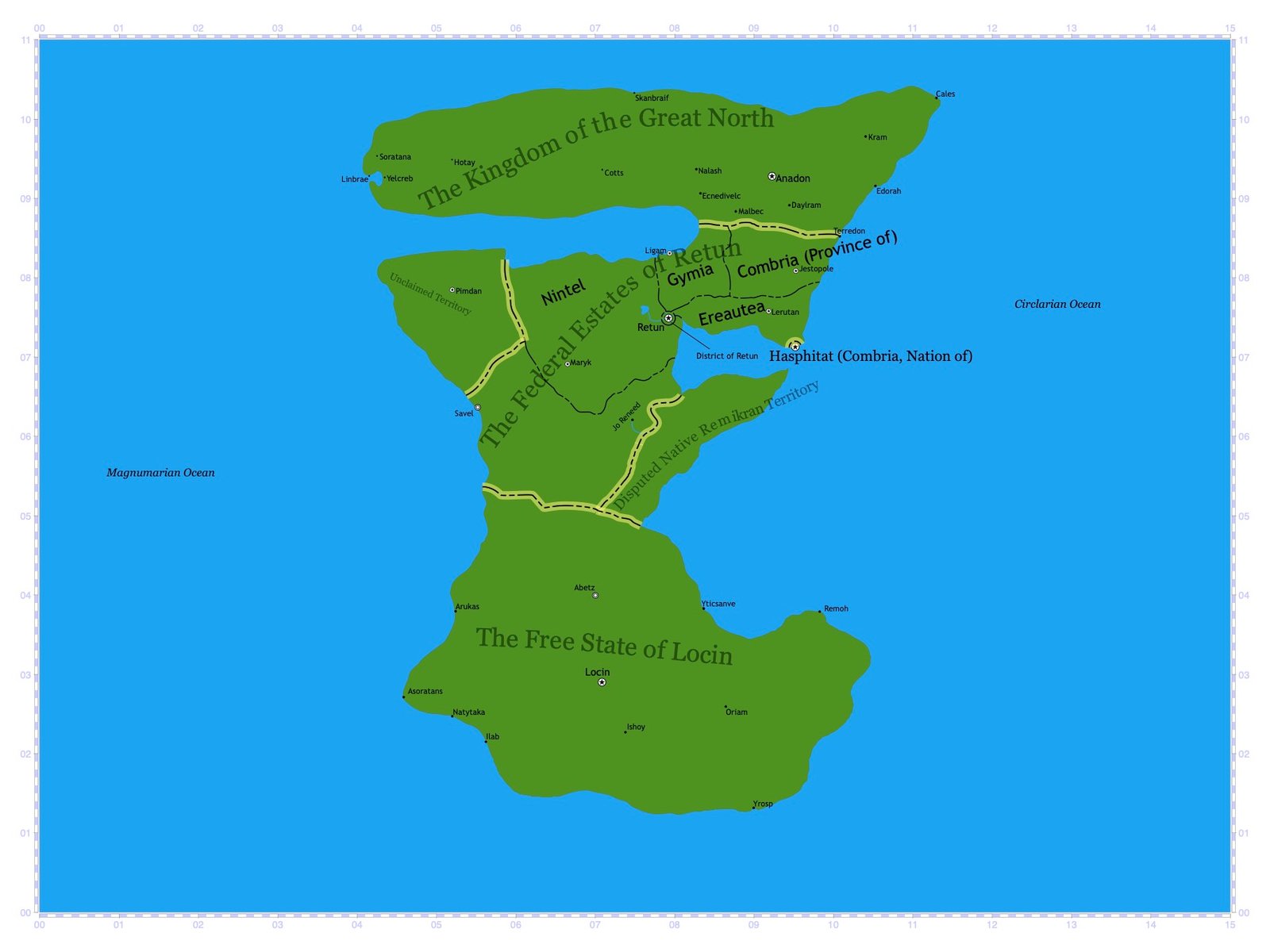
After the defeat of General Zeyk, the city of Hetia was in the process of rebuilding, as it was renamed Ligam. Meanwhile the surrounding region was heavily patrolled by the Federal Estates Armed Forces. Within a year, 117 bases, including 57 air bases, were established, and carried out frequent military and air drills as part of reserve training. These operations used large amounts of hubstone energy, raising prices for civilians...Read More
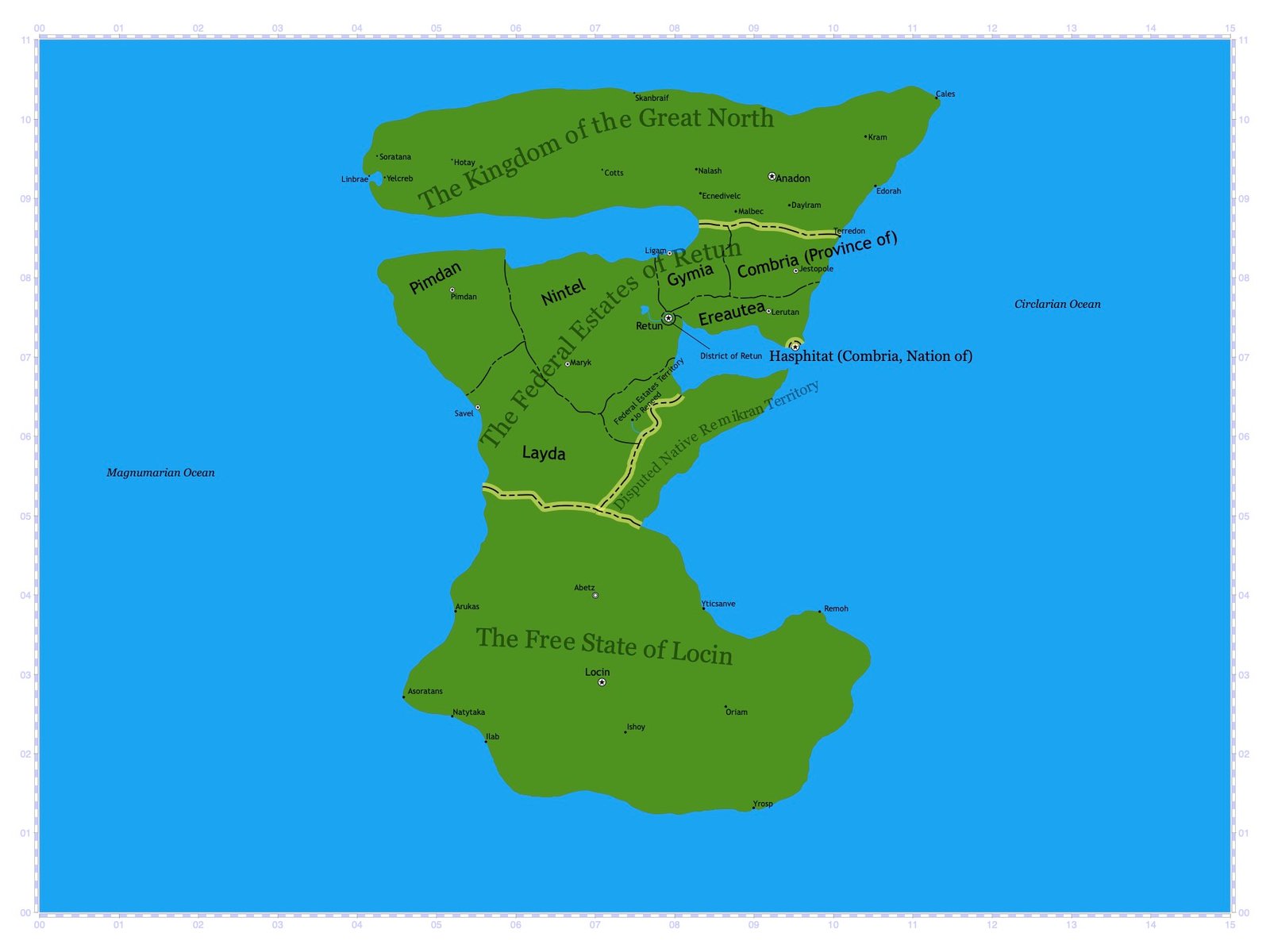
January 1249
In 1244, a popular referendum called for all provincial governor elections to be held on the same day in a particular three-year cycle as Council seat elections. The Federal Estates Council eventually voted for such an election to fall on every third year of the Prime Minister's term, beginning in 1245. On 24 September 1245, such elections were carried out, awarding John Derry the Governor Seat of Ereautea, Karl Torick the Governor Seat of Nintel, Michael Wayfare the Governor Seat of Gymia, and Jason Kellerton the Governor Seat of Combria...Read More
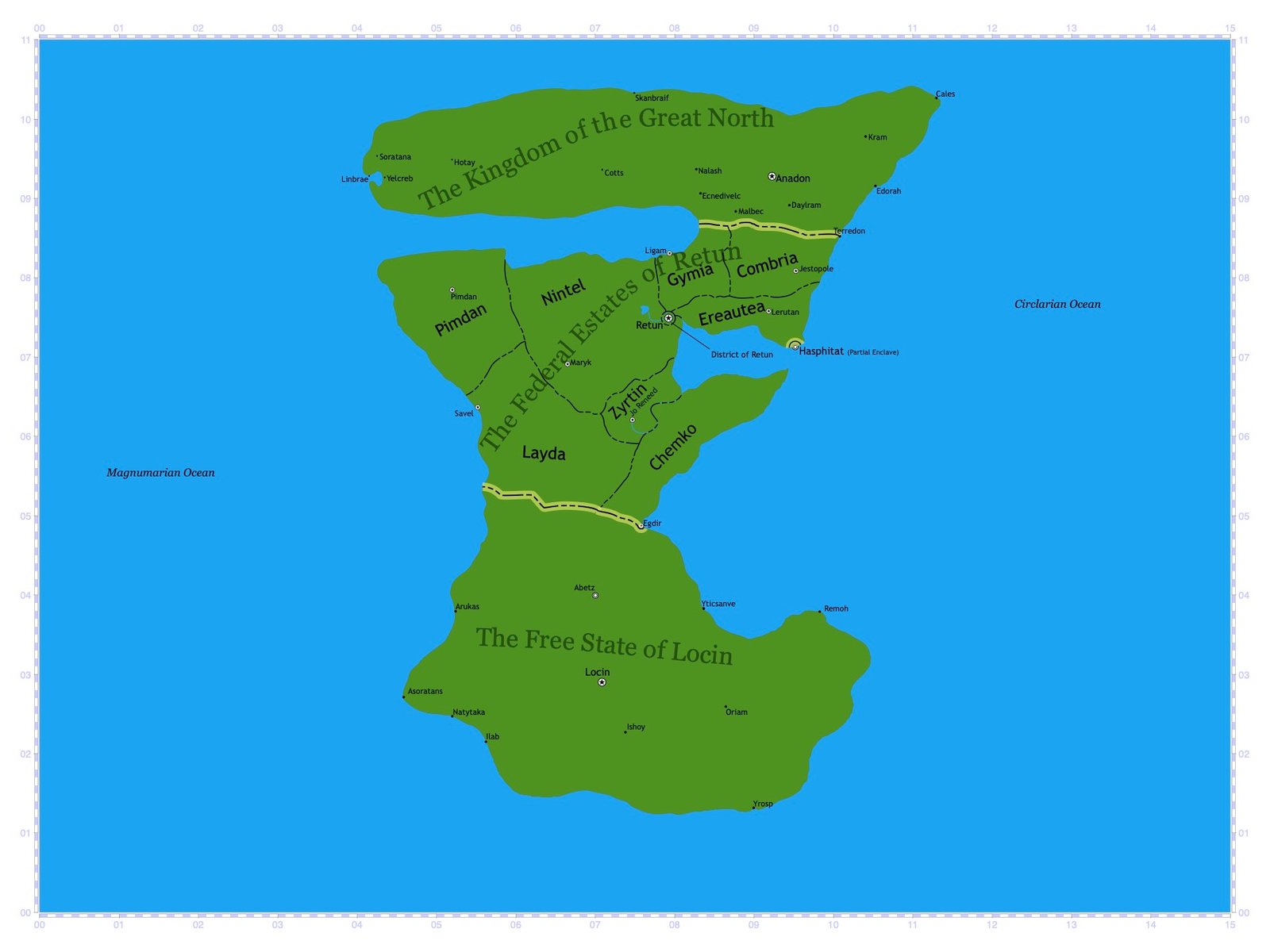
1264 to 1308
In May 1249, with a majority vote from the Federal Estates Council, James Black signed into law the Economic Restoration Act. However, a problem emerged with the measure favoring business owners over the working class. This led to the establishment of the National Labor Party in March 1250, which was decried by Prime Minister Black as a radical coalition, allegedly leading to concerns for political anarchy in the new Republic...Read More
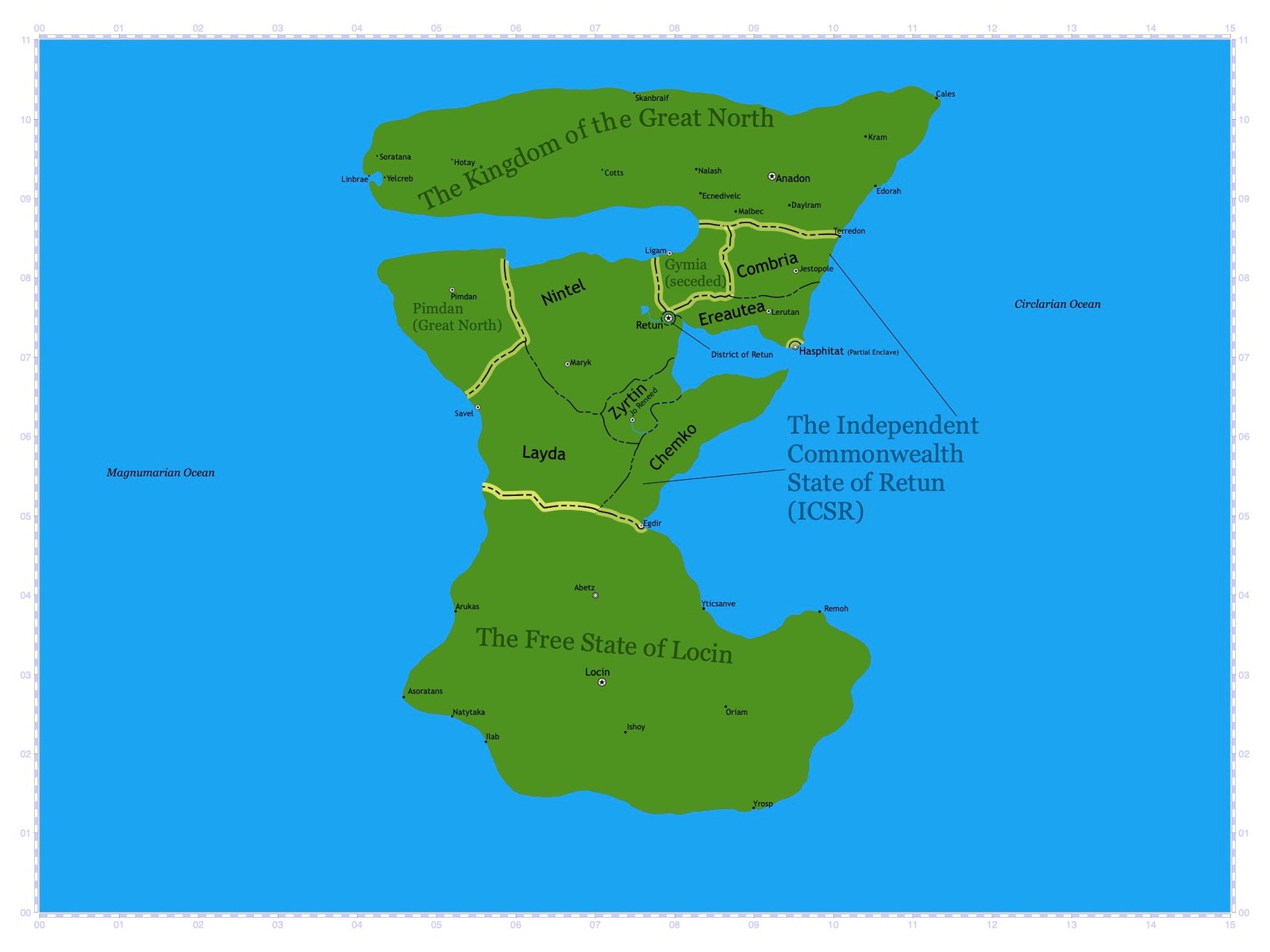
September 1309
During the Commencement Ceremonies of Prime Minister Waltmann's third term, a perimeter was secured around the Council Building, in response to concerns of frequent gunfights in the area. The Oath and Address were carried out by Waltmann in his Office, instead of the Public Assembly Chamber, as this was broadcasted over the radio. In the days that followed, the Federal Estates Council voted to designate 5 February as World Day, which had previously been dedicated to the first arrangements made with the Lykians in 1285...Read More
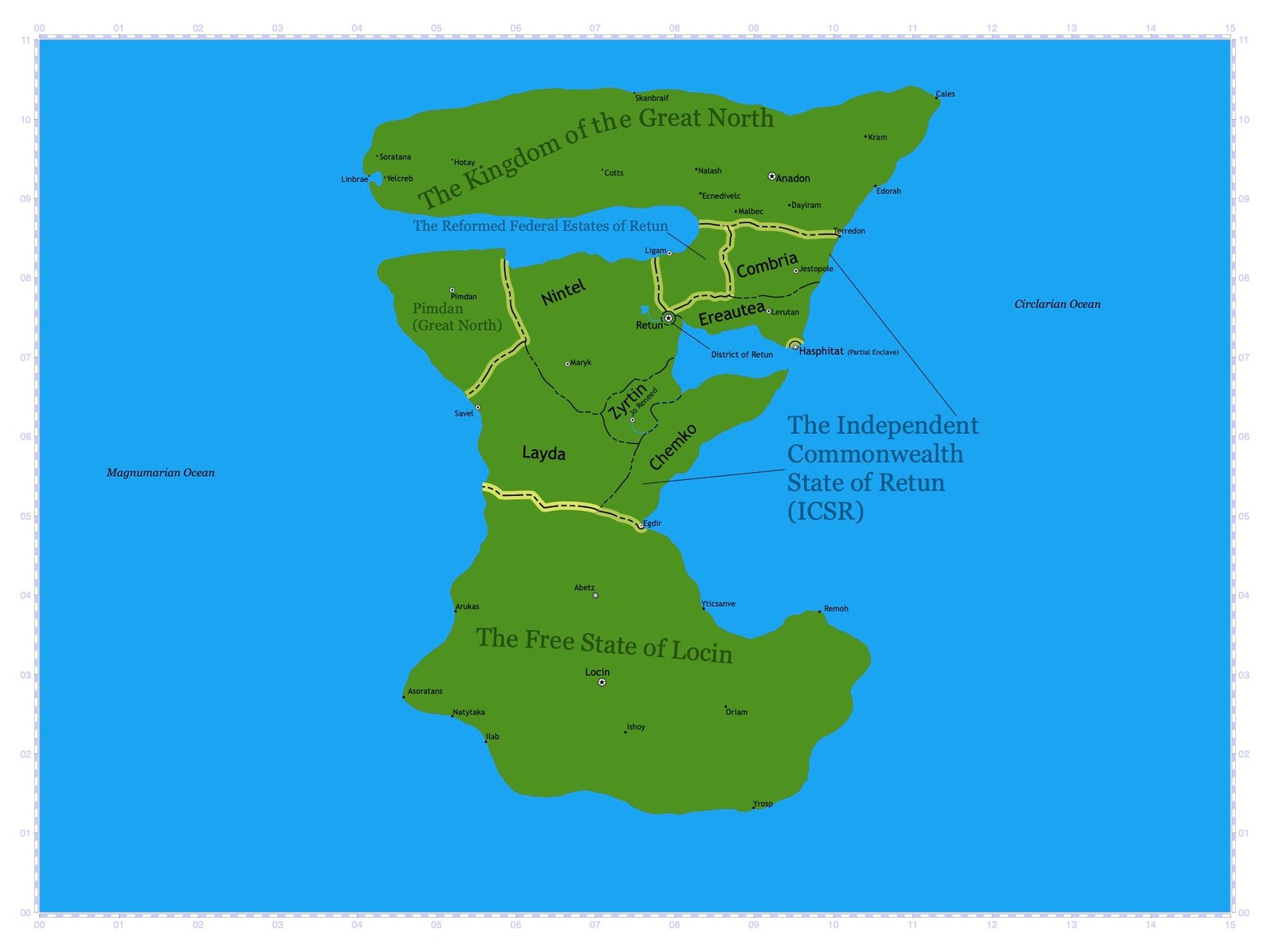
January 1311
Under Finzi, official darkfire initiation and collection facilities were established, opening their doors in October 1309. With the discovery in 1299 that Mount Carris discharges could be regulated, the darkfire industry scheduled a seven-week cycle, as part of the Great Compromise, which would succeed in its agenda to enhance the quality of darkfire...Read More
1312 to 1319
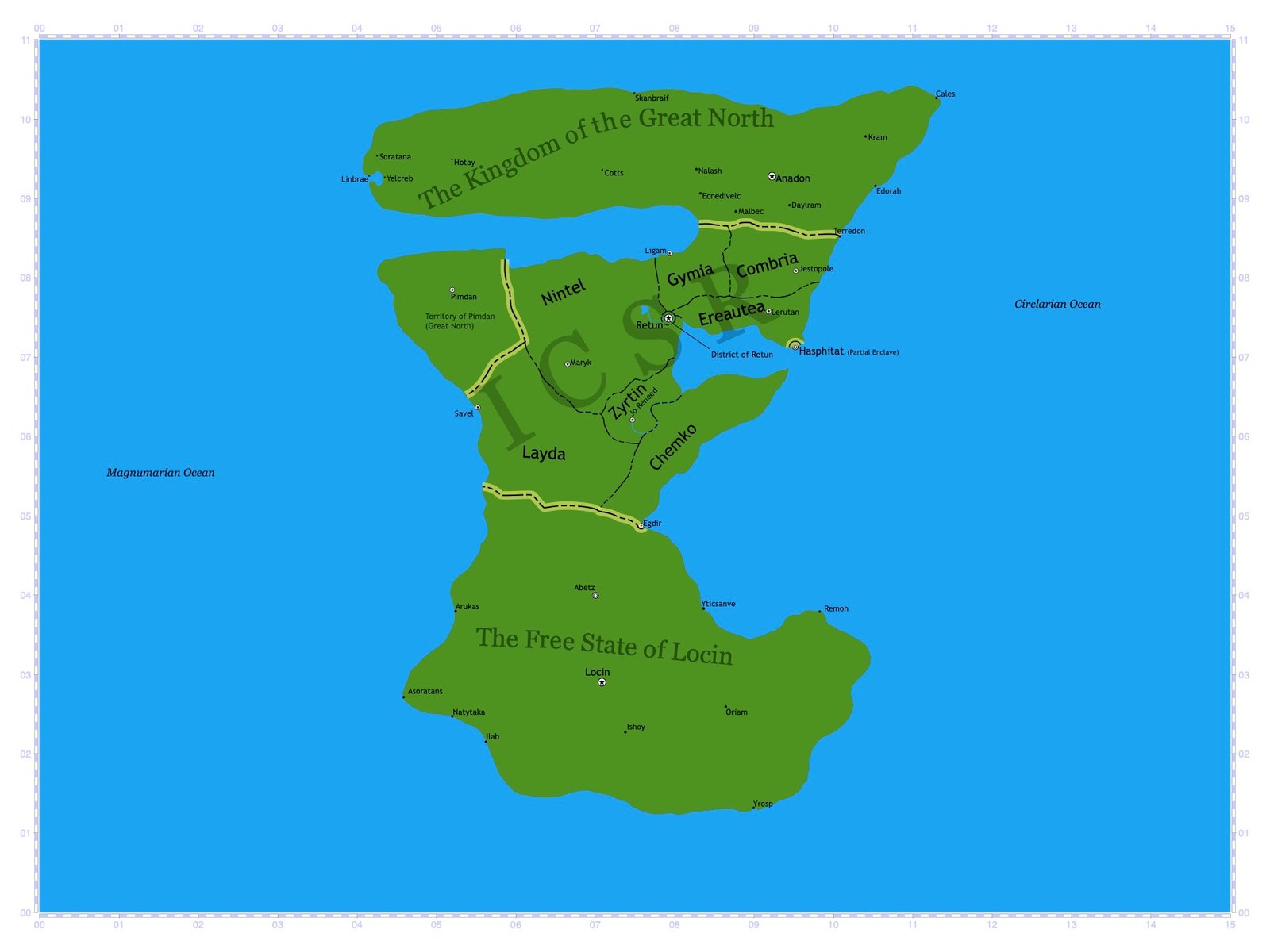
Between January and November of 1311, the war between the Commonwealth and the Reformed Federal Estates was mostly a gridlock. With the initial assault on Jestopole effectively countered by Finzi's divisions, forces between the two sides were equal along the border between the two nations, as Davis' forces carried out abductions and raids on Commonwealth families nearby...Read More
November 1319
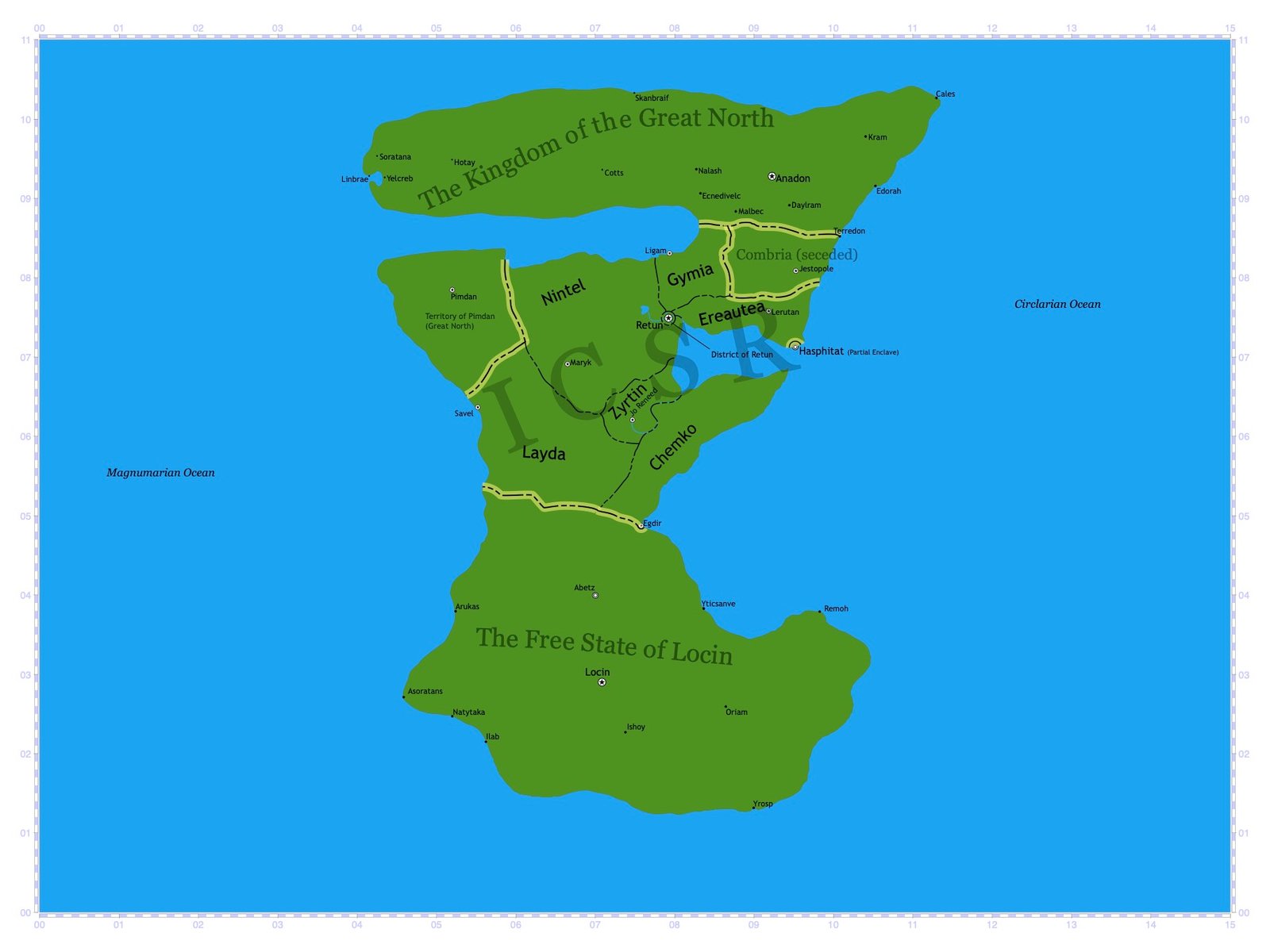
Inflation and failed investments abroad resulted in decreased labor and production for the Independent Commonwealth between 1314 and 1318. In 1319, with a stimulus in the darkfire industry employed methods to increase the quality of darkfire floans. Such approaches proved successful as more wealth was generated, giving incentive to the emergence of a dymensional plane industry. Basically, dymensionalism consists of an abstract plane that imitates reality, a product created by spellcrafters of special expertise...Read More
September 1321
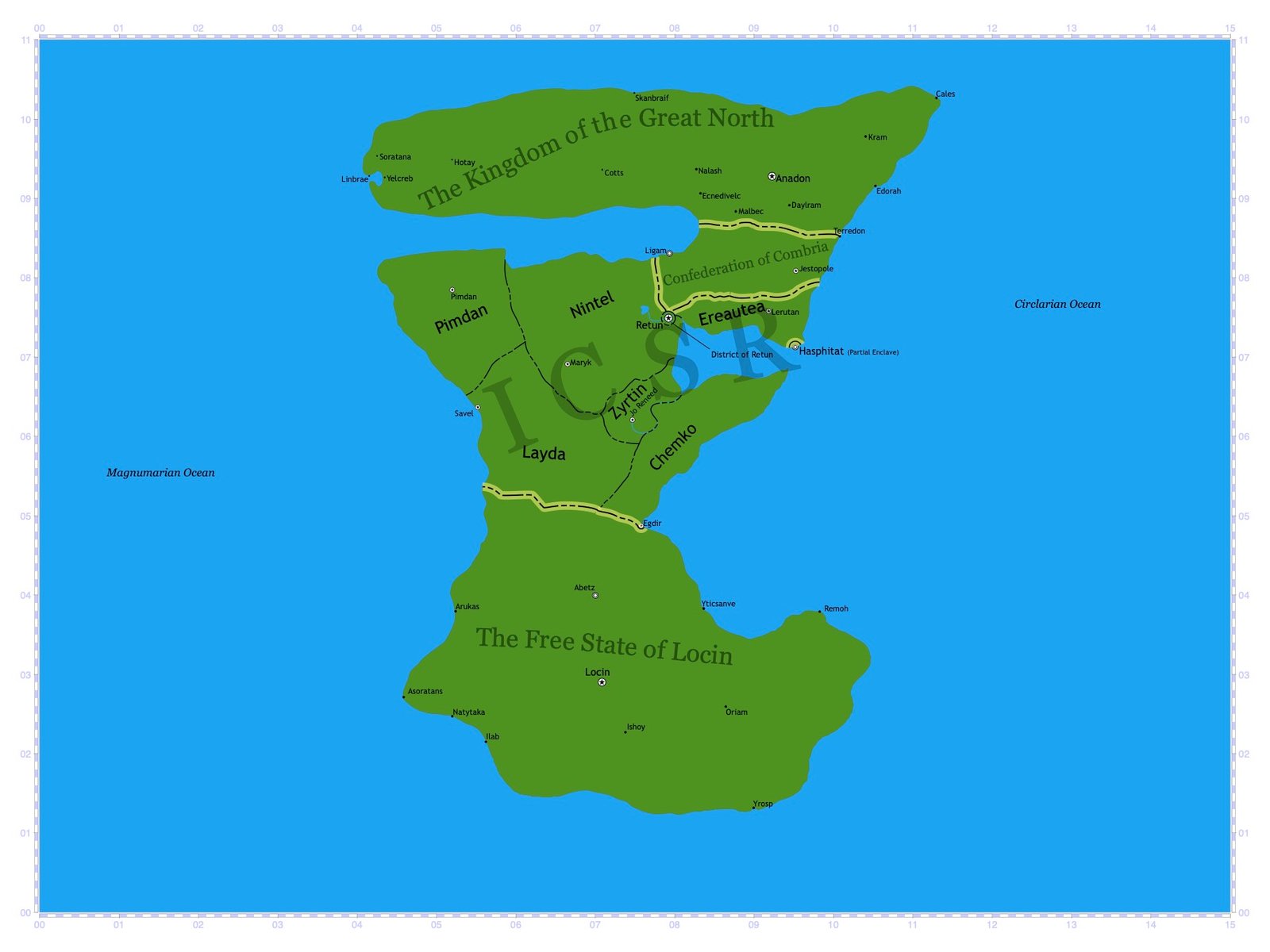
The newly independent nation of Combria ultimately was presided over by the nationalist Combrian resistance leader, George Henry, who administered Combria in the same fashion as the original Chartered State of Combria under President William Jeson. He retaliated against the Commonwealth with a heavy tariff on hubstone resources. This had incredible influence on the province of Gymia, where the tariffs put a strain on the economy...Read More
May 1323 to April 1329
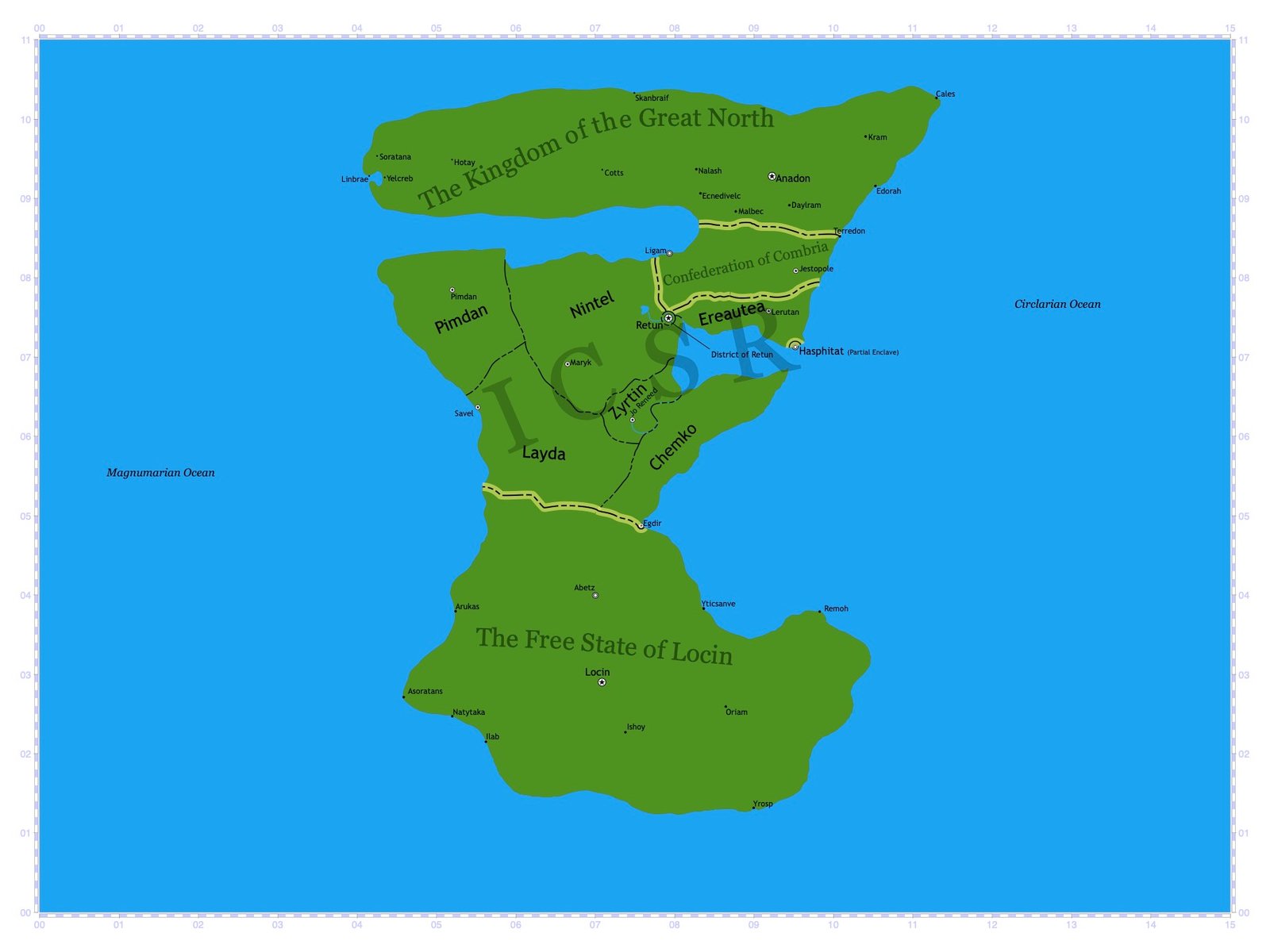
Stories of violence and brutality emerged from the ensuing conflict, and had an influence on Ellen Readon. Born in 1301, Readon witnessed economic declined and the war against Jeffeerson Davis' regime. She would later criticize these acts of war, and sided with Peter Umbol on the issues of Finzi's policies, taking part in the peaceful demonstrations in 1317. After Umbol's death, Readon established herself as a peace activist, and, citing building tension in the Commonwealth at the time, warned the public of imminent conflict...Read More
May 1329 to December 1332
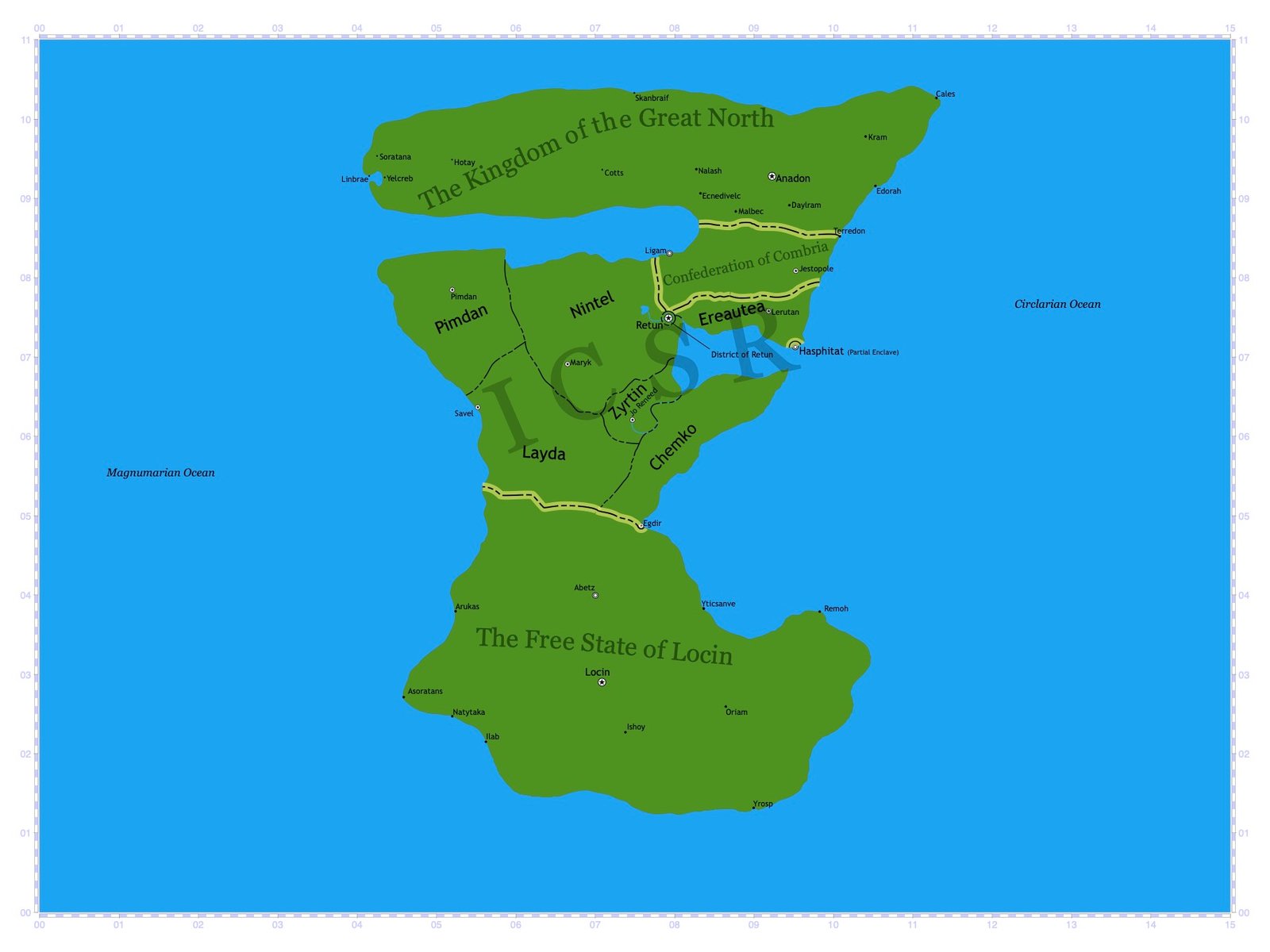
It was in April 1329 that the worst of Benjamin Arnold Syndrome, also known as the Neurovirus Pandemic, struck. Widespread and uncontrolled, the Pandemic spread to multiple regions across the Commonwealth, killing thousands each day. Local communities, stricken with fear, found irrational scapegoats and carried out insurgencies. Public infrastructure failed, as a media blackout ensued for about a year. By the year 1332, the death toll from the disease and related events was approximately 32 million...Read More
November 1333 to February 1344
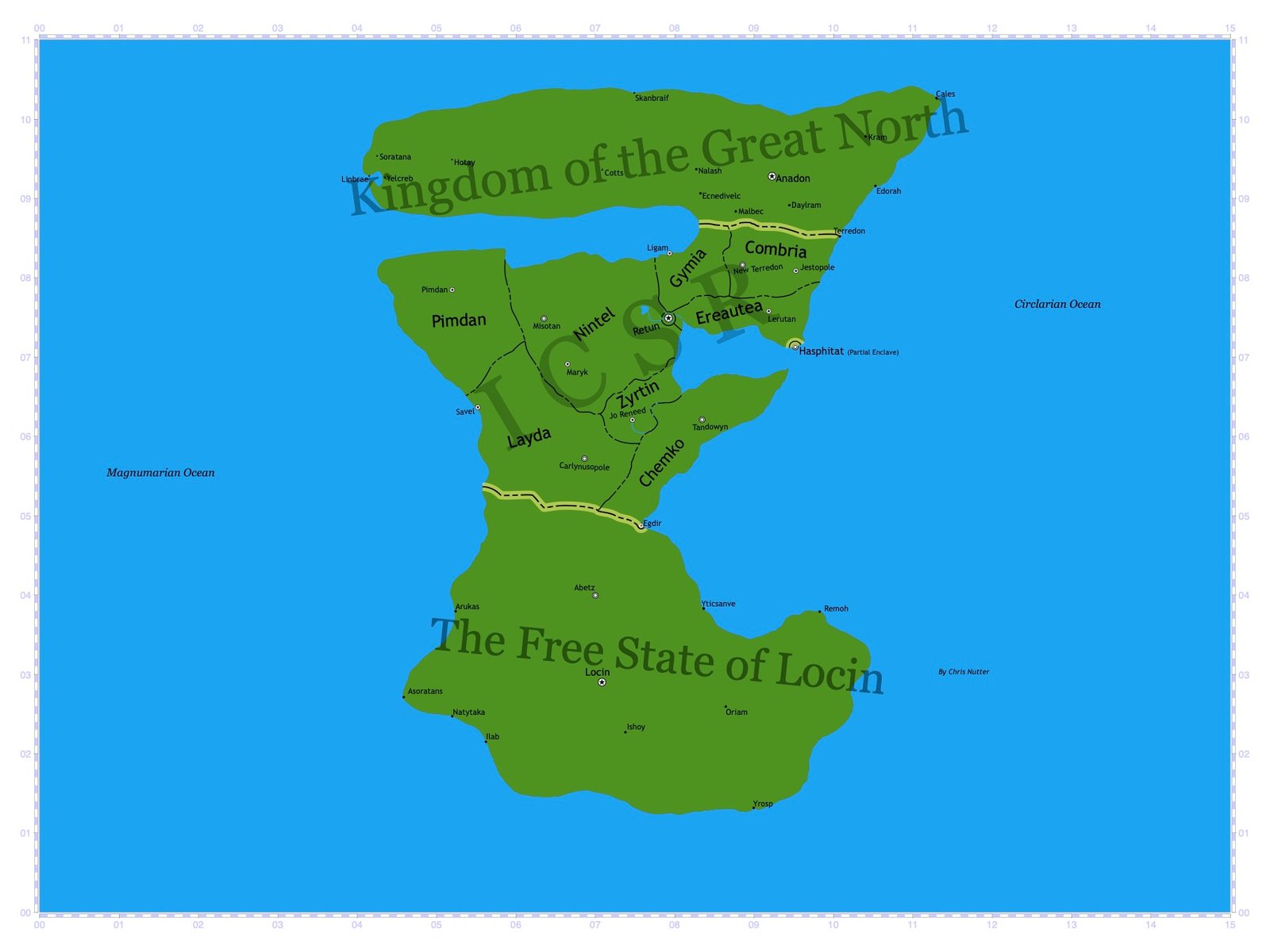
In 1330, Drs. Eric Rengold and Mary Finbar provided contributions that effectively contained the Neurovirus Pandemic. Rengold studied the virus that caused the disease and devised an institutionalization method to prevent its spread. Finbar, meanwhile, formed a drug to halt the damage. There was no way, at the time, to reverse the damage already done. It was Finbar, though, who devised a way to detect the disease early on...Read More
1345 to 1356
At 8:00AM on 6 March 1344, Commonwealth Prime Minister Alexander Schraber officially resigned from his post. He would be succeeded by George Borwell, who helped sign into law the Seventh Amendment of the Constitution of the Basin District. Under that Amendment, term limits were re-established; the Retunian Qors was reinstated; and the Waltmann Highway Project was re-scheduled for completion...Read More
1357 to 1368
In the summer of 1358, a deep-trade agreement was signed between the Commonwealth and the Ancondrian state of Saram. However, this presented a conflict with another entity: the established colony-state of Esurchia. Beginning in 1359, the Esurchians demonstrated first to Commonwealth deep-trade figures and politicians a passionate interest to override the existing trade agreement with the Saramians and establish "a better deal."...Read More
1369 to 1380
With an original agenda to expand the lightfire industry into the Ancondrian River States, it seemed that economic prosperity in the Commonwealth would continue under the administration of Prime Minister Kame. However, in February 1369, a logistical faux pas on behalf of the Commonwealth government gave way to the uncertain threat of sanctions to be carried out by Congress of Circlaria. This led tradestone brokers in the Diamond District of Hasphitat to panic and begin a mass sell-off, leading the tradestone market into a decline...Read More
1381 to 1392
The passage of the Fair Standard Housing Act (FSHA) in March 1381 authorized the nationwide construction of estate super-cantons, which raised standards of living for many Commonwealth citizens. Later that year, the Commonwealth Council passed a budget for the construction of the National Institute of Research and Development (NIRD), which would open in September 1383. In 1382, the passage and signing of the Chemkan Environmental Restoration Act (CERA) led to the release of long-classified documents detailing the events of 1264, and budgeted the environmental reconstruction of the natural Chemkan landscape in 1384...Read More
1405 to 1416
Signed into law by Prime Minister Silonk early January 1405, the series of legislative changes, informally known as the "Silonk Amendment," dramatically altered the EIFA Forum. Under these changes, Tier I was now democratically elected by the members of Tier II, and was also not industry-selective. Multiple industries were now represented in Tier I. As a result, the scriptfire industry saw a major increase in funding in the coming years...Read More
1417 to 1428
Immediately upon taking office, as the first of many measures to enhance diplomacy with both Ancondrian and Circlarian entities, Prime Minister Moore lifted restrictions on the new OCEA platform. In the last week of January 1417, the Commonwealth Council passed, and Moore enacted, the Five Schedules Act, which set a concise schedule for the Domestic, Remikran Union, Foreign, Scriptfire-Crafting, and Dymensional-Crafting sectors of the economy...Read More
1429 to 1440
Upon inauguration, Prime Minister Mary Ann Heits signed a measure approved by the Retunian Council to fully reinstate the OPEN Forum. She also approved a funding booster for the public arts. This included the visual arts, theatre, and music, all organized to a yearly schedule. Meanwhile, Heits renewed existing efforts to strengthen basic diplomatic ties with the Sidaleron Maritime Council despite the failure of Marc Warren's agenda...Read More
1453 to 1464
Not much, even presently, is known about the Lotumna Democratic Maritime State. However, it has been recorded that the entity was established, initially as House Lotumna, in May 1106 and was governed as an incumbent-appointed leadership council. In May 1387, the old government of House Lotumna was overthrown as the Lotumna Democratic Maritime State was established in its place...Read More
1465 to 1476
A budget reconciliation measure, signed by the Retunian Council during the first week of January 1465, temporarily scaled-back investments toward the darkfire industry and diverted them instead toward the dymensional planecrafter industry. Eddard Teal sought an opportunity, at that point, to attempt to expand Library of Circlaria commercially with the hope that revenue from this would float the economy as a whole...Read More
1477 to 1488
To this day, as throughout history, darkfire trade entities (nations, maritime states, etc.) have fallen into two categories: open-trade entities, or those whose representatives make public disclosure through statements or symbols of the entities they represented; or closed-trade entities, who kept such associations anonymous and privileged only to trusted sources. Before the beginning of deep-trade with the Sayleronian Maritime State, the Independent Commonwealth State of Retun was a closed-trade entity...Read More
1489 to 1500
During the month of October 1488, numerous reports began to emerge of CAD Virus cases in the Sayleronian Maritime State; and on 13 October, the Sayleronian Maritime State declared a pandemic emergency. This was followed by a similar declaration by the government of the Independent Commonwealth State of Retun (ICSR) on 24 October following numerous cases in Middle Remikra...Read More