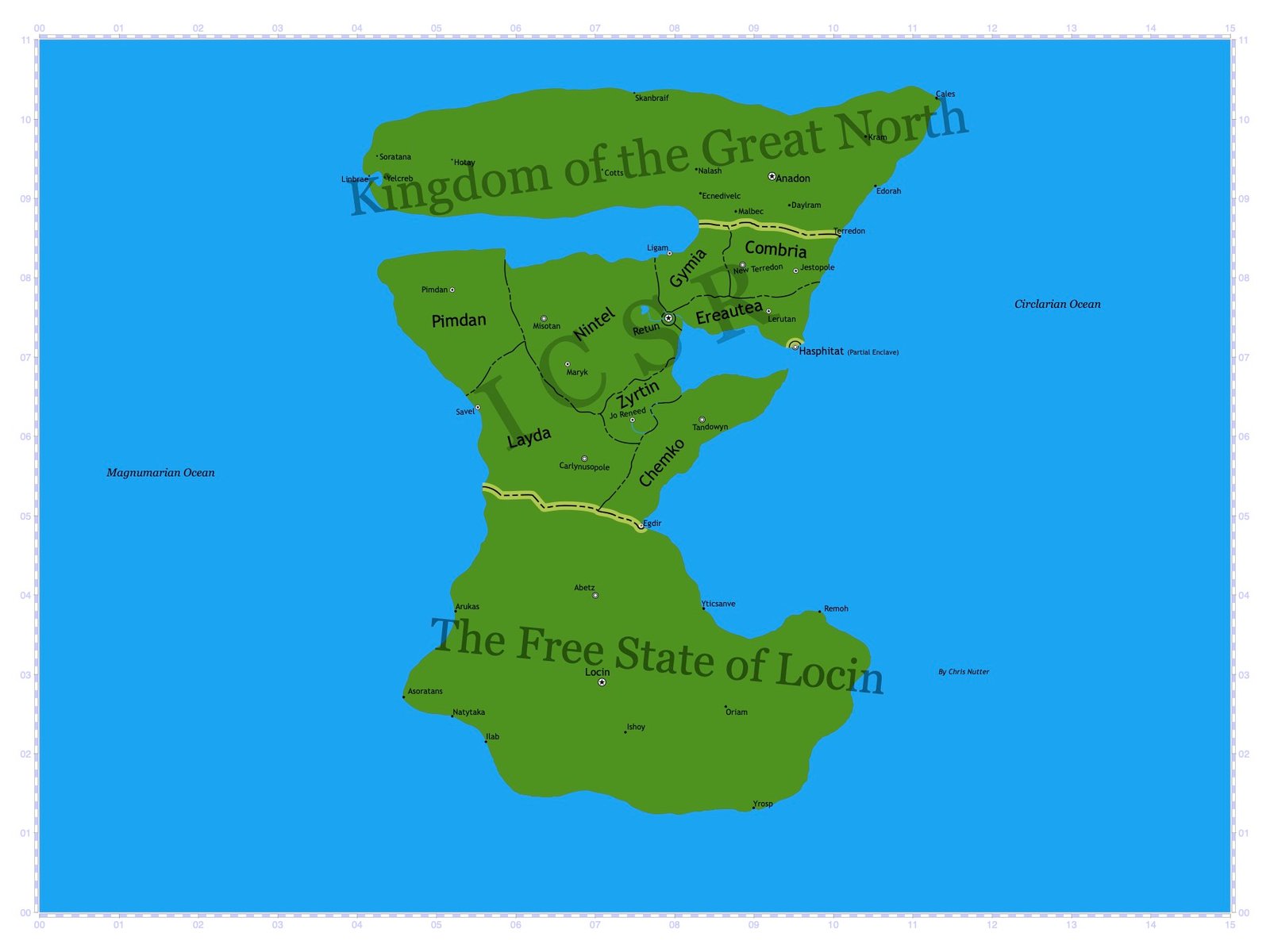
Deep-Trade with the Sayleronian Maritime State: The Early Years
To this day, as throughout history, darkfire trade entities (nations, maritime states, etc.) have fallen into two categories: open-trade entities, or those whose representatives make public disclosure through statements or symbols of the entities they represented; or closed-trade entities, who kept such associations anonymous and privileged only to trusted sources. Before the beginning of deep-trade with the Sayleronian Maritime State, the Independent Commonwealth State of Retun was a closed-trade entity. Owing to influence from the Sayleronian Maritime State, the Retunian Commonwealth has since revised its Darkfire Decision Committee Code of Trade so that the nation stands as an open-trade entity, albeit with privacy measures against disclosure to entities outside the International Darkfire Community.
Another aspect influenced by deep-trade with the Sayleronian Maritime State was the import and export of darkfire tradestones. Before the beginning of relations with the Sayleronian State, such trade was restricted only to darkfire tradestones containing conventional scripts, while the Darkfire Decision Committee made no push for tradestones involving unconventional scripts developed outside of the Retunian Commonwealth. This principle was in place with the intent to protect the Retunian Darkfire Community. However, after negotiations with the Sayleronians, the Decision Committee began opening darkfire tradestone markets to international non-conventional tradestones with insights based on research and stringent safety approvals.
Three historians from the Sayleronian Maritime State established permanent residency in the Retunian Commonwealth in 1477, and studied, in depth, the history of Remikra and its lightfire industry. In 1478, they made a joint testimony at the National Institute of Research and Development. And at the end of said testimony, they made a call for the re-establishment of the lightfire industry, albeit one that was more democratic and less profit-driven in nature. Scholars at the Institute banded together and established a lightfire production model of this nature in February 1479 while numerous economists and council members began considering the idea of establishing lightfire trade in the Carricon Isles region.
Established in the 1090s, in Combria, was a branch of Alconism known as Elsaeanism, based upon the belief that an important female figure from the Realm of Divinity would arrive and deliver salvation to the Circlarian people. Such a belief was deemed manifested with the arrival of the Esurchians, led by such a female figure, in the late 1350s and early 1360s. However, as history played out, the female figure was, in fact, an avatar generated by an algorithm book, while in reality, the Esurchian State was managed by an anonymous three-person junta. With the Esurchian Occupation overcome, Elsaean beliefs were blamed for Retunian society having failed to prevent the Occupation from happening in the first place.
Representatives of the Sororal Council of House Esary mingled with Combrian society between the 1160s and 1180s, relieving hardships from the ensuing civil war at the time and establishing standards of virtues. From this time period arose a belief that the leader of the Sororal Council, deemed "the Lady of the North," would return and deliver salvation to Middle Remikra. This belief, known as Esarianism, would come to be largely discredited with the fall of the St. Thomas Foundation in the early 1440s.
With the beginning of trade with the Sayleronian Maritime State, the belief of Elsaeanism began, once again, to be upheld among those religious demographics of the Retunian population, who deemed that the followers of the previous century were misled on the Esurchians. Elsaean followers, following the beginning of trade with the Sayleronians, determined that such a belief should be followed with a greater deal of self-determination. This would, of course, divert more people away from Esarianism.
From the falling-out he had with Library of Circlaria, Eddard Teal had gained a rather sour reputation. After the end of his final term as co-Head-Librarian, Teal would keep a low profile. However, he still had a following, consisting of those who, through late family elders, remembered Eddard Teal's association with his great-grandfather, Simon Teal. Simon Teal, as a member of the Deep-Trade Administration in the 1360s, made the call, in 1361, for the Retunian Commonwealth to begin terminating deep-trade agreements with the Esurchian State. Thus, Eddard Teal would be called upon, in 1475, to run for an elected position in the Deep-Trade Administration. Teal declined to do so in that year. However, in 1476, he would yield to such a call and would be elected.
Beginning his tenure with the Deep-Trade Administration, or DTA, in January 1477, Eddard Teal would play an important role in keeping matters stable between the Retunian Commonwealth and Sayleronian Maritime State. On 17 June 1477, the Retunian DTA would propose terms it believed would be well-kept, mutually, regarding the containment of non-darkfire shale quarry stones, a practice tried by the Commonwealth in the past but since abandoned. However, the Sayleronians would collectively disengage and maintain radio silence over the days that followed. On 23 June, the Sayleronian State announced that it was temporarily shutting down its darkfire programs; and on 5 September, they announced postponement of conferences with the Retunians for five to six months due to unforeseen circumstances. Citing possible exploitation, members of the Retunian DTA began to consider emancipation, or termination of deep-trade with the Sayleronian State. In contrast to the actions of his great-grandfather, Eddard Teal led a bloc of DTA members in opposition to the emancipation measure, citing that there was simply a misunderstanding that could be resolved. After a lengthy session of intense debate, Teal succeeded in having the DTA approve, instead, a list of grievances to be sent to the Sayleronian State, with the understanding that the Sayleronians could emancipate if the list was deemed by them to be unreasonable. The Sayleronians responded with the statement of intent to preserve the acts of Motion Three. Furthermore, the Sayleronians and Retunians agreed to establish a solid line of telecommunication as well as schedule for envoys of both states to attend an Open Forum held on the Carricon Isles every seven weeks. And on 7 October 1477, the Retunian Commonwealth and Sayleronians signed a mutual policy on non-darkfire quarry stone containment.
The Sayleronians would occasionally decline to send envoys to the Seven-Week Forum owing to its schedule and economic priorities. Representatives of the Retunian Commonwealth, on 21 September 1480, announced that they would send envoys to attend every scheduled Forum, open to trade with other entities, in the event that the Sayleronians would not arrive. The Sayleronians responded that day with a statement to have such be the case with the next scheduled Forum, to which the Retunian Commonwealth responded with a referendum pitched to the Sayleronian State to determine whether or not emancipation should occur. The Sayleronians responded by voting down the referendum and condemning the motion made by the Retunians. On 22 September, Eddard Teal led a vote by the Deep-Trade Administration to not put forward such referendums unless there arose an "unlikely situation in which collateral damage is otherwise inevitable." Thus, Motion III was preserved.
Owing to his actions, Eddard Teal would win re-election to his DTA post every year over the course of many years.
The Commonwealth Progressive Liberal Party (CPLP), 1479 Gubernatorial Elections
Since the 1430s, the political stage, nationally, was dominated by the RAD Party and the Commonwealth Democrats. The RAD Party stood to support the dymensional planecrafter and darkfire industries, while the Commonwealth Democrats stood for priority funding toward conventional trade industries. During this time period, the RAD Party would almost always carry favor of the majority of the population due to the RAD Party's stance on non-conformity. Despite varying degrees of success, the Commonwealth Democrats always maintained a minority in Legislature and were even deemed by some to be "an easy party to defeat."
Change would come to this overall political dynamic, however, with the arrival of new ideas and philosophies from deep-trade with the Sayleronians.
Nara Faye Morris, a scholar of the National Institute of Research and Development, carried a research project concluding that more robust federal funding was needed toward field research abroad on the subjects of darkfire and dymensional planecrafting. The RAD Party, though supportive of both industries as aforementioned, had been dedicating funds toward the implementation of tried and true methods of production. After testimony on the matter, the RAD Party would lead a vote in Retunian Council to allocate more funding toward international field research. But following the outcome, Morris insisted that the effort was not sufficient.
Thus, on 11 February 1478, Morris and four other scholars founded the Commonwealth Progressive Liberal Party.
On 8 October 1478, political party primary elections were held; and the Commonwealth Progressive Liberal Party, or CPLP, would pick nominees to campaign for every position contested the following year. The gubernatorial elections of 16 September 1479 would yield no governor seats for the new party, but would award seats to them for twenty-five percent of the Retunian House of Representatives, as well as one seat, representing the Mid-Westerlies, in the Retunian High Council.
The House of Masons, Changing of the Bloodstones
On 12 February 1086, the Leon and Kontacet families established the House of Masons, which would govern over the nation of Combria. Though they would eventually cease to be an actual governing body, the House of Masons has persisted to this day as a significant organization in Middle Remikra. And until 1479, the House of Masons served, without question, as a patriarchal house upon a male family line strengthened by a Patriarchal Bloodstone.
On 1 March 1086, the Cleric of the Chapel of the House of Masons presented the Bloodstone, drawn from the Combrian Quarry. The eldest man from each the Leon and Kontacet families pricked his left index finger and pressed it upon the Bloodstone, thus allowing the Bloodstone to absorb his blood to give long life and lineage, as well as good health, to their descendants. Both men in that moment swore the Oath of Mutual Friendship, a vow to lead the House of Masons without internal rivalry.
Usually, upon such blood-swearing, a given bloodstone would emit a glow, gold for male lines and silver for female. This Bloodstone, however, remained dark. Though many at the time voiced concern, the phenomenon was deemed to be a normal occurrence.
Per tradition, after the death of an elder, the involved family would elect the next male member to succeed him. The Leon family, in this case, would elect their next Elder, who would attend the Ceremony in the Chapel during which the presiding Cleric would prick his finger. The Leon Elder-elect would press the pricked finger upon the Bloodstone, which was held by the Elder of the Kontacet family, while swearing the Oath of Mutual Friendship. The same would hold true for a Kontacet Elder-elect while the Bloodstone, in this instance, was held by the Elder of the Leon family. This tradition would persist over the course of the next four centuries, even during the political turmoil following the Chadwick Era.
The Sayleronians studied the history and tradition of the House of Masons, becoming fascinated but also curious around the case of the Patriarchal Bloodstone remaining dark. Before long, they began asking the House to consider assigning a Matriarchal Bloodstone as part of a social experiment. On 22 January 1479, after such urging, the Cleric of the House of Masons held a Ceremony in the House of Masons Chapel, during which two female Elders, one each from the Leon and Kontacet families, swore to a Matriarchal Bloodstone drawn from the Quarry. To everyone's astonishment, and to the wild speculation of Sayleronian witnesses, the Matriarchal Bloodstone emitted a silver light in that moment.
Over the weeks and months that followed, there arose a great deal of controversy over the matter, both inside and outside House of Masons membership. The Matriarchal Bloodstone immediately shone silver while never once in the history of the House of Masons did the Patriarchal Bloodstone ever give a glow. Thus emerged a call to declare the Matriarchal Bloodstone a legitimate bloodstone for the House of Masons; and this drew opposition from some people and factions who considered the change to be a violation of a four-century tradition of Patriarchy. Nevertheless, on 16 October 1479, a vast majority of House of Masons members voted in favor of Matriarchal Bloodstone legitimization. Opponents would rage publicly while others voiced alarm. But this only constituted a minority of the population; whereas the majority indulged in a great deal of celebration. Most notably, in the early morning hours of 17 October, many Retunians in celebration gathered in the town square of Uhlstead, and tore down the last remaining Esarian-Remikran relic: the Tower of Virtues, a symbol favoring the Patriarchy.
Over the years that followed came a growing call to retire the Patriarchal Bloodstone of the House of Masons. This drew the same amount of controversy as supporters of the so-called Great Retirement deemed that the Patriarchal Bloodstone, which never glowed, was an illegitimate Bloodstone for the House of Masons, and was furthermore a symbol of oppression and forced conformity. Once again, however, more people favored the action. And thus on 24 February 1484, the House of Masons approved through a House vote to retire the Patriarchal Bloodstone.
The House of Masons, in that moment, became a Matriarchy, serving as an example of non-conformity and an inspiration to Circlarian people abroad to fight against oppression.
The Merger of Locin into Pharonde
The Free State of Locin had engaged in trade with the Taceranian Maritime State in the 1330s, remaining on neutral-friendly terms over the decades that followed. They began trading again between 1390 and 1410, and before long, signed deep-trade agreements. Locin entered the First Motion of deep-trade on 15 June 1403, the Second Motion on 5 February 1404, and the Third Motion on 23 February 1404. On 12 May 1412, Locin terminated its membership with the Remikran Union.
Trade prospered between Locin and Taceran during the years of the Third Motion, as Locin enjoyed a booming economy and increased standard of living. However, being in a mutual Third Motion status, traders between the two nations had to contend with minor tariffs, which could only be resolved through the adaptation of the Fifth Motion. Thus, the two nations mutually agreed to enter the Fourth Motion on 15 April 1481, a move that drew praise from major powers and members of the South Circlaria Trade Federation. The Retunian Commonwealth, especially, responded favorably to the move as it helped to resolve any lingering factors toward past tensions.
The official ceremony for entry into Motion Five was held in the municipality of Plains Crossing, Furthing. In that moment, Locin and Taceran merged and formed the Republic of Pharonde, as the head of the executive branch of each former-nation became a Lieutenant-Governor, presided over by a figure in the newly-created Governor-General role of the new Republic. The national government seat of Pharonde was established in the Locinian city of Remoh, renamed Elleraic. And thus, the Republic of Pharonde entered into the South Circlarian Trade Federation as its newest member.
Library of Circlaria: The Continued Tenure of Lorens and Herdon
Co-Head-Librarian Linda Gormann carried out her last act of supposed moral political integrity by vowing not to run for re-election to her co-Head-Librarian position for the 1480 election cycle, endorsing, instead, her ally: Guy Kevins. Against Kevins, co-Head-Librarians Aydrya Herdon and Rachel Lorens endorsed Lydia Qalmers, a figure strongly favored by the Sayleronian Maritime State for helping to bridge knowledge gaps regarding Library of Circlaria lore, thus supplying a strong body of Sayleronian clientele. Furthermore, Qalmers was famous for her association with the late Sophia Qalmers, her great-great aunt. Qalmers easily won the co-Head-Librarian election of 1480, and was set to serve alongside Herdon and Lorens. Qalmers, Herdon, and Lorens maintained a tight social bond with one another until Qalmer's stance on the House of Masons Bloodstone tradition became public.
As aforementioned, the House of Masons, on 24 February 1484, voted to retire the Patriarchal Bloodstone. Qalmers, to the surprise and shock of many, was a strong supporter of the House of Masons Patriarchy, and on 8 May of that year, began a fundraiser for a political agenda to restore the Patriarchal Bloodstone tradition. This drew backlash, not only from the general public, but also the Herdon, Lorens, and the Sayleronians. Herdon and Lorens, in response, vowed not to support Qalmers in the next co-Head-Librarian election cycle. They, instead, consulted with the Sayleronian envoy representing Sayleronian Library clientele, who suggested that a figure named Nya Merch be endorsed in Qalmer's place. Qalmers condemned the decision publicly, accusing Herdon and Lorens of engaging in transactional politics. Nevertheless, Merch defeated Qalmers in the 1489 election cycle.
The 1482 Prime Minister Election Cycle
The main issues surrounding the 1482 Prime Minister election cycle revolved mostly around membership in the South Circlarian Trade Federation, research funding priorities for the dymensional planecrafter industry versus conventional trade, and funding for the re-emerging lightfire industry. Incumbent Prime Minister John Dickens of the RAD Party sought re-election, promising to work toward the Retunian Commonwealth terminating its membership with the South Circlarian Federation, maintaining darkfire and dymensional planecrafter funding with healthy debate on field research funding, and providing equal funding priorities with the lightfire industry. Realay Thomas of the Commonwealth Democratic Party sought the Prime Minister role with a promise to maintain the status quo albeit with the lightfire industry being the only industry with priority federal funding. With a large majority of the Retunian population favoring Sayleronian sentiment, which favored many of the stances taken by the RAD Party, Dickens would win re-election on 24 September 1482, while the RAD Party would maintain its legislative supermajority.
The Sayleronian and Makrean States: Civil Strife
The Makrean Maritime State was also part of the open-deep-trade arrangement with the Sayleronian Maritime State, though the Makrean State and Retunian Commonwealth did not trade directly. A Forum between the Makrean State and another anonymous entity was scheduled to take place during the month of December 1482. However, on 14 December, it was discovered that all Makrean ships left all Sayleronian ports. There arose a conflict between the two States, a conflict that manifested into an armed conflict between 20 and 22 December. A clause in Motion Three between the Retunians and Sayleronians prevented the Retunians from directly intervening. However, the Retunians were able to provide marginal statements of advice to the Sayleronians, which helped the Sayleronians and Makreans to settle matters. Sporadic confrontations would ensue in the coming years but urgent tensions were mostly resolved.
However, during the course of such efforts, Sayleronian representatives, on 20 February 1483, accused Retunian DTA representatives of failing to adhere to the the Retunian provisions of Motion Three. Said Retunian representatives were angered by this and put forward a list of grievances along with a referendum to consider emancipation. The Sayleronians decried this motion, as tensions began to mount. However, Eddard Teal intervened and had yet another compromise signed. Provisioned in the compromise was a clause for the Retunian Commonwealth to avoid pushing grievances without substantial evidence of damages, and instead pursue economic stimuli outside the existing agreements to balance out any future shortfalls. The compromise also called upon Retunian Council to pass laws offering more protections for tradestone traders and for the Retunian Commonwealth to enlist confidential third-party arbitration to help provide guidance in future unfavorable situations. Such a measure would ultimately be become law, beginning in 1484, as the Trade Reconciliation Act.
John Dickens: End of Tenure
The decision of the House of Masons to adopt a Matriarchal Bloodstone was a very popular one with the national electorate, as the situation commanded sound leadership from the Retunian Prime Minister in order to coordinate relations between the House of Masons and the federal government. John Dickens, however, felt that other figures more associated with this decision would be better-suited to fill the Prime Minister role. And thus, on 4 February 1484, John Dickens announced to the public that he would not seek re-election as Prime Minister come the election cycle of 1488. In his place, he endorsed Salonmae Rickardson, a move well-condoned by the RAD Party.
The 1485 Gubernatorial Elections: Gains by the CPLP
In accordance to Retunian Constitutional protocol, a political party, in order to appear on a given ballot as a major party rather than simply a write-in space, must fulfill two criteria: first, the party must nominate a candidate for an elected office during the primary elections; and second, the total votes cast for said party in a primary election cycle must equal at least one-fifth of all votes for all parties cast during said cycle.
The Commonwealth Progressive Liberal Party, or CPLP, gained attention during the 1479 gubernatorial election cycle, getting enough votes to be listed as a main party on the ballot for the Province of the Mid-Westerlies, but such was not the case on the national scale. The same held true for the 1485 gubernatorial cycle. Furthermore, the 1485 cycle yielded no gains for more seats in the Retunian High Council; however, they did, once again, win the Governor Seat in the Mid-Westerlies as well as fifty percent of seats in the House of Representatives that were previously held by the Commonwealth Democrats; in other words, the CPLP gained enough seats to comprise just under twenty-five percent of the House of Representatives.
The Retunian Commonwealth: Shift from South Circlarian Trade Federation to Carricon Isles Trade Federation
On 5 December 1483, the Norica Trade-State, a member of the Carricon Isles Trade Federation, forwarded a consideration for the Retunian Commonwealth to join membership, thus enabling the Retunian Commonwealth to terminate its membership with the South Circlarian Trade Federation without resulting economic shortfalls. And on 6 February 1486, the Norica Trade-State made this an official proposal. Meanwhile, on 16 April 1486, the Etikouron State made a similar proposal for membership in a smaller, newly-founded Federation rather than the Carricon Isles Federation. Thus, between April and November 1486, debate ensued between the two proposals. Those in favor of the Carricon Isles proposal included many supporters of the RAD and CPLP Parties as well as Retunians favoring trade with the Sayleronian State, all of whom argued that such a proposal was for an arrangement more democratic in nature with more trade opportunities. Furthermore, Retunian ports would ultimately be set up in closer proximity to Sayleronian ports. In contrast, the Etikouronian proposal drew support from the Commonwealth Democrat base, who argued that this proposal would guarantee more protection and loss prevention for Retunian trade ships as well as a stronger alliance against the increasingly hostile Congress of Circlaria.
A Retunian envoy accepted an invitation to attend a closed Forum hosted by the Etikouronians between 13 and 20 November 1486, during which the Retunians reported that the State of Etikouron was run very much like a non-democratic regime with strict rules on ship-docking as well as foreign visas. Thus, on 6 December 1486, the Retunian Commonwealth voted to accept the Carricon Isles proposal.
1487: Congress of Circlaria Elections
Throughout most of its history, the Congress of Circlaria consisted of a liberal bloc versus a conservative bloc. The liberal bloc believed in democracy and free-trade for all political entities. In contrast, the conservatives favored nations and entities who strongly imposed law and order, and believed that houses and states with matriarchal bloodstone family lines should have no political power. Furthermore, the conservatives believed that nations non-conforming to the aforementioned conservative beliefs should be cut-off from trade or "starved out."
Between 1393 and 1441, the conservative bloc held a majority in the Congress of Circlaria. In 1441, said majority shifted to the liberal bloc; however, the liberal bloc during this time period gained an unfavorable reputation for being too soft on land-bound and maritime corporations as well as allowing too many conservative policies to be enforced in Congress of Circlaria member states while acting against liberal agendas. The liberal bloc of this period even refused, defiantly, to intervene in ongoing conflicts such as the West Ancondrian War and the War of the Tower of the Isle.
Thus, throughout the 1480s, conservatives amassed a solid backing while support for the liberal bloc deteriorated. Congress of Circlaria elections were held between 9 and 16 February 1487; and at the end of counting in the early morning hours of 18 February, the conservative bloc was found to have won a decisive victory. The Retunian Commonwealth responded to this shift with increased defense spending in order to protect the Retunian Darkfire Community as well as the House of Masons.
The 1488 Prime Minister Election Cycle
Issues of utmost importance, during the 1488 Prime Minister election cycle, included a debate on expanding funds toward the re-emerging lightfire industry versus said funding for expanding on the dymensional planecrafter industry, a debate on whether or not the Retunian Commonwealth should join the North Circlarian Trade Federation for better protection against Congress of Circlaria, and a debate on whether or not the Retunian Commonwealth should expand on conventional trade.
Salonmae Rickardson, running on behalf of the RAD Party, advocated for giving priority funding toward the dymensional planecrafter industry, setting up the lightfire industry for second-tier funding, implementing efforts to gain membership with the North Circlarian Federation, and avoiding prioritization of conventional trade funding unless absolutely necessary. Challenging her was Stephen Senn of the Commonwealth Democratic Party, who sought to prioritize funding toward lightfire over funding toward dymensional planecrafting, to avoid prioritizing the implementation of efforts toward North Circlaria membership, and to expand on funding toward additional conventional trade opportunities. With the majority of the population favoring her stances, Salonmae Rickardson won the Prime Minister election on 16 September 1488.