Defending the Settlements
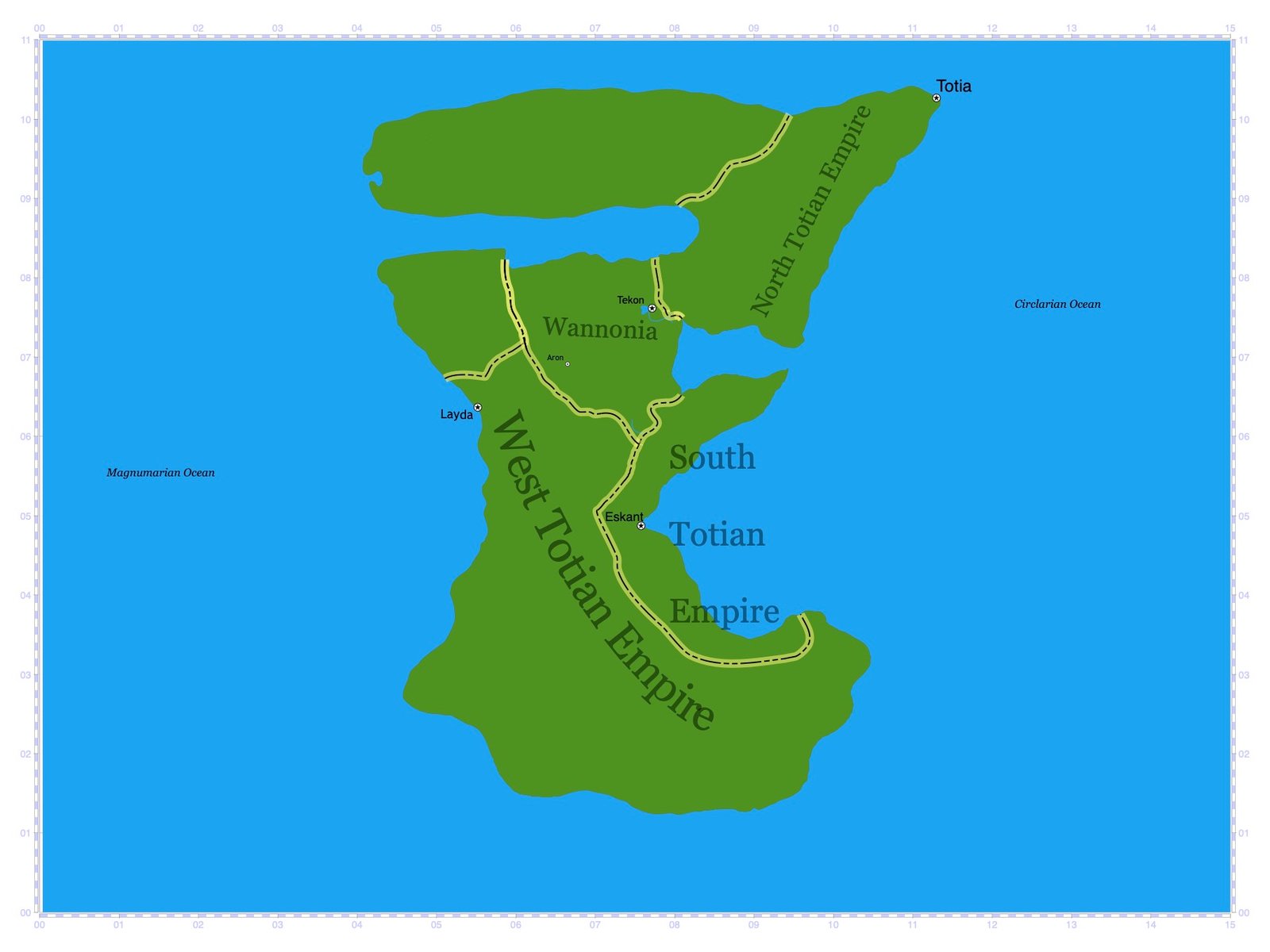
By April 737 BCE, there were numerous established settlements along the West Peninsula of Canticula. There were seventeen total, with nine claimed by the West Totian Empire and four each by the North and South. It was in the summer of that year, however, that the Cantacians, a nomadic group after which the continent of Canticula was named, attacked the settlements. The West Empire held onto five of the nine settlements; however, the North and South were driven out. In March 736 BCE, Emperor Armstus received an urgent letter describing this situation, and promptly sent three Legions by sea to confront the hostility. The Legions arrived at the settlements one year later, where they drove out the Cantacians and reclaimed all seventeen colonies. Although the settlements were returned to their respective Imperial jurisdictions, Armstus paid numerous West soldiers to permanently stay and defend them.
The Situation with the West
High taxes were placed on farmers in the Remikran Plains to fund such reinforcements overseas. In previous years, an economy had developed where the farmers traded some of their crops and livestock by sea and land. The monetary difference gained in such transactions was used to purchase more seeds and livestock, outlining an ancient predecessor to capitalism and free enterprise. An issue developed, however, where some hostile Camaran and nomadic factions formed companies of bandits who occasionally robbed these training farmers. To address this, Armstus had been sending over Legion soldiers to offer protection. Consequently, taxes were raised to pay for this; and such an increase was tolerated. It was when the overseas settlement crisis began that some of these soldiers were drawn away. The farmers, expecting lower taxes, were angered to see their taxes increase evermore. Between October and December 734 BCE, Regor, a significant leader in the farming community in the city of Tecere, raised protest. Two months later, he and his followers sent Armstus a petition, which demanded that Armstus withdraw some or all of the soldiers from Canticula to help lower the taxes in exchange for the farms compensating in terms of goods over what the colonies produced. In October 733 BCE, Armstus issued a letter of refusal, and gave Regor and his community a temporary tax break instead. Three years later, however, the taxes returned; and Regor threatened to cut off food supply to Layda. In March 731 BCE, Armstus and Regor reached a compromise in a partial lowering of the taxes. The taxes, though, were still quite high; and the West Totian government was heading deeper into debt, drawing contempt from an emerging wealthy merchant class. In February 730 BCE, a merchant named Tisdero gained favor from Regor by promising to cut taxes entirely if he were to become the next Emperor. Armstus, having neither married nor had any children, was suddenly faced with the pressure, in the following October, to appoint Tisdero as the next Emperor. Armstus initially refused; and in the following March, Regor cut food exports to Layda. By May, food prices increased while supply dwindled, leading Armstus to finally oblige in appointing Tisdero. Three years later, in October 727 BCE, Armstus died; and Tisdero became the next Emperor of the West Totian Empire.
Tisdero
Within the first year, Emperor Tisdero withdrew all West Legion soldiers from the Canticulan settlements; and in March 725 BCE, the Cantacians attacked again, forcing the remaining North and South Totian settlers abandon their settlements and to return to Remikra.
By November 725 BCE, all West Legion soldiers returned to the Empire, as the Emperor and farming faction leaders anticipated the end of such financial pressures. Such anticipation was dashed when the Lynds, in January 724 BCE, staged an assault from the Pimdanian Mountains. In the year and a half that followed, Emperor Tisdero constructed a large wall bordering the mountain range. Such an investment paid off in June 723 BCE, when the Lynds tried to attack again, suffering defeat and humiliation by "sludge" thrown at them by the West Legions. However, Layda began having issues of its own when Emperor Tisdero began "draining all coffers, public and private, to satisfy his endless taste for the lavish life." In doing so, he paid no heed to Regor and the inhabitants of the Plains. Between November 718 BCE and January 717 BCE, Regor wrote him a letter asking for the new Emperor to honor the promise of cutting taxes yet again. When the Emperor responded later that year by saying that the conflict with the Lynds was proving too costly, Regor sent a contemporary named Tyns to Layda.
The Order of Tekon
In August 717 BCE, Tyns arrived in the Imperial capital to discover that what Tisdero said was quite an exaggeration; and that October, Regor, once again, cut off food exports to Layda. In February 716 BCE, Tisdero completely eliminated taxes from the farmlands. But then, three years later, with Imperial coffers under even worse strain than earlier, Tisdero imposed heavy taxes not on the farmers, but on the leadership of the farming cantons. In May 713 BCE, Regor established the Order of Tekon in the city of Tecere, with the organization being named after a beloved community Divine figure. Under democratic leadership, they voted to have the cantons pay only the tax sum equal to that paid to Armstus before the war in the Canticulan settlements. The Order also recruited farmers to fight off any Legion soldiers sent by Tisdero to collect taxes by force. When Tisdero did such in December, the defenders of the Order drove Tisdero's men away. In March 712 BCE, in retaliation to this, Tisdero sent an entire Legion to Tecere, where large numbers of farmers were massacred, and the Order fled to the city of Maern.
The Formation of Wannonia
By June 712 BCE, the Order arrived in the city of Maern, where a ceremony took place involving the sharing of bread and wine. The Order then voted to have themselves and the territories surrounding Tecere and Maern proclaim themselves the nation of Wannonia, to cease paying taxes to Tisdero, and to rename the city of Maern to be the city of Tekon. On 12 October 712 BCE, soldiers fighting for the Order began driving Tisdero's soldiers out of Wannonia, beginning the First War of Tekon.