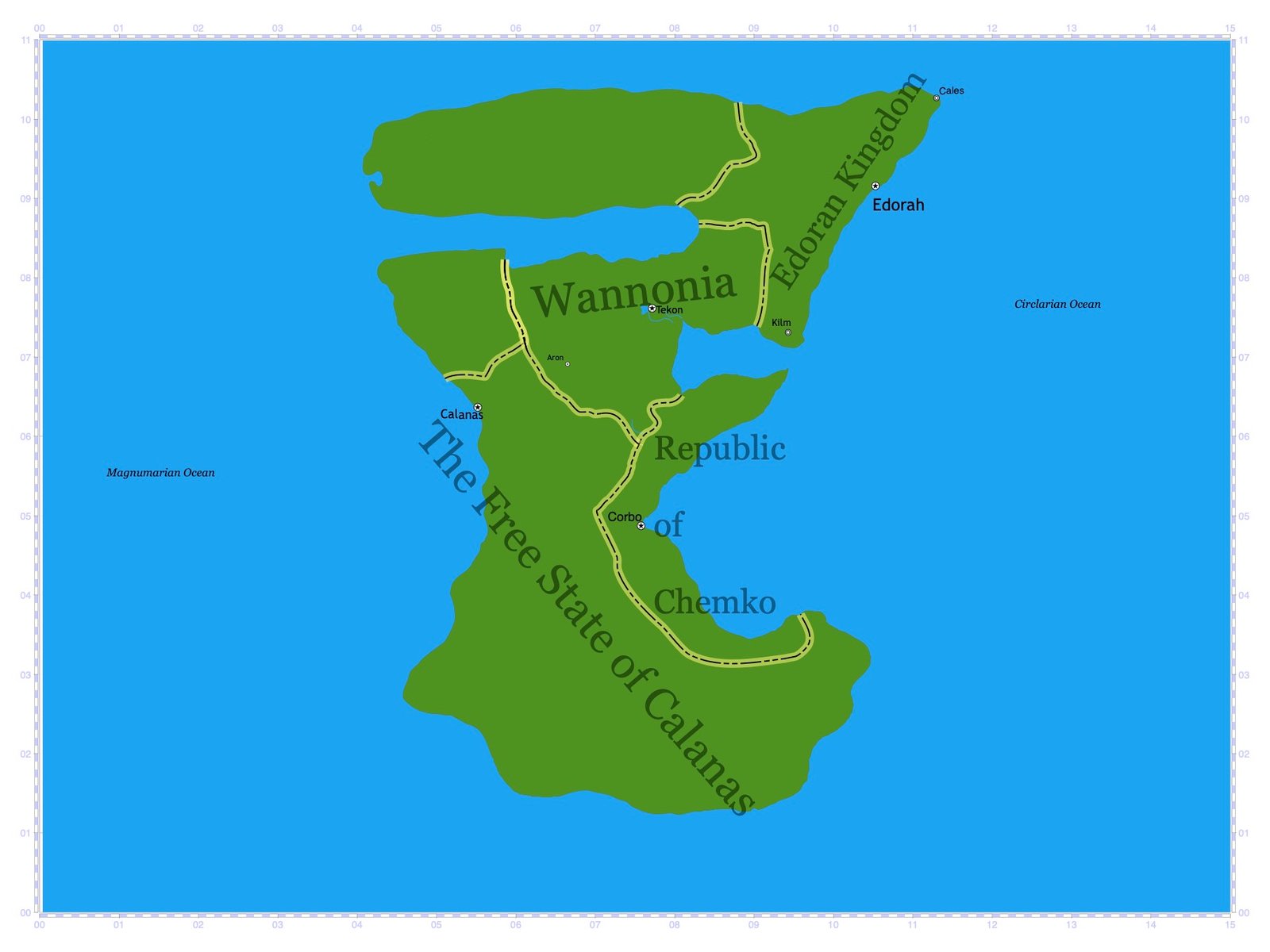
Early Karlinian Establishment
Like in Wannonia, the economy in the Republic of Karlin consisted of conventional guilds, ones that operated under government authority, while a limit was placed on wealth acquisition and asset ownership of each guild, of which excess would warrant large taxes whose funds were transferred to second-rank guild members to form other conventional guilds. The difference with Karlin was that its government was democratic, headed by an elected Senate. Because of this, everyone had a voice in government decisions, everyone including the guild owners.
Guild Reform
Over the years, various guild owners had the Senate, through lobbying, vote on specific tax exemptions as well as the gradual raising of the tax threshold, permitting guilds to own more and acquire more wealth without tax. The end result was that many trades were each dominated by one specific guild, leading to high prices of goods and services as well as a great divide between the wealthy aristocracy and the working class. Most of the population belonged to the latter sector; and in the 371 BCE elections, a party change occurred in the Senate majority as well as local governments. Subsequently, the new Senate voted to strip the guilds of their ownership privileges by removing the requirement to establish a guild solely under government authority. Thus, in the years that followed, independent guilds emerged, ushering in a period of economic prosperity.
The First Serf Rebellion
Several decades later, awareness came about that serfs (consisting of criminals and families/descendants of them) were being treated brutally by some of the Karlinian landowners. Between 345 and 341 BCE, a movement came about to abolish serfdom, being supported by a large number of free Karlinian citizens. In 342 BCE, the Senate voted on but failed to pass the abolition measure. The election in the year that followed resulted in a failure for pro-abolitionists to win a Senate majority. In 340 BCE, serfs and abolitionists coordinated a mass escape. Over the next five years, the abolitionists and escaped serfs formed armies which swept large regions of the Republic, capturing numerous towns and territory, where they halted infrastructural functions, and raided homes and public buildings for valuables, killing many in the process. Chaos ensued as Karlinian Legion soldiers failed to contain them. In 336 BCE, the next election occurred, resulting in a big win for the pro-abolitionists. In the year that followed, a negotiation and vote in the Senate completely abolished the practice of serfdom and drew land compromises for property ownership of the freed former serfs.
The Independent Guild Crisis
Independent guilds in Karlin were completely independent of the government, and were, therefore, not subject to the applicable tax codes. With such freedom, as well as the freedom to make independent business decisions, some independent guilds bought the property and assets of others. In a few short years, super-guilds formed like the conventional guilds did in the past; and the same issues, high prices and economic inequality, began to surface. This triggered a popular movement for the guild tax codes to apply to the independent guilds as the did to the conventional ones. The measure, however, encountered stark opposition from the aristocracy, and failed to pass the Senate. In the 331 BCE election, proponents of the measure failed to win enough seats in the Senate. In the five years that followed, almost all guild laborers ceased to carry out their duties in the form of a general strike, crippling trade in the Republic. In the 326 BCE election, the tax code proponents won a majority in the Senate; and the tax code measure against the independent guilds was passed the following year.
The Return of Serfdom
Brutal pirate attacks against the Karlinian sea ports in 325 BCE prompted Karlinian Legions to track the culprits, who were found to live on the East Meredythian Island of Vantacula. The Karlinians easily defeated this base, backing the establishment of a kingdom that would exist there until its toppling by the Lykians in 1281 CE. However, Legion Generals also subjected captives to forced labor. Three years later, when they returned to Karlin, the Legion Generals asked the Senate for permission to keep the captives in Karlin, to which the Senate responded with rejection. Furthermore, they ordered that all the forced labor of captives on Vantacula, which they determined amounted to serfdom, to cease as well. Pro-serfdom groups had grown in number by this point, and had begun to protest. In the 321 BCE election, the pro-serfdom candidates won the Senate majority, and immediately restored the serfdom codes. Former serfs were now, once again, forced into serfdom.
The Second Serf Rebellion
n 319 BCE, serfs and abolitionists coordinated another mass escape; and once again, towns and territories were being captured and raided. Serfdom proponents had learned from the past and readily dispatched Legion soldiers who brought the outbreak to an immediate end. However, in the 316 BCE election, a modest third party won Senate majority, and subsequently voted in a bill of rights for serfs as well as a legislative measure allowing serfs to collect wealth donations to buy their freedom at a price set by court justices.
The Building of Ancient Circlarian Society
Starting in 315 BCE and continuing for several centuries, a period of economic prosperity ensued for Karlin as well as the rest of Circlarian society. Agricultural yields were bountiful; trade deals were signed between Karlin, Wannonia, Chemko, and the Totian Empire; and sea trade began to expand. In the second century BCE, unrest in Canticula brought over settlers to Karlin, where the 141 BCE election brought about Senators who voted to place limits on the number of incoming Canticulans. In the next election cycle, however, opponents won the Senate majority, and wasted no time abolishing such quotas. During this time, the Council of Galatia formed in Canticula, which established trade and peace treaties between its dominant powers. In 132 BCE, Karlin became a member of this Council, sending diplomatic representatives overseas at regular intervals. Eleven years later, Wannonia and the Totian Empire also joined.
The Rise of Alconism
The well-known religious story of Braeus Alconus is believed to have taken place between 200 and 100 BCE. According to Scripture, Alconus was born in East Canticula, where, as he grew up, he performed miracles for those oppressed by the local ruling powers. He then traveled to the Northeast corner of the continent to disperse a "work of evil." When he returned, he found that his rival, Maronus, had corrupted many of Alconus' followers, having recruited them to travel overseas to retrieve the "Face of God" (the Arc of Totia). Alconus pursued him across Canticula to the Galatian Empire (located in Canticula), where he was arrested. However, his disciples helped him to escape; and he set forth on a commandeered ship across the Circlarian Ocean. He landed on the Coast of Remikra near the Rock of the Covenant, where he confronted Maronus; and they began to duel with spellfire. During this stand, a landslide killed both Maronus and Alconus as well as Maronus' army. However, according to belief, Alconus then returned from the dead and commanded his disciples to build a thousand ships before the rise of the Stellacrux (the Winter Solstice). They did so obediently, and, on the Rise of the Stellacrux, Alconus and all the holy saints of the past boarded the thousand ships to sail to Edom, the fabled great holy city of an unknown location where resided the Father God Almighty and his heavenly angels.
Remiscus, Early Life
Born in 71 BCE to a wealthy family, Remiscus received a quality standard of education from his teachers as his father planned for him to become a Senator when he came of age. However, Remiscus hated the idea and refused. In 51 BCE, at the age of twenty, he pursued his desire to be a sea merchant and set sail across the Circlarian Ocean bound for Canticula. Very soon, however, Remiscus was caught in a storm and was lost at sea. By a miracle, he was rescued by a passing merchant ship, occupied by those who followed the Alconist faith. Remiscus felt saved by this God and converted to the faith shortly thereafter, feeling determined to retrieve the "Face of God" from its corrupt holders in Totia. In the 36 BCE election, Remiscus attempted to run for Senate Consul with an agenda to fell Totia and claim the valuable item. However, his campaign was met with ridicule from both the incumbent Senate as well as an overwhelming majority of the general public. He did not even win the primary election.
The Fall of Karlin and Ancient Circlarian Society
Beginning around 25 BCE, a drastic change in the global climate occurred, resulting in widespread crop failures. Before long, famine and unrest ensued in both Remikra and Canticula. Remiscus saw this as his opportunity to seize power and opted once again to run for Senate Consul. He publicly blamed the famine and change in the weather on the Totians, accusing them of having practiced "witchcraft," and vowed to topple their corrupt regime to retrieve the "Face of God." This time, his agenda gained momentum. However, in 16 BCE, Remiscus lost. But in the light of him having lost by only a handful of votes, testimony emerged that the election was rigged, leading overwhelming numbers of people to believe that the Karlinian Senate was corrupt. Having faith in him, these people joined Remiscus as he organized a fast-growing military coup. In January 15 BCE, Remiscus charged his army of usurpers against Kilm city walls; and by March, the government of the Republic of Karlin was toppled, as Remiscus slaughtered the Senators and other significant political figures. In 12 BCE, he drew his forces again and launched an invasion against the Totian Empire where, in April, he toppled their Imperial government and destroyed the ancient city of Totia proper.
The Rise of the Edoran Kingdom
Totia was subsequently demolished, as Remiscus commanded that atop of the ruins be built a new city, named Cales, after his older brother who died at the age of nine from a mysterious illness. Down the coast from the Rock of the Covenant, now declared an untouchable holy site by Remiscus, was built a city around a fortress. This city was named Edora, after his living daughter. The entire continent, Remikra, was named after Remiscus, who then completely outlawed serfdom and smoking, and then established Alconism as the official and only acceptable form of religious practice. In the last decade before the Common Era, Remiscus voiced stubborn refusal to have his new country take part in the Council of Galatia. He then pressured Wannonia to withdraw. When they refused, Remiscus dispatched agents to plant a coup that resulted in the overthrow of the Wannonian Imperial Court and the death of the incumbent Emperor, who Remiscus effectively replaced with a new one. Bowing to Remiscus' influence, this new Emperor withdrew Wannonia from the Council of Galatia, which would cease to exist seven years later. When Remiscus died, his daughter Edora became the Queen of Remiscus' territory, which was renamed the Edoran Kingdom. That year, clerics in the Church of Edora established the Edoran calendar, which would serve as the basis for the Common Era.