Kingdom of Kram: Economic Prosperity and Religious Oppression
After the toppling of the last of the Edorans, King Paul I emancipated all guilds from any affiliation with the Crown, allowing them to function independently but only to pay taxes. This resulted in the emergence of a middle class, and the expansion of sea trade. Guild members and their families began traveling abroad.
In 819, King Paul I died and was succeeded by Paul II, who ruled until 844. The Crown was then succeeded by King Robert I, who made a deal with John Albert, the leader of a religious faction. While under the Kramer Bill of Rights, the Crown was not to be in any way involved with religion, King Robert I sold property to Albert, who then used it to establish the Church of Kram. Such a Church held radical Reformationist views, which, aside from main Alconist teachings, rejected Scripture altogether. Albert called for the spreading of this belief through violence, as his followers overtook towns and counties, while convincing the newly-established Kramer-imposed Duchy in Edora to convert its clergy to this radical belief. Those loyal to the Edorans challenged the Church of Kram in Court, but the Court ruled in allowance for the Church of Kram to continue its practices.
Edoran National Sentiment
Beginning in the 840s, numerous factions protested against the Kramer government, with a majority of them being Edorans, who followed the Reformed Edoran Church. They demanded that the Kramer Church left their respective cities and towns, that they, the Edorans, be allowed to utilize their religious freedoms to re-establish their own places of worship, and that they establish an elected Council. However, Robert I ignored them, and furthermore arrested the protesters for disturbing the peace while dividing other Edorans not directly involved into small living and working perimeters.
Paul Terrace, born of an Edoran family who followed the Reformed Edoran Church, was, along with his family, driven out of the city of Tulsing by the Kramers. He was assigned to work the fields as the King and Guilds signed deals that slowly initiated serfdom among the people. Terrace's resolve was to overthrow the Kramer Church for their oppression and Robert I for the serfdom measures.
City of Kram: The First Coup
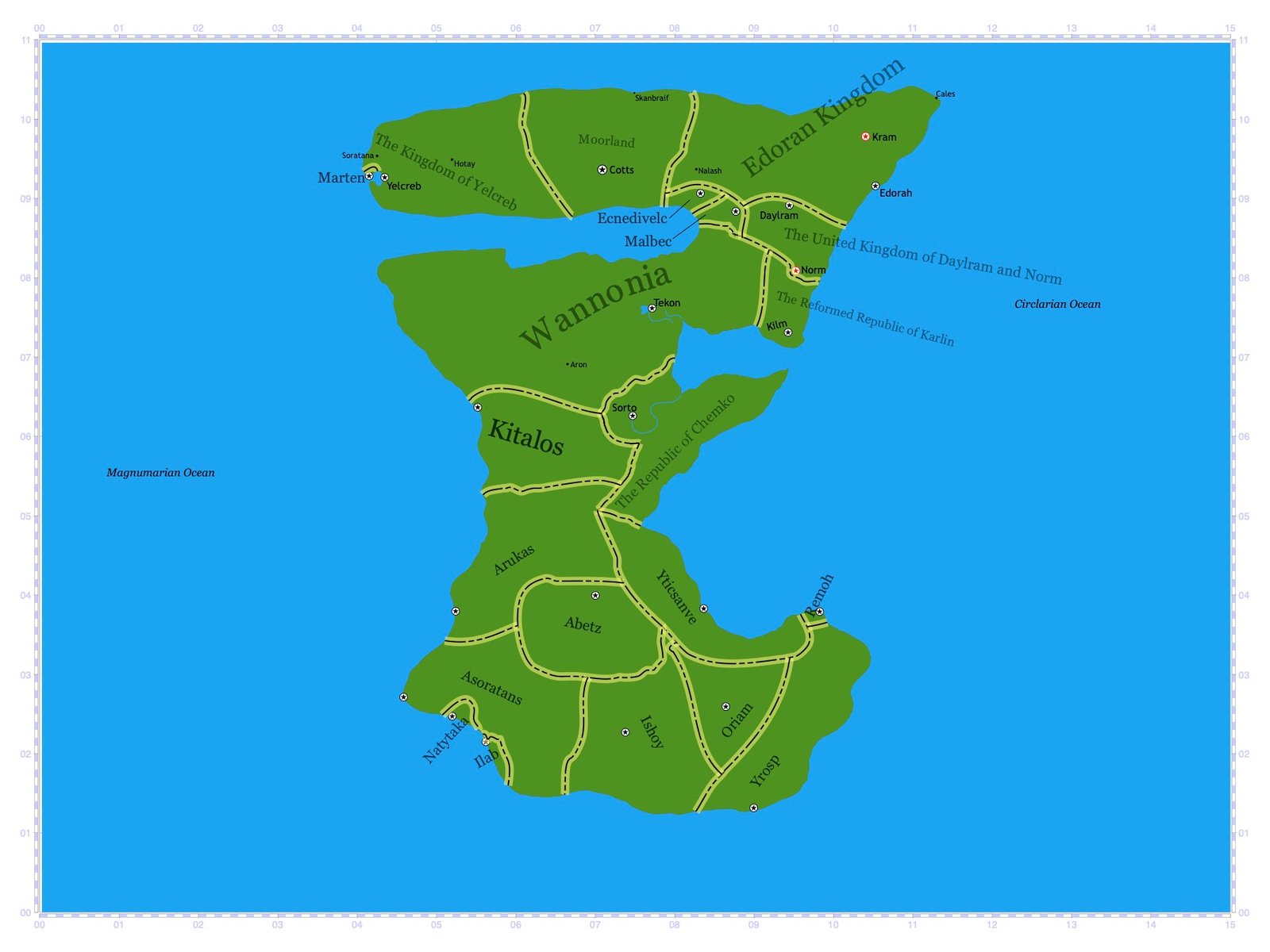
In the spring of 853, Terrace failed to report to his post, as he was traveling to the perimeters of the various cities and towns, secretly recruiting Edorans. In May, he was caught and arrested, later imprisoned in the city of Daylram. His followers, outraged by the news, set Kramer chapels ablaze and drove out Kramer soldiers, as a band of loyals helped Terrace to escape. In November, Terrace arrived in the city of Kram, where he and his rebels burned the Church of Kram Cathedral and attempted to unseat the King. However, the latter proved a failure, as the King dispatched his forces, which dispelled Terrace's followers in Kram and the towns involved. Furthermore, the King's soldiers found and shot Terrace dead in a city block.
Throughout the year 854, the resistance continued as, for each of the many divided Edoran factions, a leader emerged. Such factions made multiple attempts to overthrow King Robert I, but Kram remained well-defended, as its interior rebuilt. The Edoran faction leaders, toward the end of the summer, penned a letter to Gregory Mains, a well-known Edoran resistance figure, in the city of Edora proper.
City of Edora: The Overthrow of the Kramer-Imposed Duchy
With a background similar to that of Paul Terrace, Gregory Mains moved to Edora before his town, Kindsor, fell to Kramer Church violence. However, the situation in Edora proper was less than favorable, as its Edoran inhabitants called for the exodus of the Kramer Church, which had established itself in the Great Cathedral. Such calls were ignored, as the presiding Kramer Duchy sided with the Kramer Church and divided the resistance. In October 854, Erin Grindor, the neice of Gregory Mains, attempted a coup against the Duchy. But the coup failed; and Grindor was imprisoned. In response to this and upon the receiving of the letter, Gregory Mains united and recruited resisting forces, as well as recruited defective agents within the ranks of the Kramer Duchy Guard, and formed a plan to rescue Grindor, attack the Duchy from within, overthrowing that and the Kramer Church, and regain the surrounding land for the Edorans.
This proved successful partially in May 855, when Erin Grindor was rescued, while the Duchy was overthrown and the Kramer Church torched. Mains and Grindor led Edoran forces in a Northward advance; but King Robert I heard of this and dispatched his forces. In November 855, such forces confronted those of Mains and Grindor, resulting in the Battle of Tulsing, which lasted for approximately two months.
City of Kram: The Second Coup
Gregory Mains left Erin Grindor in charge of forces in and around Tulsing while secretly mobilizing a division of Edorans around the front line. In January 856, they attacked Kram by surprise from the North, attempting to topple and execute King Robert I and destroy the Church of Kram. However, the plan failed, as Mains was killed in action. King Robert I's forces regained Tulsing and Edoran lands, forcing Grindor to retreat back to the city of Edora, which was attacked. Utilizing a new invention, the cannon-shell, against the city gatekeepers, the Kramers broke through Edoran city walls and recaptured the city in a fortnight. In March 856, Grindor fought back, reclaiming numerous city blocks, as the city of Edora was split in half between Edorans and Kramers. Before long, Grindor was running out of resources and in need of assistance.
The Arrival of Jacob III
In the Provan Kingdom on the East Coast of Canticula, Martin Weller was born as the nephew of Jacob II. Growing up, Weller was to marry a distant cousin and serve a second-in-command post to a Lord in a local province, while his first cousin, Jacob III, was to take the Provan Throne. Martin Weller was unhappy with the situation, as there was a rule against marrying Provan locals, which did not apply to Jacob II or III and their immediate family. Jacob III, meanwhile, chose a Provan local for marriage. Furthermore, Weller was enraged to learn about his family history, with the abandonment of Jacob I from the Edoran Kingdom, and the Edoran Kingdom's fall to the Kramers, as Jacob I unfairly asserted his dominance over the local Canticulan region and established the Provan Kingdom. Martin Weller's resolve was to murder Jacob III and topple Provan rule.
In May 856, Martin Weller carried this out, poisoning Jacob III and his wife, who he saw was a traitor to the Provan locals. As civil conflict ensued, however, Jacob II discovered Martin Weller to be behind the plot and sent out for him, forcing Weller to flee the country. During Martin Weller's journey to the West, he encountered a vision of "divine intervention," during which he received redemption for his actions, and was charged with the task of re-establishing the Edoran Kingdom. Along the way, he gathered large droves of willing mercenaries while assuming the identity of his dead cousin: Jacob III.
In May 858, Martin Weller, now Jacob III, arrived in Edora, where he saw Kramers and Edorans pitted against one another in brutal civil conflict and Erin Grindor fighting for the latter. Jacob III came to her with a deal: that his mercenaries join her to defeat the Kramers in exchange for her hand in marriage as they became King and Queen. To this, Erin Grindor agreed.
The Fall of the Kingdom of Kram
In October 858, Jacob III and his mercenaries attacked the Kramer troops from outside Edoran city walls. Utilizing the Kramer development of the cannon-shells and an all-out assault approach, Jacob III pinned Kramers against Grindor's forces, which slaughtered them and overtook the city, placing the Edoran flag atop the Palace. By November 858, Jacob III and Grindor's forces gained all Kramer lands and were surrounding the city of Kram. King Robert I launched an assault on their weakest link to the Northwest, but that failed. As this involved the leaving of some Kramer troops from the city, Grindor took the opportunity to launch a secretly-stationed division of Edoran troops who attacked the Palace directly. During this, King Robert I was assassinated, while the Palace was stormed and the Church of Kram destroyed.
By December 858, the Edoran Kingdom was restored. As promised, Jacob Weller III and Erin Grindor were married, and then coronated King and Queen of the new Kingdom, as the Reformed Edoran Church was re-established in Edora.
The Second Kramer Resistance, The Formation of Edoran Parliament
In March 859, the ousted lords and nobles of the Kramer Crown banded together and led a coalition, which re-captured the city of Kram. Feeling threatened by the rise of the Edoran Kingdom and the end of the Kramer Bill of Rights limiting Crown powers, they stormed the Edoran-imposed duchy, as Edoran soldiers were driven out. In its place, a Council was established, functioning to consider the next ruler for the Kramer Kingdom.
News of the uprising reached King Jacob III and Queen Erin, who promptly dispatched Edoran reinforcements. In October 859, the city of Kram fell, once again. However, the Council held its ground in a standoff around the Palace. Then, John Marsh, the leader of that Council, came forward with a deal: that they would conform to Edoran rule, while the Edoran Crown allowed the Council to function as an established Parliament. The King and Queen agreed to this, and, in November 859, signed the Bill of the Authority of Parliament.