Strategy and Preparation
With the Wannonians thinly spread over their newly gained territories, the Edorans and Linbraeans hid in the Wilderlands, where they built makeshift fortresses. Within these compounds arose factories that mass-produced multi-celled compound aerovehicles. Similar operations were carried out along the Southern Coast of the Kingdom of Moorland, the region least-manned by the invading Central Alliance. In quickly-built cliff-hanging facilities were produced even more aerovehicles.
Beginning in September 988, the Moorlanders took advantage of an opening in the Linbraean front and attempted a direct sweep to the capital. Such an agenda proved successful until 1 October, when a rainstorm turned the ground muddy, immobilizing the wheeled cannon divisions. The Linbraeans then attacked the Moorlandish intruders, inflicting high casualties. Word of this reached Edoran and Linbraean authorities, who commanded that divisions of aerovehicles built be fitted with large reservoirs of water, which would then be shot through spouts upon the battlefield. Doing so, the Edorans and Linbraeans anticipated the risk of more casualties, due to the vulnerability resulting in more of the limited numbers of people aboard each vessel being dedicated to the water operation. Nevertheless, the agenda was pursued.
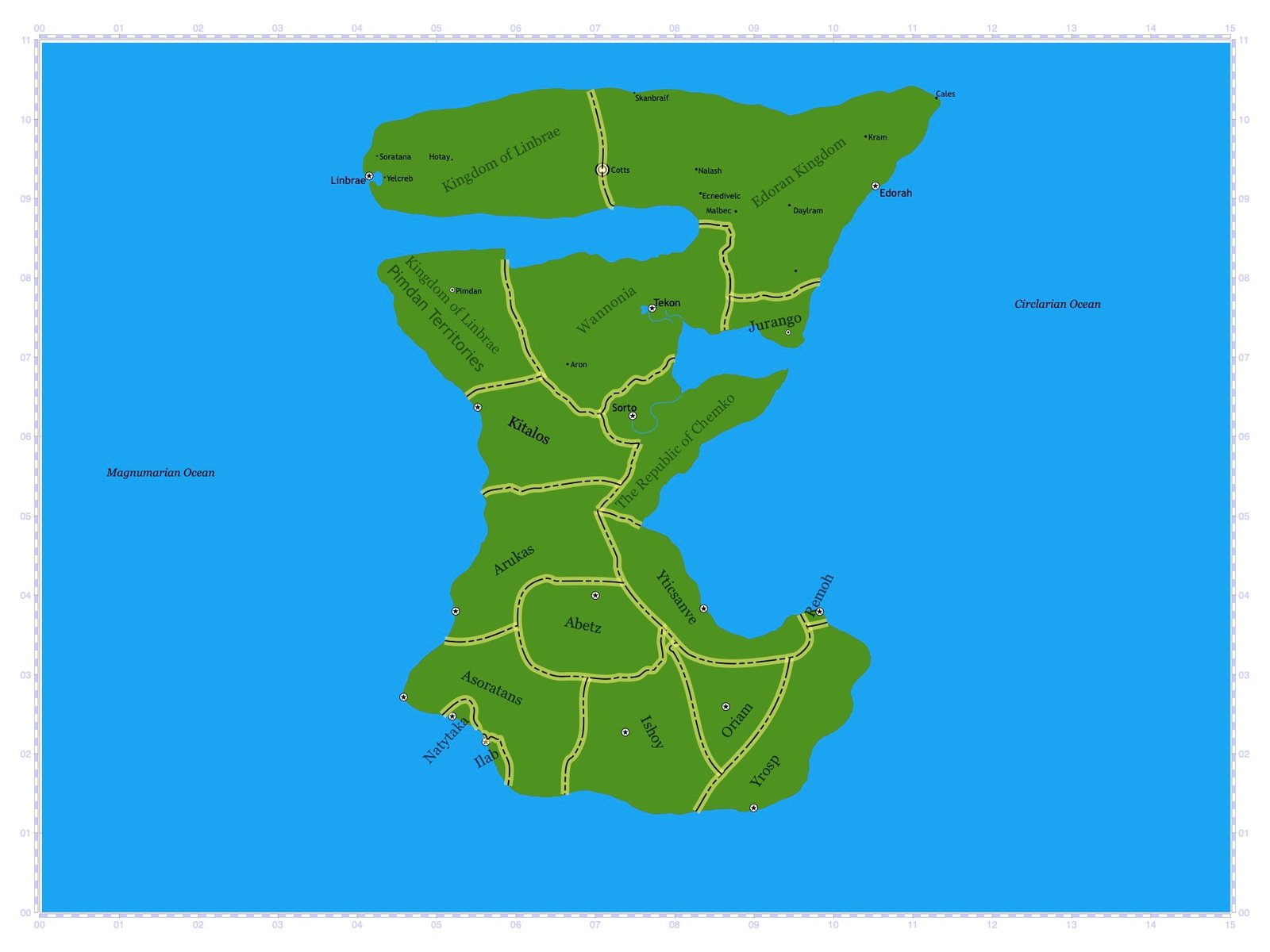
According to the formed plan on behalf of the Marginal Alliance, the Edoran and Linbraean Kingdoms, a coordinated assault would be launched from two locations, the Wilderlands and the Southern Coast of Moorland, to the two capitals, Tekon and Cotts, of Wannonia and Moorland respectively. For each of the two battlefronts, the strategy was to have a division of aerovehicles go straight toward the respective enemy capital, shooting cannons, rifles, and cannon-shells at enemy fortresses and key targets along the way, while another division of aerovehicles would travel for the staged battlefronts and confront, with the water ballasts, enemy divisions retreating to serve as reinforcements, as would be expected. While Moorlander and Wannonian balloons would be protected by spellfire-enhanced metal grid-rings, the Edorans and Linbraeans would counteract this defense with a new invention: enhanced gilded cannon-shells. Such new devices would strike balloon cabins and destroy them. Utilizing these strategies, the Edorans and Linbraeans would hold off enemy reinforcements from the battlefront while Edoran and Linbraean infantry and cavalry struck each capital city directly.
The Marginal Alliance Invasion
On 5 June 991, the invasion was launched.
In Wannonia and Moorland, key fortresses surrounding home territories were lightly manned, with most forces out on the battlefront, leading them to falling quickly. As planned, messengers spread word to Moorlandish and Wannonian forces out on the battlefronts, as they began to retreat to serve as reinforcements. Central Alliance infantry divisions were distracted as wheeled cannons were immobilized by the Marginal Alliance water ballast attacks, leading to the infliction of less casualties than expected by rifle shots. Due to speed, conventional cannons and balloons manned by the Central Alliance were outmaneuvered by the Marginal Alliance aerovehicles. The stranded Wannonian and Moorlandish divisions were forced to surrender. In Kilm, an Edoran Commander joined the followers of Jurang, an indigenous figure killed by the Wannonians weeks earlier. This Edoran Commander led allied forces as they closed in and drove out the enemy.
The Fall of the Central Alliance
The Marginal Alliance launched another invasion on September 15-16, 991, during which Linbraean and Edoran aerovehicles closed in on Cotts' defenses, which fell quickly. Turret rifle shooters stationed atop the walls of Cotts were killed by rifle bullets or cannon ammunition, as the walls, themselves, were destroyed. Linbraean and Edoran aerovehicles floated over the city, hovering low enough over the streets so that soldiers could rope down and launch street attacks. Three of the air vessels, two Edoran and one Linbraean, landed within Cotts Palace walls and eliminated outer and inner defense lines. Palace guards were killed, as King Estaean I, personally took to battle, where he was instantly shot dead.
And thus, the Kingdom of Moorland fell. In the weeks and months that followed, Linbraean and Edoran forces kept order in the city, as Edorans took territories and villages to the East, and the Linbraeans did the same in the West.
Earlier, on 24 June 991, the Wannonian city of Aron fell to Linbraean forces in a similar fashion. In early September, the Edorans continually assaulted the Wannonian Coast of the Inland Sea, firing cannon-shells from their aerovehicles and setting fire to the ports. In late September, as Wannonian territories fell quickly to the Marginal Alliance, Tekon was placed under siege. A balloon division assembled and launched under the command of Emperor Petraeus I, himself, attacked a weak spot in the siege to the Southeast. But the plan failed, as 117 of 120 balloons were shot down. On 2 October 991, Emperor Petraeus I surrendered and called for a treaty.
In the Treaty of Cotts, signed on 17 December 991, the Edoran and Linbraean jurisdictions over the former territories of the fallen Kingdom of Moorland were honored, as Cotts was managed mutually by one local duchy from each of the two nations. Kitalos was re-established as a monarchy overseen by a Linbraean Governor-General, as Daylram and Norm were handed back to the Edorans. The land South of the St. Eschel River was established as the state of Jurango, named after the fallen war hero, and established as a simple Council-run democracy. Wannonia would retain control of its central provinces, in the Plains, as well as the Southeast Coast of the Inland Sea.
Deep-Trade and Economic Prosperity
Deep-trade had been an economic spellfire practice for thousands of years. Although the function of such an art is very complex, a simplistic explanation of it involves one party owning a spellfire-enhanced trade stone, which represented certain assets of another party. The said stone would have the potential to generate a precious material of a certain value based on the value of the represented asset. As these stones were traded, deep-trade was usually practiced between two similar guilds or businesses, with each in a different nation. On many occasions, via a strong bond of deep-trade, two countries would sometimes merge into one.
Such an alliance happened between the Linbraean and Edoran Kingdoms in the years following the Four-Nations War; and, with the marriage of Mary of Linbrae and Philip of the Edoran Kingdom in 998, the two Kingdoms would merge into one: the Kingdom of the Great North.
Meanwhile, an economic boom ensued in the 990s, setting in motion the Steam Revolution.