Pasiek, After Taeac
Between 1077 and 1086, Pasiek experienced a great deal of growth, as the Fort Norm site was converted into a facility housing hubstone shale burning processes, and hubstone shale mines emerged. Soldiers having fought in the recent conflict stayed in Pasiek, as peace followed, and families moved in with them. The population continued its growth, leading the Great Northern government to hire laborers for the construction of more brick structures. Before long, the city saw the emergence of factories, shops, houses, and even a market district. Along with the structures emerged brick and concrete streets.
One of the most important discoveries concerning hubstone shale during this time was its ability to produce electricity. However, early on, the Great North implemented an experimental system of this in Pasiek, where a primitive hubstone-based generator proved inefficient, and a power grid, running street lights and connections to houses and public structures, proved largely unreliable. Despite the growth, progress was limited by high taxes and heavy regulation, as hubstone facilities were purely government infrastructure. Furthermore, the Great North discriminated against the Ujean population, a branch of the Mundaesian population. Initially promised large rewards during recruitment, the Ujeans helped to defeat Taeac, only to find that their rewards would be paid in the form of a few coppers per month as part of a monthly installment that would never pay the full amount within a lifetime. The Ujeans began protesting against this, but the government shut them out of the city of Pasiek.
William Jeson, Rising Popularity
William Jeson was assigned to preside as Lieutenant Governor over Pasiek, where he was given orders to administer a police force over each sector of the city. Such a force, though, would only function hierarchically under Great Northern Army. Jeson's other role was to collect taxes to submit to Arnold Brimmley, his superior and Governor of Terredon.
Despite this, Jeson was strongly opposed to Great Northern discrimination against the Ujeans and convened with his parent family, the Kontacet family, to launch a political agenda. Such an agenda throttled the idea of opening Pasiek to the Ujean population, establishing free trade, deregulating the hubstone shale industry and making it private infrastructure, and expanding education by establishing a University. This platform became quite popular, gaining support among the Ujeans and the Pasiek working class. Jeson and his many followers gathered and submitted a petition to Governor Brimmley, who rejected it, triggering a wave of protests. Upon popular referendum, Jeson sent a similar letter to Queen Sarah of the Great North in the hopes that her authorization would override the powers of Brimmley. But Her Majesty, herself, declined; and Jeson, furthermore, received a letter of warning from Governor Brimmley, who threatened to impose economic sanctions to the city for "insubordination." Widespread protests raged throughout Pasiek and towns in the surrounding territories, as Jeson, siding with the protestors, did not make any effort to enforce containment measures.
The Ujean and Wannonian Coalition
Begrudging of the Great North over the loss of territory in the Four-Nations War, Wannonia, during this time, publicly cited an opportunity the Great North had to stop Taeac from reaching Remikra, and, therefore, blamed the Kingdom for the violence and terror inflicted upon the Wannonians by Taeac. Sharing common hostilities, they were joined by the Ujeans, as they, together, planned to wage war upon the Great North and regain the land lost. As a measure of diplomacy, Wannonia would allocate a section of sovereign land lining the St. Eschel River to the Ujeans, and pay them the remainder of wealth to them owed by the Great North.
Agreement and the Formation of Combria
In 1085, the Wannonians and Ujeans met in a special Council, where they sent a formal letter to Queen Sarah of the Great North, threatening war for failure to pay the Ujeans their compensation in full, and for failure to give the Ujeans sovereign land along the St. Eschel River. The Queen refused to adhere to these demands, and, instead, ordered the Linbraeans and Edoran Kingdoms, along with their respective Duchies, to build their defenses. She furthermore ordered Terredon Governor Brimmley to ready his defenses. Brimmley, subsequently, sent a similar letter to Jeson.
Jeson, however, issued a call for a special peace negotiation between the three parties: Wannonia, the Great North, and the Ujean community, during which he submitted a proposition to form a new sovereign nation governed by Pasiek as a territory purchased from the Great North under the Partitioned Lands Act, and would function in adherence to the Queen's Mandate. As the leader of this new nation, Jeson would then implement his original agenda to eradicate discrimination against the Ujean population, establish free trade, and found a University. And furthermore, he would form a hubstone trade deal, where no tariffs would be imposed upon the transaction of the valued material between the new nation, Wannonia, and the Great North.
Fearing lost business with the hubstone shale industry, Queen Sarah initially rejected the deal, but then reconsidered when the Kontacet family intervened, raising the bid of the territory. On 11 December 1085, the agreement was signed.
Combrian Establishment
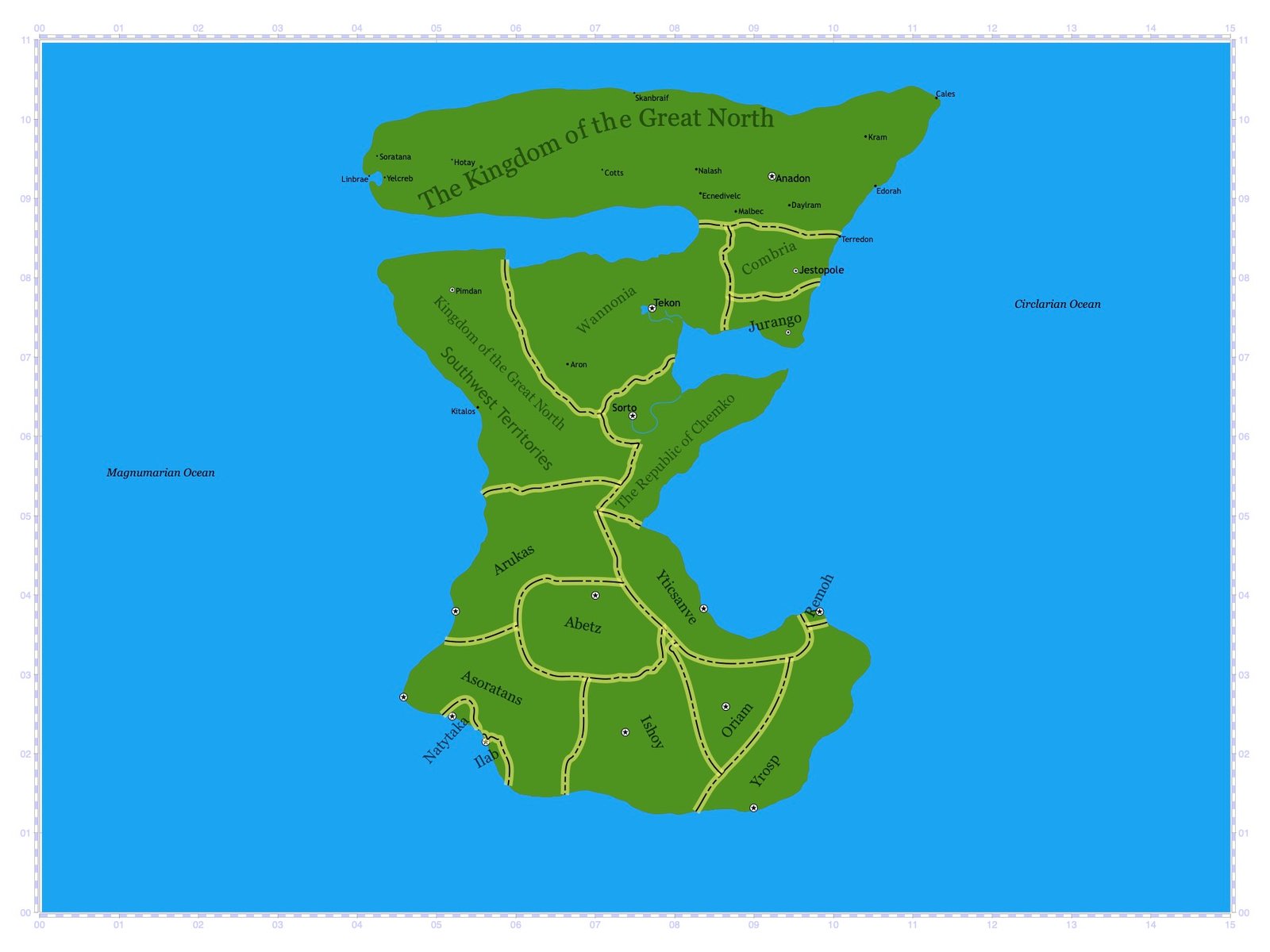
On 12 February 1086, the new territory became officially recognized as the Chartered State of Combria, where, in respect to Jeson, its capital city, the city of Pasiek, was renamed Jestopole. William Jeson became the President of Combria. Over Combria was established a form of government known as an "incumbent-appointed-presidential-council." In this system, the nation of Combria was governed by a President, who would eventually appoint a successor President before retirement. Alongside the President served a Council of 100 people serving both a judicial and legislative role. For the President, along with each Member of Council, said position would be appointed a successor by the incumbent before retirement or death. If an unexpected vacancy occurred, then the President would appoint a successor if it was a vacancy in Council, or the Council would vote for a new President if it was the President. The nation of Combria was divided into five Districts over which presided each a Governor and Council. And each District was divided into five Counties, over which presided each a Commissioner and Council. Appointments and vacancy protocols were the same for Districts and Counties.
Every Council adhered otherwise to constitutional principles similar to the Great Northern Bill of the Crown Authority. Also accordingly, each Council functioned by passing laws by simple majority votes, while the President, Governor, or Commissioner enacted them.
In the years that followed, Jeson's economic policies would lead to an unprecedented age of prosperity and innovation.