East Wannonia Invades the Federal Estates
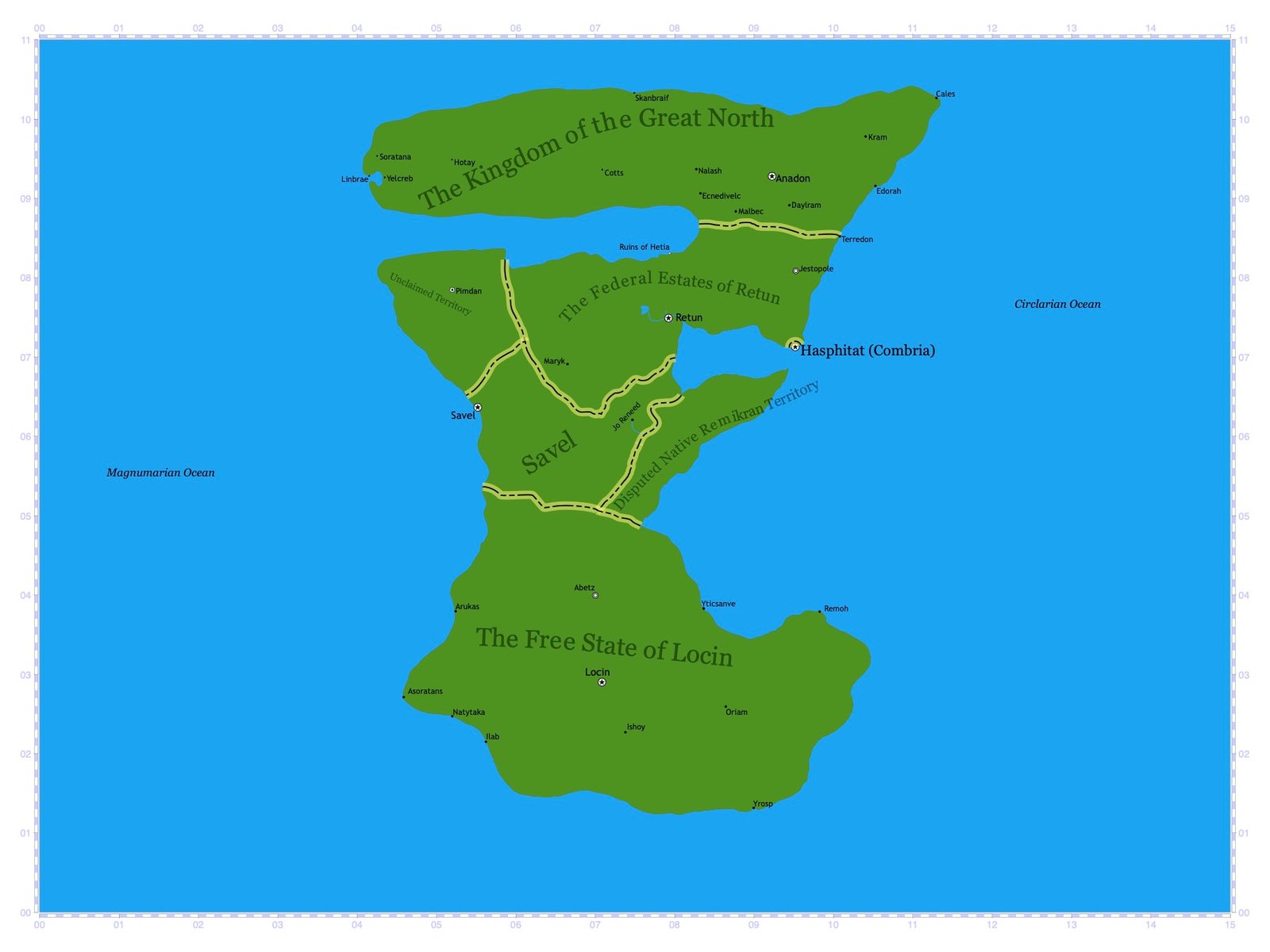
General Zeyk's grudge against the Federal Estates originated in 1238, when he desired for a part of Hasphitat and its surrounding territories because of its wealth and resources. He believed that the new Republic would help to divide the affluent region, but also believed that he could later implement a hidden agenda to claim the Republic, itself, and re-establish Wannonia proper. Arnold Stone, however, knowing Zeyk from the past, according to personal sources found afterward, declined the offer of diplomacy.
Zeyk would invade North Combria that year, conquering Jestopole and assassinating Marren, while establishing martial law in the city and its surrounding districts. Under his rule, North Combrian civilians deemed unfit for battle or labor were executed by firing squad. In contrast, those who were fit were imprisoned temporarily afterward recruited to fight for East Wannonia. As East Wannonia became more thoroughly established, Zeyk was made aware of resisting North Combrian soldier factions conspiring to overthrow him, and continually dispatched his forces to seek and eliminate them. Those captured were either promptly executed by firing squad or subject to torture for important information. Across East Wannonian bases, military arsenals were modernized to contain clipper planes and tanks similar to those in the Federal Estates.
Knowing about the Republic's jurisdiction over the Central Plains, General Zeyk wanted to attain control over Middle Remikra's main source of food. He was also determined to eliminate the critical-minded Arnold Stone and the members of the Federal Estates Council, and viewed James Black as a threat as well. Zeyk had established a network of spies, who, before long, reported to him numerous Retunian air bases and military posts heavily defending the corner boundary lining the North bank of the Basin River. To combat this, Zeyk drew a plan to have only two divisions each of tanks, planes, and infantry attack Retun from the North, an assault that would seem easy for the Retunians to fend off. Meanwhile, the remainder of East Wannonian forces would attack from the Inland Sea with numerous ships and planes, and from over the border into Nintel, where tanks, planes, and infantry would gain control of the grain fields and attack the Basin District from the Northwest. Additionally, East Wannonian paratroopers would drop from special gliders into the streets of Retun, itself, where they would serve as snipers.
On the midnight of 18 January 1240, the invasion was launched.
Retunian forces, as expected, confronted the two divisions at the corner boundary, while the East Wannonian snipers landed in Retunian streets. Zeyk's forces struck from the Plains and the Inland Sea with relative success. However, one year previously, the Council of the Federal Estates, wary of East Wannonia, voted to implement special defense measures within the Basin District, where hidden rifle turrets outgunned the snipers while numerous "house cannons" kept the invading East Wannonian forces at bay. Furthermore, Zeyk appeared not to have considered the rotating motion of the Basin, and struck at numerous strong defensive points in the places where he expected the weaker ones. The same measure passed by Council also constructed a dominating fleet of Navy ships, including many small ones disguised as trade ships. And in the Plains, Federal Estates citizens, most of them farmers, were well-armed and able to defend their local communities.
As a result, the East Wannonians struggled to gain land in the Plains, while making slow gains down the East Coast of the Inland Sea. The two powers would remain in a gridlock for the next two years.
Alliance Between Retun, Savel, and the Great North
After the fall of President Henry, Savel and the Great North adopted policies of protectionism, and decided for the time being, to remain neutral. Savel, with its economy and government still being determined, also carried resentment toward the Combrian ethnicity. The Great North regarded East Wannonia with the same amount of concern as the Federal Estates, in addition to historically being hostile to any entity related to the former nation of Wannonia. But the Kingdom also was initially opposed to the existence of the Federal Estates, seeing a republic as being anarchic in nature.
However, a change in diplomatic tides occurred on 23 March 1242, when East Wannonia reached Savelian territories and launched an invasion upon them. The Federal Estates joined the Savelians and, by the end of April, drove out the East Wannonians. Nevertheless, stories of this event reached the Great North, where a wave of fear ensued over the unpredictability of General Zeyk. Promptly, the Queen Rebecca summoned a special council with Savel and the Federal Estates. In June 1242, this council met, where the three powers agreed to secretly assassinate key East Wannonian commanding officers in Jestopole, where it was determined the location of a majority of East Wannonia's arsenal. While overtaking North Combria, the allied forces would then launch numerous divisions each of infantry, tanks, ships, and aircraft upon Hetia, where, according to sources, General Zeyk had returned.
Fall of East Wannonia, End of War
On 9 December 1242, the Jestopole assassination agenda was launched, which proved successful. However, a faction of Zeyk's forces fled to Fort Braddock where they appeared to be re-arming themselves. Peter Korren, formerly of North Combria but now a commander under the Federal Estates, traveled with his infantry units to the region to confront them. The Battle of Fort Braddock would ensue for the remainder of the month.
Meanwhile, allied forces reclaimed Plains territories from Zeyk, as they now began pushing into East Wannonian jurisdiction. With another line of allies pushing from Jestopole, the East Wannonians were overwhelmed and began running out of ammunition. After the sweep, the allies discovered and rescued prisoners of war, coming across stories of East Wannonian atrocities.
On 22 December 1242, Great Northern ships fired upon the North Coast, beginning the short-lived Battle of Hetia. By 23 December, General Zeyk was effectively defeated, but, following the Wannonian policy of fighting "to the last man standing," recruited a band of close officers and, in person, launched an assault on a Savelian division. During this, however, Zeyk was killed by ammunition fired from a Retunian clipper plane. And thus, East Wannonia was defeated, marking the end of the War. Afterward, all former East Wannonian territories were handed to the Federal Estates, as the Council signed an agreement to have the Republic officially join the Remikran Union.
Peter Korren: The Renegade Combrian
On 23 December 1242, the same day that General Zeyk was defeated, Peter Korren overcame the stationed East Wannonian forces in Fort Braddock, and immediately placed the region under his control. The deal signed in Hetia to hand East Wannonia to the Federal Estates also mandated Fort Braddock to the same terms; and thus, an honorable discharge letter was delivered to the commander. Korren, however, had a further agenda to restore the nation of North Combria, and responded with silence, staying at his post.
On New Year's Day 1243, Korren's silence prompted the Federal Estates Council to write a letter of demand for Korren's departure. On 2 January, Korren responded only with gunfire against Retunian ships and an attempted invasion of the former North Combrian territories to the North. On 3 January, Retunian clipper planes bombed key posts on Fort Braddock, as tanks and infantry pushed back Korren's advances. By the evening, Korren's headquarters fell to the Retunians, who stormed the premise to discover that Korren had disappeared. Nevertheless, Fort Braddock and its Isles were under Retunian control.
In the years that followed, a nationwide bounty notice was regularly broadcasted for Korren's arrest, prompting unending political controversy in the Combrian territories.