The Peace and Reunification Movement of 1323
Stories of violence and brutality emerged from the ensuing conflict, and had an influence on Ellen Readon. Born in 1301, Readon witnessed economic declined and the war against Jeffeerson Davis' regime. She would later criticize these acts of war, and sided with Peter Umbol on the issues of Finzi's policies, taking part in the peaceful demonstrations in 1317. After Umbol's death, Readon established herself as a peace activist, and, citing building tension in the Commonwealth at the time, warned the public of imminent conflict.
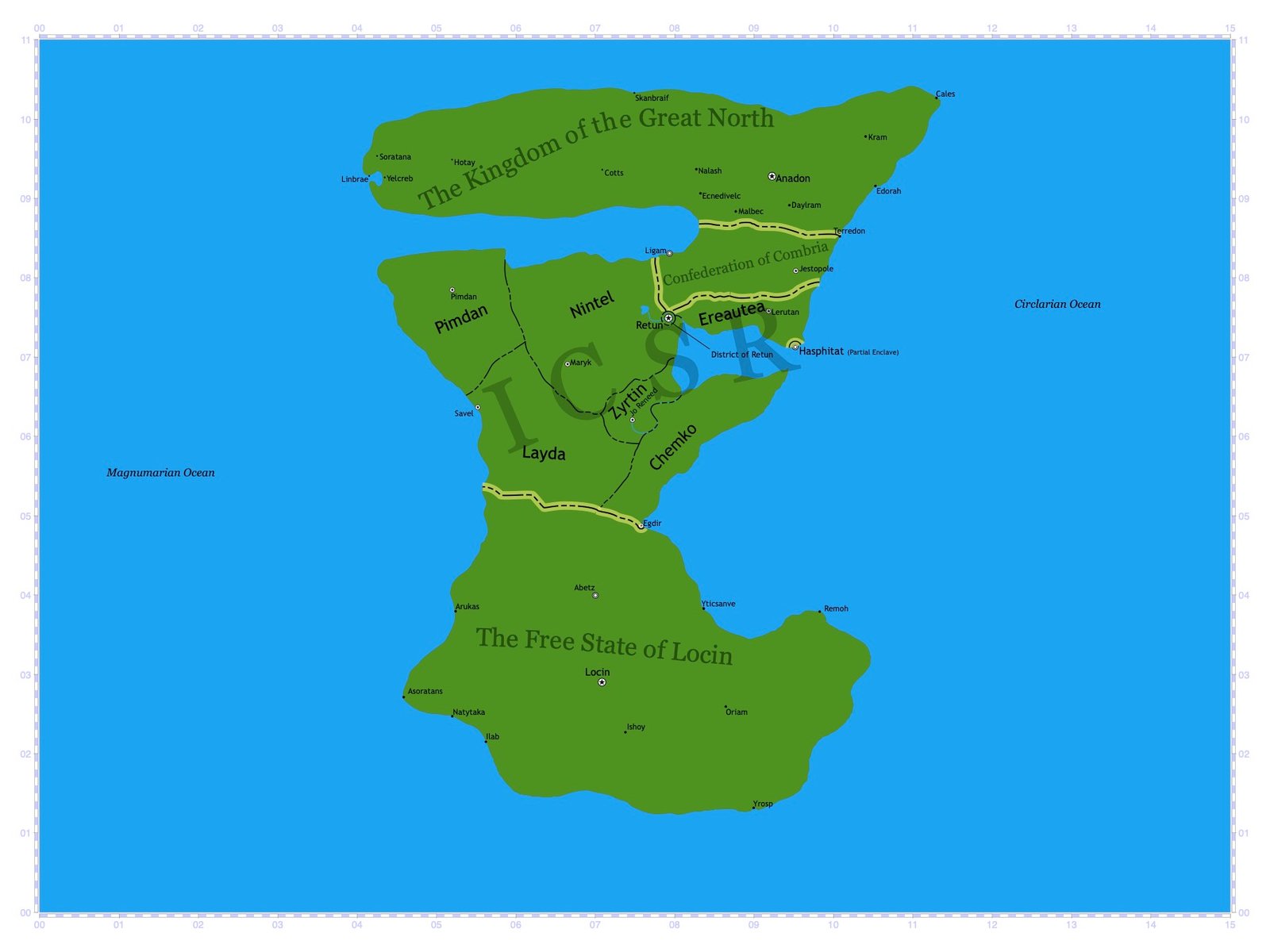
During the violence of 1321, Readon decried the conflict, calling on Holz Finzi to cease; however, she was not believed. It was from this point on that she developed and implemented a strategy, which began with the establishment of a secret communication network between large numbers of soldiers from all sides. At noon on 4 January 1323, these soldiers disregarded orders and lay down their arms, while many of these, and civilians alike, peacefully disrupted government functions in Retun and Jestopole. While numerous factions continued to fight in rural regions, civil conflict was effectively brought to a standstill. Three days later, Prime Minister Finzi called for a special summit between the Combrian and Retunian leadership to be held at Cabbotton University. Such a meeting took place on 10 January, leading to the signing of the Jurisdiction Re-Establishment Deal, which initiated a cease-fire and respected the independence of the Combrian Confederation.
Relative peace and prosperity would ensue between March 1323 and April 1324.
Ulbrae
In the beginning of the year 1324, the Commonwealth began hosting conferences and deep-trade transactions with the Ancondrian State of Ulbrae. This caused political controversy in the Commonwealth, as Finzi had, in the past, implemented heavy regulations and consumer protections on that sector of the economy. Under these measures, the Commonwealth had a Deep-Trade Administration that was, effectively, non-functional. But there was an exceptions clause, known as the Deep-Trade Allowance Policy, in which a Deep-Trade Administration representative or another entity could make a case to the Commonwealth Council regarding the worthiness of a prospective deep-trade deal, leading to the possibility for the full Administration to being voted in.
The Ulbrae State bypassed this measure on 16 March 1324, however, via consent from Lawrence Maynor, the incumbent Commonwealth Governor-General of the Ancondrian territories, and initiated deep-trade transactions. Controversy and unrest ensued in Remikra, as the media portrayed this as a deep-trade deal between the two entities, and was made worse on 8 April, when the Ulbrae State announced a temporary suspension of deep-trade functions. Prime Minister Finzi, in response, terminated all prospective deep-trade deals with the Ulbrae and, furthermore, launched an investigation into the matter. When the Ulbrae State resisted such inquiries, armed confrontations erupted. Governor-General Maynor was eventually impeached by the Commonwealth Council, as Finzi appointed Robert Climon to assume the position. The Council, in an effort to create balance and avoid another controversial deep-trade motion, voted on 14 April for the full establishment of the Deep-Trade Administration; the other heavy regulations would remain, however.
Petty Wars, Silba Fallouts, Economic Woes, and Lightfire Booms
Between September and October of 1324, a lightfire forum ensued in Silba, yielding disappointing results for the Commonwealth, and leading Retunian investors to begin withdrawing from Ancondrian initiatives. Prime Minister Finzi and the Commonwealth Council voted to buy lightfire tradestones, as part of government protocol. Between 1325 and 1326, the Southern Remikran nation of Locin began staging harsher measures of resistance against the Remikran Union, citing claims of further intervention by the Linbraean Regiondom in its education system. Locin, in turn, sided against the Commonwealth, owing to the Commonwealth's upholding of Waltmann's Global Academy. And before long, border "scuffles" ensued, in which Locian and Commonwealth troops shot at each other from across the border. This had an adverse effect on the tradestone markets across the Remikran Union.
Finzi implemented an economic stimulus measure, which led to the return of investment in the lightfire industry and a large yield from the Ancondrian lightfire forums in November of 1328. However, along with the lightfire boom came the increase in conflict within the Remikran Union. On 6 February 1328, a standoff between Locinian and Commonwealth forces prompted a limited invasion effort carried out by Finzi, marking the official beginning of the Petty Wars.
The Return of Benjamin Arnold Syndrome
Matters were made worse during this time, when Benjamin Arnold Syndrome returned to Middle Remikra, this time, present in numerous regions across the nation. In the spring of 1329, a great outbreak would leave millions of Retunians dead, as numerous entities, blaming Holz Finzi, would rival each other with differing agendas and plunge the Commonwealth into another period of civil conflict.