1381-1386
The passage of the Fair Standard Housing Act (FSHA) in March 1381 authorized the nationwide construction of estate super-cantons, which raised standards of living for many Commonwealth citizens. Later that year, the Commonwealth Council passed a budget for the construction of the National Institute of Research and Development (NIRD), which would open in September 1383. In 1382, the passage and signing of the Chemkan Environmental Restoration Act (CERA) led to the release of long-classified documents detailing the events of 1264, and budgeted the environmental reconstruction of the natural Chemkan landscape in 1384. And on 7 March 1383, fulfilling a cornerstone promise to the Commonwealth, Prime Minister Wen signed the Exceptional Case Trade Act (ECTA), which placed constraints upon the Deep-Trade Administration and protections for citizens. In 1385, budget reconciliation authorized for NIRD campuses to be constructed in every county of the Commonwealth, including its territories.
While the Stage I construction phase of FSHA began in 1386, Prime Minister Wen ran against her challenger, Chek Malley, of the Trader Party. With Malley's policy centered solely around deep-trade program expansion, Prime Minister Wen secured an election victory that year.
1387-1392
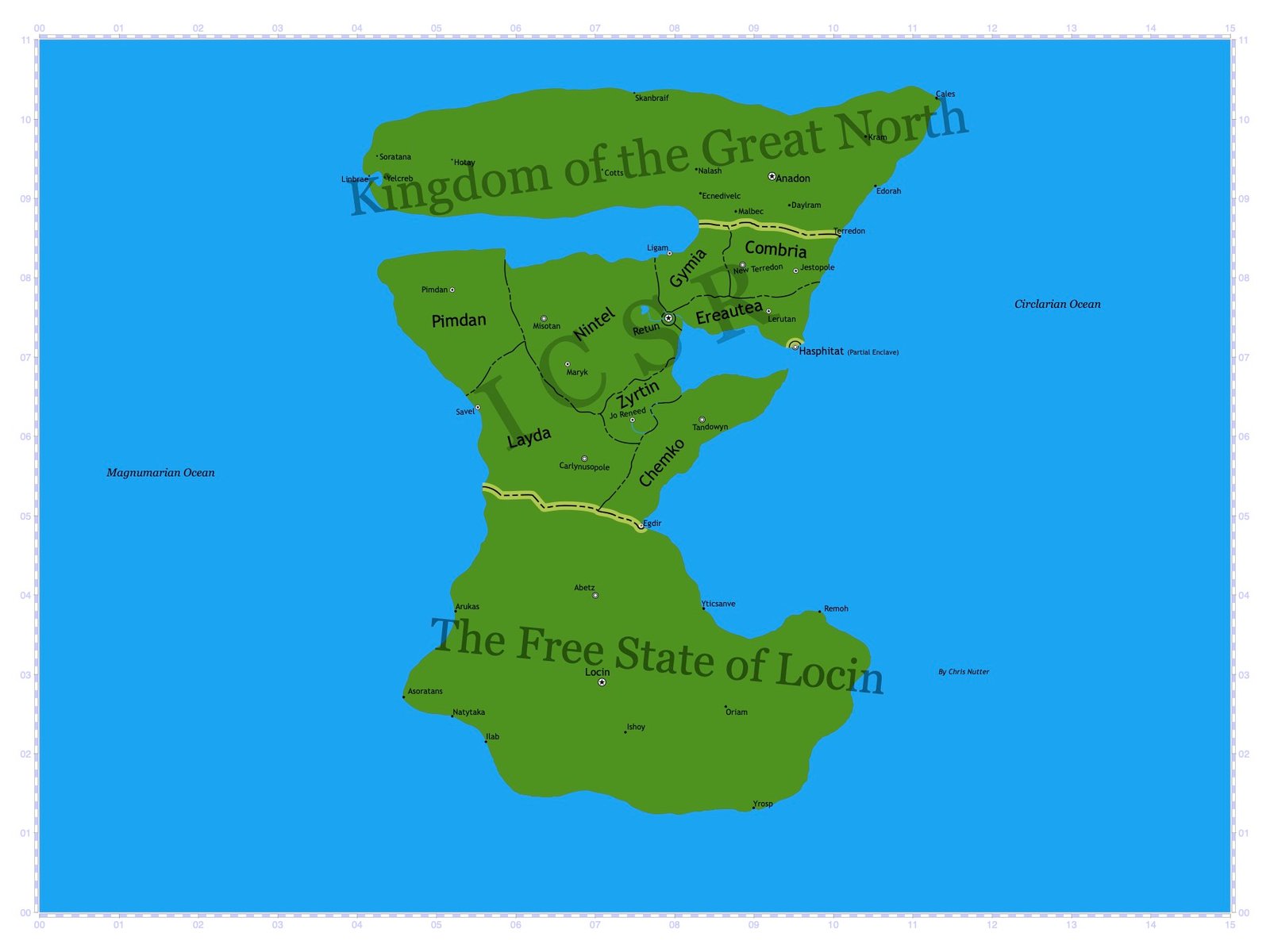
In the past, the Leon and Kontacet families existed as rivals within the ranks of the Combrian elite. And in the years leading up to this period, they were constantly volleying for control over the dymensional planecrafting industry, which had been expanding since 1369. In March 1387, however, the Leons and Kontacets conducted diplomacy and merged business interests to establish a new organization: The Leon-Kontacet Trust (LKT). Championed by Rit Leon, the LKT gained popularity among Combrian workers as it promised a raise in pay and direct representation in its newly-established Headquarters in Jestopole. And by the end of 1387, acquisition proposals for the LKT won majority votes in nearly all dymensional planecrafter businesses across Combria, winning Rit Leon popular favorability and a call for him to run for political office. On election day of 1387, Leon more than attained the signature endorsement threshold for him to officially become a member of the Trader Party. Soon after, he announced his run for Governor of Combria.
On election day the following year, Rit Leon won the Trader Party Combria Governor Primary, and, in the general election of 1389, won the Combria Governor nomination. As required by both the Combrian and Commonwealth Constitutions, Leon made plans to leave the LKT to serve his public office. In his place, he endorsed the young James Lawrence Kontacet. That October, the LKT held a special business election for this, which handed Kontacet an easy win.
As the co-Chief Executive Officer of the LKT, James Kontacet expanded upon Leon's policies to further strengthen and unite the Combrian dymensional planecrafter businesses, while making numerous calls upon the Commonwealth OPEN Forum for more funding. Unsatisfied with the response, Kontacet, in March 1390, announced a run for a seat in the OPEN Forum, which he would ultimately win with the most votes attained historically by any past OPEN Forum candidate.
An Ancondrian-based business agenda attempting to reignite the Commonwealth lightfire industry was countered, in January 1391, by Kontacet's counter-agenda, which made further gains to firmly establish the dymensional planecrafter industry, especially to help Library of Circlaria to attain more if its desired funding. This agenda gained more popular support in the wake of the surprising pro-Imperialist takeover of the Circlarian Union Council elections, as a growing number of Commonwealth citizens saw Kontacet as being a stubborn but reasonable figure. On election day of 1391, the dymensional planecrafter industry won a simple majority in the OPEN Forum.
With this new majority, the OPEN Forum, in 1392, passed a budget to boost funding for the dymensional planecrafter industry.
In light of growing popularity with the dymensional planecrafter industry and having won the Combria Governor election, Rit Leon, beginning in 1391, launched a campaign to succeed Meghan Wen as Prime Minister. His platform centered around a deep-trade program expansion like that of Chek Malley, along with a stubborn agenda to further follow through with Kontacet's agenda for the dymensional planecrafter industry. Meanwhile, Prime Minister Wen aimed to maintain the lightfire industry in terms of OPEN Forum funding, keep the status quo with the ECTA, and to maintain and strengthen the housing reforms under FSHA.
Although the dymensional planecrafter industry was gaining popularity and momentum, concerns over Leon's desire to make reductions to the housing agenda and take risks with ECTA led Prime Minister Wen to win re-election in 1392 for a fourth and final term.