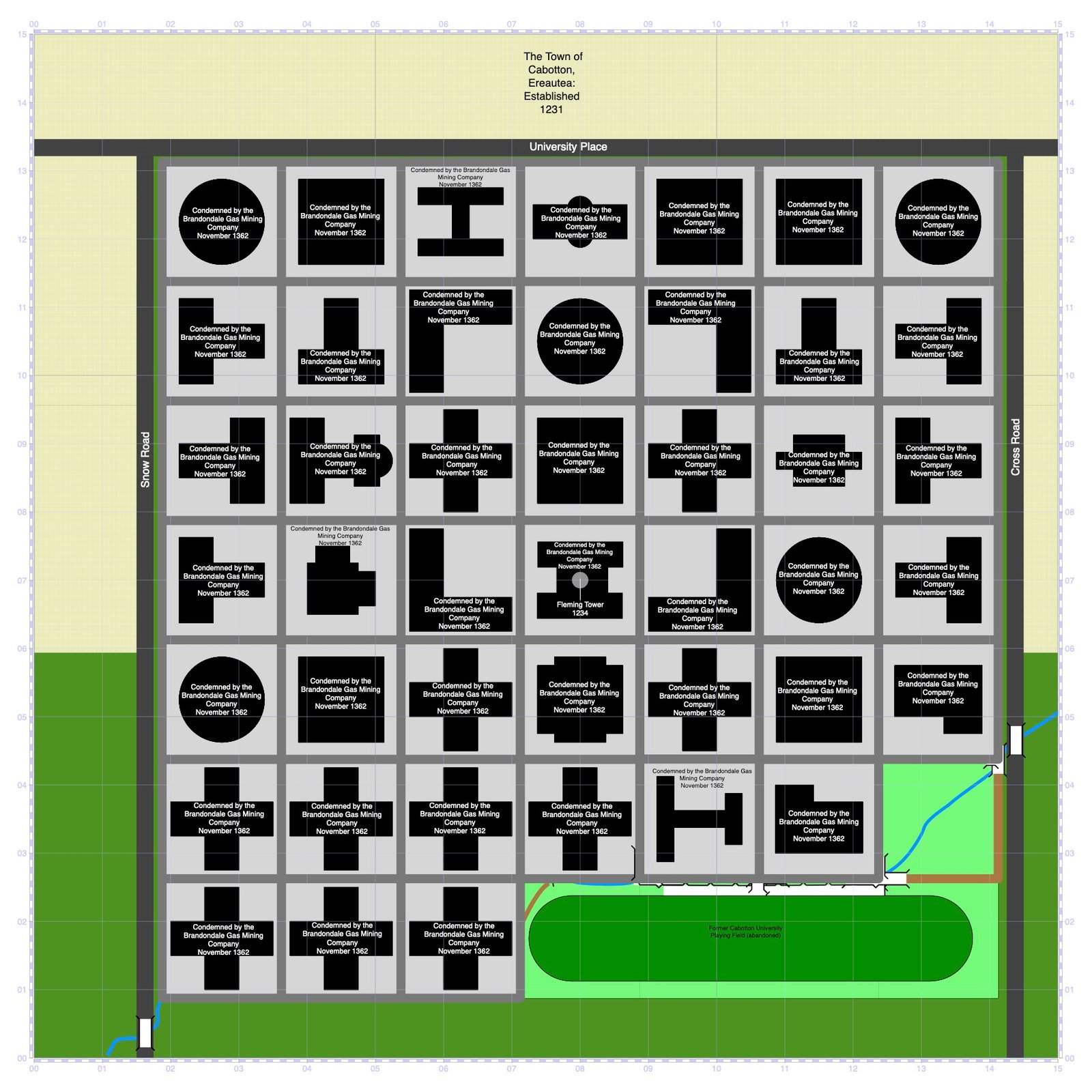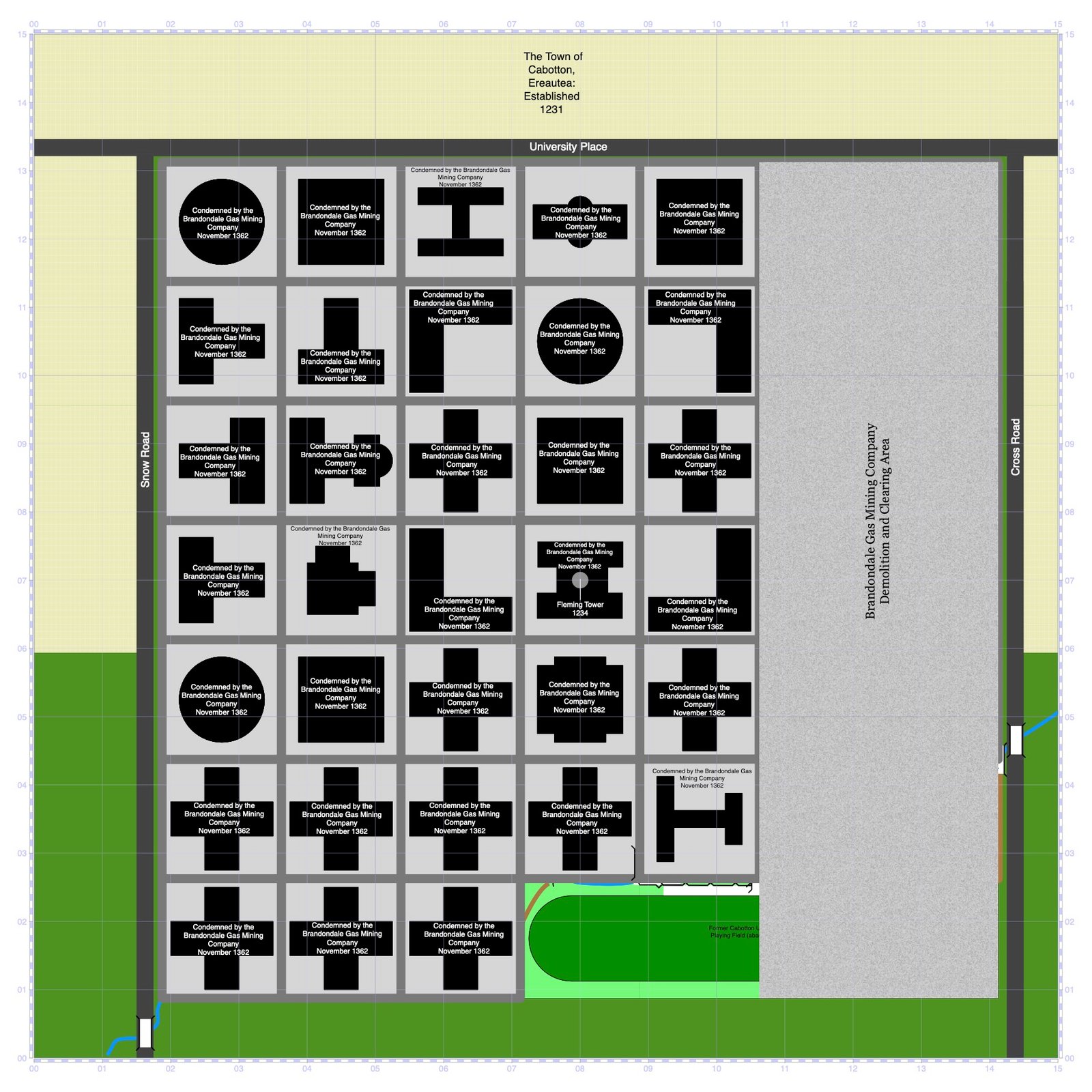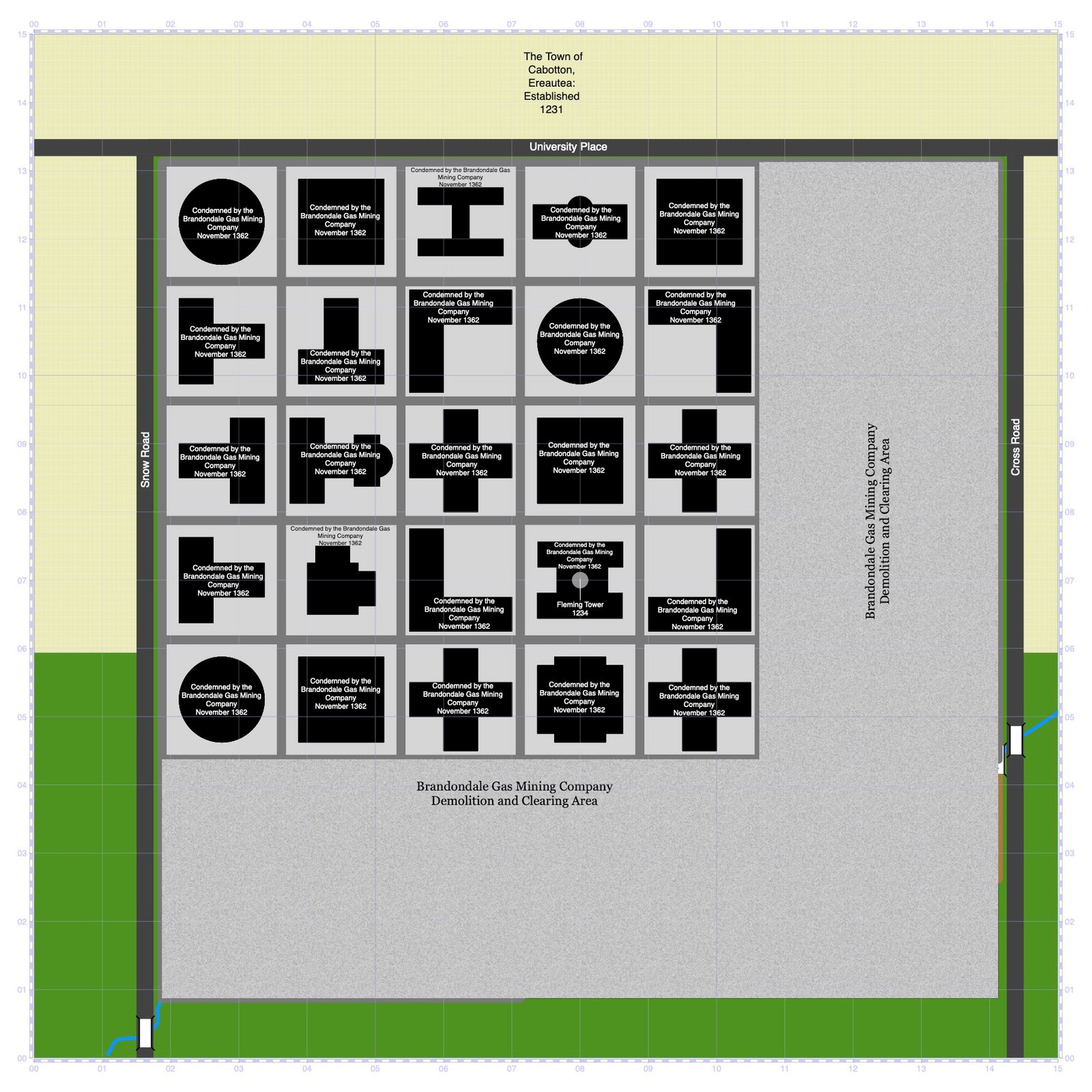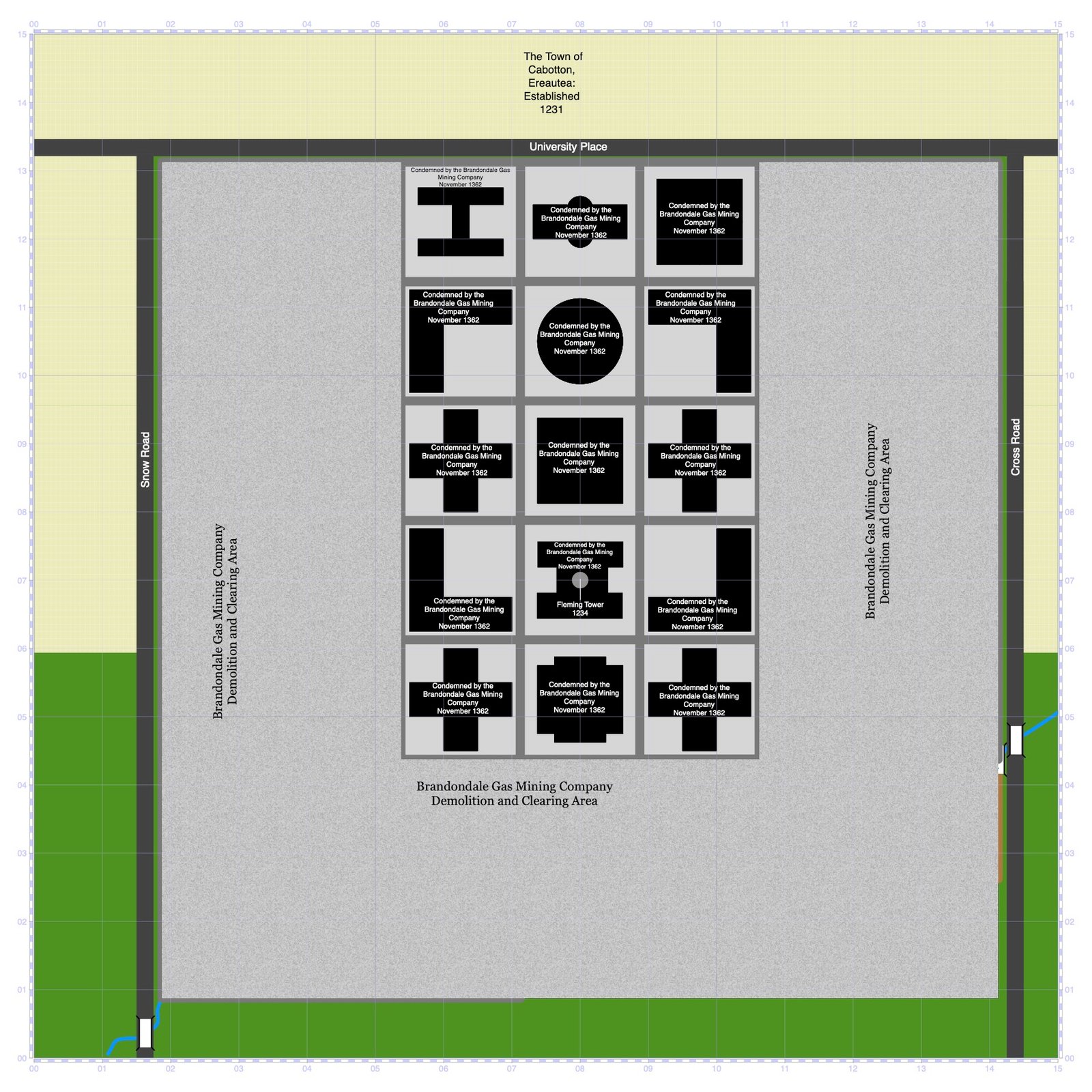
Before 1200
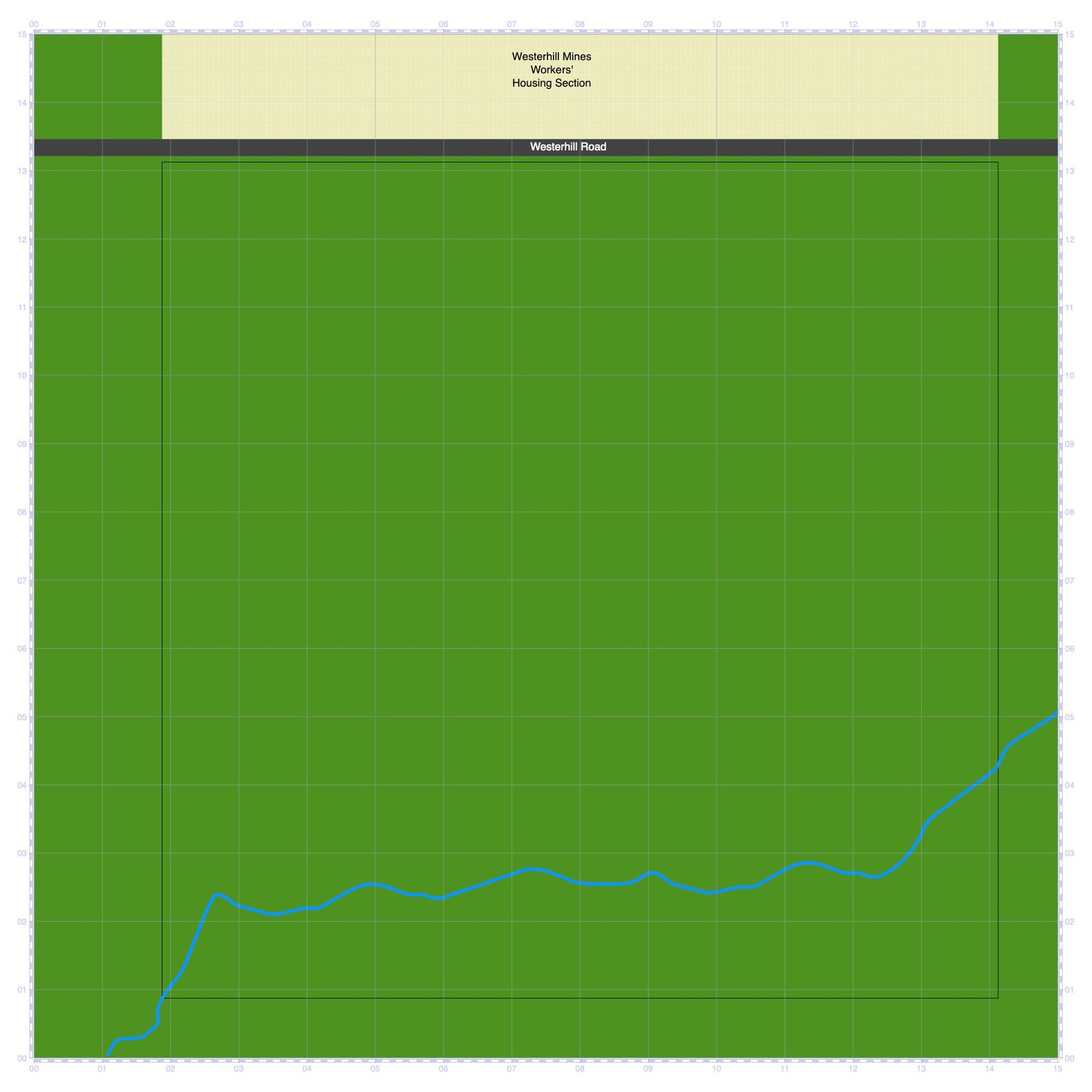
The geography of present-day Cabotton, Ereautea before modern human settlements was very much like the remainder of rural Ereautea, consisting of low rolling hills covered by a natural patchwork of forests and meadows. Flora consisted of maples, beeches, oaks, grasses, ferns, flowers, bushes, and berries; while fauna included birds, deer, bears, wolves, eagles, and a variety of rodents....Read More
1203
In 1198, the Combrian government launched a special airship fitted with detector equipment which flew across Ereautea, where it detected large deposits of ebony underground. And the largest of which detected thus far was found under the ground of the future site of Cabotton University...Read More

1233
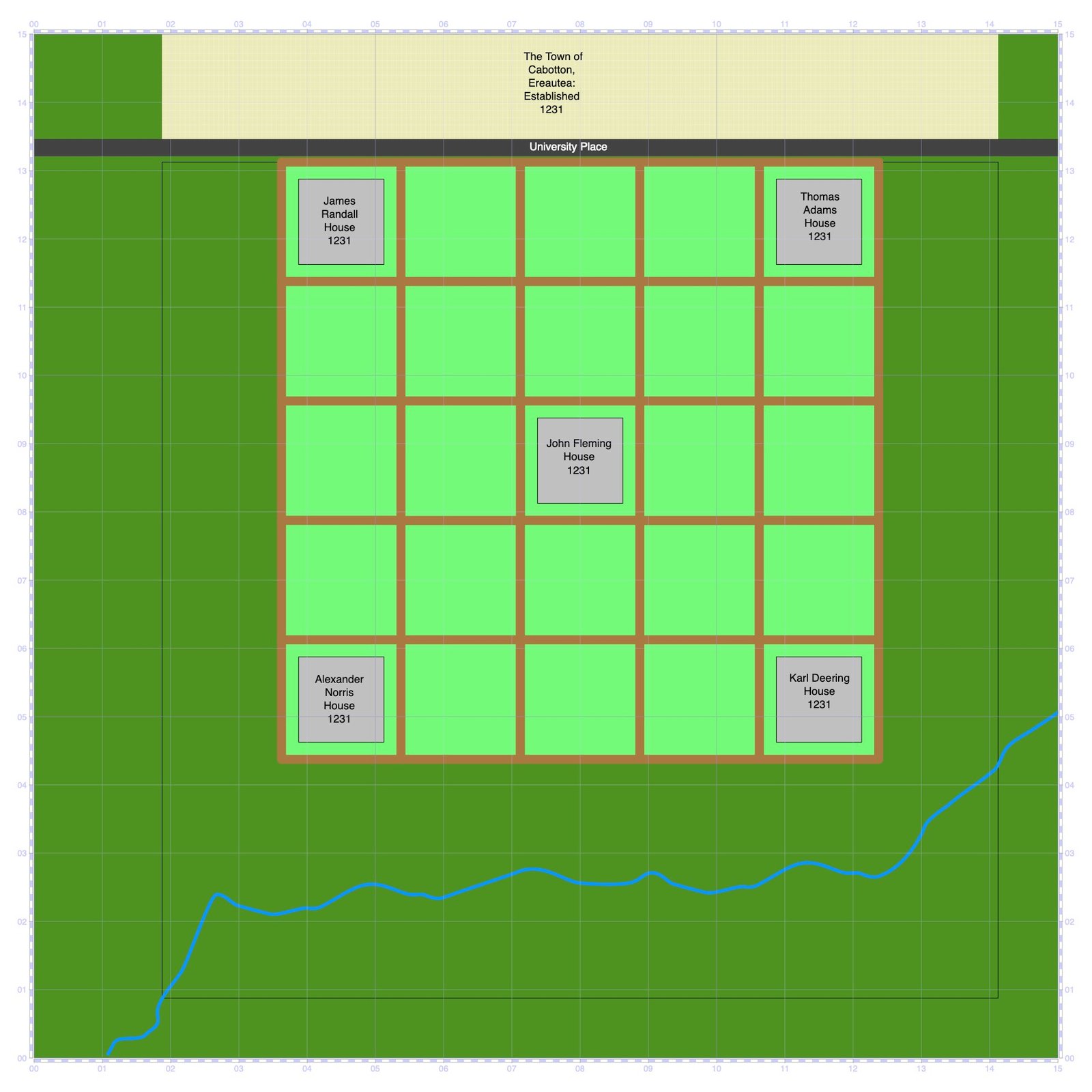
Like Westerhill Institute, each of the Five Houses stood housing the same studies as before, with James Randall House holding the Grammar and Literature studies, Thomas Adams House holding the Science and Spellfire studies, Alexander Norris House holding the History and Law studies, Karl Deering House holding the Mathematics and Engineering studies, and John Fleming House holding the Civics and Economics studies...Read More
1234
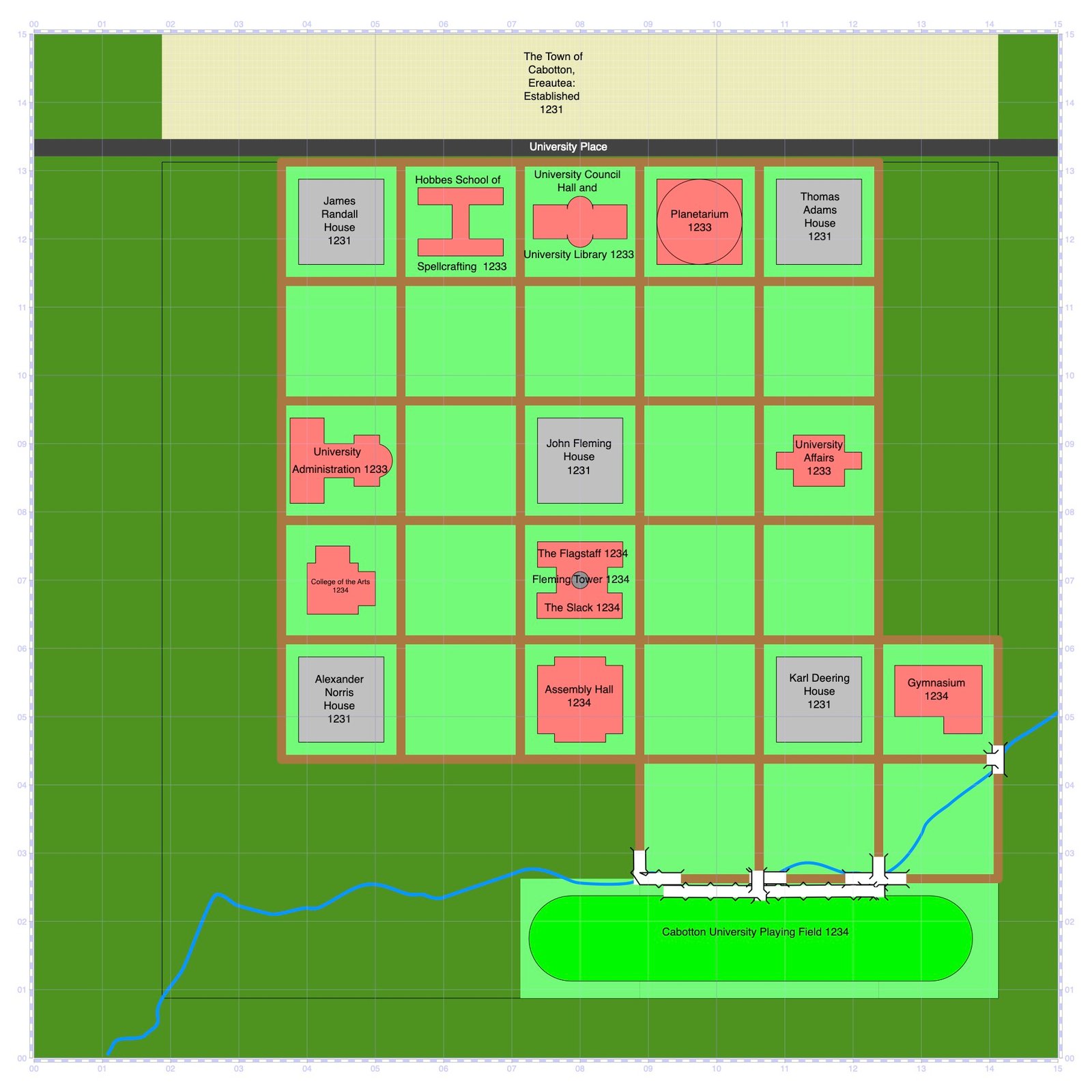
Construction was not yet complete for the Hobbes School. However, by the beginning of Cabotton University's first Spring Semester in January 1233, there were enough rooms and corridors inside capable of housing classes, meaning that the school opened for its first unofficial semester. This was aided by the sealed pavilions around the premise providing venues to the classes whose rooms were not yet completed. And a chamber larger than the other classrooms, situated in the Southeast Corner of the school, served as a venue for spellfire practice and testing...Read More
1235
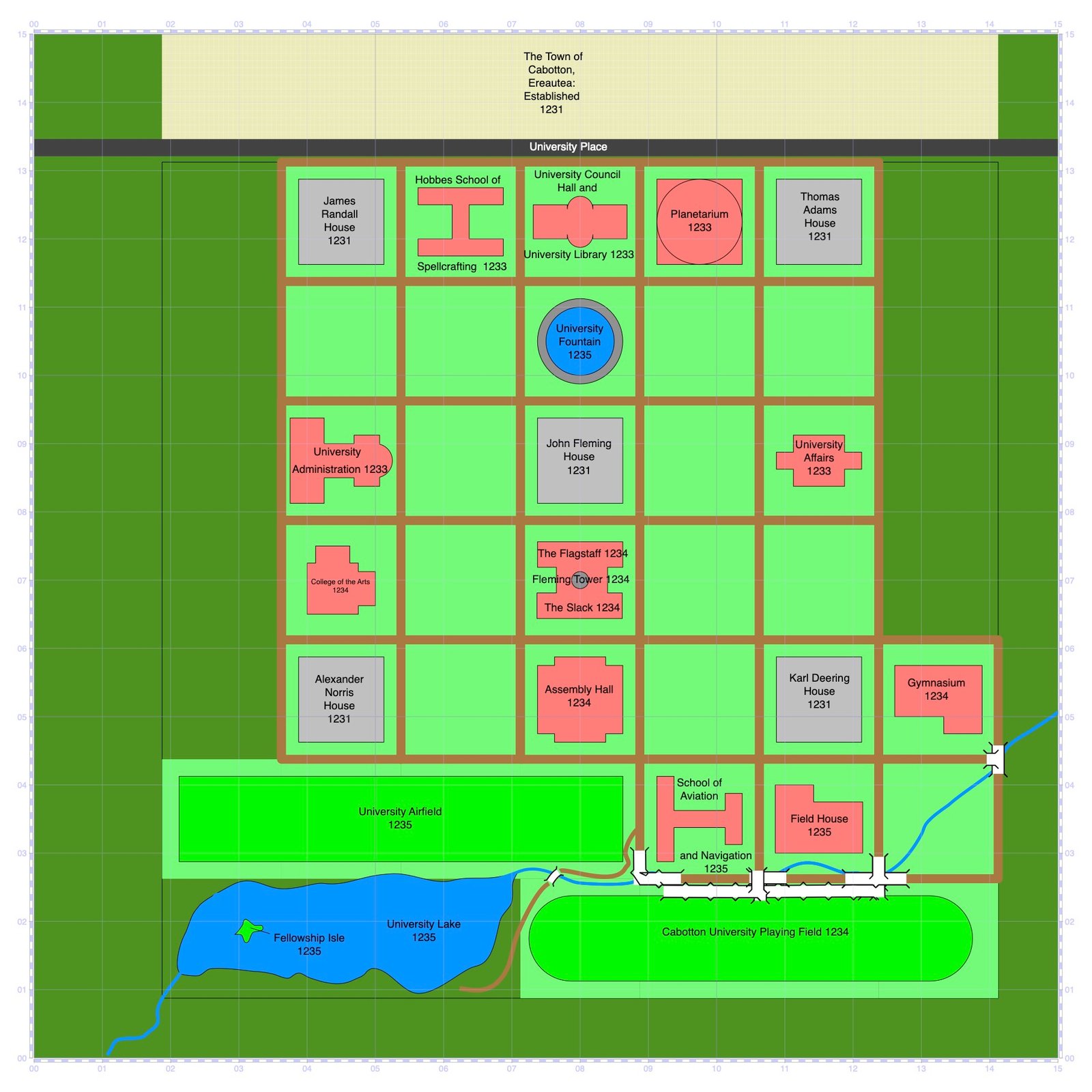
With more classroom availability in the new buildings came a lesser presence of the classroom pavilions. This, along with the opportunity to engage in freedom of voice and self-determination in education, made Cabotton University an increasingly attractive option for prospective scholars, though it was still only locally known at the time...Read More
1252
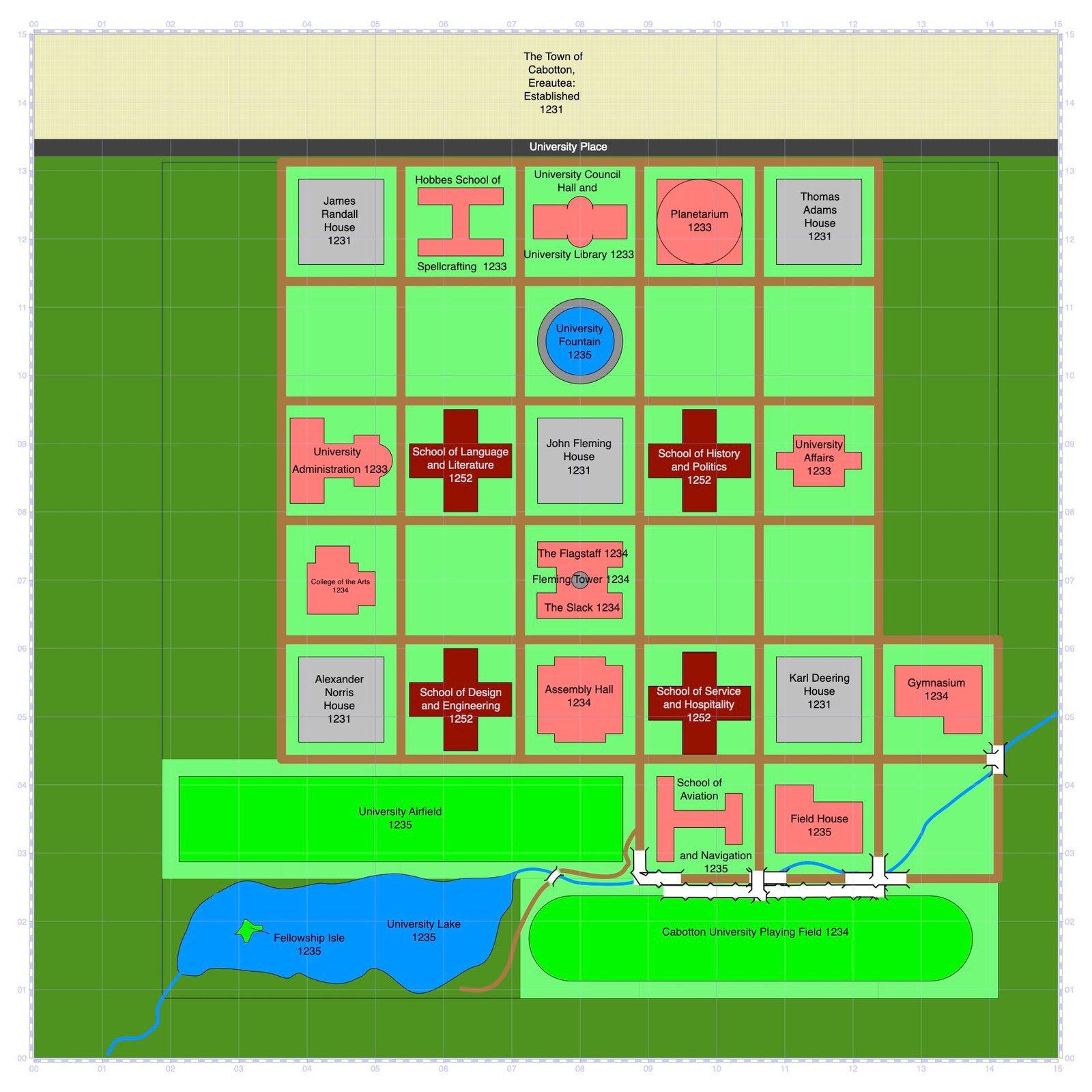
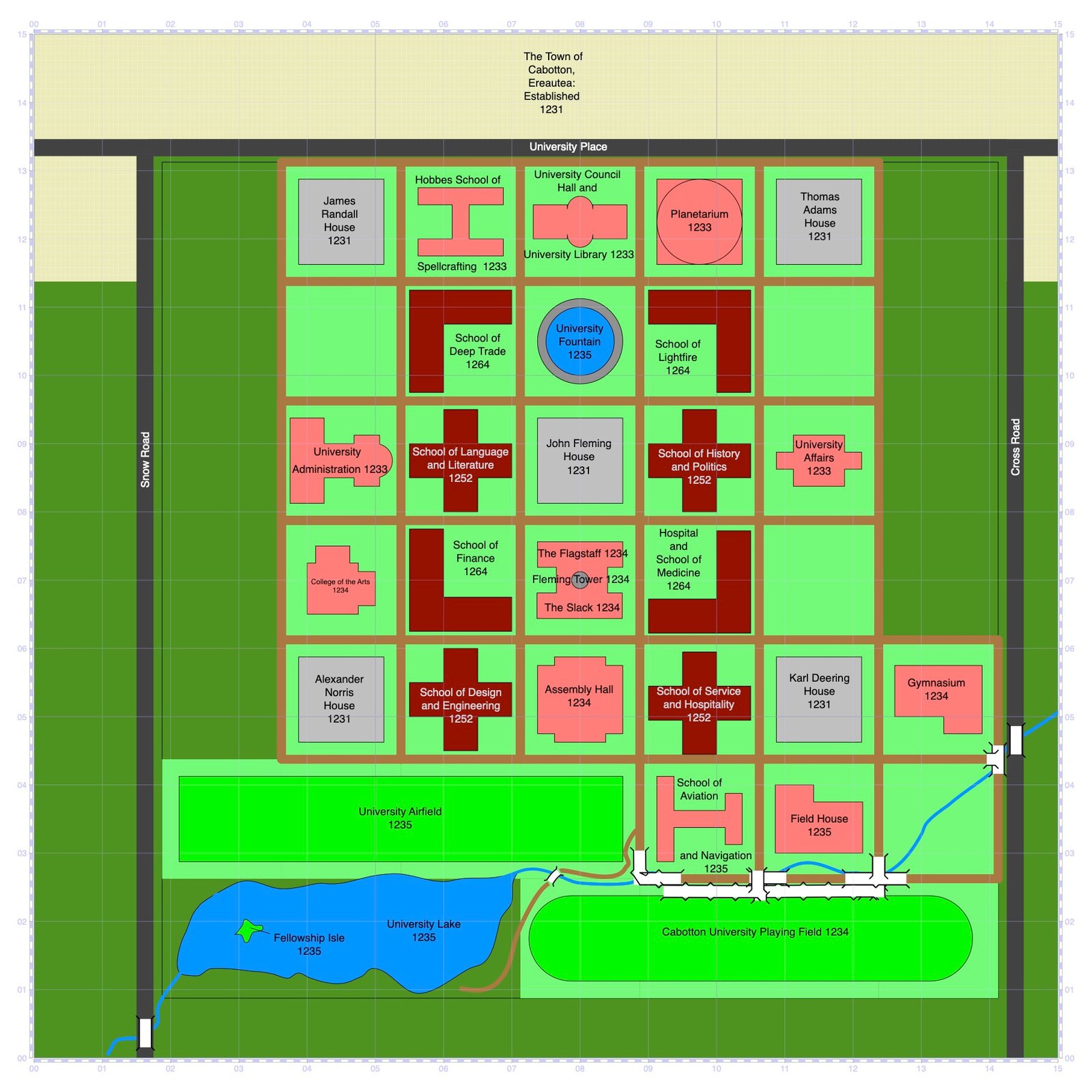
As mentioned before, the curriculum at Cabotton University during the 1230s was very much similar to the structure of the present-day National Institute of Research and Development. Every semester, each Department would publish a "big question," open for two-sided debates among students or student groups. Such a curriculum took on enlightening ideas spurred by an international lightfire conference held on the Campus in February 1236. Meanwhile, students of the School of Aviation and Navigation as well as the Hobbes School of Spellfire-Crafting took on projects involved in the establishment of New Hasphitat to design buildings, roads, boats, watercraft, aircraft, and numerous pieces of infrastructure. Such projects in the end would be either approved or rejected by the majority vote of their particular class before being subject to the same kind of vote in University Council...Read More
1264
The music program, up to this point, had been collectively run by numerous Cabotton Scholars, serving as the last "holdout" of former Headmaster Thomas Snow's old curriculum and being known for having numerous informal music group ensembles. Headmaster Cross, however, had a vision to re-establish this program as one with more integrity and unity. Slightly more than half of those in the program actually supported Cross in this endeavor despite opposition led by Kara Tomwell. And in May 1253, Cabotton University hired Robert Manning, who started his tenure that fall and established a new music program which would grow into one of good repute in the years to come...Read More
1276
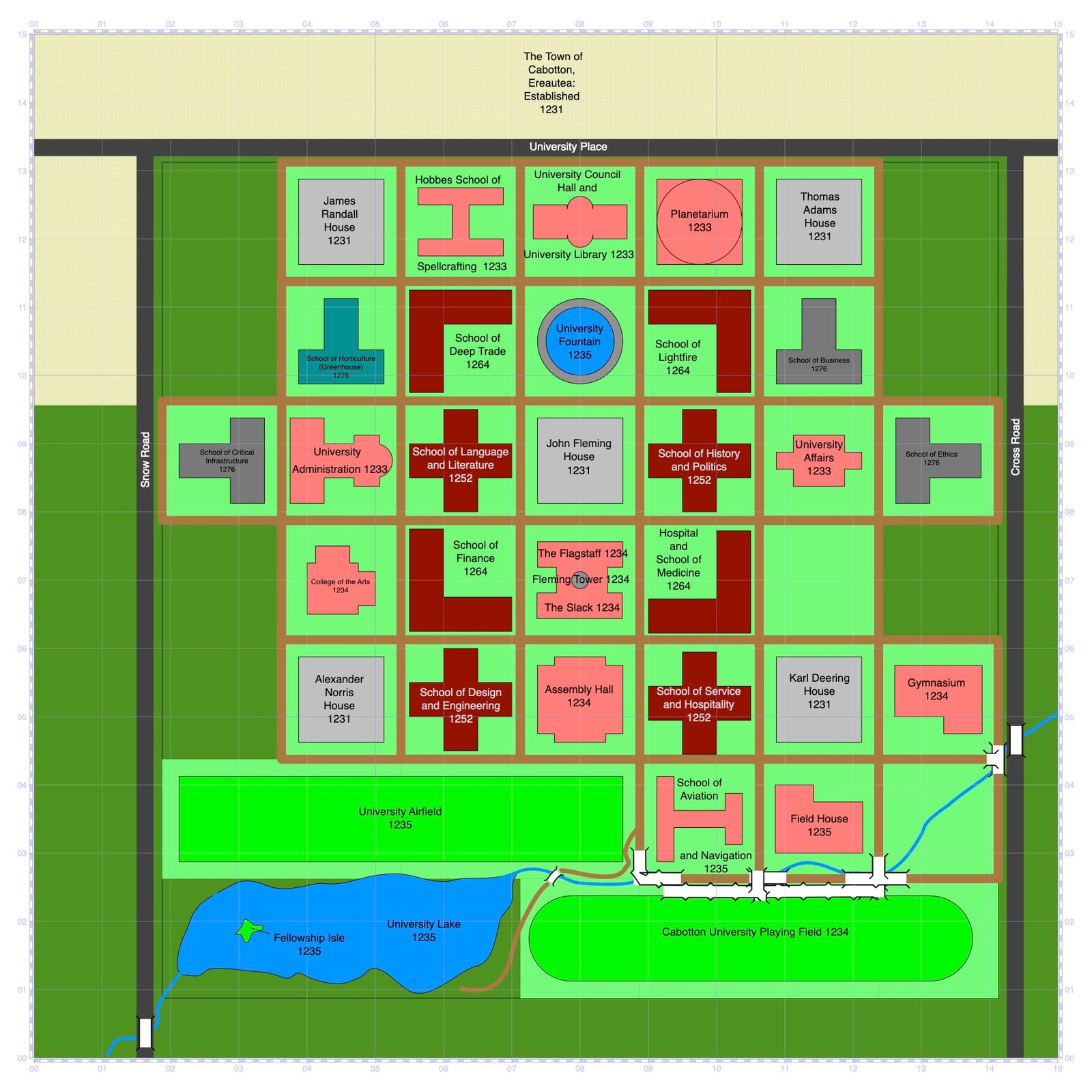
A growing number of Members in the Third Level Society began, in the 1260s, calling for the creation of a medieval version of the Arturian Realm. This was supported by Meona Bell but such support never resonated with Society leadership or the majority of its Members. However, interest was voiced by Marcus Terrings and Jon Beyon, who invited Meona Bell and her supporting colleagues to travel to Cenofan in Canticula to discuss implementation of the agenda...Read More
1348
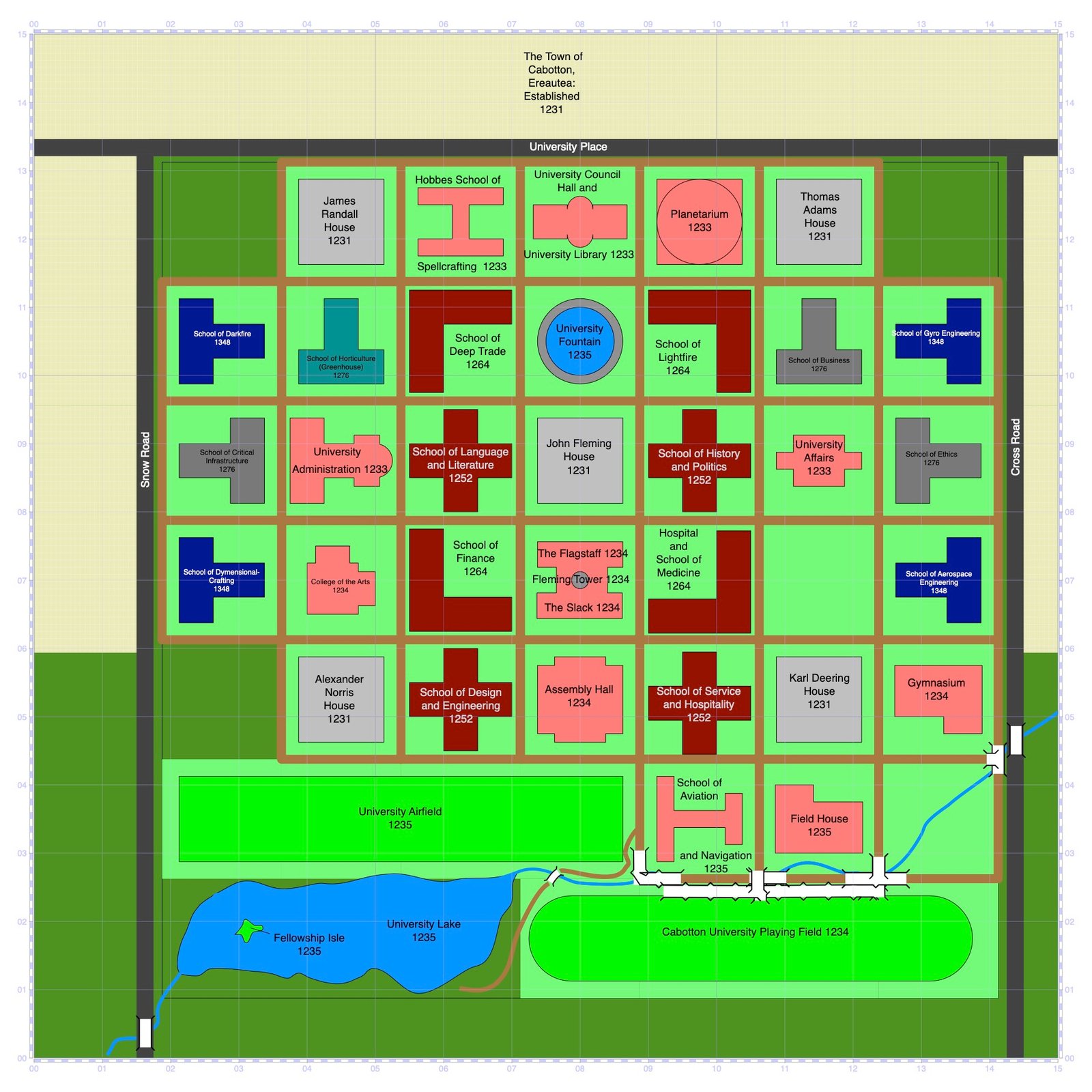
The first student tuition took effect in June 1275 at 483.84 credits per semester. There had been a promise that this would expire the following Spring. However, citing the financial strain, Cross and the Council extended the tuition till May 1277, then again till May 1278, and then again till May 1279....Read More

1354
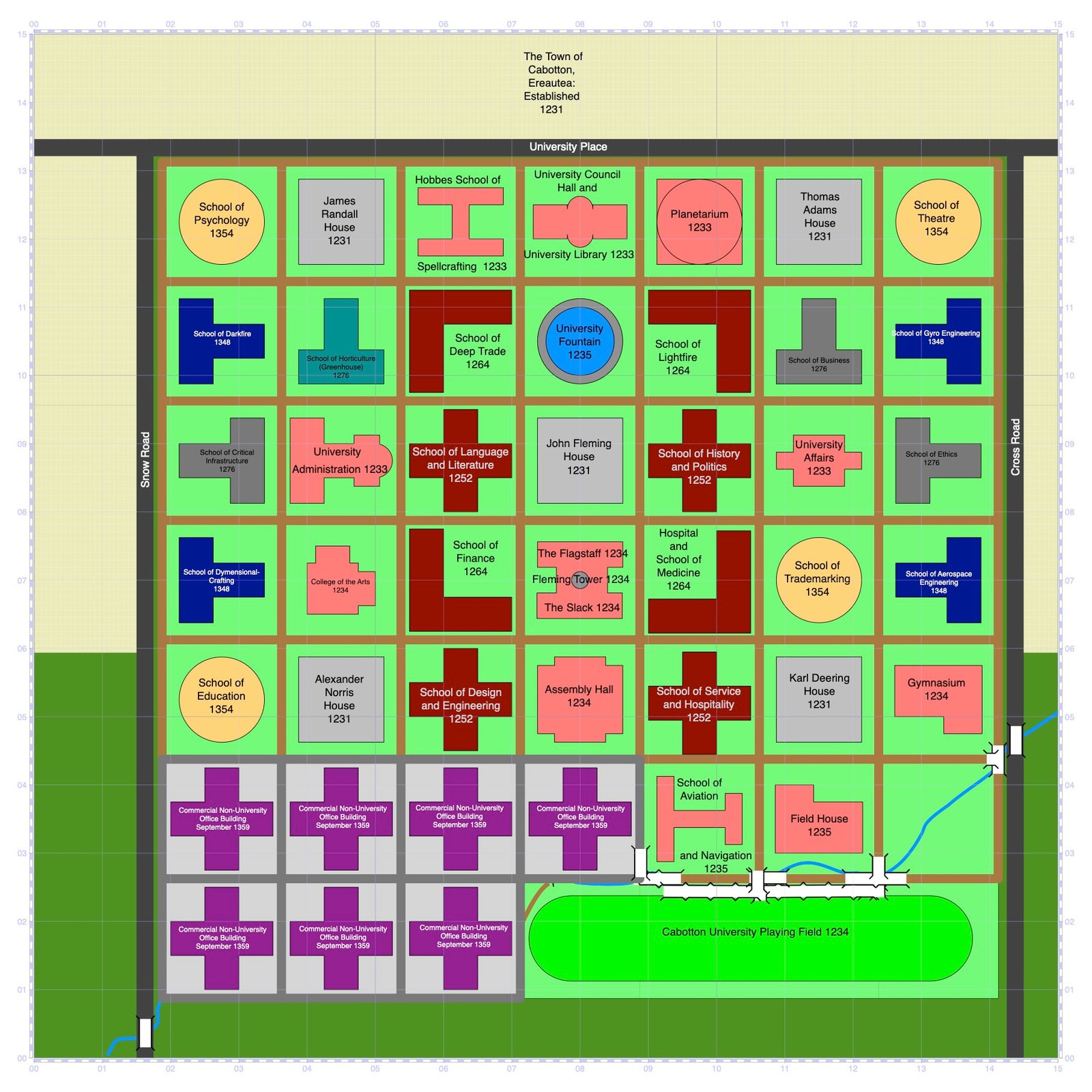
Once again, the University began experiencing issues with class venue overcrowding and over-scheduling. This time, the issue involved psychology classes in the Healthcare Department of the School of Critical Infrastructure, theatre classes in the College of the Arts, education classes in all of the schools and departments, and trademarking classes in the School of Business and School of Ethics...Read More
September 1359
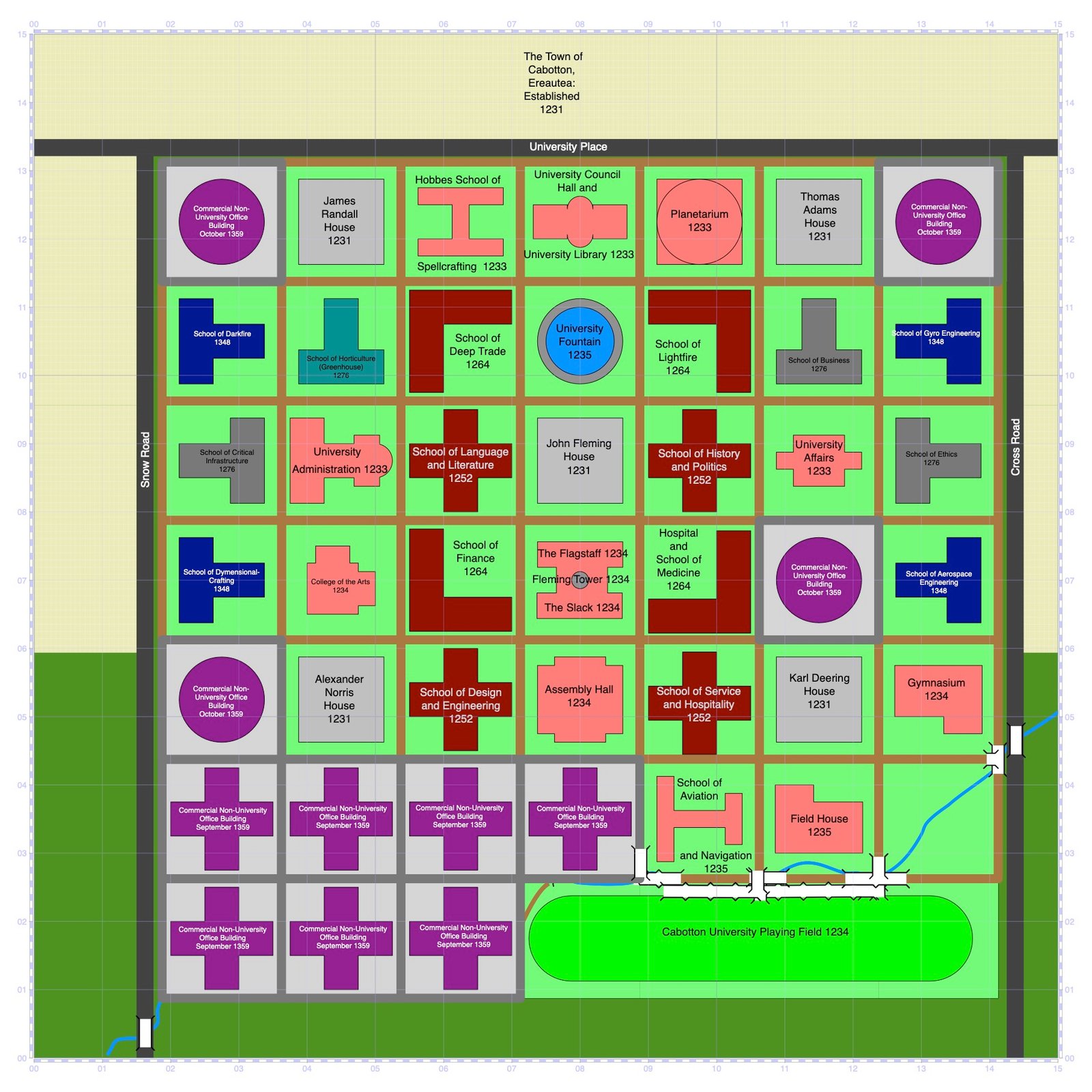
Waltmann School Expansion Project VI, Phase II, approved officially by the University Council in June 1357, would begin in June 1359 and finish construction in May 1360 to provide one Waltmann School for every State in Tandeiyah. Cabotton University also continued to make contributions to Ultima Porta as well as other missions to be carried out by the Retunian Aerospace Program...Read More
November 1359
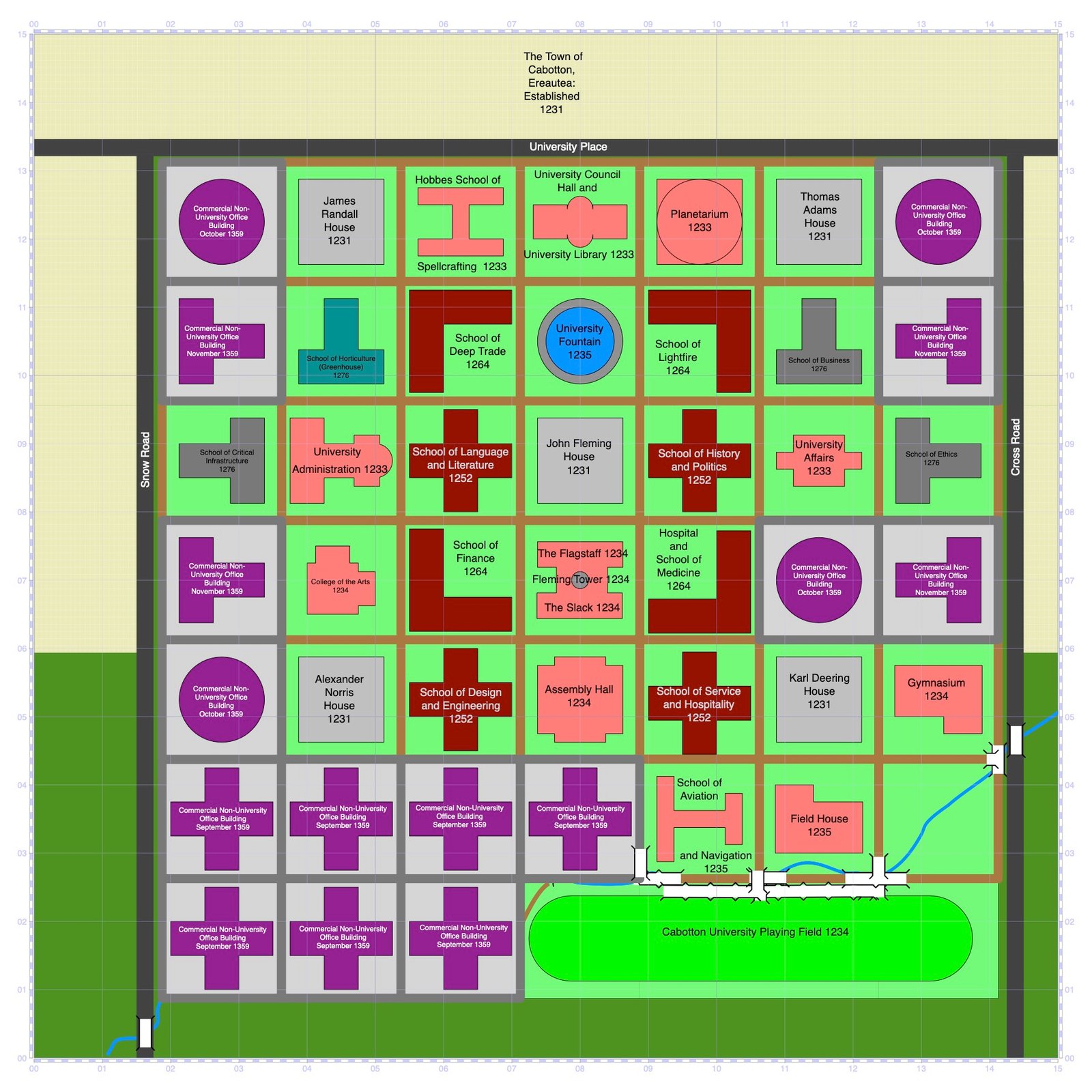
On 5 November 1359, the University Treasury sold the residence to the Lynn Bank Financial Institute, based in the Canticulan nation of Gamroa. And before long, reports emerged of the Institute considering a renovation on the place before selling it to the highest bidder, a move seen by the Cabotton University population as destructive to University heritage...Read More
December 1359
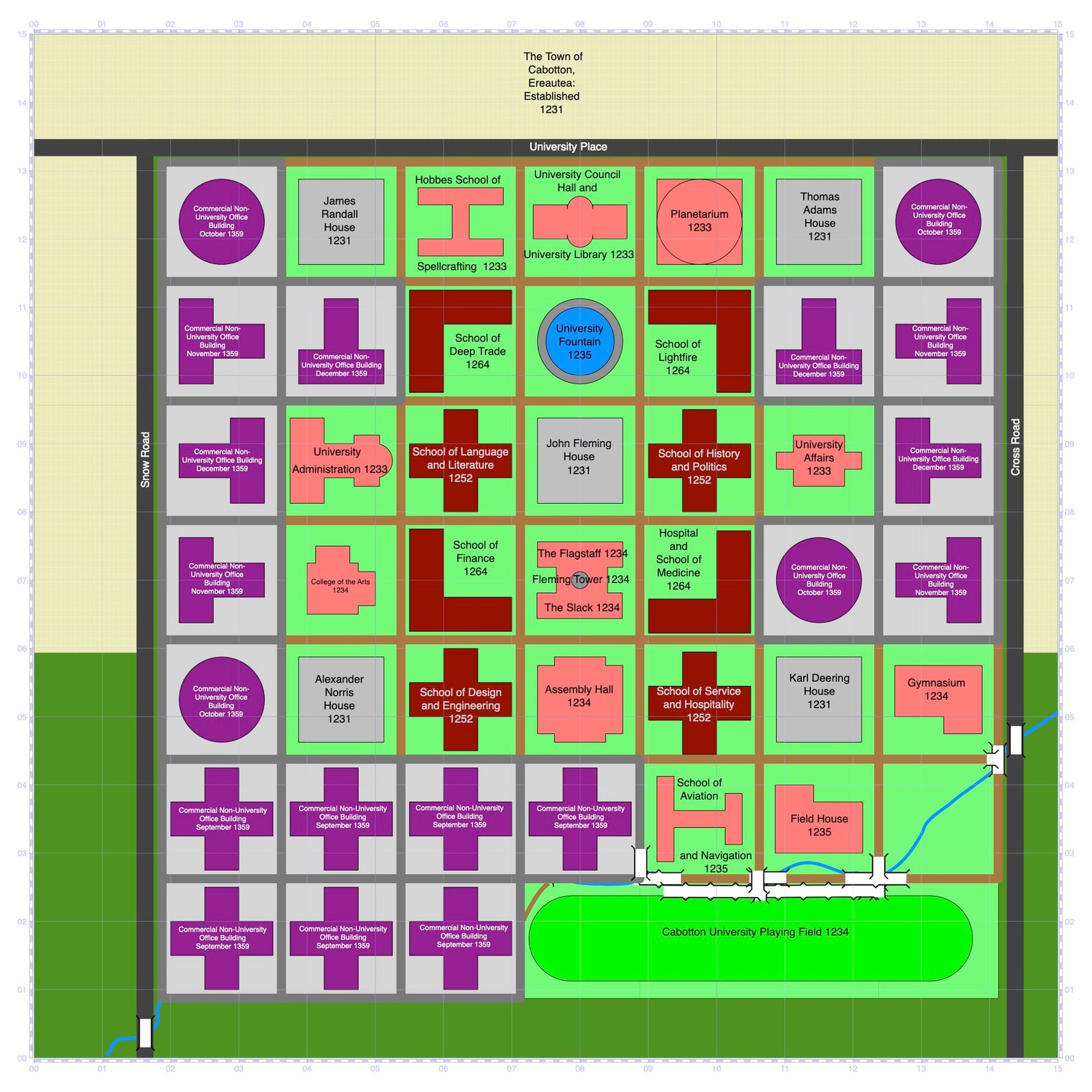
On 5 December 1359, University Chief Administrator Jon Den announced from his Northeast Ancondria location that, for 23 December, the School of Horticulture (the famous Greenhouse), the School of Critical Infrastructure, the School of Business, and the School of Ethics would close...Read More
January 1360
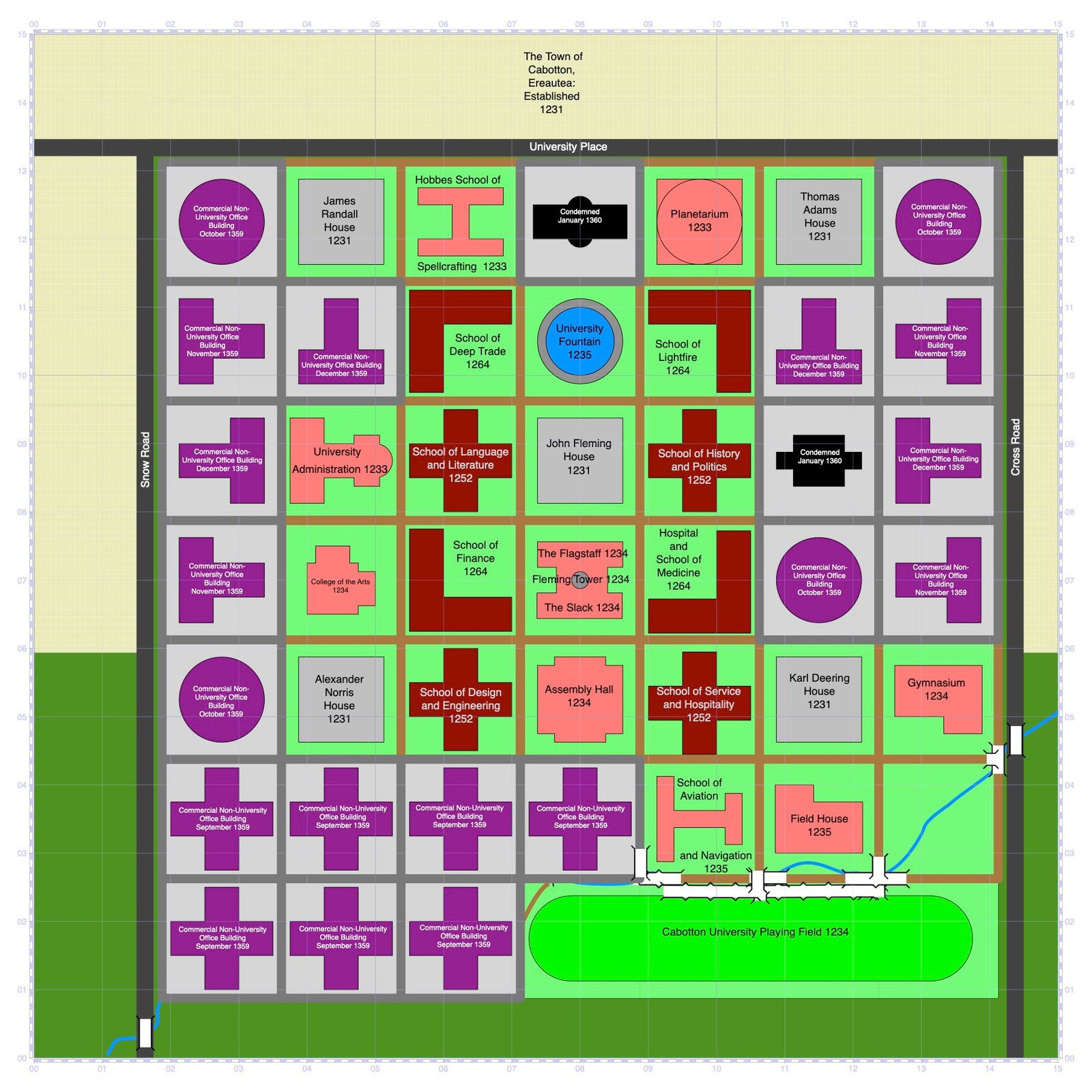
A Cabotton University student named Heather Walker declared, through underground communication networks to the Cabotton student body, that the decision by Jon Den to downsize the University Council was the beginning of a policy to end democracy for the University. In response to this, a large of students on Campus held conferences during which they made a plan to accompany those elected Council Members deemed illegitimate by Den to sit in the Council Chambers alongside their colleagues beginning 2 January 1360...Read More
February 1360
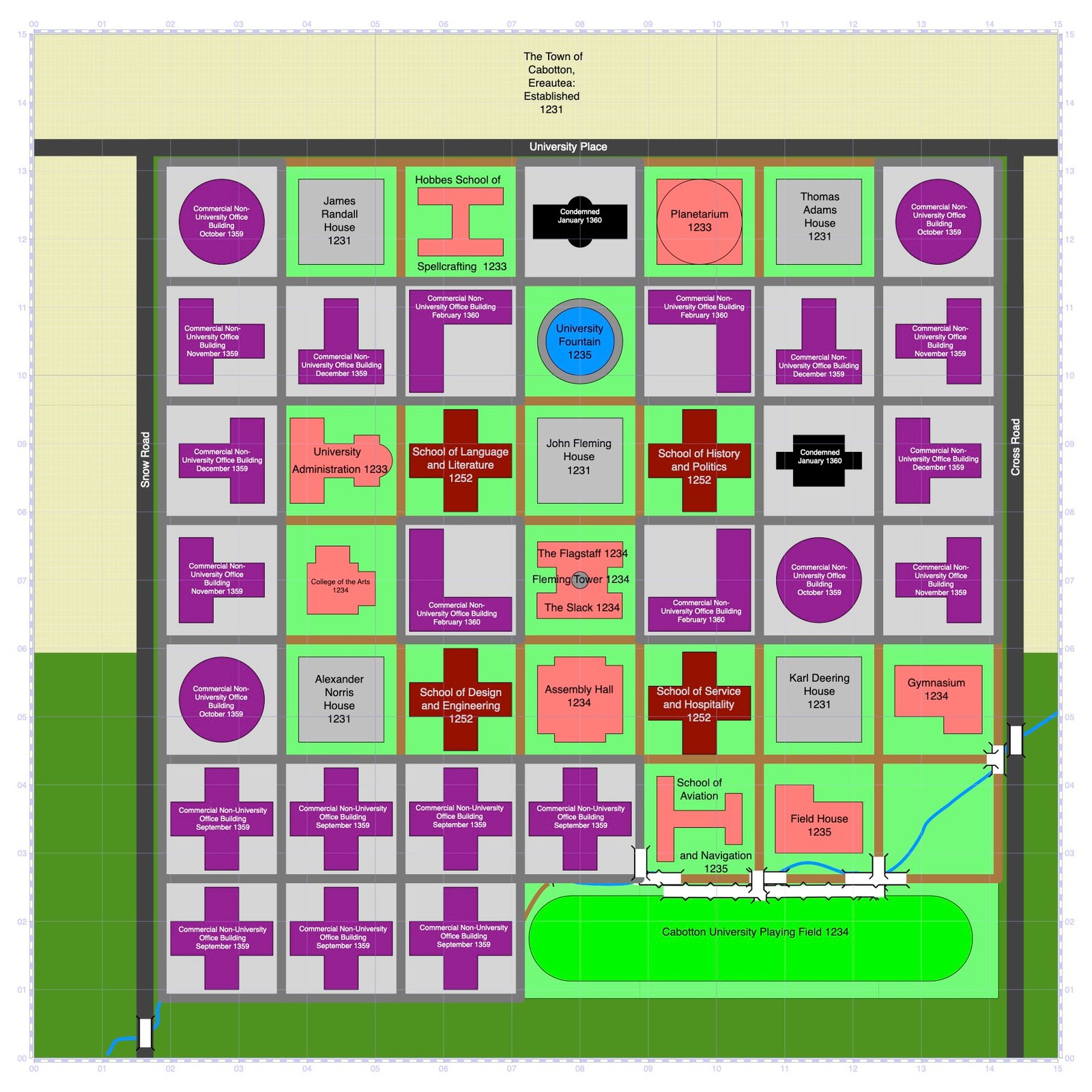
The University Chief Administrator, Jon Den, released a public statement announcing the closure of the School of Deep-Trade, the School of Lightfire, the School of Finance, and the School of Medicine, to be in effect starting 23 February 1360. Within this statement, Den reasoned that this was intended to help the University pay off its mounting debt; and he promised that this would be the last round of closures...Read More
April 1360
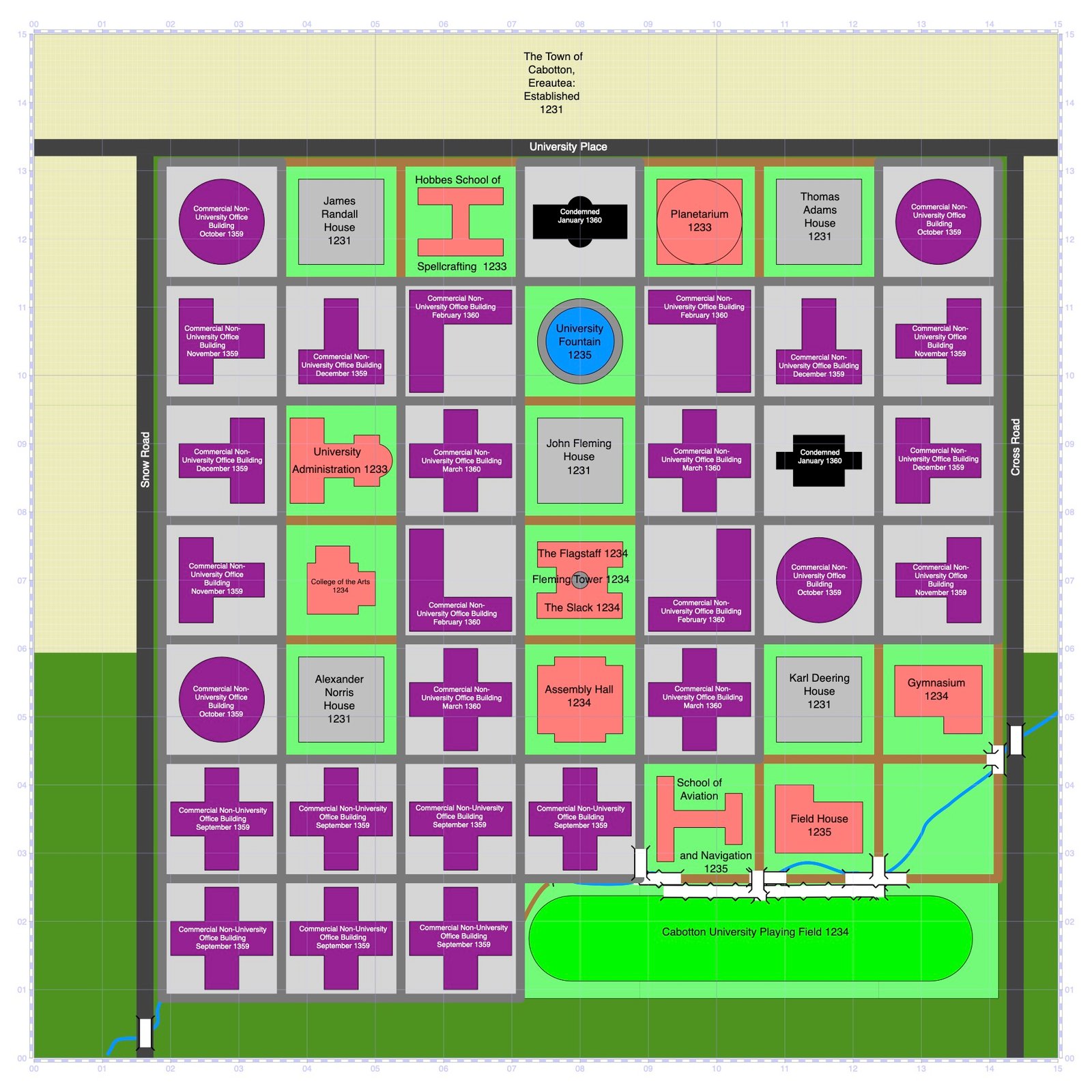
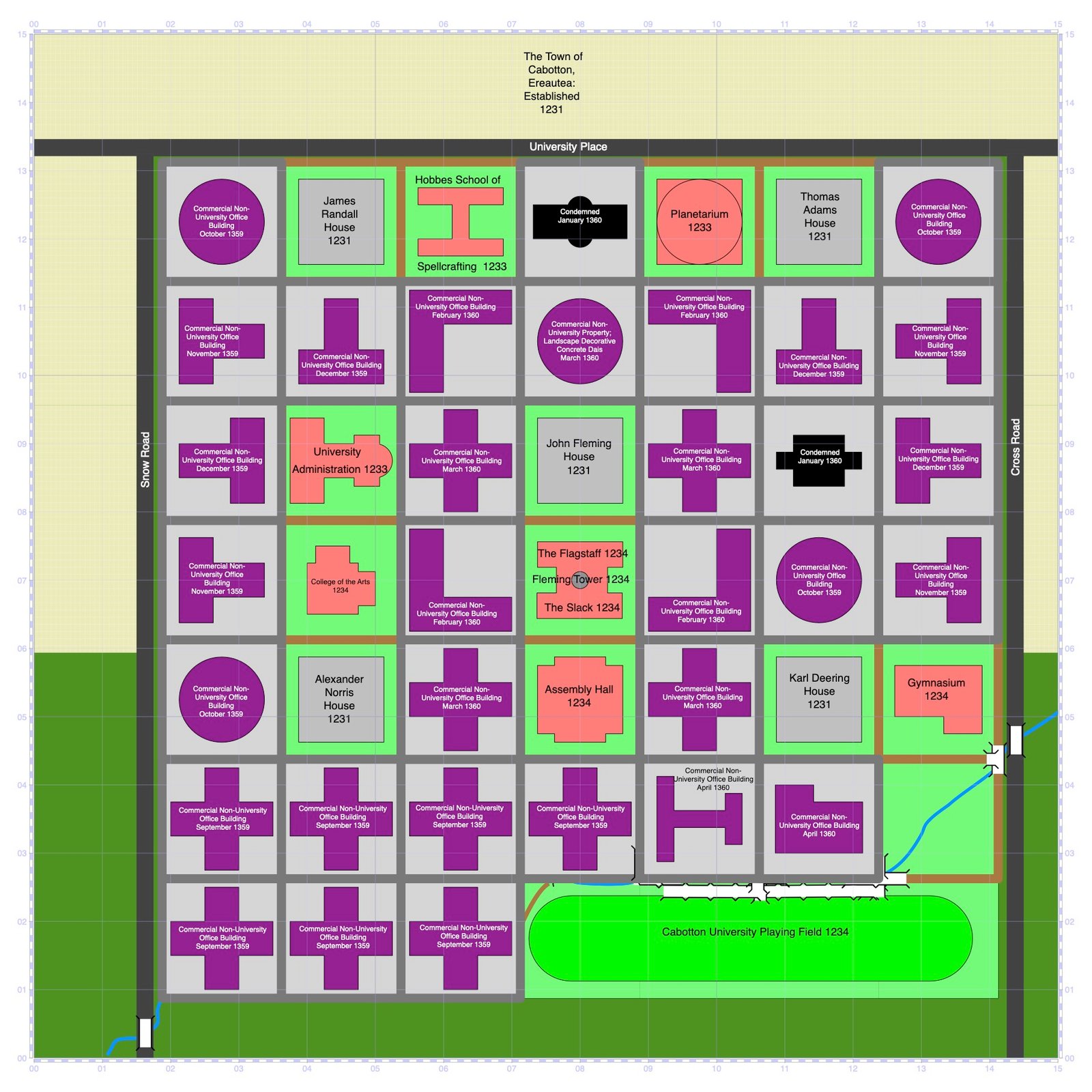
Per orders from Cabotton University Chief Administrator Jon Den, the Field House and the School of Aviation and Navigation closed on 23 April 1360; thus becoming the first closures of Cabotton University venues built before the establishment of the Retunian Republic in 1238. The School of Aviation and Navigation had, throughout the previous ten years, been the site of a significant amount of planning and experimentation for Retunian Aerospace Program, meaning that the closure forced the program to seek new venues and resources...Read More
May 1360
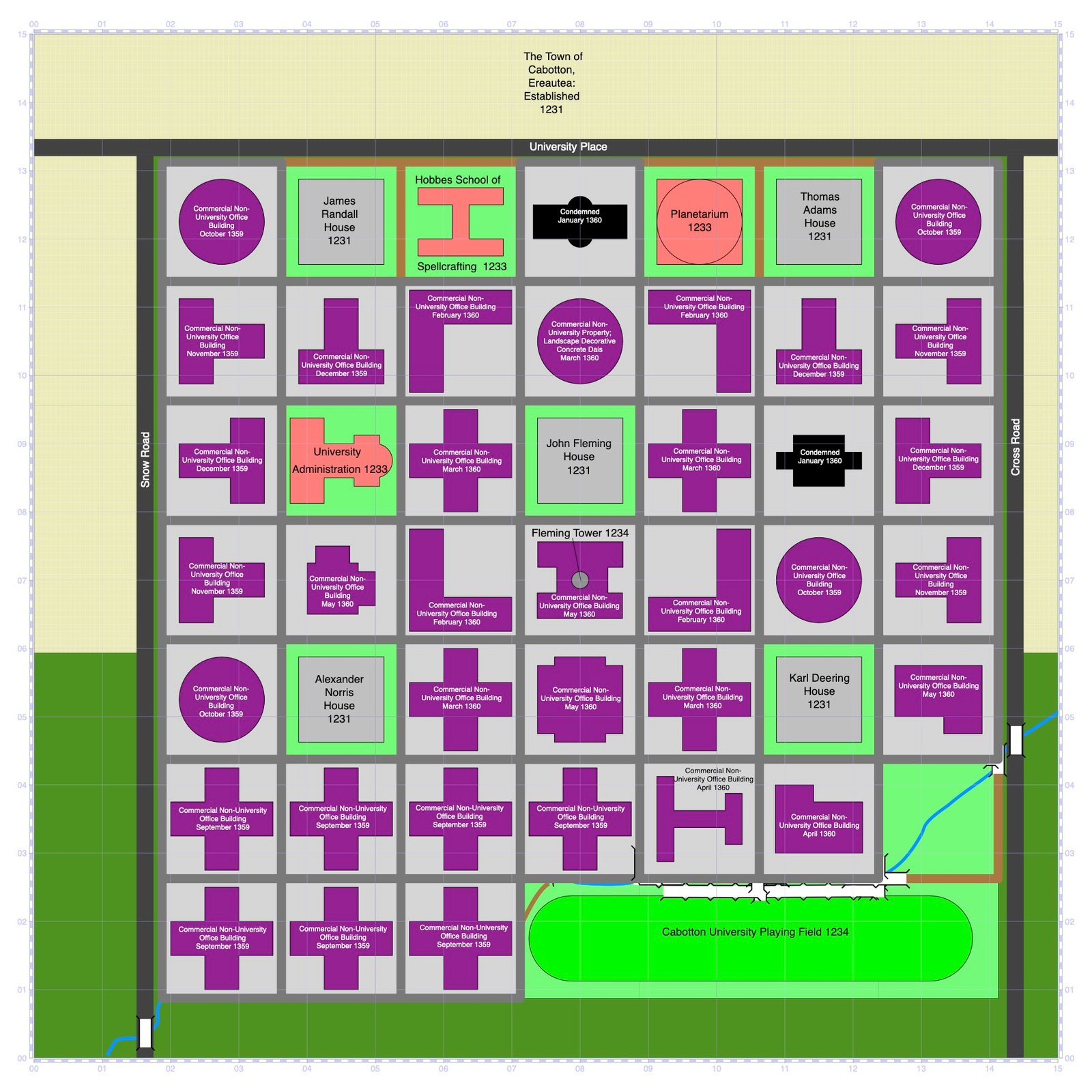
Per the orders of Jon Den, the Cabotton University Administration authorized the closure of the Great Assembly Hall, the College of the Arts, the Gymnasium, and the venue housing the Flagstaff, the Slack, and Fleming Tower. Such a closure, and subsequent leasing of venues to non-affiliated businesses, took effect on 23 May 1360...Read More
June 1360
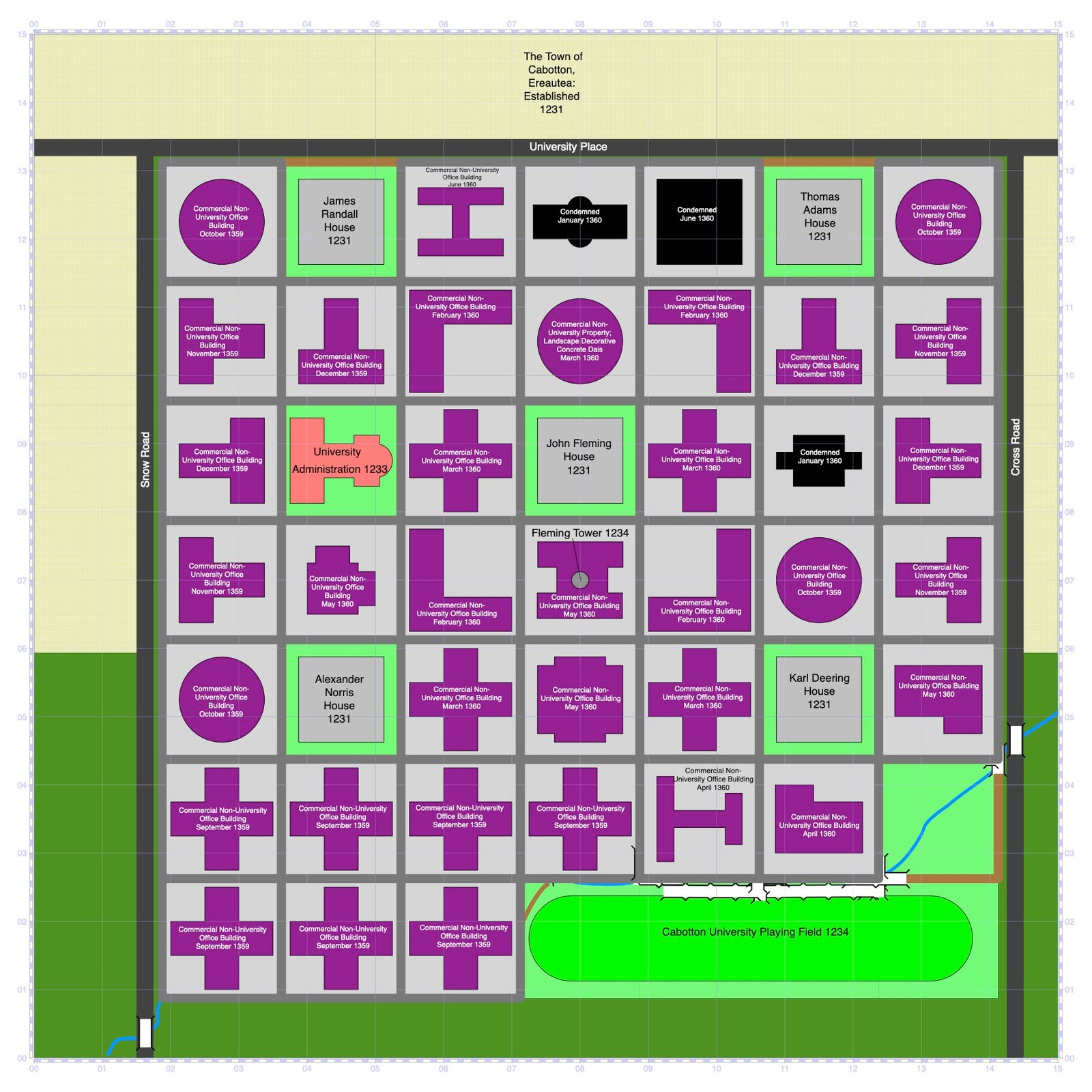
The Jon Den Administration responded to the Trust Fund petition with silence. Furthermore, during the month of June 1360, the Administration initiated a program that involved randomly selecting Cabotton students for mandatory recruitment into the growing Esurchian forces in Ancondria. A collection of students gathered for informal meetings in the old Planetarium venue of the Third Level Society to attempt to resist this; but anonymous insiders informed the Den Administration, who promptly closed and condemned the building...Read More
January 1361
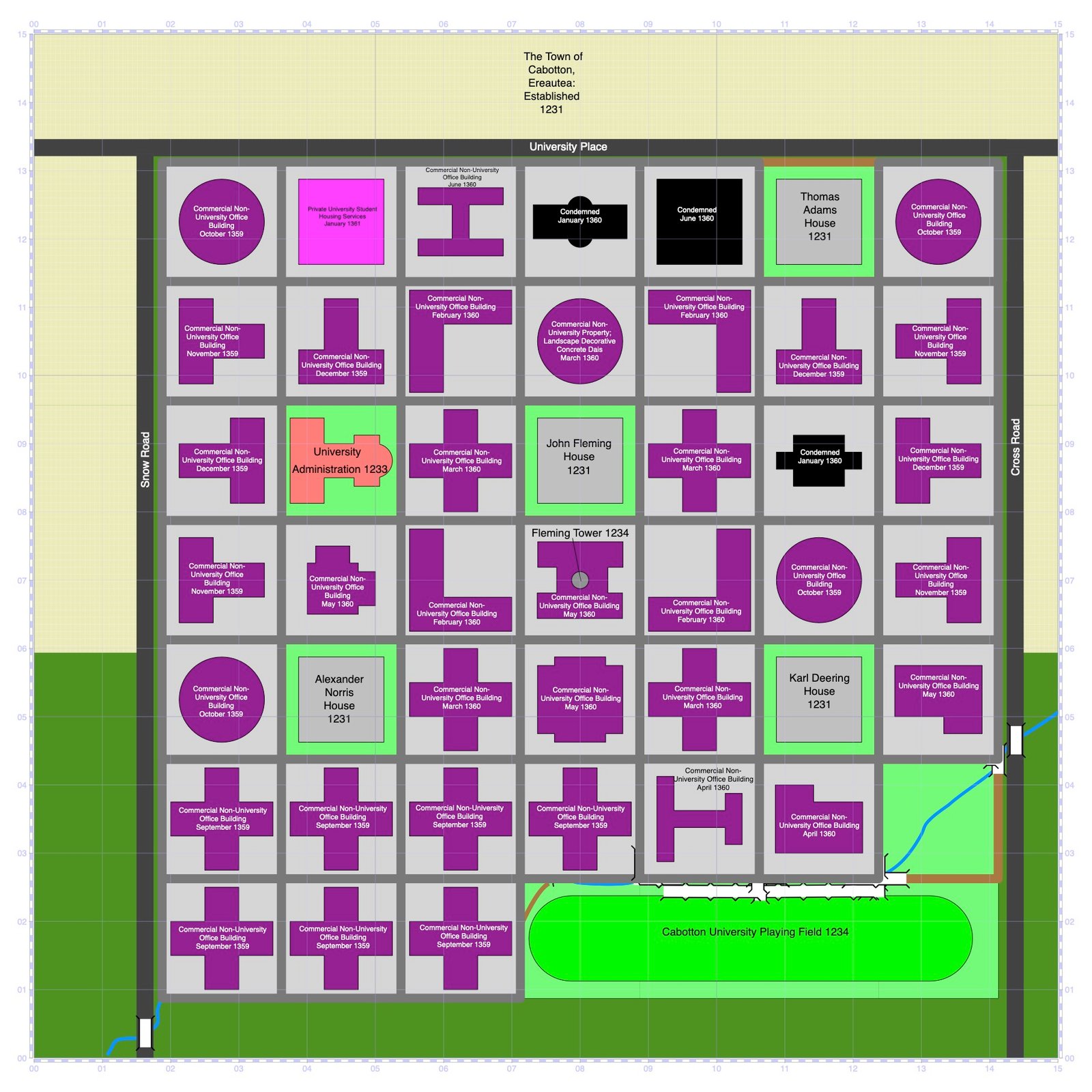
Beredon Cooper was considered by many at Cabotton University to be a loyal employee, having worked as a clerk for the University Administration, under multiple Cabotton University Headmasters, since the year 1342. However, when Jon Den began discussing a plan to convert the Five Houses (Fleming, Randall, Adams, Norris, and Deering) into for-profit hotels for the middle managers associated with the on-campus businesses, Cooper voiced opposition...Read More
June 1361
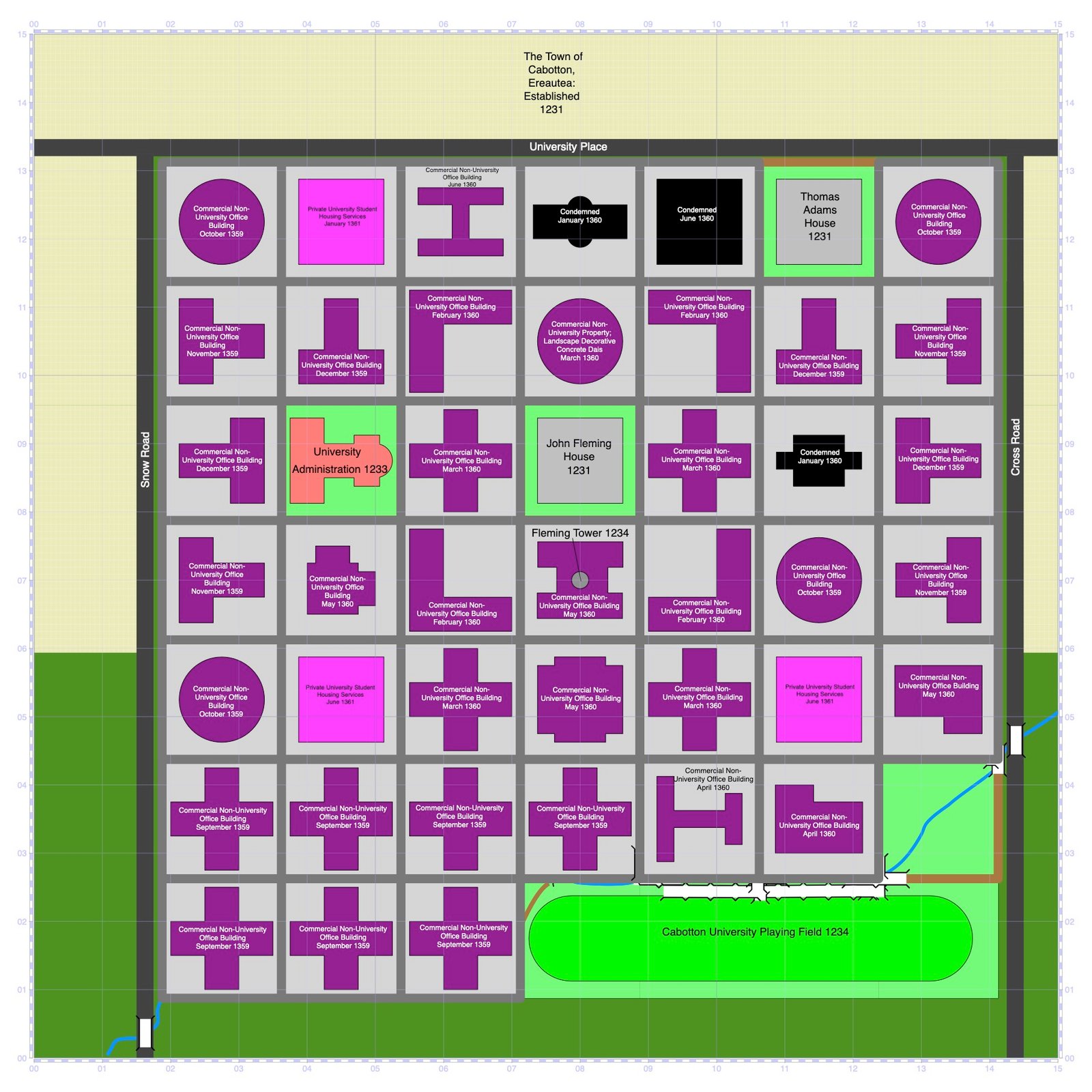
On 02 April 1361, the Jon Den Administration recruited select members of the Campus Watch and Esurchian Scouts to form a new unit known as the Orderly Recruitment Task Force. This new task force was assigned to enforce the Mandatory Recruitment Program previously established, using "whatever means necessary." By mid-April, there emerged from this development dozens of reports of kidnappings, attacks, and disappearings...Read More
January 1362
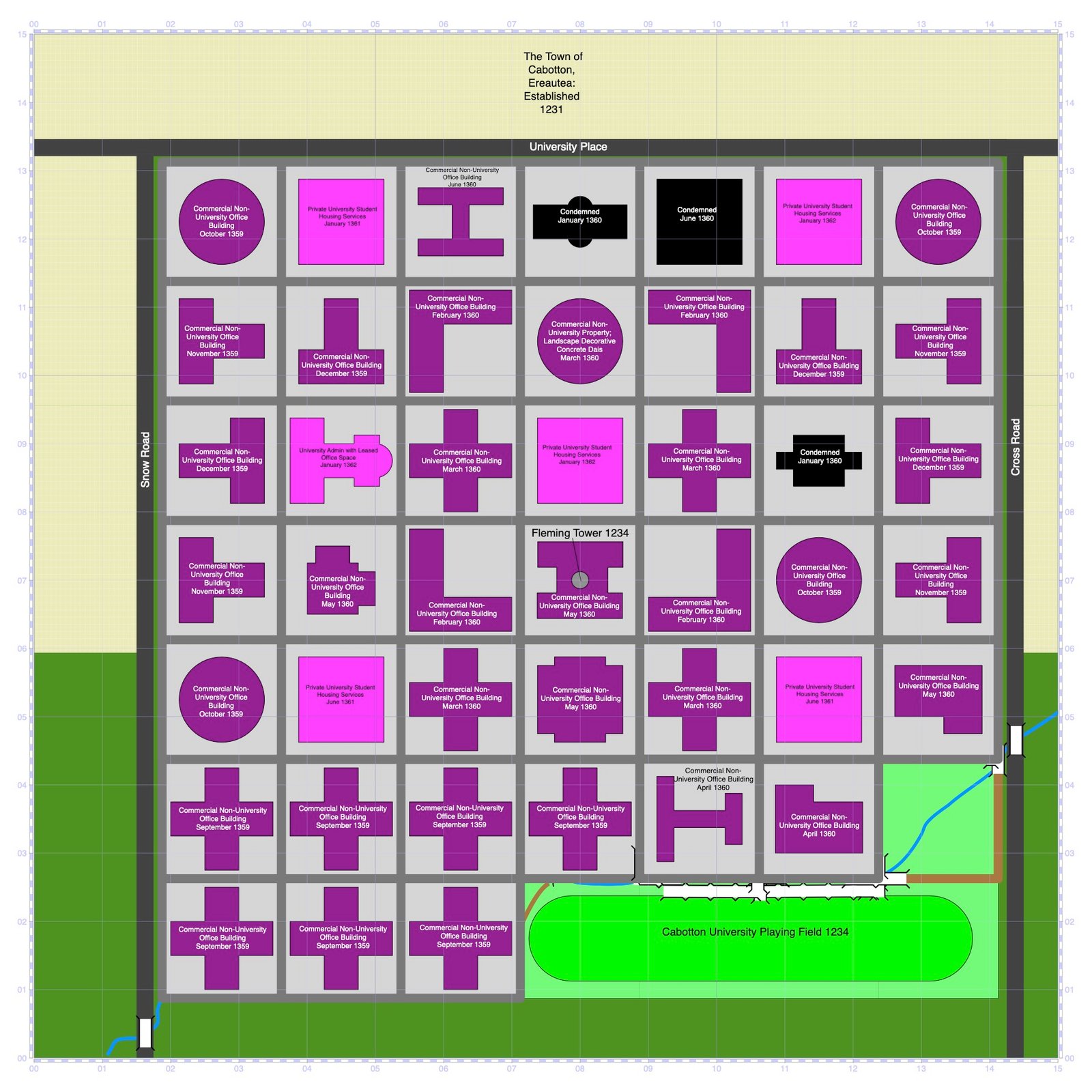
Like the other Four Houses in previous months, Thomas Adams House, on 23 November 1361, was closed to students and leased to business figures under the same terms. That same day, the Jon Den Administration announced that it would begin charging students higher tuition to help lower the rent for said business figures..Read More
February 1362
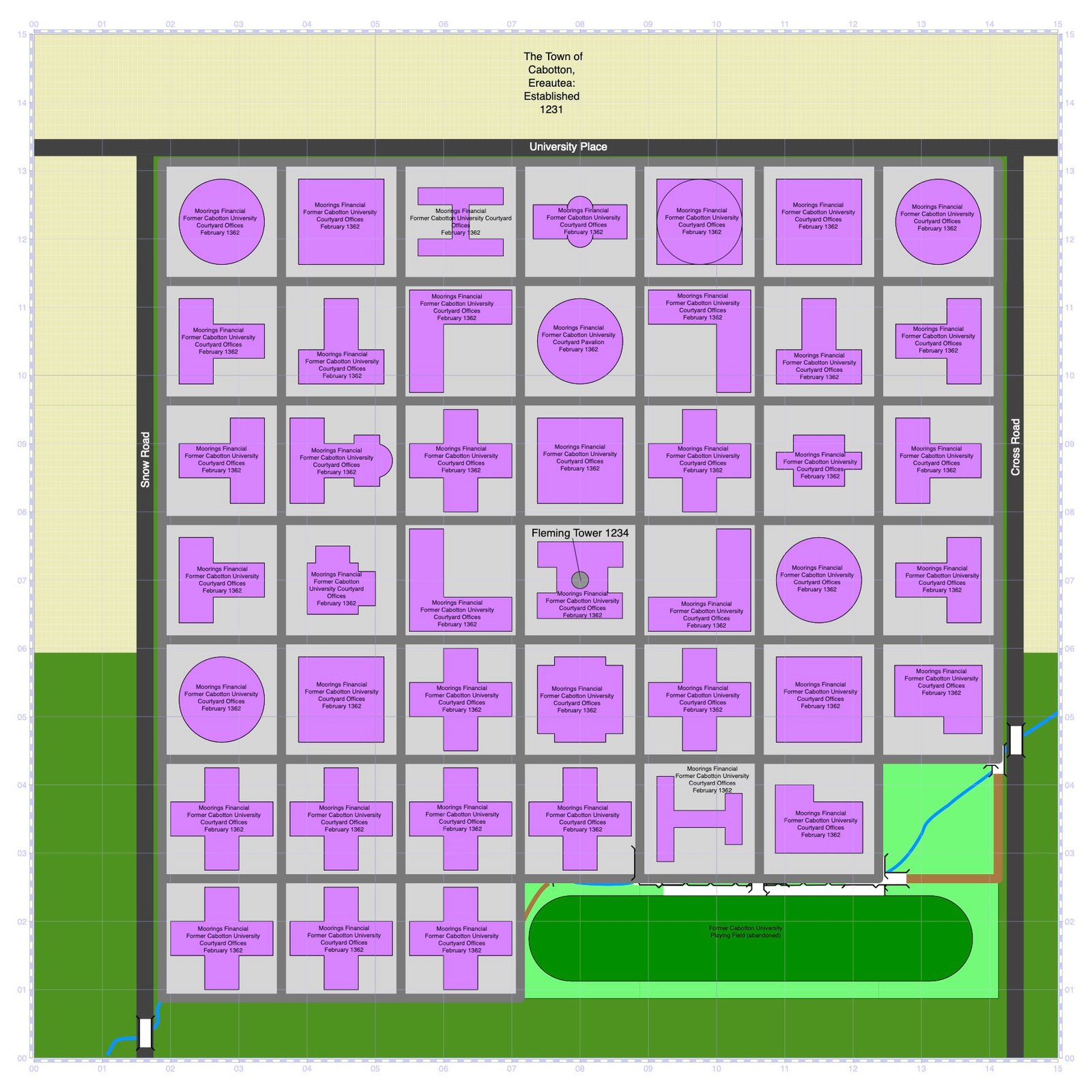
Throughout the final week of January 1362, those Cabotton students who still firmly believed in the philosophies of Former Headmaster Arnold Stamp had been calling for the new owners, Moorings Financial Equity Firm, to allow and facilitate charter school classes to take place in the former classrooms adjacent to the rooms now occupied by private business offices...Read More
September 1362
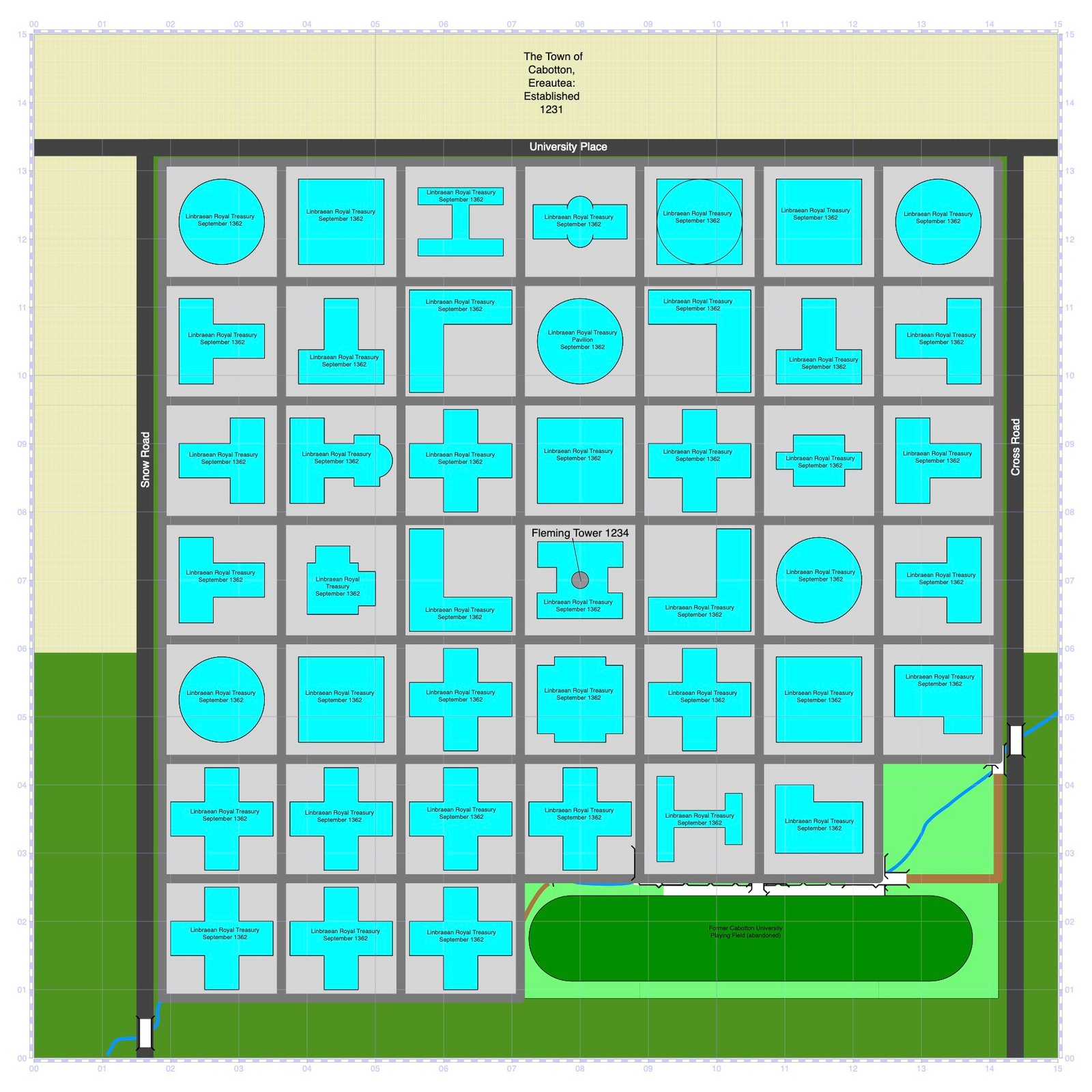
By the end of February 1362, private businesses occupied one-third of classrooms and office spaces on Campus. Of the remaining two-thirds, one-third of that was taken up by the Endler Academy, while the remaining spaces were vacant. In March 1362, numerous members of the Cabotton Scholar Foundation, impatient with the pace of negotiations, began...Read More