Additional Closures
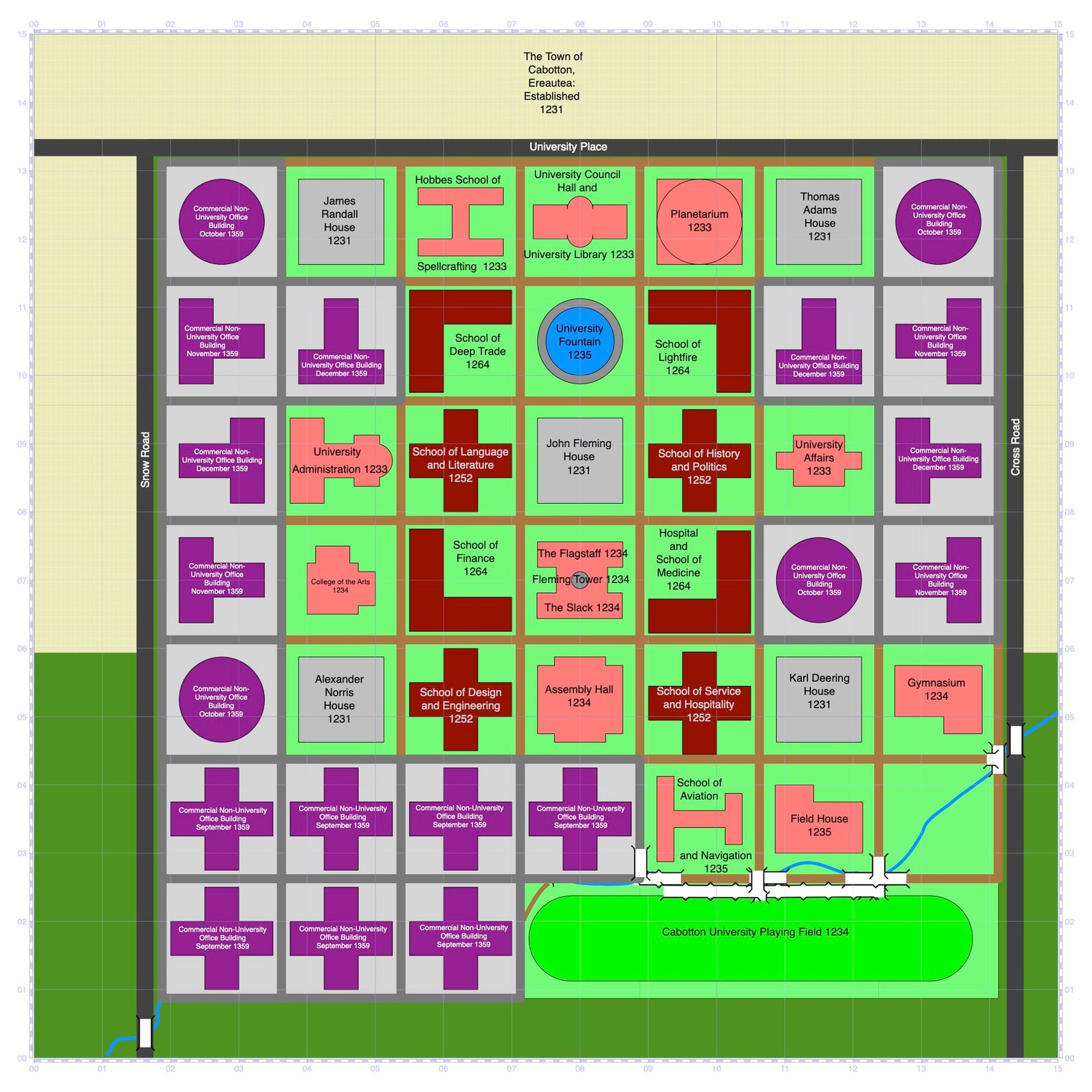
On 5 December 1359, University Chief Administrator Jon Den announced from his Northeast Ancondria location that, for 23 December, the School of Horticulture (the famous Greenhouse), the School of Critical Infrastructure, the School of Business, and the School of Ethics would close.
The Cabotton Scholar Foundation, aware of the Administration's response the previous month, advised members of the resistance to "not conform but also not to protest openly." Meanwhile, the Foundation began to establish a solid communication network with allied Retunians to secure venues for the programs that had been housed in the Schools that the Administration closed. On 14 December 1359, the University Administration ordered for these programs to be defunded. In response, the Foundation collaborated with its growing network to secure financial donations for them.
University Council Elections: 8 December 1359
Despite the hostile response from the University Administration, the Cabotton Scholar Foundation dispatched secret recruiters to reach out and register Cabotton scholars willing to vote for the 8 December election. It is important to note that over ninety percent of Cabotton scholars opted for this registration. A team of couriers would then carry ballots from the Foundation headquarters on 124 West Mason Street to the scholars on the registry. Afterward, another team of couriers would return the ballots submitted by the voters to 124 West Mason Street, which would have poll booths open to accept ballots during the first week of December 1359.
However, on 16 November 1359, an anonymous person serving as an insider relayed detailed information regarding this underground operation to the University Administration, who sent a threatening letter to 124 West Mason Street. Furthermore, three couriers disappeared.
The Cabotton Scholar Foundation, in response, sent a letter to the University Administration, falsely declaring that they would cease and desist. In the last week of November, however, they relocated to the basement of the Fire Hall in Cabotton proper, where they resumed operations and sent out "secret spaghetti dinner" invitations to members of the resistance for a meeting to occur on 24 November. The recipients of said invitations were informed beforehand by word of mouth. Thus, no word of this activity reached the University Administration.
The election was carried out, without incident, during the first week of December 1359. And on 8 December, after ballots were counted, every electoral vacancy for University Council was filled, as the Cabotton Liberal Party held a slight majority. The Cabotton Conservatives agreed to collaborate with the Cabotton Liberals and form the "University and Community Coalition" in order to uphold a common agenda of resistance against the Esurchians. The new University Council vowed to secure elections in the same fashion for the future until a new Headmaster was elected. Furthermore, they made a long-term plan to reverse the policies imposed by former Headmaster Arnold Stamp and incumbent Chief Administrator Jon Den.
The Esurchian Response
Chief Administrator Den, on 9 December, declared the previous week's election and resulting Council member nominations to be illegitimate. Den furthermore threaten to trespass the nominees from the University for "disturbing the peace," stating that members of the "true Council," those whose roles were not up for re-election in 1359, were allowed to continue to meet in their respective chambers as scheduled, even after the beginning of January 1360.
On 10 December, mass-walkouts began, to which the University Administration responded with the deployment of the Esurchian Scouts and Campus Watch. The Administration officially trespassed all "illegitimate members" of the University Council. On 12 December, the Administration announced that the University Council would "be downsized temporarily to help resolve the pressing budgetary concerns."
The Continued Resistance
To further protect themselves, the Cabotton Scholar Foundation voted to relocate its headquarters to one of its venues in North Kempton, Nintel, where they began a fundraiser plan to help the University budget recover in the event that the University Council was restored. They also drafted a more concise plan for University Council elections in the coming years as well as a plan to have a new Headmaster elected and the Office of University Affairs restored. Furthermore, they began drafting the University Recovery Plan, a more concise draft to reverse the policies started by Stamp and Den.