Article Written: 10 September 1452
The area encompassing present-day Layda had previously been sparsely populated by a variety of people including Great Northerners, Kitalans, and indigenous groups. However, it was the Combrians, arriving in the 1190s and early 1200s, who began to transform the landscape.
Initial Settlement
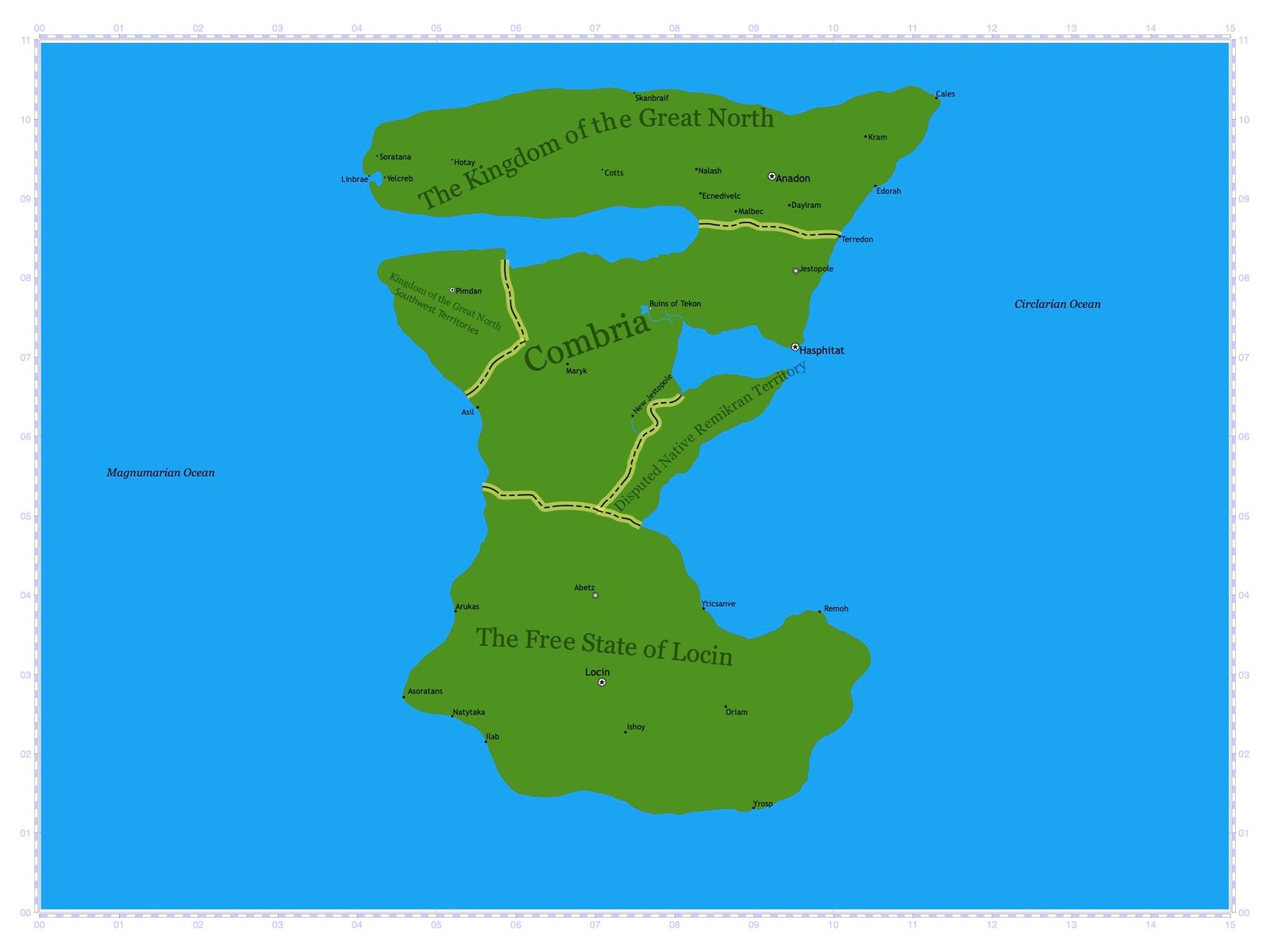
Map of Remikra, 1206
Termed "land-carvers" by the local population, the Combrians, indeed, used their innovative hubstone-powered machines to change the landscape drastically in ways never seen before. There were three types of Combrian settlers: the ranchers, the rangers, and the farmers.
The ranchers raised livestock, primarily horses and cattle. They lived in a variety of places and were better able than farmers to settle in the semiarid regions, provided that underground water was available. Ranchers in these dry places used hubstone powered seismic-shockers to determine if there was underground water, and used hubstone drills to extract the water. There were also ranchers in the grasslands and in the mountains; and ranchers in the Magnumarian Shield were known for raising eagles.
All of these domesticated animals were used by others for a variety of purposes, so there was a lot of trade between fellow ranchers as well as farmers and rangers.
The rangers, on the other hand, did not have settled pieces of land to call home. They roamed the region in either all-terrain vehicles or airships that also served as their homes. Rangers gathered food from various practical sources, and made their revenue collecting and trading various items of value. Rangers also served as de facto members of societal welfare by warning travelers of dangers on the road such as bandits and wild animals.
The farmers, like the ranchers, raised livestock as needed, but were primarily focused on growing crops. Along the West Coast, farmers owned and operated vineyards using complex irrigation systems developed by hubstone technology. Vineyards were also grown on the other side of the Magnumarian Shield but not so frequently. Meanwhile, in the mountains were grown a variety of crops such as wheat and barley, which could sustain temperate climate patterns. Farmers played an important role out West, for they provided sources of food to both ranchers and rangers. Although these farms mostly functioned for self-sustainment, many of them sold products to rangers, ranchers, fellow farmers, and other Combrian civilians who began to populate the region.
Early Modernization
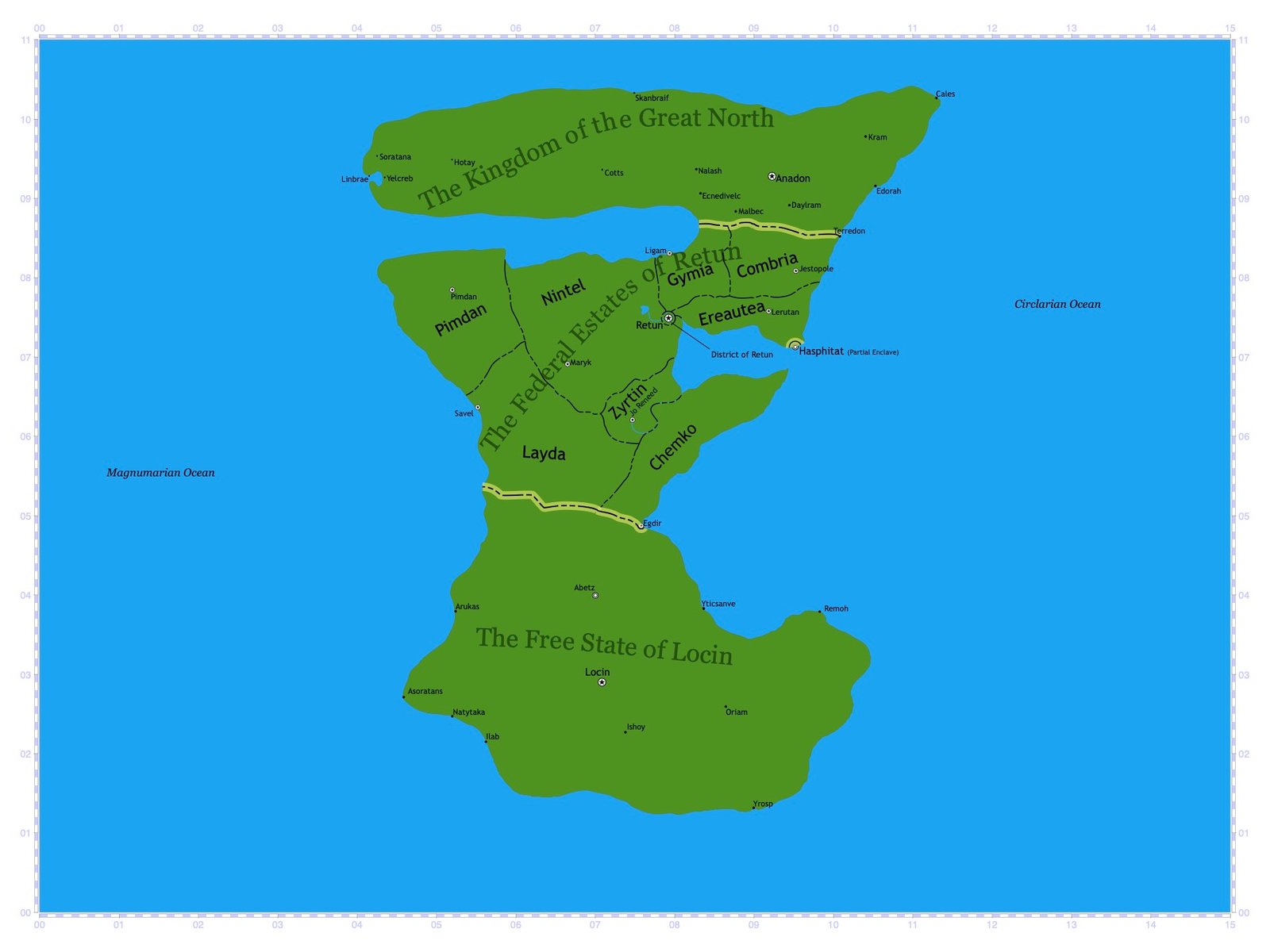
Map of Remikra, 1264-1308
Such was the society that existed by the mid-1230s, as Combria laid out the county borders. The towns and estates in these administrative divisions, however, were very small with the exception of the city of Asil, which became a breeding ground for revolutionary sentiment. In 1235, the inhabitants of Asil and the region declared autonomy from the nation of Combria; and the plethora of ranchers, rangers, and farmers, wanting freedom to thrive and trade amongst themselves, were quick to join the resistance against Combria. And thus the Republic of Savel, with the city of Asil being renamed the name of the new Republic, was established. The nation of Savel did not last long due to financial issues, and was quick to join with the Federal Estates of Retun as the Province of Layda before the end of the 1240s.
The city of Savel and the Province of Layda experienced another transformation. The capital city of Savel exploded in size and transit infrastructure sprung up between the counties, towns, and estates, which were growing as a result of Retunian economic and social policies. Similar to the East Coast of Middle Remikra, an air travel network sprung up in Layda between the counties, a road network between the towns of each county, and tram networks between the estates. Meanwhile, Savel, like every other Provincial capital, became home to a hub for the inter-Provincial cable train network and to a large airfield for airships used for international travel.
Some of the ranchers, rangers, and farmers took to this infrastructure, using it to boost trade, but most remained largely off the grid. These off-grid traditional settlers and their descendants continued using their self-made aerovehicles and ground vehicles as means of transit and living. And so there were, effectively, three societies: the emerging Retunian society, the traditional settler society, and the indigenous societies.
The Commonwealth
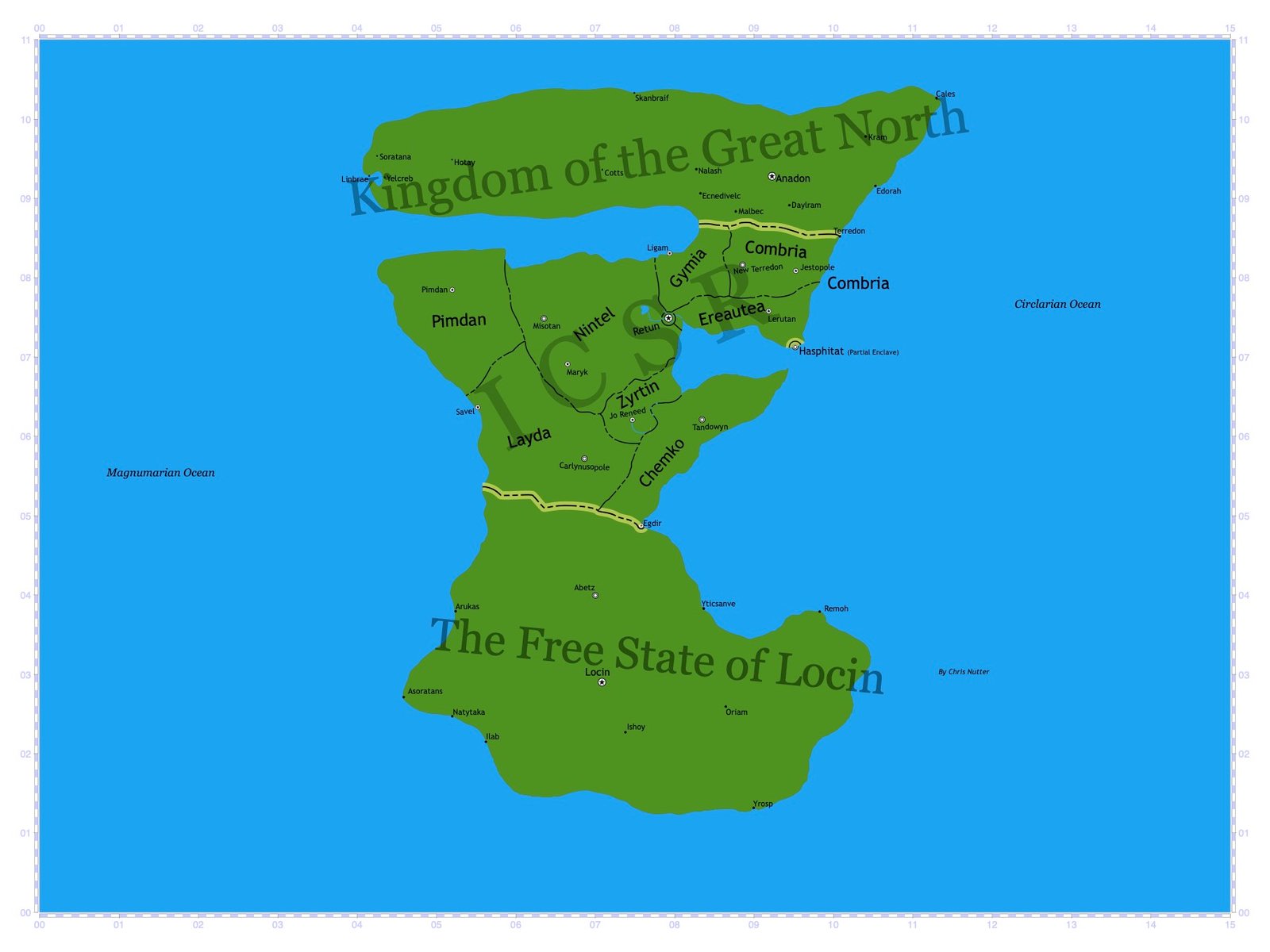
Map of Remikra, 1345-1481
Following the 1309 Revolution and the beginning of the Commonwealth, the ranchers, rangers, and farmers resented the increase in government involvement in the economy; and some of them even went so far as to arm themselves in defense of their trades. Despite taking such a libertarian stance, however, the traditional settlers wanted nothing to do with the Knights of the Common Good, who the settlers saw as "hell-bent on the destruction of humankind." Although taking such a neutral stance, the traditional settlers heavily armed and defended themselves and their assets against the warring entities during the period of political instability in the 1320s. And the settlers did not abandon such ways until after the Esurchian Occupation.
It was during the Esurchian Occupation of the 1360s that settler libertarian culture peaked. The settlers strengthened their ties with one another and established secret lines of communication and transportation in order to resist the Esurchians. This played a factor in the Commonwealth's ability to overcome the Esurchian influence.
Afterward, traditional settler culture underwent a major transformation. Gyroplane technology modernized and became mainstream in the 1370s; and it was the rangers who first adapted. Seeing financial and logistical conveniences, many rangers abandoned their old-style airships and ground vehicles for POD vehicles and other gyrocraft. Farmers, meanwhile, took advantage of plant-preservation technologies having emerged as a result of wildlife preserve investments stemming from the policies of Prime Minister Megan Wen, and began growing crops off of high-rise buildings or underground facilities. This became mainstream among farmers as room-climate technology advanced.
The ranchers were the most resistant to Prime Minister Wen's policies, which called for an increase in animal treatment standards. They, however, took advantage of granular animation and operated ranches in dymensional planes created by Library of Circlaria. Although this practice is deemed controversial, ranchers continue to trade among themselves and others in these dymensional planes for revenue.