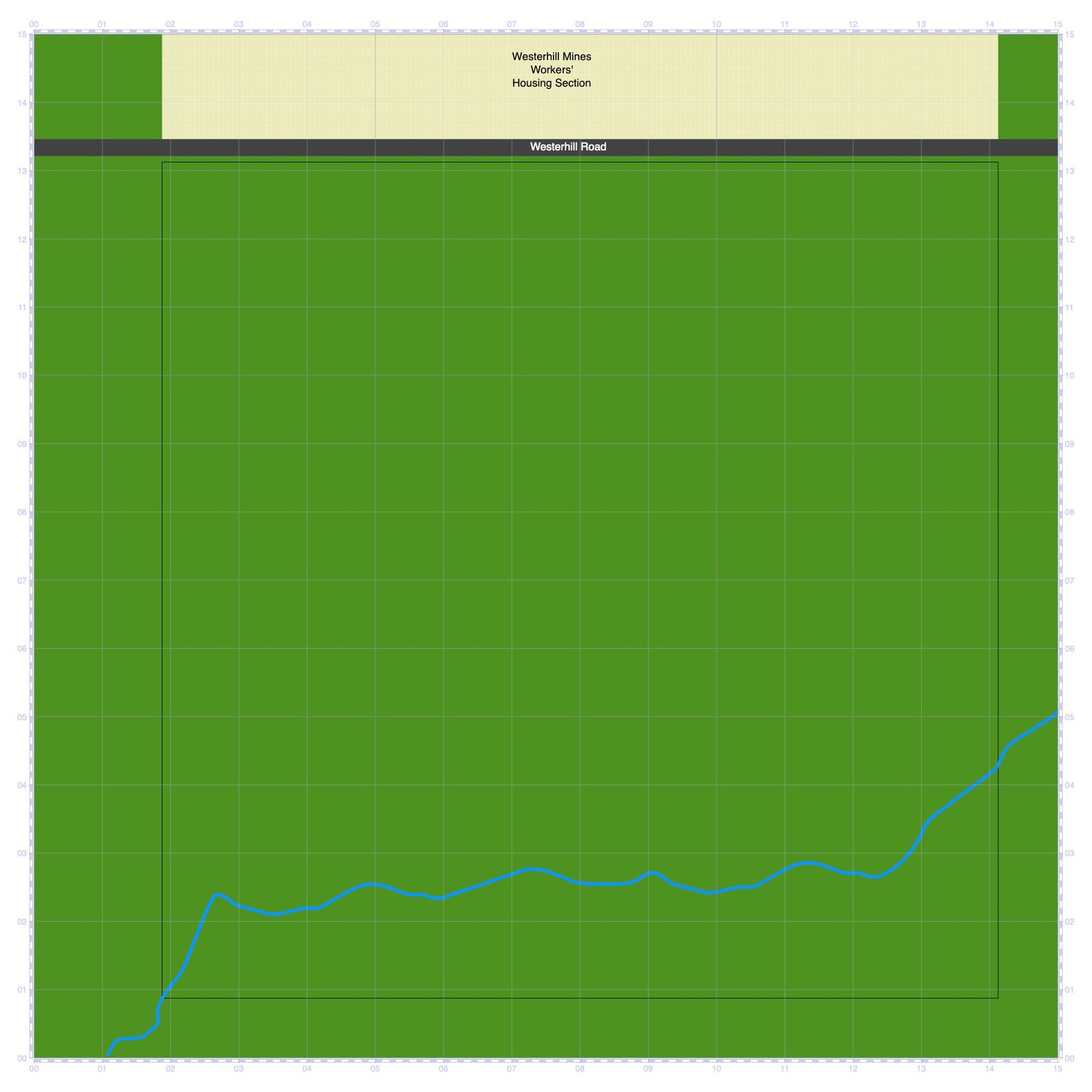
Local Emoran Community, Circa 1200
Since the time of the story of the Stag, Emoran society in this area developed into quite a sophisticated one, with the consecrated land of continuing to stand as the believed home of the ancestral spirits and the land to the immediate North serving as the place in which the Emorans themselves lived.
The Emoran community here governed itself democratically and administered itself in the form of Five Houses: Rucar, House of the Trees; Hava, House of the Wind; Sura, House of the Sun; Nadi, House of the River; and Fala, House of the Fruits of Harvest. House Rucar served to gather plants, nuts, and fruit for food as well as build tree dwellings in which all Emorans in this spot lived, and build bridges between such tree dwellings. House Hava, meanwhile, tended both birds used for transit and birds used to carry messages; House Sura managed sun-bake chambers to help in the making of food and certain fabrics; House Nadi constructed the boats and did the fishing; and House Fala farmed and harvested crops from Emoran crop fields.
Each House, meanwhile, mandated its fit young men and women to train as fighters to protect their community.
These Emoran Houses were matriarchal. However, there was a hierarchy where each House was governed my a male Elder who reported to a female Elder. The male Elder, known as the Elder Father, was the oldest male member of the House while the female Elder, known as the Elder Mother, was the oldest female member. Such a title was granted to the oldest determined member of said gender and was so by mandate, exempting that member from other conflicting roles, including that of a Chosen Elder.
Every year at the time of harvest, all Emorans in each House gathered and elected a Chosen Elder to watch over the consecrated ancestral lands and to communicate with them on important decisions for the community. This was the Emoran community's primary form of governing.
Chartered State of Combria, Circa 1200
Combrian President Arthur Chadwick's failed agenda against Wannonia left the nation of Combria in a bad state of affairs. And when Chadwick abandoned his government seat in the wake of an assassination attempt in 1165, Combria fell into civil conflict as warring factions sparred over the resulting vacancy. In 1184, however, Jacob Henry emerged as the next President to hold the role for more than five years. Standing as a strong leader, President Henry quelled an uprising in Ereautea in 1187 and aimed to recover Combria's economy with a slew of reformative policies mirroring those of the free markets established under the Great North in the 1000s. These policies were largely successful and involved a lucrative trade deal and territorial acquisition of Asil (now Savel) and the West Coast territories once under the Great North.
With these reforms came a drive for the Bank of Combria to purchase commercial property and, along with that, a drive to acquire lands to the West. Although Wannonia had defeated Combria when Chadwick was in power, Chadwick had deployed blight spores that destroyed Wannonia's flaxweed crop in the years to follow, leading ultimately to Wannonia's downfall. So the former Wannonian territories, despite being home to warring rag-tag factions, were free for Combrian settlement. Under President Henry's policy, the Bank of Combria sold some of this land to emerging residential estates for housing development. This led many Combrians to move into these regions and establish new towns and communities.
The Ebony Industry
Until the 1190s, most talismans in Remikra were made with "hard clay" extracted from various places around the continent. In Middle Remikra, it was extracted from the West and Central regions of the present-day province of Combria.
A noted issue with hard clay was that it would wear out after about ten years at which point the talisman would have to be either refurbished or remade. In attempting to address this issue, a special stonecrafter seminar group discovered the usefulness of a hard material known as ebony. Initially deemed a source of precious jewelry and nothing more, ebony was discovered by this stonecrafter group in 1174 to have a capability to store and discharge spellfire scripts efficiently and effectively for up to approximately 2000 years, based on observations and calculations. However, ebony was hard to come by at the time, serving as an impractical alternative in the old Combrian economic model, which was dominated by the hubstone and old clay talisman industries.
That was, of course, only the case until the late 1190s, when economic figures began introducing into Combria the lightfire industry from the Great North, which began serving as competition against the talisman industry. This gave incentive to search for more ebony to produce more durable spellcaster talismans.
In 1198, the Combrian government launched a special airship fitted with detector equipment which flew across Ereautea, where it detected large deposits of ebony underground. And the largest of which detected thus far was found under the ground of the future site of Cabotton University.
1201: Negotiation with the Emorans
David Morriston, an emerging business leader in the ebony mining industry, arrived in March 1201 to the site with his stepdaughter, Olive Craine, who doted on him at the time and had requested to travel with him.
Morriston spoke with the leadership of the Emoran community, headed at the time by Lada of the House Nadi, and sought negotiation for land development for the mining of ebony. After lengthy discussion, Lada and the other Elders agreed to allow Morriston and Combrian settlers to construct a modern road up to the Emoran lands but not through it, and to allow the Combrians to have a patch of land 100 feet by 100 feet, located far away from the consecrated lands, for ebony drilling. The Emorans, of course, agreed to this not realizing the potential environment ramifications. Nevertheless, these dealings were far too small for Morriston's business interests; and the Emorans were not open to further negotiation on the matter.
Much to Craine's reported shock and opposition, Morriston opted to call in Combrian government units to implement business expansion by force against the Emorans. Craine attempted to intercept the letter Morriston wrote to the Combrian government on this request, but she was caught by Morriston's henchmen and made to be confined to her bedroom and living quarters. Needless to say, the letter was sent anyway.
However, the Combrian government responded with a refusal, citing the violence that occurred with the incident of 1013 and stating that it did not intend for the nation of Combria, a modern state, to gain a reputation for bloodshed, particularly against indigenous groups. The refusal also cited the issue Combrian authorities were having with travel security through the former Wannonian territories, which had been home to warring Wannonian rag-tag factions roaming around since the fall of Wannonia in 1176. The Combrian authorities said they were prioritizing this concern, and that furthermore, they intended to have the indigenous groups allied to them rather than additional enemies.
Father Daryk and the Westerhill Mine
In June 1201, a clergy figure named Father Daryk Orren arrived and demanded Craine be freed, a demand to which Morriston obliged. He then prayed and "interceded" with the ancestral spirits on the consecrated ground. Shortly after, Chosen Elder Lada of Nadi received an apparent vision from one of those ancestral spirits calling upon her to gather her House and travel to a holy site a few miles away from the Paddyne River in present-day Nintel. The Chosen Elder Kyry of House Hava joined her in this quest while Mae of Rucar, Ardon of Sura, and Vares of Fala opposed her. Olive Craine observed a change in Lada's sentiment in this regard with a great deal of suspicion and convinced the Chosen Elders to reconvene in order to talk Lada and her allies out of making such a pilgrimage. Instead, Ardon of Sura simply switched sides and joined Lada and Kyry in making the travel.
With Mae of Rucar and Vares of Fala still opposed, Craine coordinated with them a plan to intercept the traveling Houses on the road and stop their quest by removing the wheels off their caravan carts. This plan was carried out but Craine, in the process, had failed to understand that such changes in sentiment were caused by oathcrafting cast by Father Darryk Orren, who was actually a spellcrafter and would not be discovered as one until much later.
Houses Rucar and Fala confronted the other three Houses on the road in a location five miles Northwest of Talsep. Here, a large battle took place between the two factions. Spellfire discharges were exchanged, and over 600 people died. It was later determined to be Father Daryk Orren having indulged in the illegal act of oathcrafting, but Olive Craine was also blamed. Both figures eluded authorities and were never seen again, though stories emerged of them attempting to assassinate each other, as they were both rivals.
Those Emorans who stayed behind were insufficient in number to tend or protect the land. Morriston and his fellow business leaders convened with the remaining Emorans and signed a deal with them to purchase the Northern part of the land for ebony mine drilling. As an act of consolation, they also purchased the Southern consecrated portion on behalf of the newly-formed Emoran Heritage Foundation, which aimed to preserve the land and heritage of the Emoran people in this area.
In September 1201, developers broke ground and drilled a shaft for the Westerhill Mine, which began operation by the end of that month. Over the next two years would emerge a town consisting of its employees. This town, unnamed at the time, consisted of a Southeastern sector for the low-level workers, which consisted of one-level wood-and-metal townhouses, a center sector, which consisted of two-level brick townhouses for the supervisors and foremen, a West sector, which consisted of large, three-story standalone brick houses for the managers, and a large property Northwest of the mineshaft, upon which stood a mansion and a network of gardens and serving houses for David Morriston, who was serving as the Chief Manager.