Waltmann School Closures
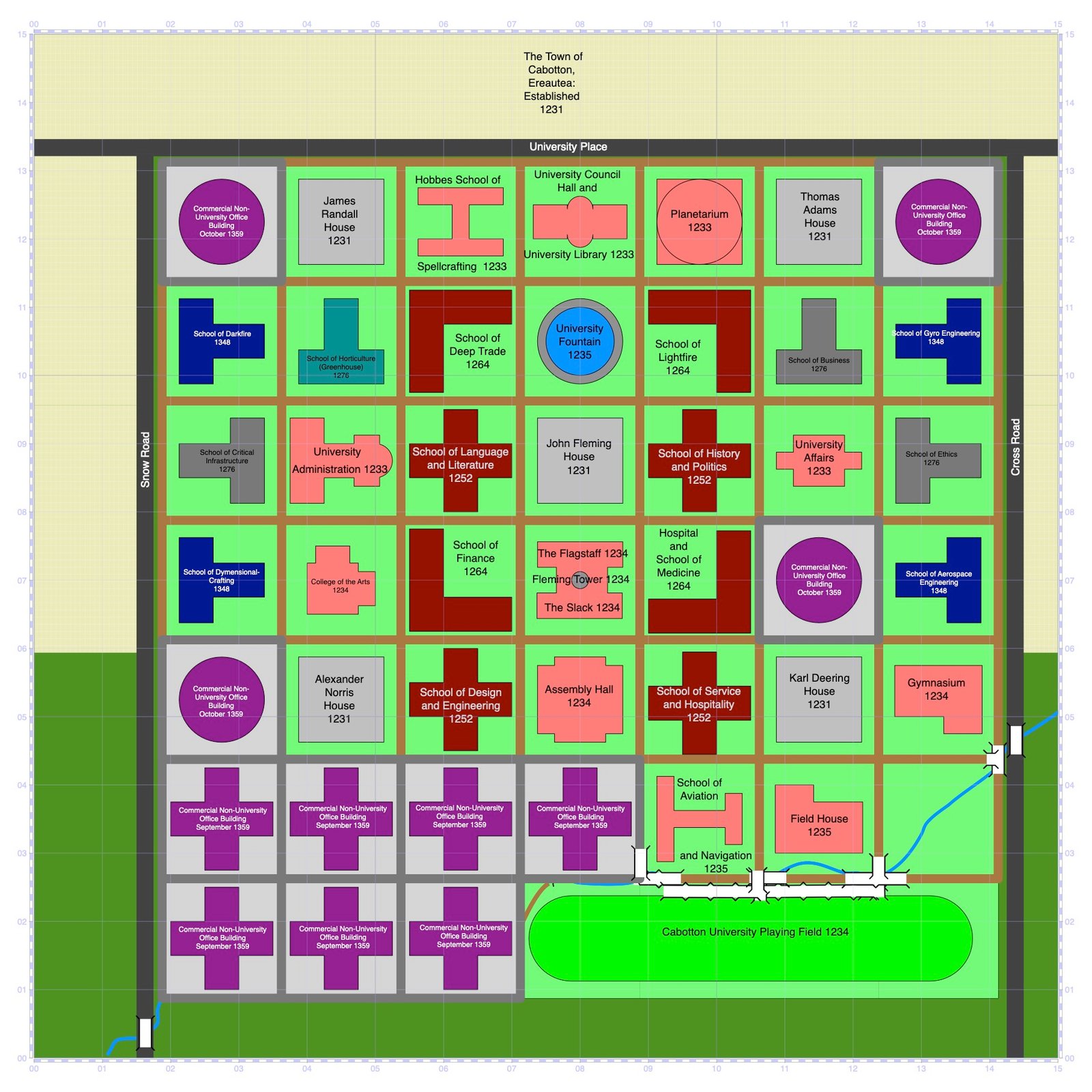
On 23 September 1359, all Project II Waltmann Schools closed. And on 23 October 1359, all Project I Schools closed, bringing an end to the Waltmann School Program.
The Beginning of the Esurchian Occupation
House Esurchia was one of the Five Houses of Onitalep which, until 1209, existed as a powerful regional entity in the Motanian Empire, having effective de-facto jurisdiction in the present-day Democratic Counties of Aldonya. The Motanian Empire consisted of many internal factions and entities, all of which were at odds with one another. Following the fall of the Motanian Empire in 1209, these factions engaged in open civil conflict, over which Onitalep emerged as one of the dominant entities, owing to their incredible capabilities in the art of oathcrafting. In the Aldonyan region, they, as a result, established a totalitarian regime. This regime stood until the 1340s, when the common people rose up and overthrew them, establishing the Four Democratic Counties of Aldonya in its place. Three of the Five Houses of Onitalep, including House Esurchia, fled the region and settled in the Havenlands in Northeast Ancondria, establishing a weak network of camp-towns. House Esurchia, up until the Great Move to Ancondria, had been one of the weaker Houses. The ensuing political break and migration, however, gave them an opportunity to gain power, which House Esurchia would do so through acts of infiltration.
After a chance-meeting with Retunian business figures in Silba, House Esurchia, in February 1359, proposed a "better deep-trade deal" to the Retunian Deep-Trade Administration to override the latter's arrangement at the time with the Ancondrian State of Saram. In doing so, Esurchian figures appealed to various Retunian communities and demographics with sentiments of charisma and favorable standings on relevant matters. This approach was especially successful at Cabotton University, resulting in the nomination of Jon Den, a representative of the Esurchian Education Department, as the Cabotton University Chief Administrator. And over the months that followed, Esurchian figures all over the Retunian Commonwealth were enabled to attain certain important positions in businesses, schools, local governments, and residential estates.
It was at this point, however, that the Esurchians began exploiting such positions for wealth and resources to add to the political and economic capital of the Esurchian State. And in an attempt to stop any resistance, the Esurchians infiltrated news and communications platforms through methods including directing Retunian media platforms to report only on frivolous issues relevant to the Commonwealth or the Esurchian State, infiltrating OCEA platforms by making frivolous posts or deleting and blocking posts made by resistance figures, tapping communication lines, and even deploying a special task force known as the Esurchian Scouts to abduct those found to be resisting.
Jon Den
Despite having promised to do otherwise, Jon Den, as the Cabotton University Chief Administrator, refused to repeal some of the destructive policies started under former-Headmaster Stamp, and even accelerated other policies such as the Waltmann School closure agenda. In the face of all this, students and staff began protesting, to which Den responded by dispatching the Campus Watch. Most terrifyingly, however, Den authorized for the Campus Watch to be joined by a squad of the Esurchian Scouts, who began disappearing protestors.
On 2 September 1359, Jon Den, personally, moved to an unknown location in the Ancondrian territories occupied by the Esurchian House, and continued his role remotely as the Cabotton University Chief Administrator. Meanwhile, Esurchian figures at the University implemented oathcrafting measures in an attempt to keep students and staff politically divided.
On 2 October 1359, news broke from anonymous Retunian resistance figures that Arnold Stamp's resignation had been discussed in advance as a favorable arrangement between himself and Jon Den, who turned out to be on friendly terms with one another, and also that Jon Den expanded on the amount of funds taken out of the credit line with the Linbraean Royal Treasury in order to benefit Esurchian shareholders. On 4 October, the Linbraean Royal Treasury, in response, terminated the credit line with the University. However, those resistance figures who leaked the information were found and then disappeared by the Esurchian Scouts.
The October 1359 Decision
On 5 October 1359, in order to balance out the resulting financial shortfall against the University Treasury, Den ordered the closure and the leasing to non-University businesses the buildings of the following four schools: the School of Psychology, the School of Education, the School of Theatre, and the School of Trademarking. The classes housed in these buildings were left on their own to either relocate elsewhere or to terminate altogether. On 6 October, the University Council voted against Den's decision. However, neither Den nor his Administration even acknowledged the occurrence of said vote. Numerous figures of the Cabotton student body, in response, filed a complaint against Den under the Office of University Affairs. However, being that there were no Arbitrators available to proceed with hearings and complaint handlings, the complaint effectively stalled. And on 7 October, student protestors gathered in and around the University Administration Building in order to place pressure on Den to reverse his decision. However, such a gathering had no effect as Den, himself, was not physically present. Furthermore, the Campus Watch and Esurchian Scouts detained many of the protestors.
The venues of the four aforementioned Schools would, despite the feverish opposition, be closed down on 23 October 1359, and turned over to non-University businesses through said lease agreements. Furthermore, with the Esurchians infiltrating most news and communication outlets, the move received effectively no public attention.