The Unofficial Cabotton University Movement
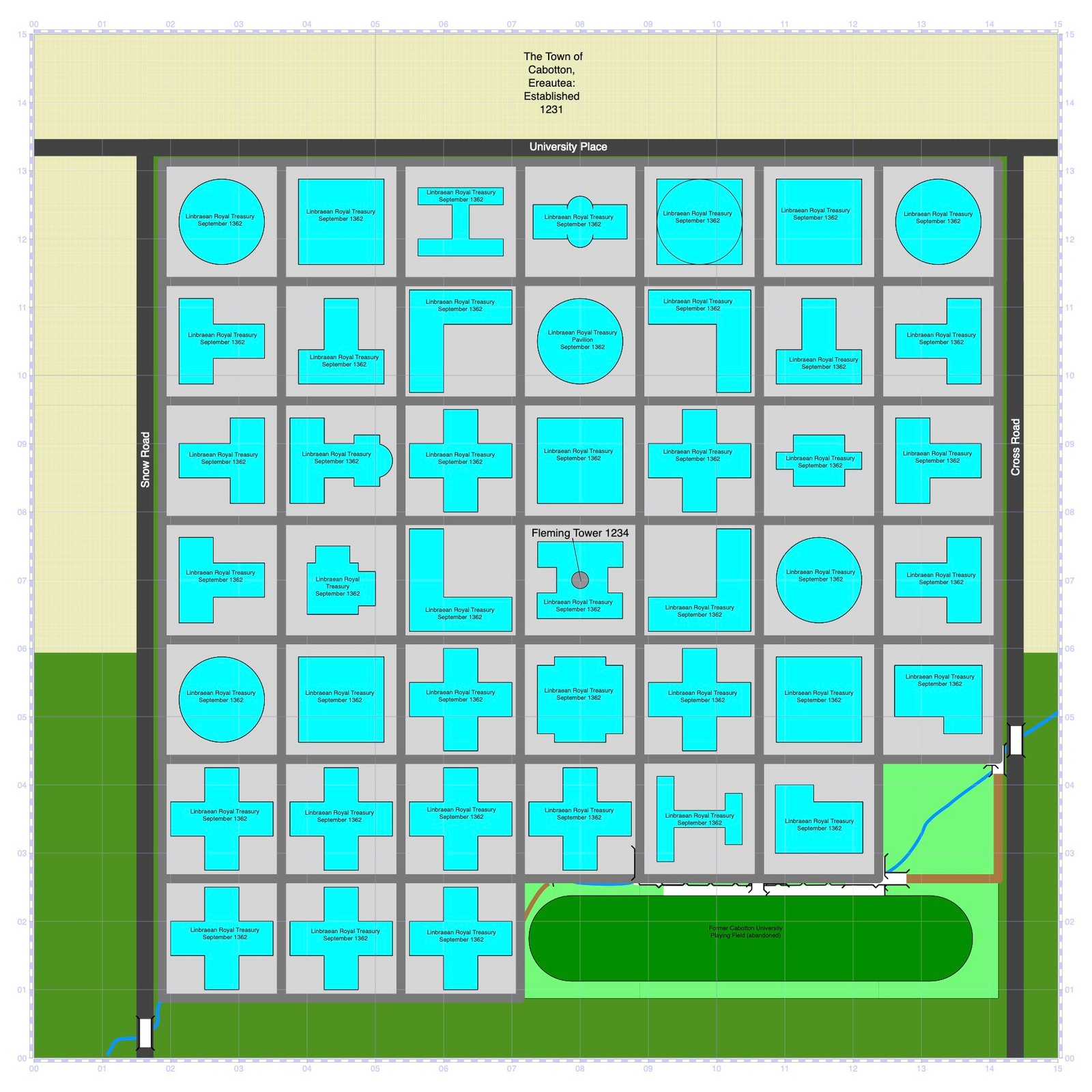
By the end of February 1362, private businesses occupied one-third of classrooms and office spaces on Campus. Of the remaining two-thirds, one-third of that was taken up by the Endler Academy, while the remaining spaces were vacant. In March 1362, numerous members of the Cabotton Scholar Foundation, impatient with the pace of negotiations, began moving into these vacant spaces and re-establishing classes as part of a "Unofficial Cabotton University Movement." The businesses on Campus made complaints about this to Moorings Financial Institute, but the financial firm refused to enforce trespassing, citing "unnecessary costs."
Heather Walker, leader of the Cabotton Scholar Foundation, was made aware of the Unofficial Cabotton University movement and voiced that she would not condemn the act. Before long, she began promoting it.
The Failed Effort to Nullify the University Deed
When signed in 1231, the University Deed served to protect the integrity of Cabotton University through numerous clauses to be enforced by the Remikran Union. One of the provisions therein prohibited a state government from, physically or by any other method, interfering with University properties, assets, or functions. While this was designed to prevent a government from instilling an unpopular University Administration, as with what had happened with the Westerhill Academy in the summer of 1231, the clause created a loophole, thus allowing for the unpopular actions committed by both Arnold Stamp and Jon Den.
However, when the name "Cabotton University" was sold by the Esurchians to the Congress of Circlaria Public Domain, there emerged an argument supported by the Cabotton Scholar Foundation that since the name of the property was surrendered, so too should be the terms and clauses of the Deed itself. Thus, Heather Walker and Maxima Tangreen attempted to present such a case to the Court of the Remikran Union in Cotts. However, in May 1362, the Arbitrator assigned to the case denied to have the case waived to court, stating that it would not stand due to not only the Deed also having a clause prescribing the right to change the name of the property, but also that, shortly before the transaction took place, the official name of the Campus was, in fact, changed to the "University Courtyards of Gentry County."
Maxima Tangreen made a call in the Cabotton Scholar Foundation to vote to take this up with two other Arbitrators for an override into the court, but the motion failed to gain the votes needed. Thus, the effort failed.
Transactions and Negotiations
In late February 1362, the Linbraean Royal Treasury succeeded in negotiating to purchase the Campus, a transaction that would occur officially on March 2. Between March and June 1362, the Treasury had the campus cleaned and restored. The next part of the agenda, previously mentioned, was to sell the Campus to the National University Research Foundation in exchange for a stream of revenue from the Cabotton Scholar Foundation through the University Trust Fund. The Treasury would lend credit to help the Trust Fund, while the Scholar Foundation would pay off the transaction through a mortgage.
This deal, however, was challenged by the henshale industry, which intended to outbid the Foundation. The Research and Scholar Foundations responded by forming a coalition, named the Scholar and Research Foundation Coalition, to push back against the henshale industry.
The Scholar and Research Foundation Coalition increased its bidding price for the Campus by building up grants toward the Research Foundation, both from the Great North and the Retunian Commonwealth. This approach succeeded by earning multiple statements of accreditation from notable educational organizations based on the Research Foundation implementing a successful curriculum that derived those successful elements of Cabotton University before Arnold Stamp's tenure. Meanwhile, the henshale industry conducted ongoing appraisals of the henshale reserves under the Campus, which increased in price dramatically in 1362 due to peak global demand for henshale at the time.
The Scholar and Research Foundation Coalition thus far stayed ahead in the bidding war, but the henshale industry was not far behind due to inflation boosting appraisal values. To counter this, the Coalition named the future University the Cabotton Academy of Research, earning boosted popularity and backing from the academic community at large, especially from the Edoran Regiondom in the Great North.