
Canticula Timeline
Most Recent: 760 BCE
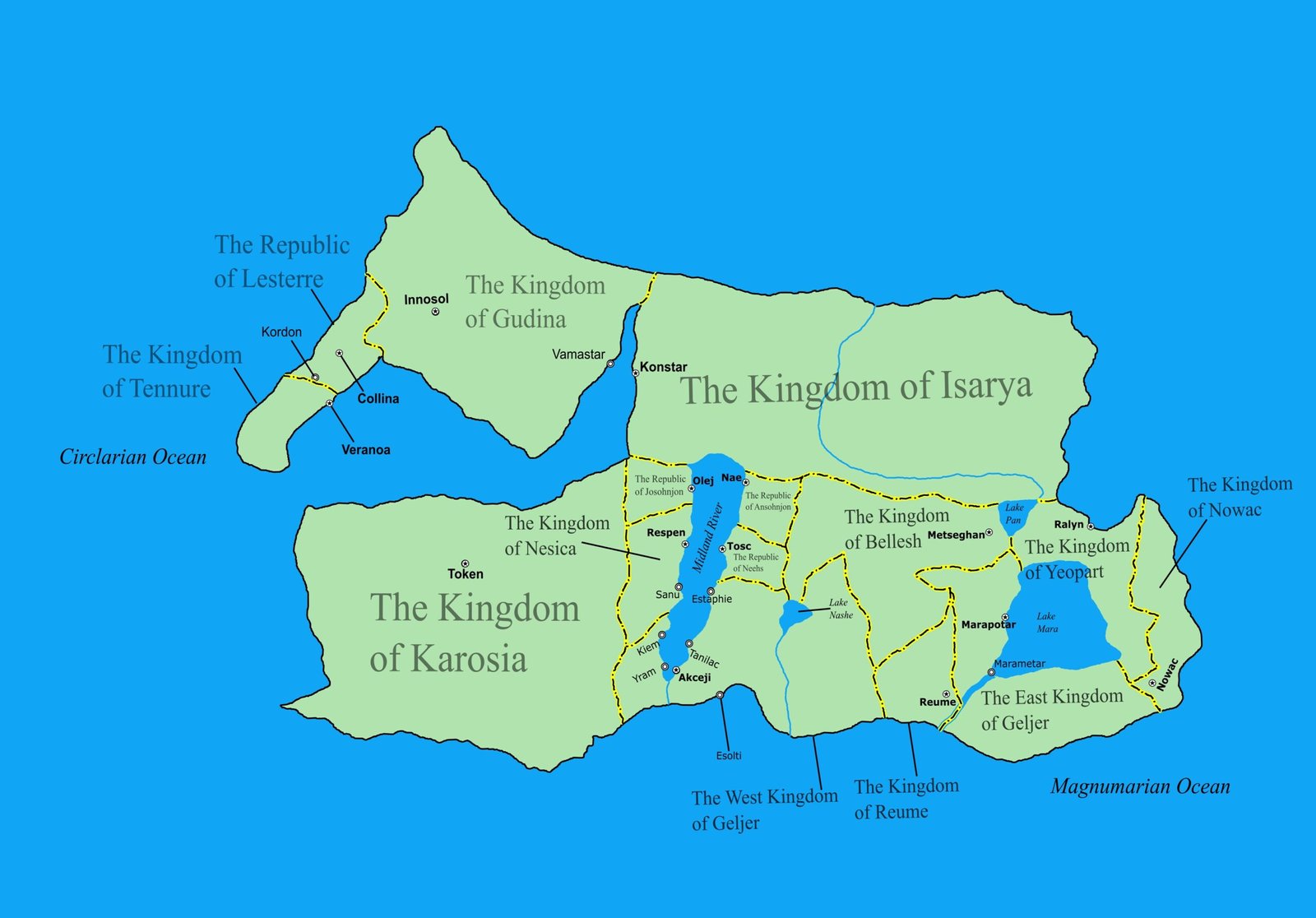
Until the latter days of the 800s BCE, much of the land home to the Synarin peoples had been governed as clans by Elders. The Enra Clan, a strong maternal line, remembered this and, after the fall of the Empire, saw an opportunity to regain territorial dominion. Many looked to the Elder Daughter of this Clan, Veranoa, to run for Consul. However...Read More
835 BCE
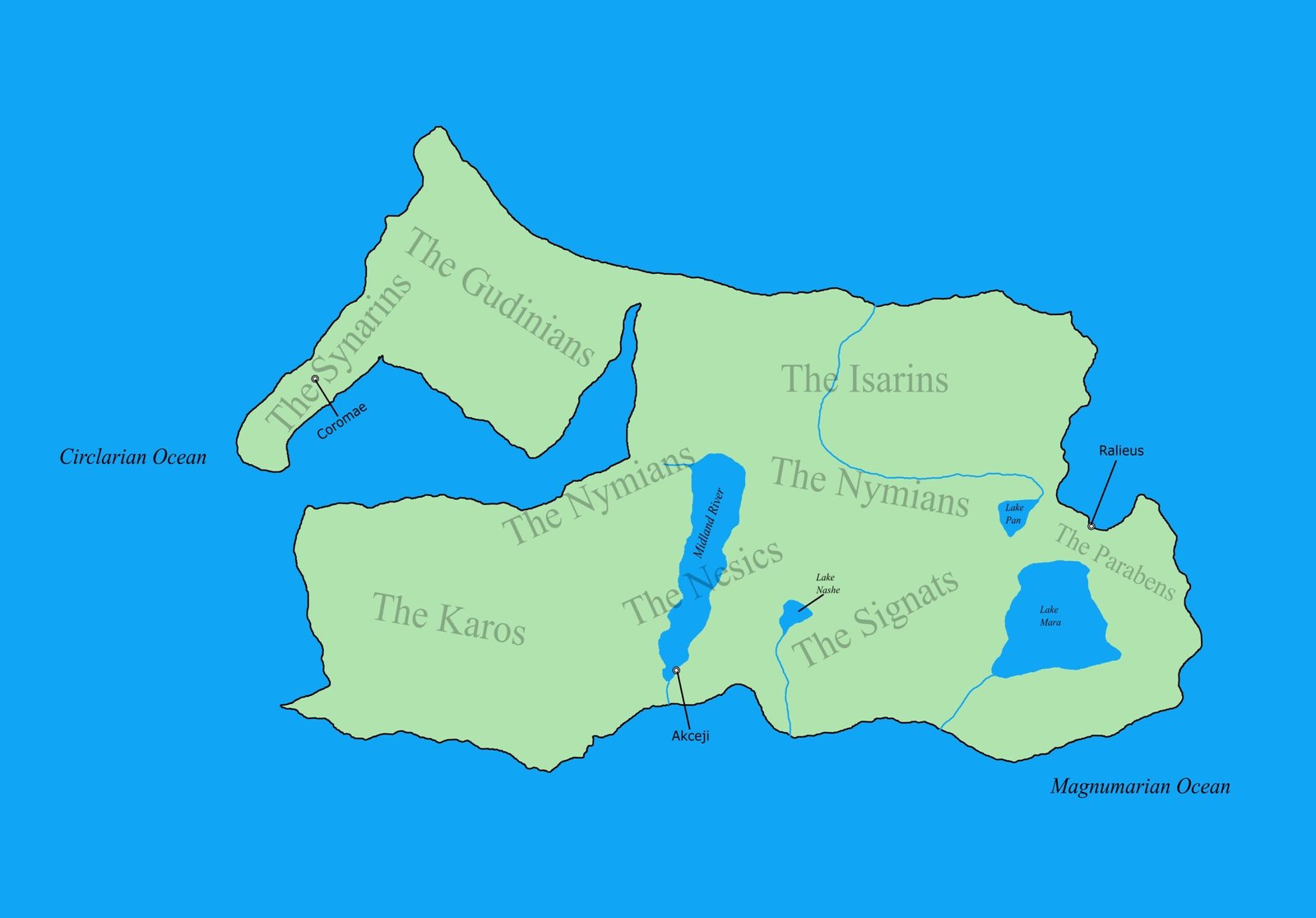
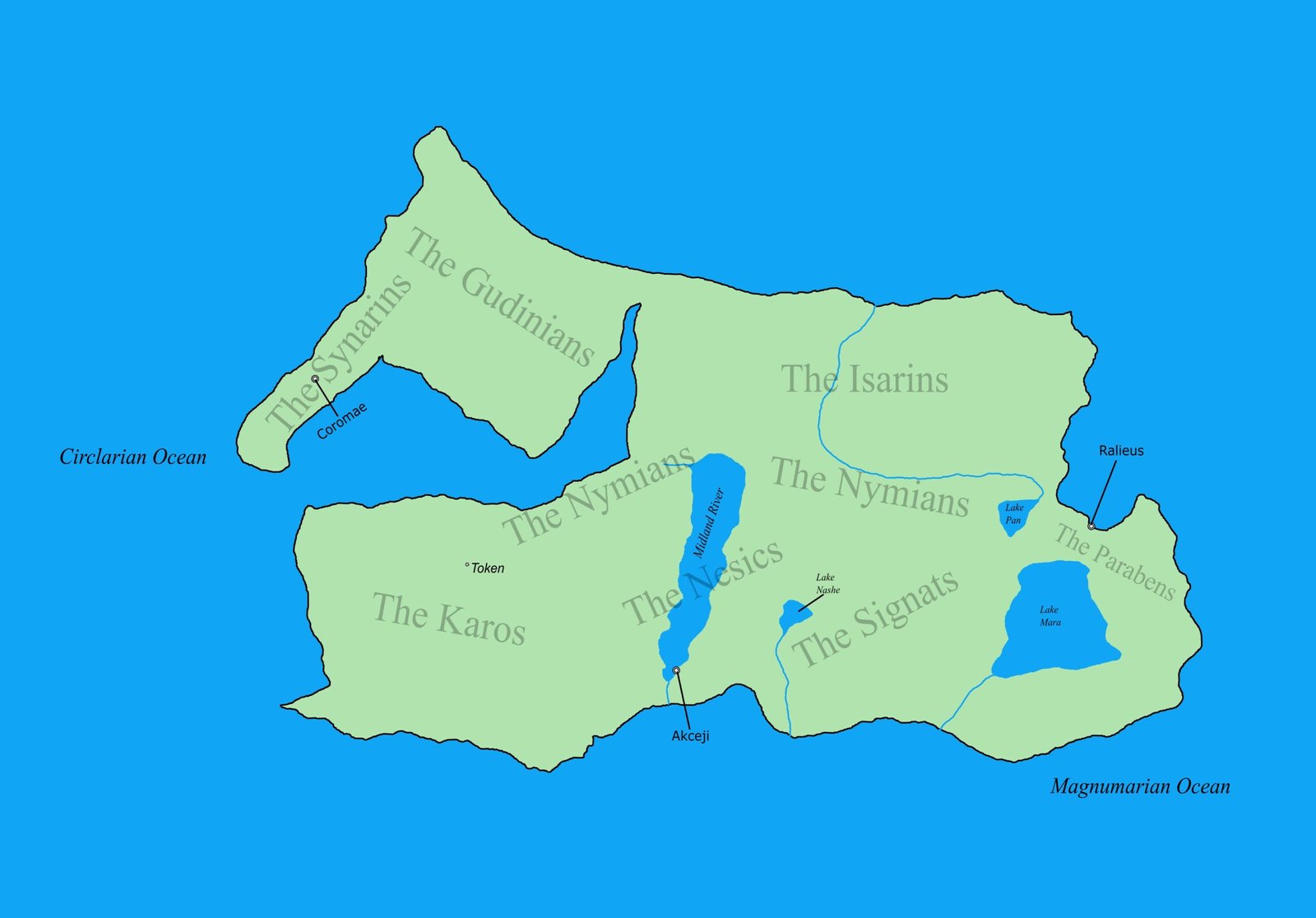
According to legend, Oron Limus, Consul of Coromae, received a vision of a place that he visited as a child. The place consisted of a vast lake surrounding a gray tower atop which was a lit a blue and white flame. In the vision came a calling to seek this place, for "by the light of this tower would be restored to the world the order of old."...Read More
830 BCE
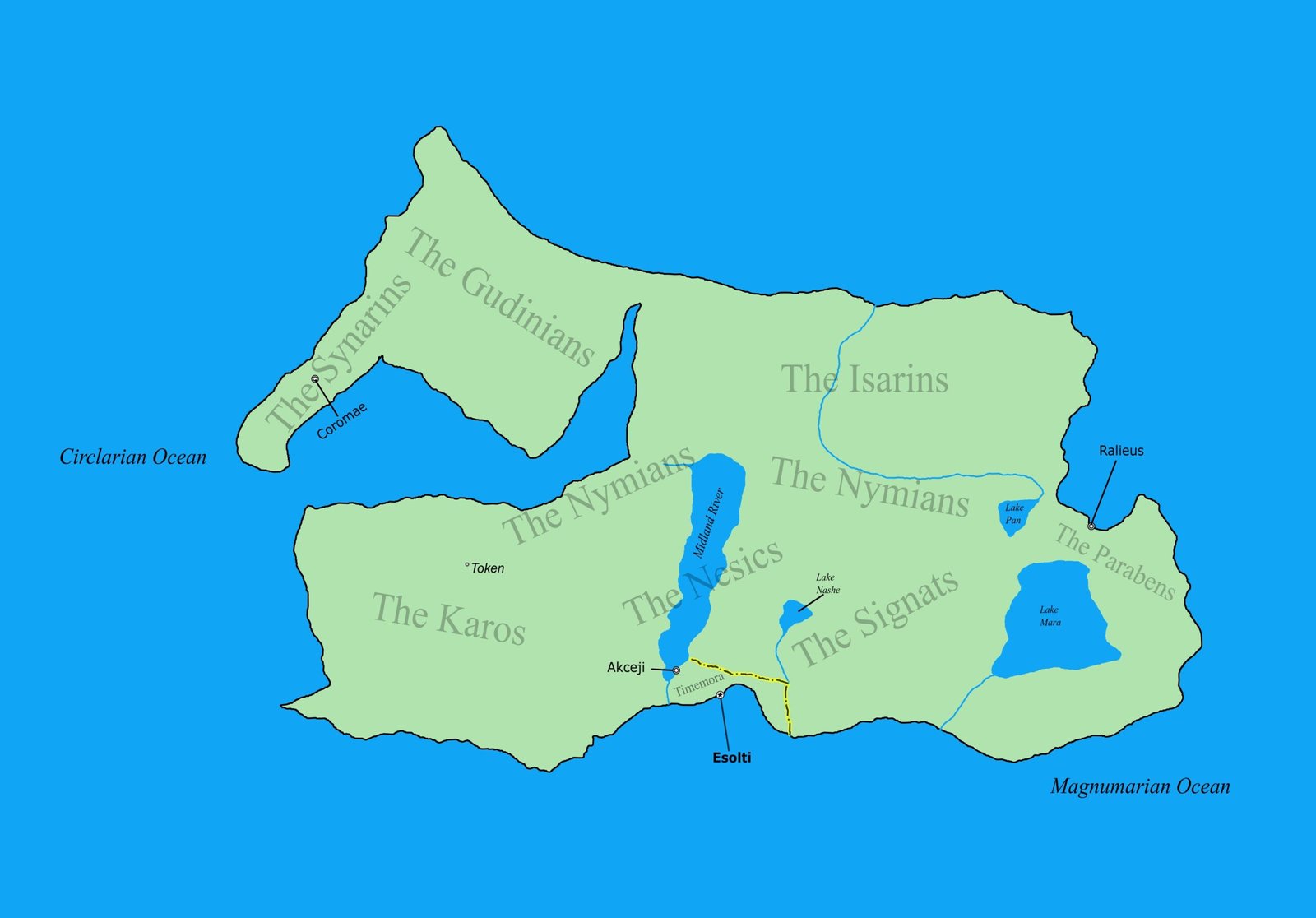
Numerous explorers set out from Akceji, between 835 and 830 BCE, in the search for the fabled tower of Oron Limus. However, most either returned empty-handed or did not return at all. These expeditions encountered many challenges, including most commonly the Nymians of the Chokian Mountains, who either killed travelers or denied them passage; and the Signats of the Red Desert, who did the same. Aside from the dangers posed by these two nomadic groups, passage over the Mountains and the Desert was also impossible due to geography...Read More
825 BCE
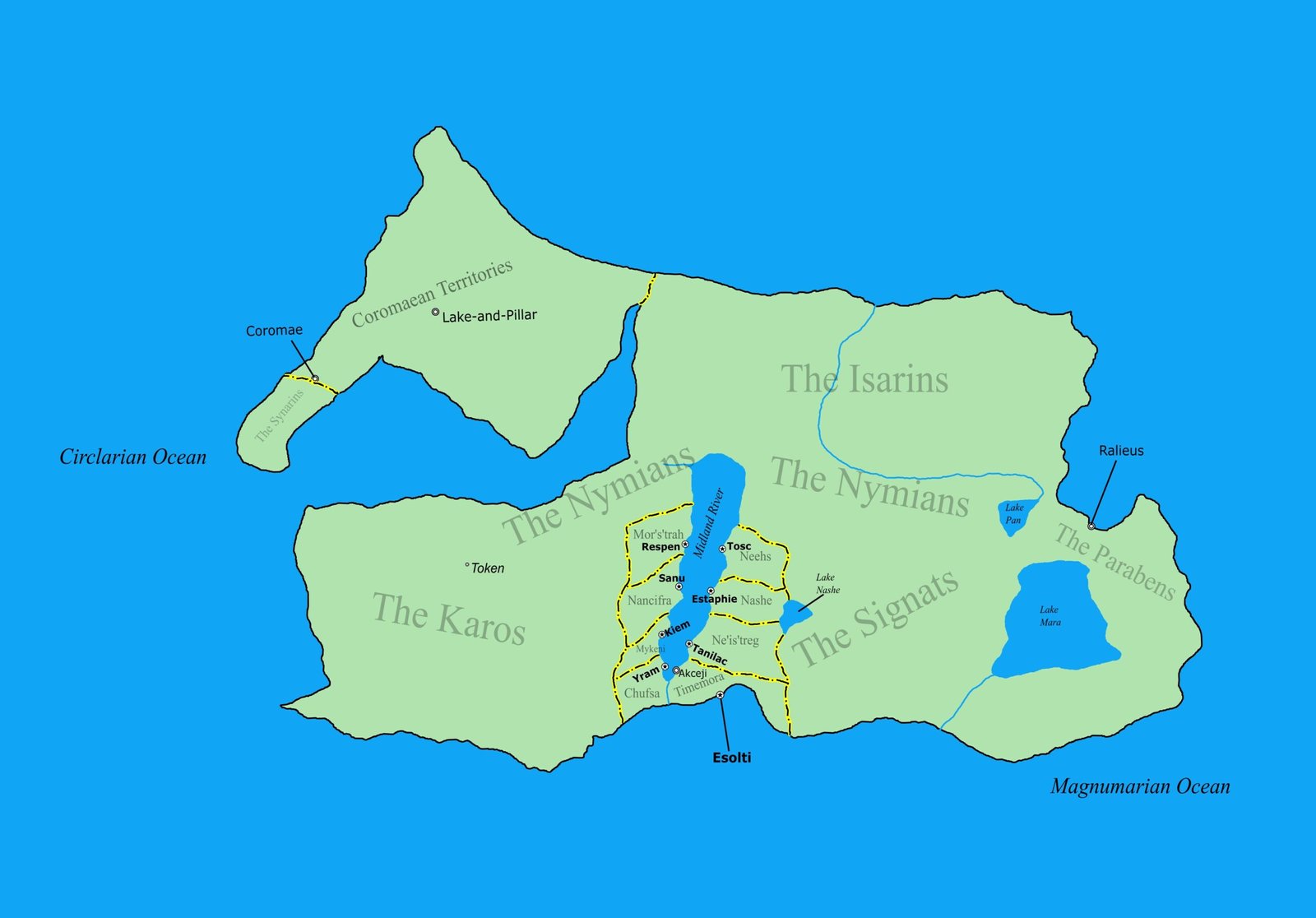
Gera, the Head Cleric, would have many partners. For each partner, with the land named after their family and the capital city named after the partner, Gera commanded to be established a Kingdom functioning autonomously with exception to bending the knee toward the Clergy in Akceji...Read More
820 BCE
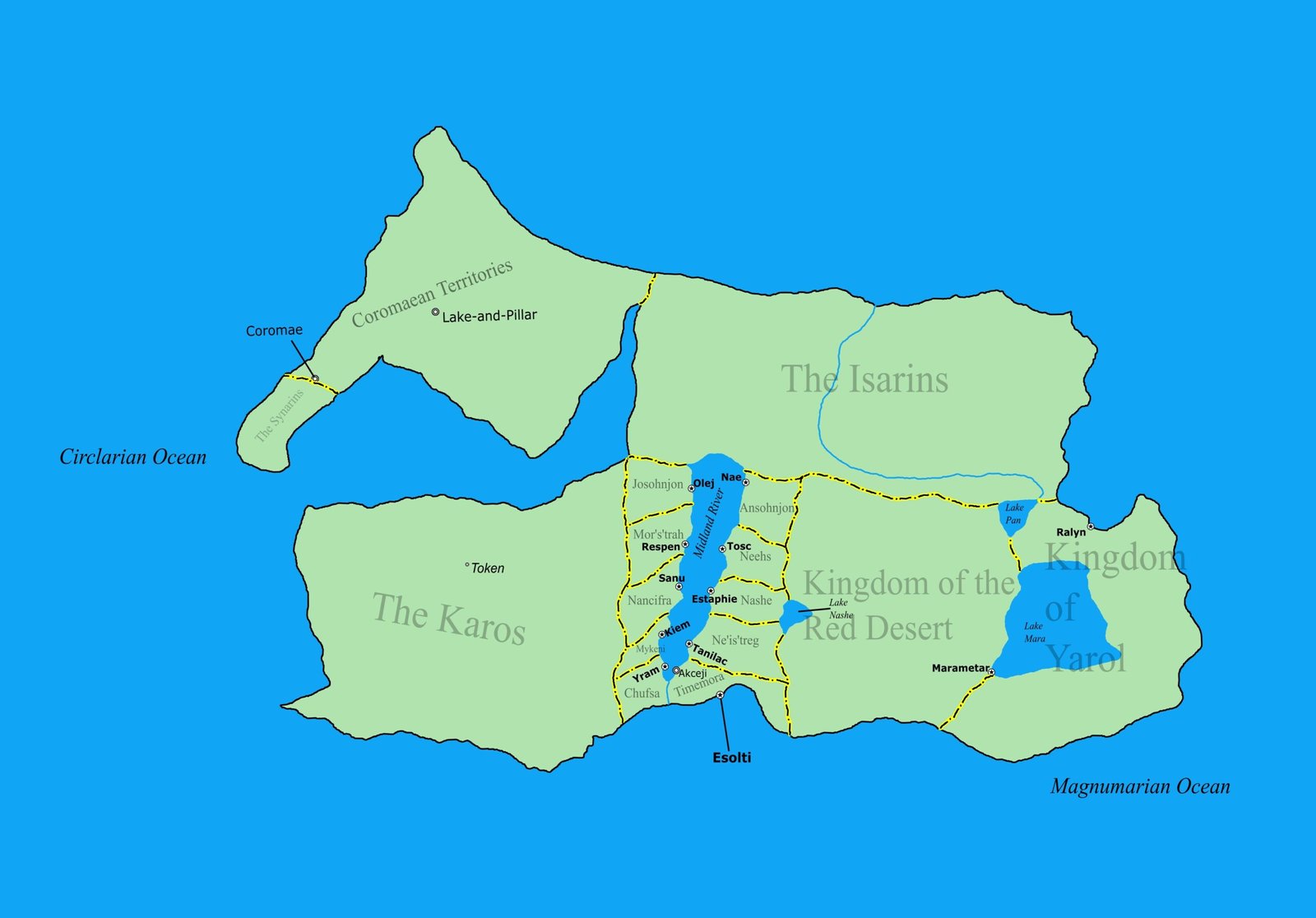
In 824 BCE, Gera gave birth to twin sons, which she sent, each accompanied by a Regent to rule until the son came of age, to establish two new Kingdoms: Josohnjon, ruled from Olej; and Ansohnjon, ruled from Nae. That year, Gera and the Clergy summoned leaders of the ten Gerian Kingdoms and led them to sign the Treaty of the Kingdoms of the Midland River...Read More
805 BCE
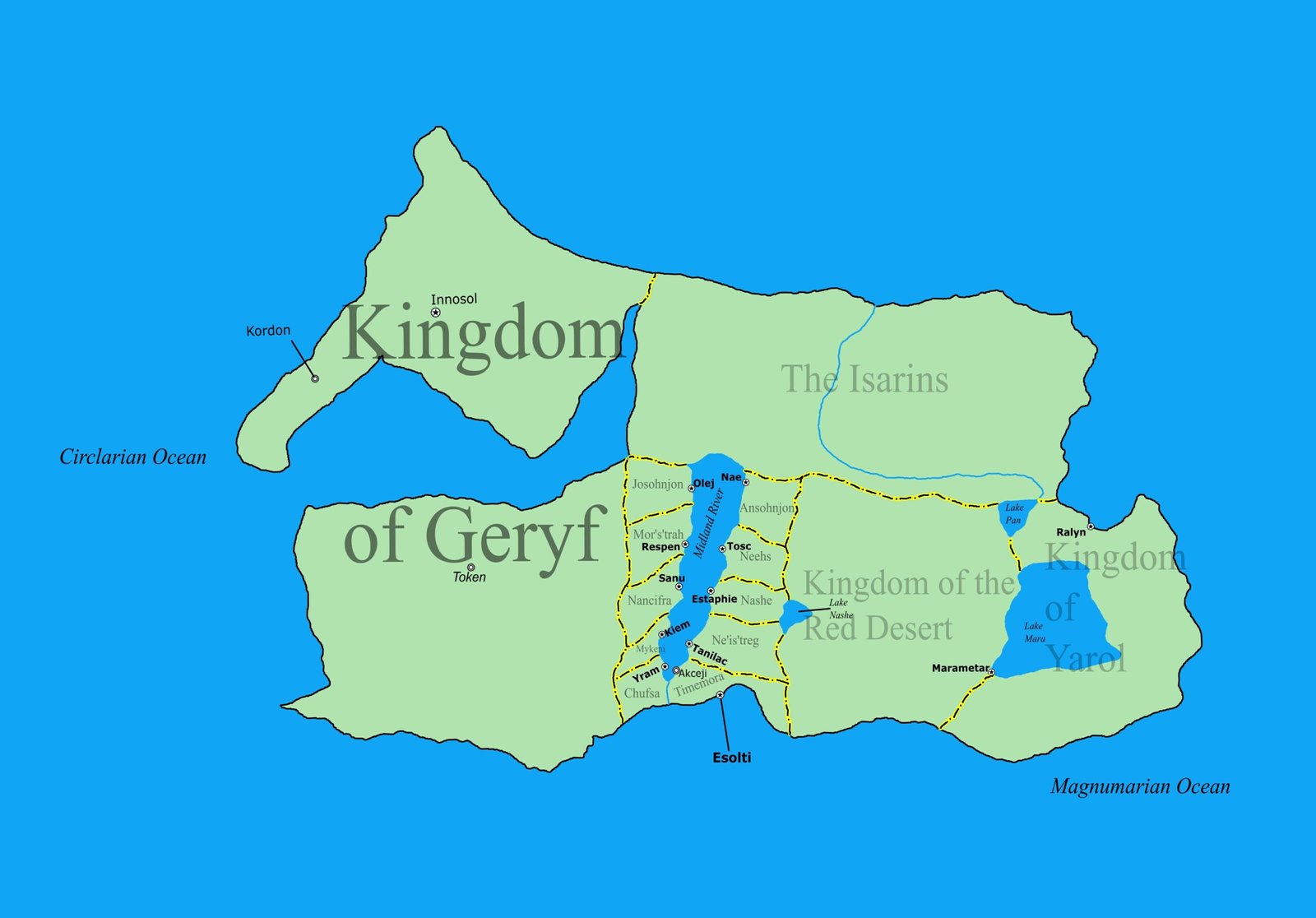
The Synarin nomadic peoples traveled mainly by boat as they lived along the many rivers and lakes of the West Peninsula of Canticula. They spoke a variety of native tongues and dialects. Their religious pantheon was very much like the Ancient Circlarian Pantheon, except that the deities were elemental like that of the Earth, of the Sky, of the Oceans, and of the Streams and Lakes. The Synarins were known for their cave and stone paintings as well as their clay reliefs...Read More
795 BCE
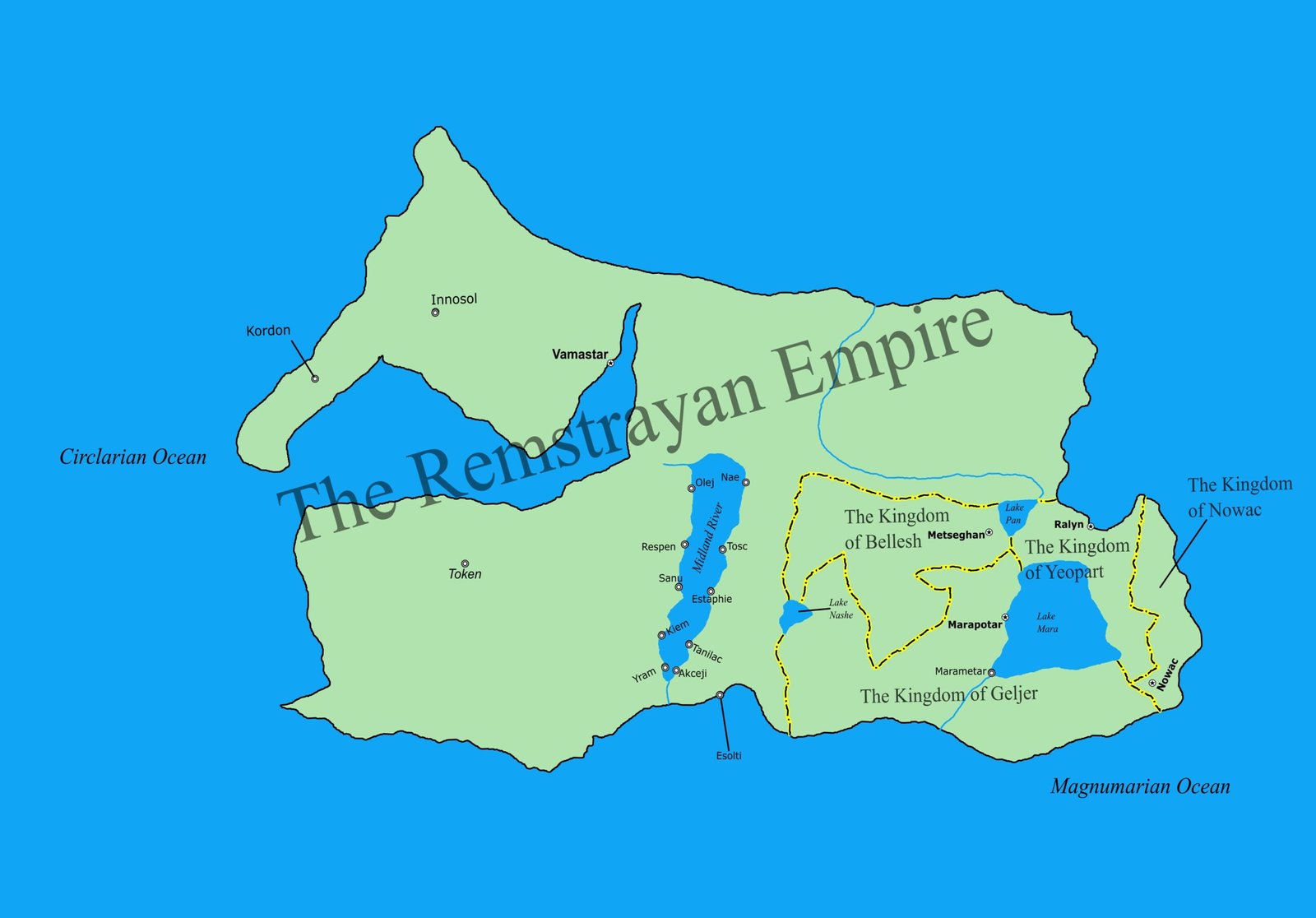
While many Isarin factions remained as nomadic groups in the grasslands of Northeast Canticula, others took to the seas around West Canticula and the Peninsula as shipwrights and traders. Many of these sea-bound Isarins, having been exploited by King Gereon since his rise to power, banded together in October 803 BCE and staged a general strike for higher wages. In short time, the King signed an agreement meeting their demands...Read More
785 BCE
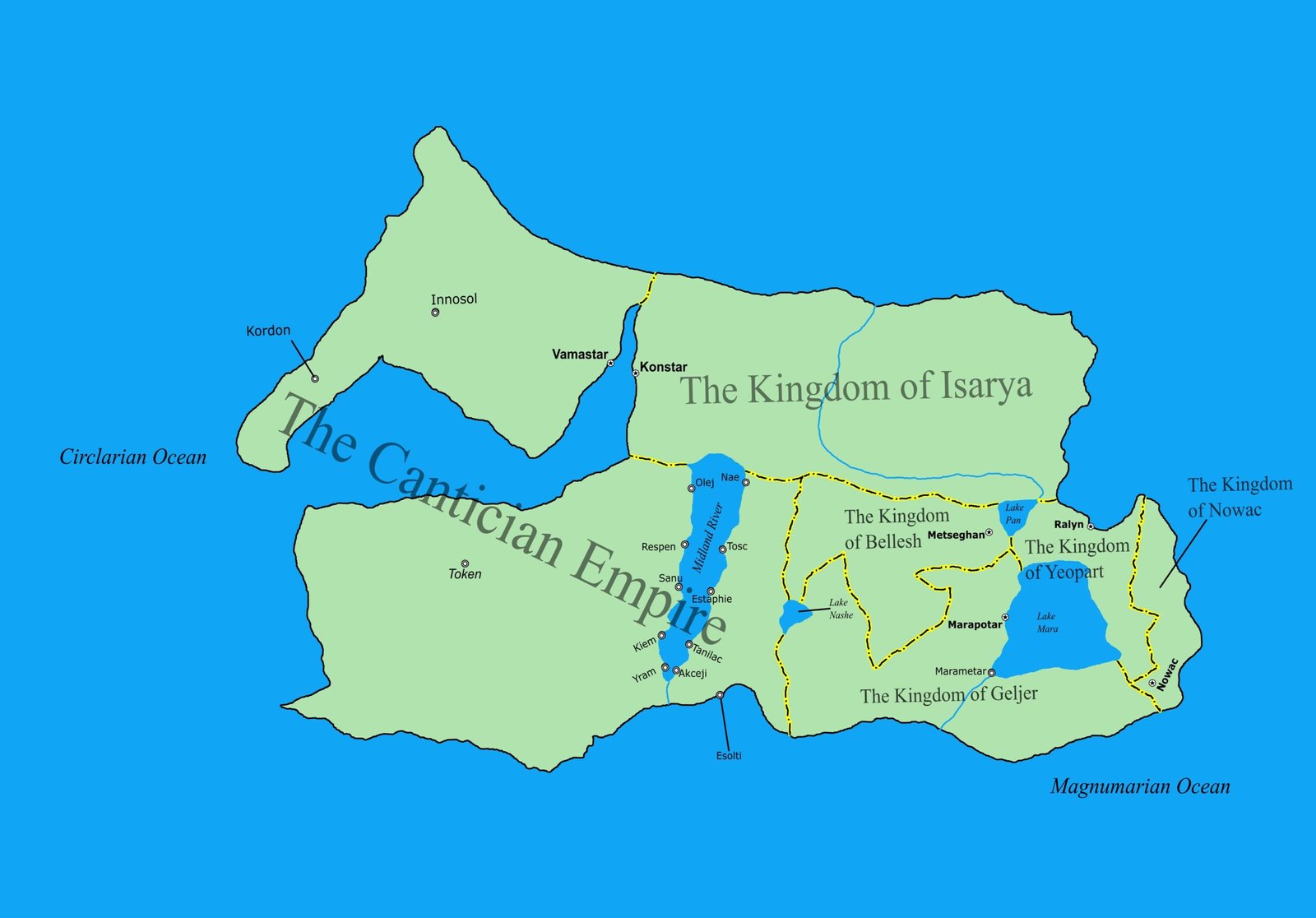
In the summer of 811 BCE, Canticius I attempted to overthrow Geryfian rule and free the Isarin peoples of Northeast Canticula. The Geryfians defeated Canticius I, however, forcing him into exile. Thus he would remain until he was found in June 802 BCE by Queen Remstraya, who gave him refuge. She then asked Canticius I to fight for her kingdom, promising him that afterward he would have the land of the Isarins to rule over as an independent kingdom...Read More
775 BCE
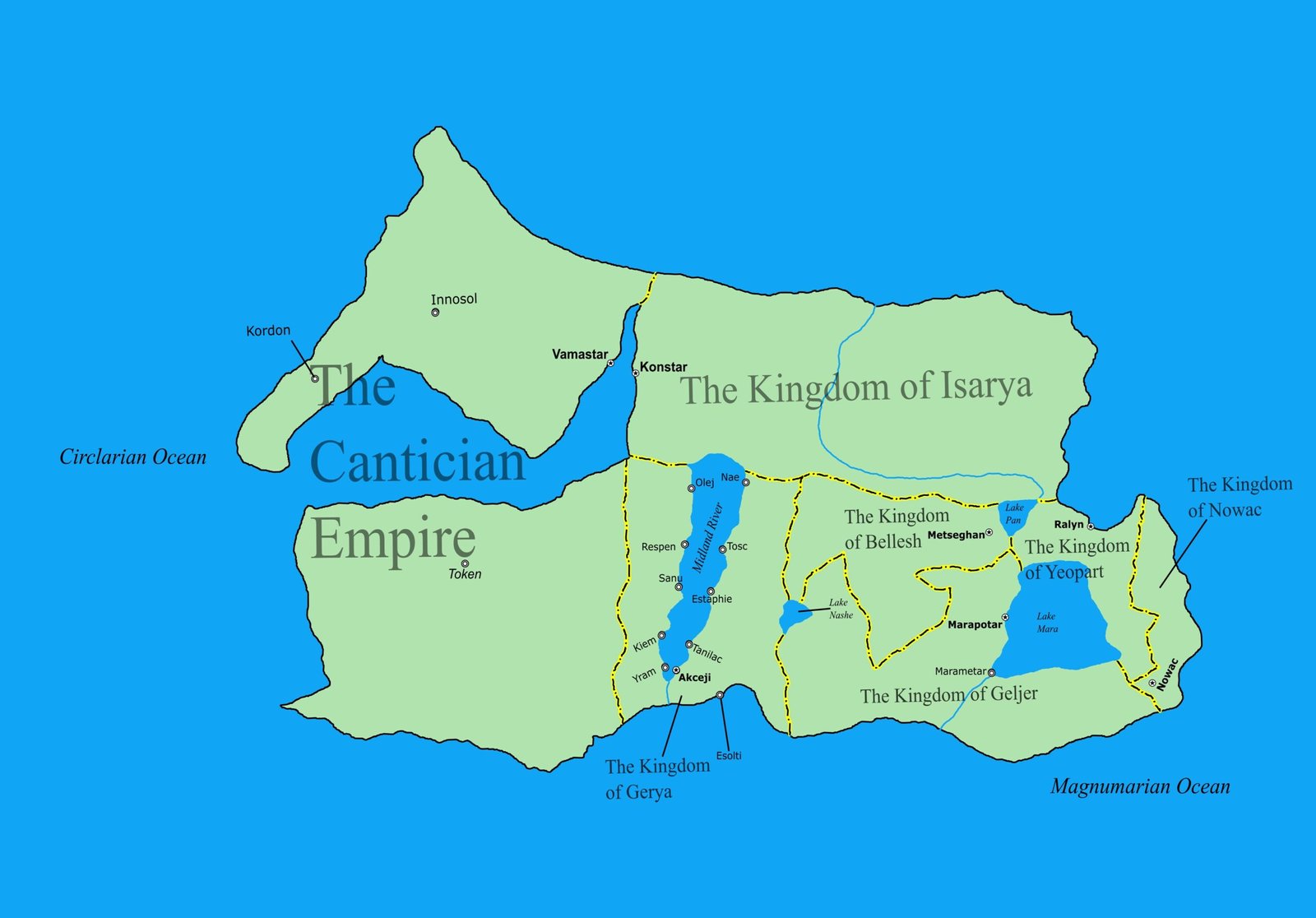
In March 781 BCE, Canticius II turned twelve years of age. A few weeks later, Orumdeus received news that Canticius II was still alive and that he would come of age, that being the age of sixteen, to rule in less than four years. Seeing Canticius II as a threat, Orumdeus dispatched an assassin named Eron to end his life. Skilled in spell-bound fire arrows, hired assassin showed a lot of promise in his assignment...Read More
765 BCE
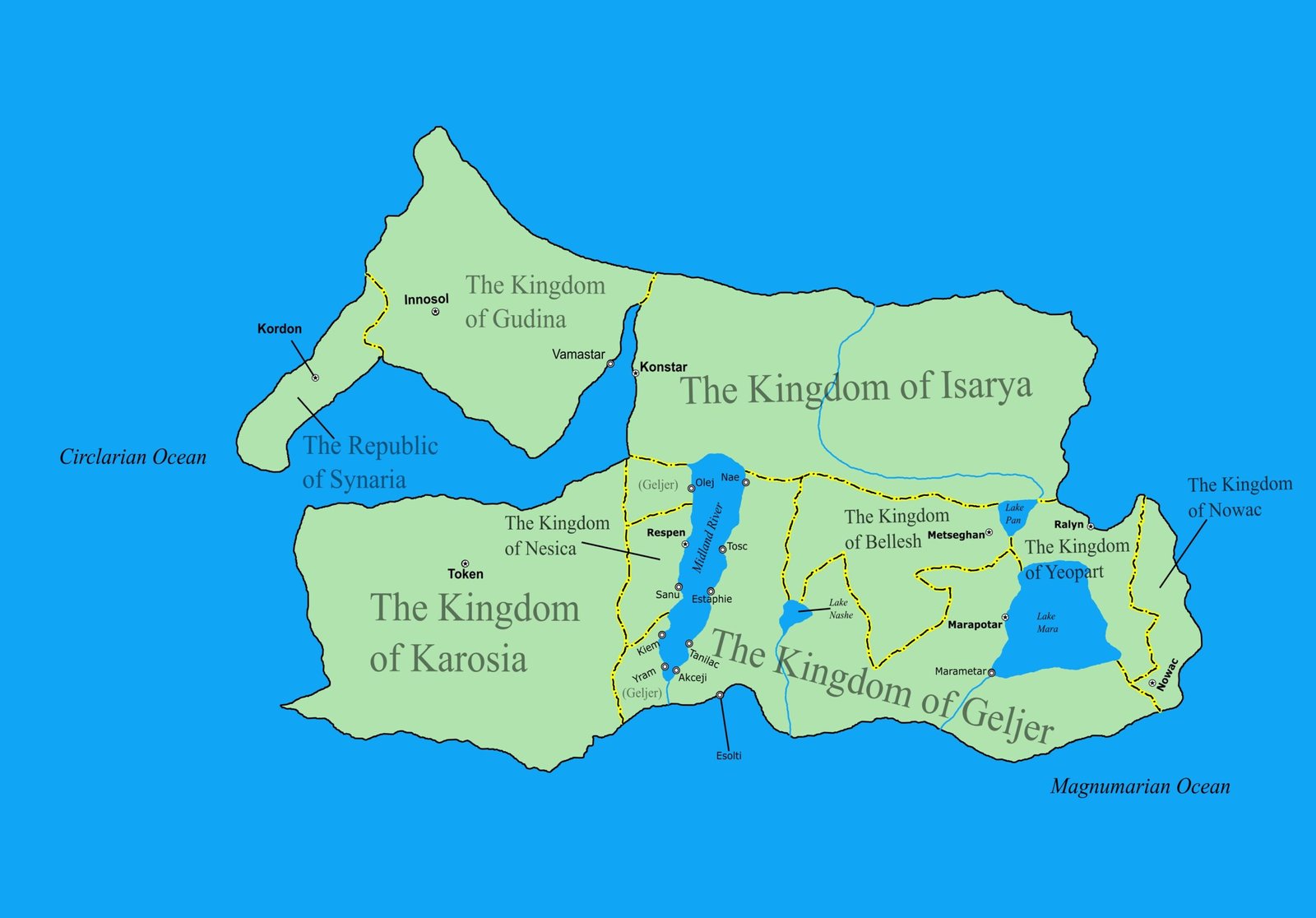
In May 772 BCE, Gymra died; thus, in accordance to established terms, Canticius II became the ruler over the Kingdom of Gerya. Shortly after his coronation, Canticius II assigned the Guardians of Gerya to become his personal Royal Guard, a move that historians argue proved to be a strategic mistake. Canticius II then pursued his primary agenda: to defeat Orumdeus and gain the Imperial Throne of Vamastar...Read More
760 BCE
Until the latter days of the 800s BCE, much of the land home to the Synarin peoples had been governed as clans by Elders. The Enra Clan, a strong maternal line, remembered this and, after the fall of the Empire, saw an opportunity to regain territorial dominion. Many looked to the Elder Daughter of this Clan, Veranoa, to run for Consul. However...Read More