James Black
In May 1249, with a majority vote from the Federal Estates Council, James Black signed into law the Economic Restoration Act. However, a problem emerged with the measure favoring business owners over the working class. This led to the establishment of the National Labor Party in March 1250, which was decried by Prime Minister Black as a radical coalition, allegedly leading to concerns for political anarchy in the new Republic. In May, politicians supporting Black formed the Foundationist Party, which Black, himself, initially refused to join, as he aimed to maintain bipartisan leadership as an independent figure serving as Prime Minister, but then relented on his stance and joined nonetheless. In 1251, the incident with the Pirafone led to an investigation of maintenance policies concerning all aircraft, prompting the passage of the Aircraft Safety Act. That September, the National Labor Party made significant gains in provincial and national seats; and Scott Adams, leader of the Party, announced his bid for the Prime Minister role.
The following Prime Minister election, contesting Adams against the incumbent Black, was held on 24 September 1254. In this election, James Black won re-election, but the National Labor Party gained a majority in the Federal Estates House of Representatives and two more seats in the Ministry Council.
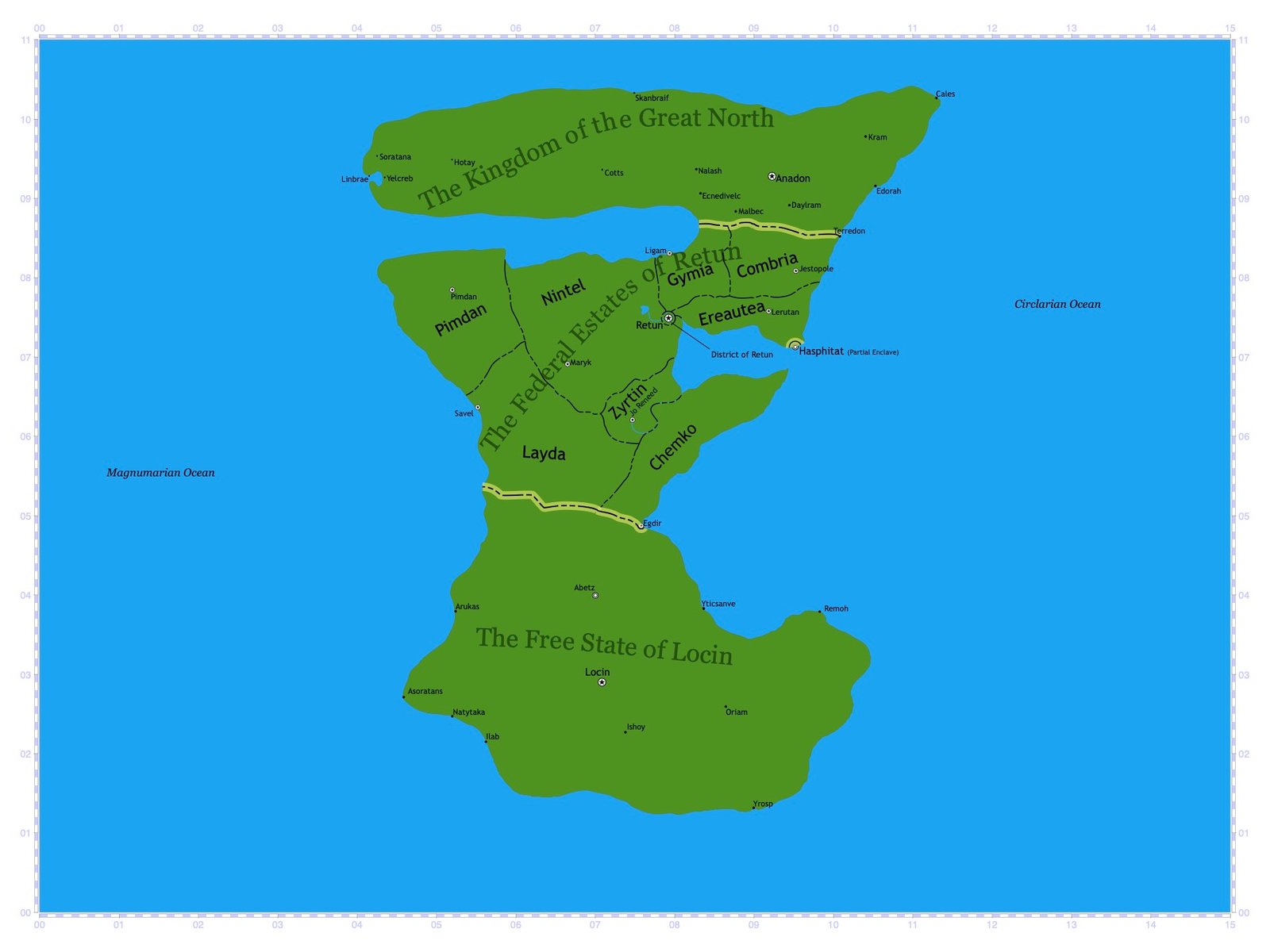
In 1255, Arnold Stone announced his bid to join the National Labor Party. Two years later, a darkfire incident on Mount Carris struck fear into local residents, prompting Prime Minister Black to impose martial law in the area. In the end, Black drew a perimeter around the Lake Maern and Mount Carris region, ordering Holz Finzi's followers to stay within it but permitting them to practice non-invasive darkfire activities. In 1258, Stone gained the petition signatures needed to become a candidate for the Prime Minister position, and aimed to increase wealth and business opportunities for individuals by taxing wealthy businesses and bank owners. Stone also vowed to legalize the darkfire industry and dissolve the Mount Carris Perimeter. With higher popularity than James Black during the 1248 campaign, Stone far outperformed his closest in-party rival, Robert Smith; and polls showed Stone's likelihood of defeating James Black in the 1260 election. In 1259, the notorious Vandalish Black Terror attacked Remikra from the Circlarian Ocean, invading Chemko, which affected trade with the Diamond District, and launching a coordinated offensive over the Chemkan Mountains and toward the Basin District. However, the Federal Estates retaliated, defeating the Vandalish within 36 hours, and storming Chemko, which then became a Federal Estates territory.
In the early half of the year 1259, Arnold Stone continued to outpace Robert Smith in terms of electoral popularity. However, that summer, two conspirators loyal to Smith staged a scandal in Nintel, placing blame on Stone and bringing charges against him. During the Supreme Court trial that resulted, Stone was convicted and impeached from Council. He was furthermore disqualified from the election cycle, leading Robert Smith to win the National Labor Party nomination in the primary election. In the last week of December, however, Edward Jackson, a candidate on behalf of the newly-formed Diplomatic Party, came forward with the promise to establish deep-trade policies.
During the 1260 campaign, James Black promised to retain and expand upon the provisions of the Economic Restoration Act. Robert Smith, in contrast, promised to shift Restoration Act provisions to further benefit the working class in a milder version of Stone's agenda. Meanwhile, Edward Jackson aimed to privatize large sectors of infrastructure, especially the banks, and establish deep-trade policies. On 16 September 1260, the election was carried out, which led to even division in the Public Assembly caused by a voting tie in the city-district of South Masonia. Legal battles ensued as the Combria Supreme Court heard various mediators and attorneys on the disputed results. On 2 December, they concluded with a determination that South Masonia was won by Jackson, giving Jackson the official nomination for Federal Estates Prime Minister.
Edward Jackson
In 1261, his first year of office, Prime Minister Jackson convinced Councillors and Representatives to side with him and his fellow Diplomats, and passed legislation that sold assets of aviation and mass transit to the ownership of private banks. The ramifications were that the banks would lend money and capital to private companies, leading to a boom in the mass transit and aviation industries. That same year, Jackson established the Deep-Trade Administration, where private firms elected representatives, who would choose mutual representatives from another given foreign entity involved in a deep-trade deal. Meanwhile, a crisis ensued in the Diamond District of Hasphitat, where corrupt leadership was threatened with a coup by an angry population. Jackson addressed this with negotiations that attempted various deals with the Hasphitatian Presidency. However, these failed; and Jackson, as it was discovered later, secretly planted bombs throughout the Chadwick Building, using this as a threat to pressure another deal. Eventually, Hasphitatian leadership obliged to an exchange that made the Diamond District part of the Federal Estates. The governing structure in the District changed, as a democratic constitution was established, while the Diamond District of Hasphitat was administered independently though under Federal Estates jurisdiction. The Diamond District of Hasphitat also had its own currency, but was required to accept the Retunian Qor. The District would be presided over by its own elected Governor, who was elected every seven years.
In 1262, a cable train disaster in Ebony Valley closed down that sector of the line, prompting the immediate construction of a detour. Such measures were carried out by private firms, however; and the only form of direct intervention by the Federal Estates government was a law requiring all cable trains to have a wheel-catch safety feature. Meanwhile, the territories of Zyrtin and Chemko each had federally protected land, providing a safe haven for indigenous Remikran groups and bee colonies. However, controversy ensued from this, driven by business opportunists interested in the region's wealthy resources. Local Federal Estates citizens were supportive of the businesses and were opposed to the protection measures. They, as a result, began submitting petitions to form the two territories into provinces.
In 1263, the Chemko-Zyrtin controversy became a main issue in the gubernatorial election, where Diplomats, including Jackson, supported the idea of expanding businesses, while the Labor and Foundationist Parties opposed this and upheld the federal protections. On 24 September 1263, it was the Diplomats who made gains in Governor and Council seats; and in January 1264, the proposal for Chemko and Zyrtin to become provinces reached the floor of the Federal Estates Council. Here, Prime Minister Jackson engaged in various persuasion methods to gain votes from the two opposing parties, before finally gaining enough votes to pass the measure and sign it into law.
Indigenous communities were ordered by the businesses to leave, but they resisted with sit-in protests. In response, Prime Minister Jackson dispatched air and ground armed forces, which unleashed violence and conducted mass-arrests upon the indigenous communities. Jackson's measure was a success, as the bee colonies were destroyed and the land was converted into business properties, resulting in a local economic boom.
Opposition leaders in the Federal Estates Council filed impeachment charges against Jackson, citing forceful coercion upon Councillors regarding the Chemko-Zyrtin measure. However, in March 1265, the impeachment call failed to pass either the House or Ministry Council.
During the 1266 election, Prime Minister Jackson competed with Terrence Walker of the Foundationist Party and Marshall Lance of the Labor Party. The latter two carried out reactionary campaigns to undo the radical measures carried out by Jackson. But there was division. While the Foundationists wished to restore the original policies under James Black, the Labor Party wanted to implement new measures to give more voice and pay to the working class. On 24 September, 1266, with a large portion of the population satisfied with economic progress, Edward Jackson won re-election for the Prime Minister role.
The Third Forum of Cales was held in the summer of 1267. With such financial yields lower than expected, the Retunian economy began to stagnate. Over the next four years, Prime Minister Jackson called for more expansions in the deep-trade sector, stirring up controversy over diplomacy and radical imposition abroad. Meanwhile, in 1268, the continent of Ancondria was discovered. In previous years, numerous religious and academic organizations speculated over the possibility of another world in the South Magnumarian Ocean, though no evidence was there to prove it. Opposition in this debate repeatedly claimed the likelihood that there were simply island chains on "the other side."
In 1263, though, an airship from the Middle Westerlies, a Retunian territory, was blown off course in a storm; and a photographer named Jerris Brown took a picture of some islands. Four years later, Dr. Henry Roh, a professor from Cabotton University, examined these photographs and noted distant mountains in the background. In 1268, an expedition to the region revealed a large landmass. Prime Minister Jackson called for the funding of numerous expeditions of the place, an agenda in which other nations participated, where the landmass was found to be thousands of miles across. Furthermore, the remnants of Edom were discovered here, triggering an explosion in religious debates. Dr. Roh named this new continent Ancondria.
Between 1268 and 1269, the discovery of Ancondria, along with a boom in the lightfire industry, led to another economic boom for Middle Remikra. It was the emergence of the latter that would lead to debate over lightfire's legitimacy. In 1270, the Vandalish grouped with the regime on Elsa Island and launched another attack on the Federal Estates. Prime Minister Jackson retaliated and invaded Elsa Island, leading to the defeat of the enemy and Elsa Island becoming part of the Retunian province of Ereautea.
In 1272, the Acrean Deep-Trade Deal was formed. The Acreans made the first call for a conference in January of that year, where a forum was scheduled to be held in Canticula in March. Successive forums were held in June, September, and November, leading to a boom in the Diamond District Tradestone Exchange and a tenfold increase in the Federal Estates gross domestic product (GDP). That year, the Prime Minister elections were held, where Jackson proudly upheld his accomplishments, while the Labor and Foundationist Parties decried deep-trade as a dangerous gamble. However, the latter two parties, headed by Jefferson Stone and Karl Mack respectively, only made up a minority of the electorate, as Jackson sailed to another re-election victory on 16 September.
On 8 October 1273, the Acreans announced withdrawal from the deal, leading to economic collapse. Jackson refused to order deep-trade "squatters" to return to the Federal Estates; and on 13 February 1274, the Acrean War began. While this was occurring, the tradestone markets continued to fall, hitting the city of North Kempton, Nintel the hardest. Here, the fallout caused most businesses and banks to close. Later, the province of Nintel repealed laws restricting the henshale industry, allowing Gymian gas drillers to begin operations in North Kempton and revitalize its economy.
On 4 June 1275, Prime Minister Jackson ended the Acrean War, calling for a truce and compromises with Meredythian territories. He designated this day as Continuance Day. The war was, nonetheless, considered a stalemate-loss for the Federal Estates, leading Jackson's popularity to begin falling, and allowing Foundation and Labor Party candidates to begin gaining traction in anticipation for the year's gubernatorial elections. These elections, held on 16 September, allowed Diplomats to hold provincial and national seats in Nintel, Zyrtin, and Chemko; however, the Labor Party gained seats in Layda and a few in Combria. In Combria, though, the election was close, but Robert Bueller, the Diplomatic Governor, was re-elected by a close margin.
But then legitimacy of the results in Combria came into question, as certain claims surfaced, in the beginning of October, that the ballot system was rigged in the city-district of South Masonia in favor of Bueller. A motion was made for a recount. However, the effort was frustrated on 10 October, when the courthouse of South Masonia was set ablaze, raising suspicion. In the weeks that followed, in light of more evidence, speculation was raised that Prime Minister Jackson had played a part in a conspiracy to commit election fraud; and a call was made for his impeachment. The impeachment trial began in April 1276, when the motion passed the House of Representatives, but failed to gain a majority in the Ministry Council. And thus, Jackson remained the Prime Minister.
In the autumn months of 1276, Jackson hosted a conference with the Diamond District banks, as well as numerous other businesses including West Horizon, where he made a deal with them to provide them with large tax breaks in exchange for the implementation on behalf of the latter of massive lending programs to revive deep-trade and the entire economy as a whole. The Federal Estates Council passed the tax measures, along with an additional measure to begin construction on a large building in the Basin District Commerce Square for the Deep-Trade Administration, to be completed by the year 1280. Between 1276 and 1278, deep-trade anticipation and the loan programs brought the Federal Estates economy out of decline, with its growth exceeding even that of the Acrean days. In 1277, Jackson signed legislation to enroll Retunian schools in the Global Academy of North Circlaria, which carried a standardized Circlarian curriculum and provided global business opportunities for students and alumni.
The election of 1278 focused primarily on the legitimacy of Jackson's policies regarding the economy and deep-trade, as the incumbent Prime Minister ran for re-election to his final term against Maxwell Nessant of the Foundationist Party and John Dash of the National Labor Party. The latter two candidates voiced skepticism of Jackson's measures and decried the corruption involved in the 1275 gubernatorial elections. Nevertheless, such opposition was overshadowed by the overwhelming number of Jackson's supporters, who used the recent economic recovery to justify the preceding recession as simply being the results of unfortunate circumstances caused by the Acreans. And that was what led Jackson to win re-election on 24 September.
In April 1279, a call was made from the Rinean Kingdom in the Far North to host a trade conference, hinging on the possibility of deep-trade. That November, an official Forum was held, prompting Jackson to announce more calls for them, and leading Diamond District banks to lend out large amounts of money for business and trade. One year later, the large building in the Commerce Square was complete, and opened, named the Rinea Building. A lightfire trade arrangement made with Ancondria in 1281 led to the establishment of the first permanent Retunian settlement along Ancondria's East Coast, marking the beginning of the Magnumarian Passage. That summer, Jackson and the Rinean Kingdom made an agreement to host the Rinea-North Canticulan Academy Forum in the following year. The outcome of all of this was the second-largest economic boom for the Federal Estates, which occurred between 1281 and 1282. In 1281, the gubernatorial elections handed all provincial governor seats and at least two thirds each of the Popular Assembly, House of Representatives, and Ministry Council, to the Diplomatic Party. However, in light of such economic prosperity, there loomed a concern. The South Kindol Educators Union, collectively bargaining against the Global Academy, threatened to strike.
In 1282, these concerns became apparent as members of the Union in Middle Remikra began calling for the same. On 11 May, after failed negotiations, the Circlarian-wide strike began, prompting all Academy-associated schools, including the ones in the Federal Estates, to close. This triggered backlash and riots from Diplomatic Party Members and their supporters. Nonetheless, the Academy strike inspired Deep-Trade Administration employees to begin airing similar grievances regarding recent fallouts from the Rinean deal. In light of this, the Diplomat-controlled Houses of Legislature passed an amendment to the Federal Estates Constitution which allowed Supreme Court Justices to uphold the appointment to Mitigators without the required number of petition signatures, which ultimately gave leverage to the wealthy class. Meanwhile, Prime Minister Jackson, nearing the end of his term limit, was advised to endorse another Diplomat for the Prime Minister role. Jackson picked Arthur Cummings, who, on 16 September 1282, gained the endorsement signatures required to join the Diplomatic Party as a candidate.
On 18 January 1283, the Deep-Trade Administration employees officially began their strike, as the Federal Estates economy, after unprecedented growth, entered into a slight recession. On 7 May, Provincial Domain Governor-General Mervin Teller, in office since 1273, unexpectedly signed a deep-trade deal with the Humerian Kingdom. Bypassing legal protocol, Teller's move prompted backlash from Jackson and the Federal Estates population. However, the Council would later vote to uphold the decision. On 23 May, the Academy strike ended, as schools re-opened. And on 24 September, Arthur Cummings won the primary election, making him the official Diplomatic Party candidate for the Prime Minister role.
With the consequences dealing with the Academy and Deep-Trade Administration strikes, as well as controversy over Teller's decision regarding the Humerian Kingdom and the constitutional amendment regarding the Mitigators, the Prime Ministry election of 1284 would prove to be a memorable one. Arthur Cummings, poised to succeed Jackson as the Diplomatic Party candidate, vowed to continue Jackson's policies, which led to high economic standards. As expected, opposition was voiced by the Foundationist and Labor Parties, who decried the Mitigator amendment; however, aside from that, there was division. Darel Cline of the Foundationist Party aimed to repeal the Deep-Trade Administration and continue the Academy, but only to end Union membership. John Mackwell of the Labor Party wanted to settle the Deep-Trade Administration strike and pending friction with the Academy via fulfillment of labor demands. Meanwhile, there began a coalition of those with growing contempt for all three candidates, who were henceforth accused with collaborating too closely with the large banks.
However, the coalition was still in its infancy; and on 16 September 1284, the election was carried out with strong support behind each of the three parties. This election, though, was deeply divided, as support behind each party was equal in weight. Once again, an election toss-up ensued in South Masonia, bringing uncertainty to the final Prime Ministry nomination. On 2 November, the Combrian Supreme Court ruled in favor of Arthur Cummings, winning him the nomination as the next Prime Minister.
Arthur Cummings
Upon taking office as the third Prime Minister of the Federal Estates, Arthur Cummings ended the Deep-Trade Administration strike by borrowing funds, on behalf of the Federal Estates Treasury, from the Diamond District banks, becoming the first ever Prime Minister to do so. This prompted backlash from Councillors and former Prime Minister Jackson alike. On 5 February, a transaction and conference invite was carried out by the Lykian Republic in Canticula to the Federal Estates, with possibility of deep-trade with the nation leading to a boom in Retunian tradestone markets. Losing faith from their support bases, during this time, the Foundation and Labor Parties dissolved, as their members united and formed the Reformed Foundationist Party, whose agenda was to end the close relationship between politicians and financial institutions.
In 1286, James Lawrence Kontacet II, a highly revered member of the House of Masons, lost a sporting bet which involved money he borrowed from the Combrian Tradestone Exchange in South Masonia. This caused Combrian investors to lose faith in the market and withdraw, causing a collapse and leading the prices of hubstone products to fall dramatically. However, this collapse was local; and the remainder of the Federal Estates economy benefited from the low hubstone prices. With the addition of the Lykian trade deals, the Diamond Tradestone Exchange in Hasphitat experienced its single largest boom in the history of the Federal Estates. In November, the first official forum was hosted between the Retunians and the Lykians, and was hosted on the Meredythian Island of Vantacula. Here, Cummings attempted to push a special deep-trade deal with the Lykians, but the Lykians, citing suspicion, suspended the forum. Throughout the months of November and December, the Lykians carried out an investigation on the matter and discovered a major scandal. On New Year's Eve, they terminated all deep-trade agreements and ordered Retunians to leave Vantacula.
Cummings responded to this, in January 1287, by ordering Meredythian Territory Governor-General John Verrance to stay the Lykian orders and have Retunian military forces remain on Vantacula. When Verrance invoked constitutional measures to refuse Cummings' orders, Cummings had "outsiders" call upon Mitigators to suspend Verrance's Office, and had remaining Cabinet members carry out the orders to the stationed military commanders. Amid growing public speculation on the matter, Cummings also convinced the Courts to issue gag orders on media outlets. In the last week of January, Lykian reinforcements carried out an assault upon the Retunians, who were engaging local opposing forces, and drove them off Vantacula. Between 1 and 5 February, Cummings launched a counterattack that gave the island back to the Retunians and henceforth ordered a cease-fire, proposing to the Lykians a call for a truce and re-establishment of deep-trade negotiations. But on 6 February 1287, Lykian U-planes dropped Red-Desert bombs on South Masonia. Then, other Lykian U-planes dropped Red-Desert bombs on Hasphitat and Retun, wreaking mass destruction on these areas. Provincial Domain Governor-General John Anderson declared a state of emergency and implemented martial law measures across the nation, while Cummings, upon hearing news of this, issued further orders to terminate the cease-fire and continue the conflict. On 16 February, the Lykians dropped a Red-Desert bomb on the manmade island supporting an airbase off the coast of Egdir, and yet another Red-Desert bomb on Retun, with this one in the Basin District. Invoking the constitutional measure of refusing Cummings' orders, Anderson withdrew Retunian military forces from the Meredythian region. Meanwhile, the Mitigators employed by Cummings' agenda ceased their duties, allowing Verrance to return to his Office and make further military withdrawals. In the early morning hours of 17 February, Cummings, under immense pressure from his colleagues and the Retunian public, signed a peace deal with the Lykians, which turned over significant portions of the Meredythian Territory to Lykian jurisdiction.
In March, an impeachment call was made on Cummings, with such allegations composed of coercion with the Mitigators and acting against deep-trade codes of conduct. The impeachment trial was held in June, where the measure passed the House and Public Assembly but failed in Ministry Council by one vote. For the remainder of the summer, the population voiced grievances over insurance companies failing to cover for property lost during the Lykian attacks, bailing out only the wealthy business owners. In light of this, the Reformed Foundationist Party gained traction, as they increasingly blamed recent politics on the power of the banks. On 16 September 1287, during the gubernatorial elections, Reformed Foundationists gained six of eight Provincial Governor seats, the same proportion of seats in Ministry Council, and a majority of seats in the Assembly and House.
By 1288, the Federal Estates was deeply divided over the issue of deep-trade, as trust in policy and leadership continued to erode. Cummings responded to this with the implementation of a rehabilitation program named "Rising from the Ashes," as existing deep-trade policies were subject to reform. In such an atmosphere of change and uncertainty, the Lemke Sea Guild, native to the trade routes of the Circlarian Ocean, began lobbying Councillors and Representatives from both the Diplomatic and Reformed Foundationist Parties, prompting them to pass numerous bipartisan measures to benefit the former. When a minor fallout occurred, the Lemkans continued lobbying Retunian politicians for exempted trade deals. Meanwhile, on 15 May, deep-trade transactions began between the Federal Estates and the Council of Atkie, a city native to the Canticulan nation of Lotemn.
Throughout the year 1289, there emerged two candidates of the Reformed Foundationist Party. The first was William Irving, who was a close friend of John Waltmann, the incumbent Governor of Ereautea, and advocated for the nationwide implementation of Waltmann's welfare and public infrastructure measures. The second was Dennis Hall, who advocated for a milder implementation of the same agenda, but was struggling with public speculation over possible deals he had made with the Lemke Guild. On 16 September, it was Dennis Hall who won the primary election.
On 6 January 1290, the Esterzy, the famed state-of-the-art airship in service since 1272, was shot down by Lotemnian authorities over the Lotemnian region of Lake Onad, resulting in many casualties. Soon after, allegations pinned Cummings to the ordeal, in which he supposedly collaborated with Bucksworth Financial Institute to attempt an unauthorized deep-trade transaction, involving the airship, with Atkie. Another claim surfaced that the Esterzy belonged to Dennis Hall's family, who had purchased the airship with money made from the Lemkan deals. By February, the effects of the Esterzy crash, along with growing distrust in Circlarian trade, put Retunian tradestone markets into a recession. Along with the economic decline, the Supreme Court's decision to toss out the case involving the Dennis Hall allegations prompted riots and voiced speculations of deeply-engrained government corruption. In March, Jack Casey, a Councillor serving on behalf of the Reformed Foundationist Party, came forward with an unofficially-announced bid to run against Hall for the Prime Minister role. This led to division within the Reformed Party between Casey and Hall during the summer, as yet another allegation surfaced that Casey was accepting contributions from the Thomas brothers, the largest donors to Cummings' platform. Meanwhile, Prime Minister Cummings, himself, seeking re-election, made a call for votes, citing lack of integrity surrounding corruption and division within the Reformed Party. And thus, on 24 September 1290, Cummings won re-election.
Cummings began his second term in 1291 with an attempt to reverse the economic recession by restoring business relations with the Rinean Kingdom; however, this agenda failed. On 13 September 1291, the Lykians broke a four-year period of silence with a call to a conference to Vantacula, which took place in November. During this event, Casey, Hall, and Cummings, as well as the Thomas brothers, secretly formed a joint deal in an attempt to form yet another special arrangement with the Lykians. Suspecting, yet again, of another scandal, the Lykians quietly ended the conference. Word of this reached the public, which began protesting against Cummings and the "establishment"; and the Reformed Party closed its doors, as deserters joined numerous third-parties. Meanwhile, the lightfire industry, growing in popularity since the 1270s, had been regulated by the laws crafted by lobbyists representing the industry's largest competitor: the talisman industry. On 18 November 1291, amid riots in Ebony Valley and immense public pressure nationwide, Cummings and the Federal Estates Council passed legislation lifting the lightfire restrictions and redirecting banks to invest in the lightfire industry.
In March 1293, amid political turmoil regarding its superior hierarchical government, the Council of Atkie quietly and peacefully withdrew all deep-trade deals with the Federal Estates. With the economy in further decline from this, John Waltmann, the Governor of Ereautea, founded and became the leader of the Progressive Party, which aimed to found a "Free Academy," further the lightfire industry, and implement a nationwide public infrastructure. During this time, the lightfire industry gained quick momentum. And on 24 September 1293, the Progressives won the gubernatorial election with six of eight provincial seats in Ministry Council, and all eight Provincial Governor seats. They also gained a majority in the Assembly and House. In the following year, Waltmann announced his candidacy for the Prime Minister position.
After a great deal of campaigning, Waltmann won the primary election of 1295 and appointed James Welch as the candidate for the Provincial Domain Governor-General. With the Cummings administration weathering a deep-trade deal fallout with the Hoblandish city-state of Noliespe, the economy was pushed into a further recession. This brought to light two different issues. The first was healthcare, which was administered differently from county to county. The other was transportation, where each county had different laws regarding the use of gas-powered or electric-powered cars, making long-distance traveling more difficult by car and creating unfair incentive for the industries of air and cable rail.
With Cummings running for re-election to a third term, John Waltmann appealed to a great number of Retunians with his promises to create a nationwide uniform system of healthcare and transportation, with his third agenda being education. This, ultimately, carried Waltmann to election victory on 16 September 1296.
John Waltmann
In 1297, Prime Minister Waltmann signed into law a bill overriding county laws concerning cars, and initiating the Great Retunian Highway Project. He and the Progressive Party did the same with nationwide healthcare, except the population, this time, voiced grievances over the mandated traditional treatment for patients with Involuntary Darkfire Conjuration Syndrome. That September, accreditation programs began for Waltmann's establishment of a "Free Academy," where there arose controversy over the location of its headquarters. Diplomats advocated for the school to be centered in Jestopole, while the Progressives called for it to be in Ancondria. Throughout the year of 1298, the academic accreditation and controversy ensued while the economy, fueled by the growth of the lightfire industry, began to recover and grow. In 1299, the Council finally rested on the Progressive decision and voted to have the Free Academy established in Silba, located in Ancondria, where it would be renamed the Global Academy of Ancondria. Meanwhile, the Federal Estates called for a deep-trade forum with the Oshra Guild. Under these circumstances, the Federal Estates economy experienced yet another boom in the year 1300.
But such progress was short-lived. In 1301, a fallout with Oshra led to the collapse of the deep-trade economy, prompting Prime Minister Waltmann to close the Deep-Trade Administration. Meanwhile, a testimony from the Free State of Locin decried Retunian investment in Ancondria, condemning it as being too risky. As a result, the banks in the Diamond District, invoking a provision granted to them by then-Prime Minister Jackson in 1276, issued mass numbers of loan liquidation statements to every Ancondria-inclined business. This triggered the shuttering of large numbers of businesses and the complete collapse of the Diamond Tradestone Exchange.
By 1302, the economic impact was being felt across the nation, as many Retunians lost their jobs and homes, and living standards fell as infrastructure failed. In response, Prime Minister Waltmann initiated basic housing, an emergency provision granted by the Remikran Union. He then made deals with the Diamond District banks to continue minimal-risk investments with Ancondria, continuing his effort to establish the Academy. That year, Mervin Teller, on behalf of the Diplomatic Party, ran against Waltmann for the 1302 Prime Minister election cycle. Teller, in his campaign, criticized Waltmann's business deals and blamed his policies for the economic collapse. He called for a return to Jackson's policies, but also mentioned the idea of cutting basic housing programs. It was the latter that cost Teller the election to Waltmann on 24 September 1302.
As Waltmann began his second term in 1303, the economic crisis continued. With more people losing their homes, Waltmann expanded on the basic housing program while implementing job creation programs. Basic housing conditions, however, were less than ideal. The jobs were also hard to come by; and such jobs hosted poor working conditions, long hours, and little pay. On 2 June 1304, the Global Academy opened in Silba, providing educational opportunities for many Retunians as satellite campuses in the Provincial Domain created more job opportunities.
In 1305, the Diamond Tradestone Exchange crashed again, prompting Waltmann to implement more stimulus measures. This, with the help of the lightfire industry, led to a slight recovery in the following year. But then, in 1307, a fallout from a failed lightfire deal in Silba lead to yet another economic crash. Retunians, frustrated with the circumstances, began protesting, carrying out widespread riots. It was in this period of unrest that Walter Scott Mason emerged, blaming the country's misfortunes on Waltmann and the Darkfire Community. That summer, Mason led his followers to form the Knights of the Common Good, or the KCG, an organization that aimed to carry out its agenda by unleashing violence and terror upon the Darkfire Community and their allies. This prompted numerous members of the the Progressive base to form the Finzi Coalition. On 24 September, Mason won the primary election, on behalf of the Diplomatic Party, for Prime Minister. In the weeks that followed, protests erupted against Mason's campaign. But such activism was countered by the KCG. And before long, political extremist factions began to form.
In January 1308, at Mason's first campaign stop of the year, in Lyndonpole, members of the Finzi Coalition were shot dead by the KCG. At Mason's third stop, in Pimdan, darkfire sympathizers opened fire on marching KCG members, who returned gunfire and plunged the city block into a virtual battlefield. That March, Supreme Court Justice Jefferson Davis, appointed by Waltmann in 1299, ruled that all campaign events were required to occur in specified perimeters in which no firearms were permitted. In the campaign stops that followed, KCG guards stationed outside the perimeter carried guns, technically not violating Davis' court order. It was here that subsequent gun fights occurred. And in the cities of each campaign stop, KCG members began engaging in "pick-and-shoots," in which they would spot a significant member of the Finzi Coalition or any other anti-Mason organization and shoot the said target. Retaliatory acts of violence were exchanged between anti- and pro-Mason factions in the weeks that followed.
The election of 1308 occurred on 16 September, where the numbers for Waltmann and Mason were uncomfortably close. By the final count, it was apparent that Mason had defeated Waltmann in the popular vote count but lost to him in the Public Assembly vote count, the latter of which determined the election outcome. In this case, Waltmann had won re-election. Mason, however, refused to read his written concession speech, and, instead, made a passionate call for resistance against a "corrupt establishment." In October, Mason carried out an "after-campaign," raising concern among Progressives and darkfire sympathizers alike. He then called for a special meeting with all prominent KCG members in the University of Tendowyn, in the province of Chemko.
On 2 November 1308, Mason arrived in Chemko, where he met with Libertarian Candidate, Karl Rens, in anticipation of the announced conference. It was at Rens' estate that Mason was assassinated. In the weeks that followed, the KCG retaliated with a widespread campaign of violence against the Darkfire Community, blaming them for the tragedy. As Finzi Coalition compounds were directly attacked, the Federal Estates began to resemble a war zone.