The Esurchians and the 1362 Election
In the summer of 1358, a deep-trade agreement was signed between the Commonwealth and the Ancondrian state of Saram. However, this presented a conflict with another entity: the established colony-state of Esurchia. Beginning in 1359, the Esurchians demonstrated first to Commonwealth deep-trade figures and politicians a passionate interest to override the existing trade agreement with the Saramians and establish "a better deal." To bolster the effort, they appealed to various local Commonwealth communities with sentiments of charisma and favorable standings on issues relevant to the Commonwealth masses. This succeeded, especially at Cabotton University, where students were beginning to resent the new Headmaster, Arnold Stamp. Furthermore, the Esurchians succeeded in liquidating the Knights of the Common Good.
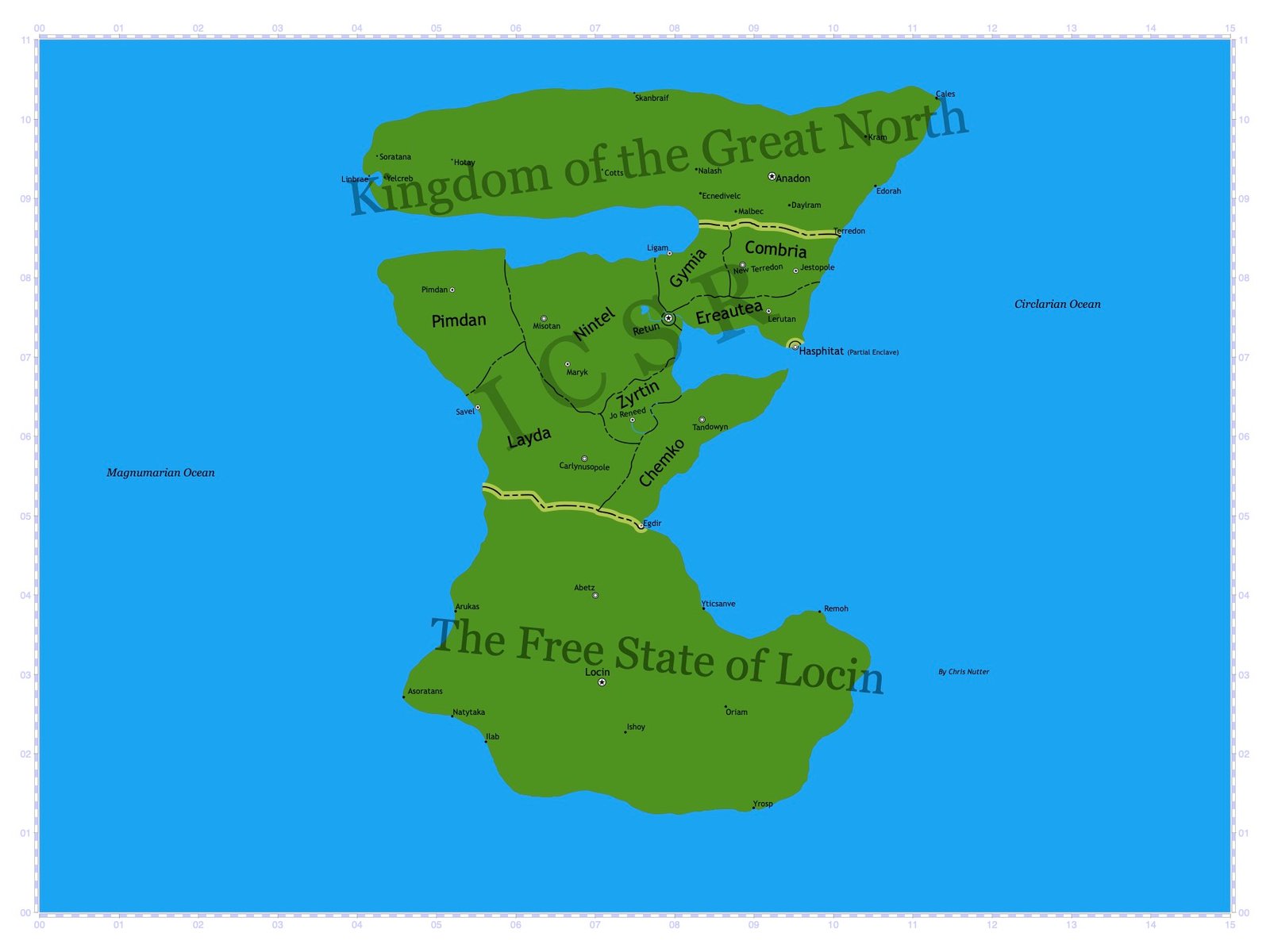
Born in 1311, Jed Mandoven was a dedicated follower of Remikra's second-largest religious sect: Elsaenism. He led a life and career adhering to its values, becoming a leader in the belief by the 1350s and attaining enough wealth in the process to construct a large cathedral in Ereautea, near the Combrian border and next to an open field later named the Field of Salvation. By 1359, Mandoven was in the midst of a successful mission to restore order in the war-torn Canticulan nation of Yarol when he was presented with the news of the arrival of the Esurchians proposing deep-trade with the Commonwealth. He returned to the Commonwealth that year, celebrating publicly the Esurchians, who seemed fitting to the Bill of Reciprocation, which Mandoven helped to craft for the Commonwealth Deep-Trade Administration.
With such an expression of approval from Mandoven, the Esurchians were gradually allowed positions in businesses, schools, homes, and even law enforcement units. It was at this point that scholars argue that the Esurchians began to exploit Commonwealth resources. Throughout the Commonwealth, citizens were effectively driven from their homes by the Esurchians and gathered into makeshift refugee camps. From these camps, they launched numerous units to protest against organizations allowing for Esurchian infiltration. Prime Minister Robinson, having been invited as a guest was, effectively, held a prisoner in the Esurchian Capital.
In the summer of 1359, Cabotton University Headmaster Arnold Stamp resigned from his position. Beforehand, he had, ironically at the request of a petition of Cabotton students, appointed Jon Den from the Esurchian State to preside over the Main Campus as the Chief Administrator. After Stamp's resignation, Den had been tasked with organizing special Headmaster Elections. However, this did not occur, nor did the Chief Administrator do anything to carry out the 1359 University Council elections. Thus, next term's University failed to materialize officially; though student protestors against these decisions organized unofficial elections and assembled what they upheld to be the next University Council. Jon Den refused to recognize this and signed an order to have the Building housing University Council and the University Library condemned. On 2 January 1360, students forced their way into the condemned University Council Building, but were confronted by Esurchian vigilante forces, resulting in three fatalities.
On 6 October 1360, street protestors blocked Esurchian functions in a suburb of North Caylor, Ereautea, where Esurchian vigilantes opened fire upon them, killing 36. News of this prompted widespread protests across the Commonwealth as Esurchian sources spread false propaganda to pit sectors of the population against one another. This Esurchian strategy had some effect until the autumn months of 1361, when Commonwealth citizens united in a growing coalition to drive out the Esurchians. On 5 November 1361, the Esurchians, through espionage, located a refugee camp two miles North of Cabotton as the source of many protestors, and dispatched vigilantes who massacred 156 people.
This prompted a mass-mobilization of Commonwealth citizens, as the coalition grew into a nationwide movement of solidarity and an organized network of refugee camps emerged. On 6 February 1362, however, the Esurchians launched a coordinated attack on significant refugee camp locations, where thousands of Commonwealth citizens were either killed in direct lines of fire or froze to death. The total death toll was later estimated to be around 2400, while the Field of Salvation was littered with the dead. Jed Mandoven, upon seeing this, withdrew from the public, and, two days later, took his own life.
News of this reached Governor-General Karl Metz via a secure channel of communication. Metz immediately convened with the Great North and the Remikran Union for responsive action. On 8 March, Metz was sworn in as Acting Prime Minister, where he issued an order for the operation which would ultimately succeed in bringing back Robinson. After his return to the Commonwealth, Prime Minister Robinson, on 11 March, issued an order for all Esurchians to leave Commonwealth territories, while the Commonwealth Deep-Trade Administration voted in a temporary emancipation measure for all Esurchian transactions.
On 16 March 1362, the Robinson Administration delivered the official announcement of such trade and diplomatic sanctions, which included a notice of mass eviction from Batten Island. When trying to enforce this order, Retunian Civil Guard units came under fire from the Esurchian Scouts, an equally strong para-military unit. The Retunian federal government called in the the Retunian National Guard as back-up, but the Esurchian Scouts surrendered before the confrontation turned into a proper military conflict. In an effort to avoid an all-out war, the Commonwealth and the Esurchian State signed a cease-fire agreement on 18 March.
The events surrounding the Esurchians caused many in the Commonwealth to lose trust in Prime Minister Robinson, causing him to lose absolute majority popular support. However, in accordance to the Constitution, which awards an election victory to the candidate with the highest number of votes in the absence of a majority, Robinson won re-election on 24 September 1362.
The Esurchian War
In the weeks and months that followed, numerous reports surfaced of Esurchian pirates raiding and robbing Commonwealth commercial ships passing through the Magnumarian Ocean. They launched similar forceful strategies on Ancondrian territories to push for informal deep-trade transactions.
In 1364, the Ancondrian state of Malfua enacted a deal with the Commonwealth that effectively excluded the Esurchians, who had been involved with them since 1359. On 11 April of that year, the Esurchians retaliated by attempting to capture the city of Malfua proper. The following week, Malfua and the Commonwealth signed a joint executive order putting territorial and travel sanctions on the Esurchians. On 1 June, the Esurchians launched an offensive, known as the First Magnumarian Offensive that captured Ancondrian seaports responsible for importing goods to the Commonwealth Ancondrian Domain and attempted to attack and capture Remikran Union ships. The Commonwealth responded by putting further trade and travel sanctions on them.
On 16 February 1365, the Commonwealth warned the Esurchians that it had "thermal bombs" and promised not to deploy them upon condition of a cease-fire agreement. The Esurchians signed this and, until 6 March, appeared to comply. But on 7 March, they launched the Second Magnumarian Offensive, during which they successfully captured numerous Ancondrian ports, numerous Commonwealth ships, and the Westerlie Islands. Furthermore, they recruited allies to attack Commonwealth vessels, while they, themselves, appeared to make a beeline approach to the West Coast of Remikra. In response, the Commonwealth Council voted with a two-thirds majority to officially declare war. Prime Minister Robinson, shortly afterward, signed the first order to drop "thermal bombs" upon an Esurchian compound near its Southern border. Almost immediately, the Esurchians retreated from the Westerlies and Commonwealth territories, though they never signed any cease-fire officially.
On 4 November 1365, the Esurchians captured Ancondrian state of Cardo, an Ancondrian city-state allied to the Commonwealth. In January 1366, mercenaries allied to the Esurchians began attacking stationed Commonwealth forces. And on 15 May 1366, Esurchian forces captured the part of the Ancondrian city of Silba under Commonwealth jurisdiction. The Commonwealth responded on 2 June with the deployment of a second thermal bomb on a key Esurchian military base.
On 12 February 1367, Esurchian forces gathered around the East, West, Inland Sea, and North coasts of Middle Remikra and attempted to launch an assault and lay siege upon Retun proper, known as the Third Magnumarian Offensive. This proved disastrous for the Esurchians as Commonwealth forces obliterated their vessels and stations, defeating the Esurchian forces within 90 minutes. The Commonwealth retaliated by dropping its third and final thermal bomb, this time on the Esurchian capital. Despite this, the Esurchians launched a major land offensive, starting on 11 April 1367, that bombarded Silba, the Northerly section of the Commonwealth Domain, Cardo, and the Commonwealth city of Ramport. The Robinson Administration took action and dispatched a petition to the Congress of Circlaria, citing imbalance of power. Congress of Circlaria responded by summoning Esurchian representatives by subpoena to an in-person inquiry that took place on the second week of January 1368. During that inquiry, the Esurchians officially declared surrender, as they finally signed a cease-fire agreement on 7 January.
Other International Involvements
In 1362, the Commonwealth, over fears stemming from tensions with the Esurchian State, closed its aeronautic base in New Canton Two and relocated its assets to Vantacula, where it merged operations with the Canticulan nation of Gyrosak. On 2 October 1364, a joint mission launched by the two nations put the first humans on Planet Nephina.
It was also during this time that the Commonwealth Council voted to sell off its part of the internationally-managed Global Academy of Ancondria to Silba, as part of a deal to expand the Commonwealth lightfire industry to the West in Ancondria.
1368
Such a transaction of the Global Academy of Ancondria occurred in May 1368.
The war effort against the Esurchians, in the end, boosted support for Robinson and his policies. However, with Robinson nearing the end of his last term allowed by the Constitution, voters turned their support to Rez Kame, a candidate of the same political party and the first female Prime Minister to win the election, which happened on 16 September 1368.