Diplomatic Enhancement Measures
Immediately upon taking office, as the first of many measures to enhance diplomacy with both Ancondrian and Circlarian entities, Prime Minister Moore lifted restrictions on the new OCEA platform. In the last week of January 1417, the Commonwealth Council passed, and Moore enacted, the Five Schedules Act, which set a concise schedule for the Domestic, Remikran Union, Foreign, Scriptfire-Crafting, and Dymensional-Crafting sectors of the economy. Other provisions of the Act included the loosening of restrictions on the South Coast Trade Deal, the attempted re-establishment of the lightfire industry, a trade-surveyor agenda, and specific weeks for government agencies to set fitting schedules for the 11-week cycle. Prime Minister Moore also founded the Department of Risk Assessment, which utilized a special scale to measure the "weight" of risks and consequences for each economic decision made by the government and businesses. The Council also passed, and Moore signed into law, the Fair Economic Industrial Forum Act, which eliminated the two Tiers of the existing Forum, making it into one chamber for the first time since former Prime Minister Wen's tenure. Later, a proposed amendment to the latter Act to restore the 15 Percent Rule and bring back the OPEN Forum was rejected.
The year 1418 saw important changes made to the Darkfire Community. The passage and ratification of the Eleventh Amendment in January gave the Darkfire Decision Committee the authority to keep a "status journal from time to time," which helped to enhance stability in that sector of the economy. Also, Commonwealth representatives, for the first time in history, on 23 February, attended an international Darkfire Forum.
Fallout and Expansion
On 6 March 1419, the South Coast Company rejected a Commonwealth proposal to expand the presence of the Commonwealth in the multi-national Trade Deal. In the week that followed, the Commonwealth Council voted to repeal the South Coast Trade Deal provision of the Five Schedules Act. In a measure of short-term reconciliation, the funds for that provision were diverted to the scriptfire-crafting industry. On 15 March, Prime Minister Moore, in accordance with a favored resolution in the Commonwealth Council, signed a deal to utilize those funds in the purchasing of property on Planet Nephina, which, on 24 March, saw the first extra-global establishment of a server for the organization Library of Circlaria. The public responded to this decision with a great deal of celebration, but also with a demand for more funding. In June 1419, the Council responded to the demand with a budget reconciliation measure that repealed the lightfire provision of the Five Schedules Act.
In 1421, the Moore Administration conducted a special evaluation on the diplomatic situation with the South Coast Trade Deal, using the Department of Risk Assessment point system to measure the "weight" in alliance-hostility relations with various involved entities, and determined that more outreach was needed. The Administration launched the Enhanced Diplomatic Outreach Program, which set trade quotas to be implemented by the Commonwealth OCEA platform. This had relative success, with Commonwealth tradestone investment traffic increasing.
Re-Election and the Banner Program
In the beginning of the year 1422, leaders of the South Coast Company announced the implementation of new changes to trade protocol, which proved unpopular with the Commonwealth and other entities. The Moore Administration responded to this with a temporary platform dedicated to the search for other trade contracts. This platform would later be named the Banner Platform.
Opposition to Moore was mostly divided, with the rise of a charismatic figure named Travmore Sparks, who ran for Prime Minister on behalf of the Reformed RAD Party. Seen as too unstable, Sparks was defeated by Moore as Moore won re-election in a landslide in September 1422.
Change in Moore's Public Reception
Prime Minister Moore had maintained, and even increased, high favorability toward his reputation among the Commonwealth population by the beginning of 1423, as he continued to carry out the Banner Program, which, by this point, encountered two proposals: the Ten Guild and the BarTar Council. Owing to logistical reasons, the Ten Guild immediately withdrew its offer, but the BarTar Council was showing promise.
Progressive forums ensued with the BarTar Council until 21 December, when an Advocate from the Moore Administration made a verbal jest deemed inappropriate by the Council. Immediately after, the BarTar Council issued freezes on trade with the Commonwealth; and fifteen months later, they withdrew their initial offers.
In response to this, the Moore Administration issued directives for officials and businesses to take exhaustive measures to better conform to Circlarian trade standards, a move that resulted in public outcry. Condemning Moore for being too conformist, emerging opposition figures began to meet and organize protest measures.
The ECTA Supreme Court Case
Earlier in his tenure, Moore attempted to launch a deep-trade agenda that was controversial under the Exceptional Case Trade Act. Encountering opposition, Moore had pushed successfully for this case to go to the Retunian Supreme Court. The case began in March 1424 and dragged on until 26 June, when the final ruling struck down Moore's agenda, upholding ECTA while highlighting the dangers of deep-trade as well as the popular desire to carry out a mostly domestic economy for prosperity.
The National Solidarity Movement
The outcome of the ECTA Supreme Court case combined with the BarTar Fallout led emerging opposition figures to begin carrying out what would be called the National Solidarity Movement. The Movement would grow to have chapter organizations in every county and every province, and would be championed by Mary Ann Heits, a leading figure of the re-emerging Proculturalist Party.
In the 1425 Gubernatorial Election, the Proculturalist Party won just under half of the contested Governor seats, just under half of contested High Council seats, and just over half of the seats in the House of Representatives. Heits then called on the FEIFA Forum to expand on dymensional-crafter education, and, in March 1426, announced her run for the Prime Minister position, calling for the re-establishment of the OPEN Forum.
1427
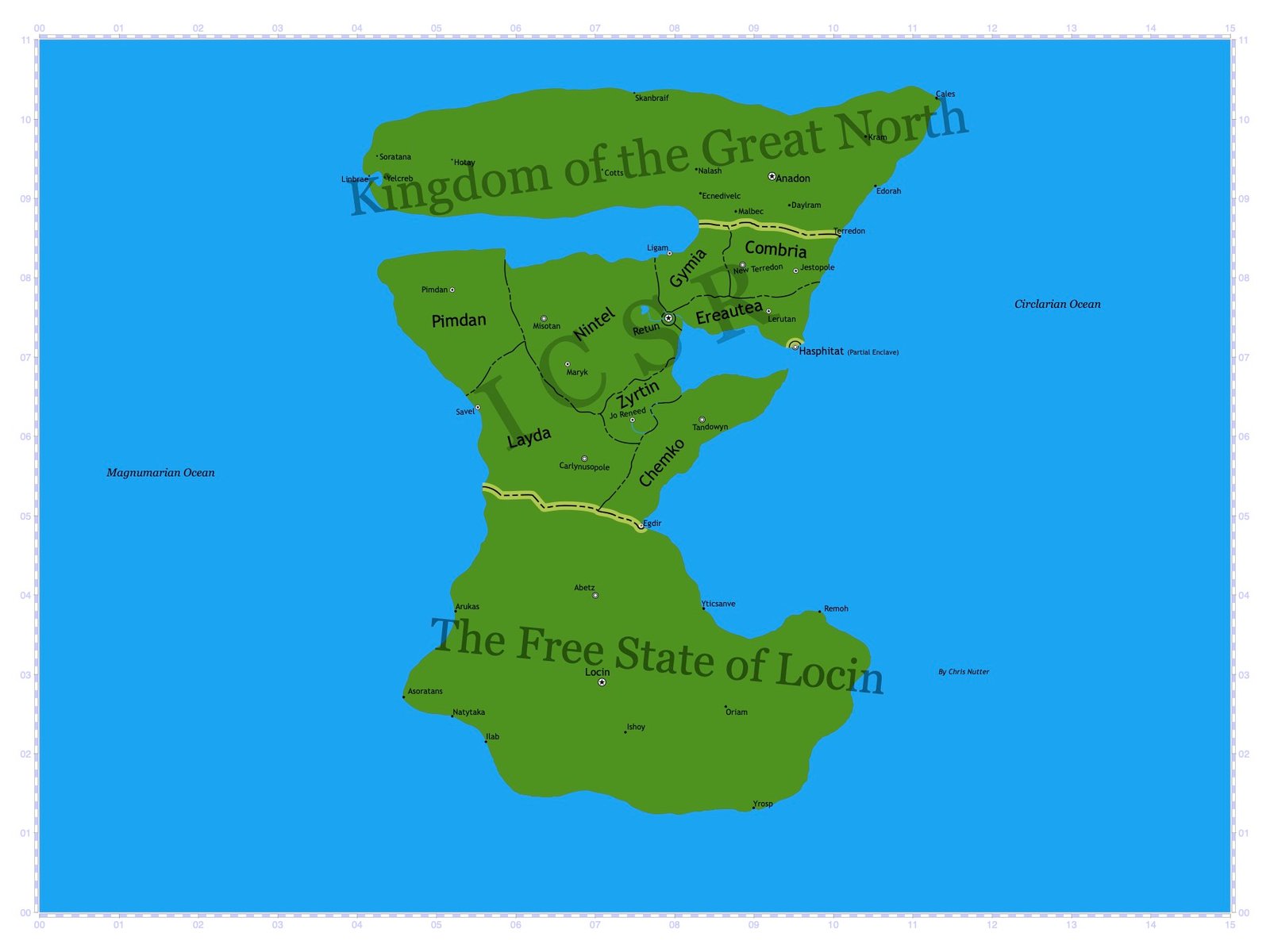
In January 1427, Locin and its associated Federation attempted to negotiate the Commonwealth into a trade deal, against which Heits began a public petition. In a subsequent call by Heits to instill legislation to protect the Commonwealth against such deals, the Commonwealth Council, on 7 March, passed the Direct Opportunity Act, which would later be signed by Moore. Under the Direct Opportunity Act, the Five Schedules Act was fully repealed, while the FEIFA Forum was only allowed to accept foreign proposals that benefitted economic agendas prescribed by the Council. Also under the Act, delegations were required to be appointed by Council for each proposal to determine the weight of each proposal for acceptance or rejection. And the Act also permitted the Council to vote to withdraw from the said deal at any time.
On 10 March, the Commonwealth ratified the Twelfth Amendment, which firmly established the legitimacy of the Darkfire Decision Committee. Between 1375 and this point, numerous attempts to pass such an amendment had failed. However, the Twelfth Amendment succeeded as a push by the National Solidarity Movement.
The Kontacet Ship Scandal
In the spring of 1427, a ship owned by the Kontacet family was held indefinitely by a member of the South Coast Trade Deal due to a logistical issue. The Kontacets counted this as a loss for the Commonwealth government to give them a due tax break. However, before the tax deadline, the ship was released, and an apparent cover-up of its release was carried out to preserve the tax break. With ensuing speculation over whether or not his Administration assisted the Kontacets in the cover-up, Prime Minister Moore became subject to impeachment. An impeachment motion was put forth in Council in February 1428, but, that September, was voted down over "lack of sufficient evidence."
Marc Warren
An outspoken Advocator of the Deep-Trade Administration, Marc Warren formally launched an agenda, beginning with a Motion of Interest as prescribed by ECTA, for transactions of deep-trade with the North Circlarian entity: the Cidaleron Council. Being the first official Motion of Interest since the trade deal with the Esurchians, Warren's agenda proved controversial. However, on 21 June 1428, a bombshell revealing of important information dashed all hopes of deep-trade with the Cidalerons. On 3 September, Marc Warren resigned from his post. And on 10 September, the DTA passed an official Bill of Reciprocation that favored the interests of the National Solidarity Movement.
The 1428 Election
Promising the re-establishment of the OPEN Forum, the removal of Moore's costly diplomatic and trade quotas, and the further organization and stabilization of the Direct Opportunity Act, Mary Ann Heits won the Prime Minister election on 16 September 1428.