Prime Minister Mary Ann Heits: Beginning of First Term
Upon inauguration, Prime Minister Mary Ann Heits signed a measure approved by the Retunian Council to fully reinstate the OPEN Forum. She also approved a funding booster for the public arts. This included the visual arts, theatre, and music, all organized to a yearly schedule. Meanwhile, Heits renewed existing efforts to strengthen basic diplomatic ties with the Sidaleron Maritime Council despite the failure of Marc Warren's agenda.
In 1430, the Edoran Regiondom put forward a suggestion for the Retunian Commonwealth to fund and develop a Scriptfire-Quality-Enhancement Program, owing to potential market growth upon a very high demand abroad. Toward this, the OPEN Forum elected to dedicate 50 percent of all government grants.
The CAD Virus
With its acronym standing for Coughing Affliction Disorder, the CAD Virus, found to have originated from the Five Coastal States in Eastern Canticula, was a very deadly and contagious pathogen with no known cure. Governments in the area, alarmed by such an outbreak, made attempts to impose quarantine measures. However, all efforts proved futile as, by the end of 1430, the entire continent was affected.
In the summer of 1431, the pandemic began spreading among Circlarian trade ships tied with Circlarian Maritime Councils; and so on 3 June 1431, Congress of Circlaria restricted traffic accordingly. On 6 June, the Independent Commonwealth State of Retun closed its borders to any political entity outside the Remikran Union while requiring viral tests for those traveling in from the Great North.
Reunification of the RAD Party
In 1423, the Independent Commonwealth State of Retun had a trade deal fallout with the Bar-Tar Maritime Guild. Stanley Arland Moore, Prime Minister at the time, responded to this with a call for the Retunian Council to approve measures in order for the nation to align itself in a better fashion with Circlarian trade expectations.
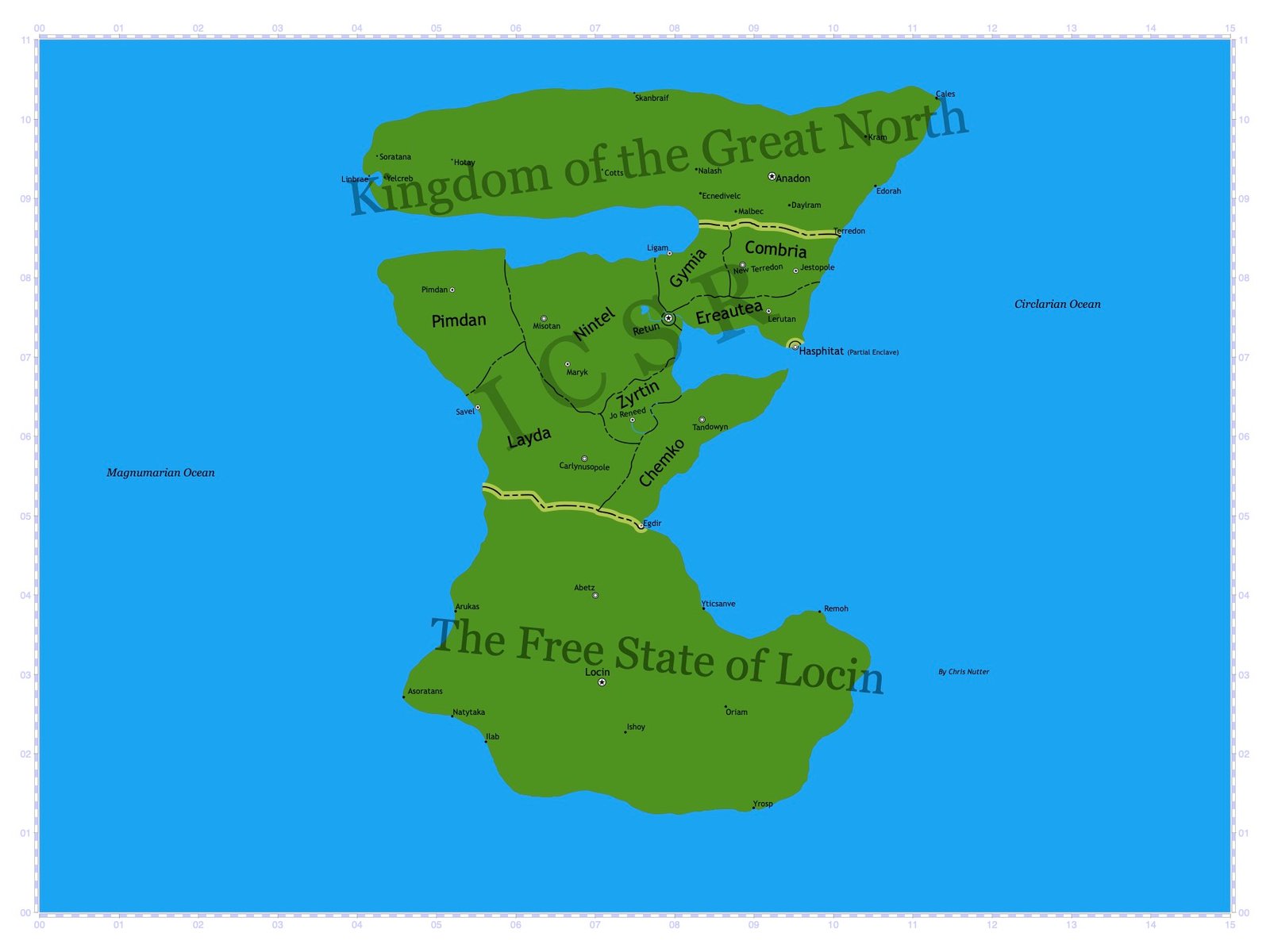
However, throughout the history of the Retunian Republic existed two dueling cultures: Coastal Culture and Inlander Culture. Coastal Culture, comprising mostly of Retunians near coastal trading ports like Hasphitat and Savel, carried an attitude of openness to different cultures, trade customs, and social fairness. In contrast, Inlander Culture, present in mostly interior rural areas as well as interior cities like Jestopole and Maryk, carried an attitude focused on tradition as well as fulfilling the needs of Retunian individuals, particularly those of the working classes.
Though it historically encompassed mostly conservative-leaning citizens, there were also left-leaning factions within Inlander Culture. These factions, in 1423, banded together, under leadership of Mary Ann Heits at the time, to resist Moore's conformist policy reforms. This would, of course, play a significant role in Heits' nomination for the Prime Minister role in the 1428 elections.
Per constitutional protocol, Prime Minister Heits delivered, on 2 January 1429 to the Retunian Council, her Order of Business speech, during which she called for her allies in the Proculturalist Party and her opponents in the Trader Party to put aside their differences in order to work toward the common goal of improving the Retunian economy as well as its standing in the Circlarian Realm. Such a call was inspired by a similar diplomatic call made internationally by the Sidaleron Maritime Council. On 3 January, in response to this, Ron Geins, Minority Leader in Council for the Trader Party, formally announced a motion for the Trader Party to form a coalition with the Proculturalist Party. And Majority Leader Sarah Mackwell of the Proculturalist Party accepted this call. On 4 January, the coalition officially formed.
This led to widespread speculation among politicians and voters alike. The Trader and Proculturalist Parties had been sub-factions of the former RAD Party, which had split into the two parties sixty years previously due to seemingly unresolvable disagreements over the issue of deep trade. With the coalition formed on 4 January, many began speculating that this would possibly be a signal of party reunification in the near future. Said speculation was also bolstered by the apparent willingness of the Trader Party to stand down its position on deep-trade, following the failed Marc Warren deep-trade agenda with the Sidalerons.
Between 1430 and 1432, said speculation turned into a growing call for the two parties to reunite into the RAD Party, as those part of the National Solidarity Movement realized the favorable benefits of such a move. In response to this, Party Leaders Geins and Mackwell, on 3 January 1432, made an official joint call to begin formal debates for reunification. On February 23, a special vote on this matter was held among all elected public office-holders, with such a vote overwhelmingly approving the measure. A popular referendum on the measure was then held on 24 September 1432, and yielded an overwhelming majority voting in favor.
On 9 June 1433, the Proculturalist and Trader Parties officially merged into the RAD Party.
On 7 September 1433, after a similar process, the conservative bloc of parties, consisting of the Realist and Reformed RAD Parties, merged to form the Commonwealth Democrats.
1434: Mary Ann Heits, Re-election Campaign
Upheld by both the RAD Party and Commonwealth Democrats, as well as the other parties, was the need to carry out protective measures against the CAD Virus. However, there were also several debatable issues. First was the decision on whether or not to increase funding toward the Scriptfire-Quality-Enhancement Program. The CAD Virus had caused the promised market demand promised by the Edoran Regiondom to vanish. There was also too much competition in the industry from standalone Maritime Councils. To this the Commonwealth Democrats responded by calling for increased funding toward the industry; though this proved a controversy when said increases were determined to begin undermining funding for the dymensional planecrafter industry, primarily Library of Circlaria.
There was also diplomatic friction between the Independent Commonwealth and the Remikran Union. The Great Northern Regiondom of Linbrae had, in the course of investigating Retunian trade activities with West Ancondria since the 1410s, stepped up numerous security measures, particularly through its deployment of the Law and Order Task Force. The Law and Order Task Force was a secret police force established, in 1121, by the Linbraean Regiondom and funded by the Remikran Union. By law, the Task Force covered only Linbraean jurisdiction with specialization in investigating those from outside Linbrae who were suspected of law-breaking or terrorism. The Task Force had the ability to investigate and detain suspected individuals, though they were not given the authority to actually carry out arrests. They were, however, able to extradite suspects to applicable law enforcement agencies for subsequent arrests and prosecutions.
It is important to note that the Law and Order Task Force had two major limitations. First, no Task Force agent could engage in any form of lethal force against any suspect. Second, the Task Force could not hold or detain anyone for more than 24 hours. However, the Remikran Union did have the authority to grant exceptions to the other power limitations of the Task Force , limitations particularly to the territorial jurisdiction covered and adherence to a particular member-nation's constitutional provisions. Such exceptions were first seen in action in 1201, when the Remikran Union authorized the Law and Order Task Force to be deployed beyond Linbraean borders, expanding its patrols to the remainder of the Great North, in order to help quell terrorist activities spawned by the ongoing Great Unrest. In 1301, such an exemption was granted again, this time for the Task Force to deploy in the nation of Locin to keep order during the Linbraean Occupation.
It is important to note that under normal circumstances, the official jurisdiction of the Law and Order Task Force was solely within the borders of the Linbraean Regiondom, and that said agents were required to identify themselves and their agency as well as adhere to the Great North and Remikran Union Bill of Rights. Accountability for such responsibilities, however, was enforced by the Linbraean Court System, which covered only Linbraean jurisdiction. This created, early on, a loophole regarding exceptional deployments abroad, but said loophole would never be addressed by the Remikran Union.
As a result, during the times that it was deployed abroad, particularly with the two aforementioned cases, the Law and Order Task Force was known to violate numerous constitutional principles. Back in 1420, the Law and Order Task Force was deployed to the Retunian Commonwealth international ports of entry, owing to concerns over increased trade activity between the Commonwealth and West Ancondria. Though not as invasive as the deployments of 1201 and 1301, the Law and Order Task Force was reported, during this time, to overstep its bounds, primarily in the form of unwarranted searches and detentions. A very notorious incident occurred on 21 September 1434 during which Kylia Merrick and her friends were detained by the agency while traveling by gyroplane between the Mid-Westerlies and Lerutan, Ereautea.
Such reports led to growing resentment within the Commonwealth population against the Remikran Union, who appeared to not be taking action to address the ongoing issue. Before long, there came a call for the Independent Commonwealth State of Retun to secede from the Remikran Union, very much like Locin had done in 1412.
The third debatable issue was a call for the induction of the Mid-Westerlies as the ninth Province of the Independent Commonwealth. The Mid-Westerlies came under Retunian jurisdiction in the year 1249, initially as a territory because it did not meet the population threshold or local jurisdictional structure requirements to be a Province. Both criteria had been met since shortly before the Esurchian War, but a call for such an induction did not materialize until this point. Proponents of the induction cited that the granting of Provincial Status would give the Mid-Westerlies more representation in Retunian Legislature, a locally elected governor instead of a governor-general appointed by the Prime Minister, and local taxpayer funds for infrastructural expansion. The catalyst to this movement was the CAD Virus Pandemic, during which the Retunian federal government was seen as not doing enough to impose precautionary measures to protect the Mid-Westerlies against potential routes of infection from Magnumarian traders. The Mid-Westerlies population wanted a Provincial government in place to make decisions better for the region rather than having to rely on the Basin District thousands of miles away.
During the 1434 Retunian Prime Minister election cycle, Mary Ann Heits ran on behalf of the RAD Party for re-election, challenged by the Commonwealth Democrat: Evan Scott. On the issue of investments toward the Scriptfire-Quality-Enhancement Program, Heits advocated for all effort to be made to ensure that Library of Circlaria did not become a priority below the scriptfire investments, while Scott advocated for favorable priority toward scriptfire. On the issue of Remikran Union membership, Heits advocated for the Independent Commonwealth working toward secession, while Scott opposed it. And on the issue of the induction of the Mid-Westerlies as the ninth Province, Heits supported the move while Scott opposed it, the latter emphasizing the issue of businesses having to pay provincial taxes if the motion carried.
The voting population of the Independent Commonwealth favored dymensional planecrafting and Library of Circlaria, supported secession from the Remikran Union while opposing the oppressive measures of the Law and Order Task Force, and favored Provincial induction of the Mid-Westerlies. As a result, Mary Ann Heits won re-election by a landslide on 24 September 1434.
1435: Next Prime Minister Term and Retunian Secession from the Remikran Union
Going into Heits' second term as Prime Minister came growing resentment toward Kylia Merrick and resentment toward the Law and Order Task Force.
On 21 September 1434, Merrick and several of her friends were aboard a gyroplane from Clareon, Mid-Westerlies to Lerutan, Ereautea when their aircraft was forced to land in an unknown location somewhere in Southern Pimdan or Northern Layda. At this location, five blankly-dressed law enforcement officers ordered all occupants of the aircraft to disembark while they conducted vehicle and body searches. In the process, the officers refused to identify themselves and refused to identify the cause for the search. When one of Merrick's friends began question one of the officers, he was brutally tackled, pinned to a wall, thoroughly searched, and threatened with unspecified "consequences" for non-compliance. Though they were all eventually released, Merrick and her friends made a complaint to the Retunian Department of Justice, who, in turn, determined that the blankly-dressed agents were, in fact, members of the Law and Order Task Force. The Justice Department collaborated with the Retunian Department of State and filed a formal lawsuit against the Task Force under jurisdiction of the Superior Court of the Remikran Union, who agreed to hold a preliminary hearing in Cotts on 3 January 1435.
On 2 January 1435, the Justice and State Departments filed another grievance to the Superior Court regarding a similar incident the previous day, to which the Linbraean Royal State Department Chairman, Daryl Mornings, retaliated by issuing a statement condemning the Independent Commonwealth for "not respecting law and order in the name of security for the Remikran Union during these trying times." Meanwhile, on 3 January, the Remikran Union Superior Court tossed the Kylia Merrick case, stating that the Task Force had every right to waive constitutional rights in the event that it detected any imminent concern to the security and integrity of the Remikran Union. The Remikran Union Superior Court, later that day, issued a memo explaining this condition and guidelines for compliance, ordering that this be displayed publicly in every Remikran Union Embassy as well as every public gyroplane landing port.
This enraged the Retunian population, many of whom carried out nationwide riots and protests. The most intense of these occurred in the Basin District between 3 and 7 January 1435. On 8 January, Martin Marks, a political activist, got in front of a crowd of protestors and rallied them to make a call for immediate secession of the Independent Commonwealth from the Remikran Union. This was relayed by Council Member, Stevia Knimes, who made the formal call in Legislature. Later that day, the Locinian Department of State consulted with the Independent Commonwealth Department of State, calling for a Conference to occur to 23 January.
During the Conference of 23 January 1435, between Retunian and Locinian ambassadors, Locin released information regarding the grievous details of the crimes committed by Linbrae during the Occupation of Locin between 1300 and 1412. They also forwarded a deal for the Independent Commonwealth to secede from the Remikran Union and join with Locin and the Tecaren Maritime Council as a member of the South Circlarian Trade Federation, with such a measure slated to take effect in January 1441. To this term the Retunian representatives came to an agreement. And on 8 February 1435, a popular referendum in the Independent Commonwealth overwhelmingly approved this agreement.
Locin later amended the above measure to have the secession occur sooner, at the end of the year 1435 on a date to be determined. This amendment was approved in similar fashion by another Retunian popular referendum carried on 8 April 1435. An official date of secession was then decided in the same fashion on 16 September.
Thus, on 5 November 1435, the Independent Commonwealth State of Retun officially seceded from the Remikran Union and joined as a member of the South Circlarian Trade Federation.
1436 to 1440: The Remainder of Mary Ann Heits' Second Term
After a similar popular referendum on 8 April, the Mid-Westerlies, on 5 November 1436, officially became inducted as the ninth Province of the Commonwealth.
During the 1437 gubernatorial elections, the Mid-Westerlies elected Kara Woodson as its first governor. Meanwhile, concern began growing throughout the Commonwealth over an increasingly dangerous agenda carried by a radically conservative bloc in Congress of Circlaria, which was feared to trigger numerous wars and a possible collapse in Circlarian trade. There was also a call made by the Commonwealth Democrats to preserve funding toward the Scriptfire-Quality-Enhancement Program as an equal or higher priority with respect to Library of Circlaria. As a result, on Election Day 24 September 1437, there yielded a very slight majority in Retunian Legislature for the RAD Party but a very strong and numerous minority for the Commonwealth Democrats.
The year 1438 was noted for a call within the Independent Commonwealth to expand upon its darkfire industry. The surrounding concern was that potential fallouts from any collapse in Circlarian trade would affect the supply chain of critical resources. The Darkfire Decision Committee, on 10 April, voted to employ efforts to increase its resource stockpile. On 10 May, the Retunian Council approved a block grant toward the Decision Committee to assist. And on 16 September, more darkfire advocates were voted into the OPEN Forum to help with funding accordingly.
In the final week of January 1439, elections were carried out for the seats in Congress of Circlaria. By 4 March of that year, it was determined that a new liberal majority would emerge for the next term to start in 1441.
1440: Mary Ann Heits, Second Re-election Campaign
Between 1439 and 1440, the Commonwealth Democrats renewed a call for increased funding toward the Scriptfire-Quality-Enhancement Program with the argument that success here would float markets for the Independent Commonwealth and restore the nation to the status as a top global power. Opponents within RAD Party stated that such would be a waste due to how competitive the market was.
Mary Ann Heits would, once again, run on behalf of the RAD Party for re-election as Prime Minister, challenged by Commonwealth Democratic candidate, Ava Delwood, who argued for the aforementioned scriptfire funding proposal. On 16 September 1440, Mary Ann Heits won re-election, but she and the RAD Party won only a slight majority above the strong minority of the Commonwealth Democrats.