The Downfall of Eddard Teal
A budget reconciliation measure, signed by the Retunian Council during the first week of January 1465, temporarily scaled-back investments toward the darkfire industry and diverted them instead toward the dymensional planecrafter industry. Eddard Teal sought an opportunity, at that point, to attempt to expand Library of Circlaria commercially with the hope that revenue from this would float the economy as a whole. Teal, therefore, set a quota of paying clients to be achieved by the end of the year of 1476; and established a secondary agenda involving a publicized consideration to close-down Library of Circlaria. This secondary agenda stood with the intent to draw a large number of alarmed clients abroad to send additional funds to the Library in the form of "rescue investments." Between 20 and 23 January, Teal decided to spring a social experiment involving pseudo-clients to test such a secondary agenda. The said pseudo-clients voiced intense backlash in a way that gave publicity to the scheme, leading Library of Circlaria to lose public investors. Thus, Library of Circlaria was put at risk of losing priority federal funding.
Aydrya Herdon had won the 1459 Library of Circlaria organizational election to begin her tenure in 1460, serving as a co-Head-Librarian alongside Teal. Herdon was initially seen as a soft-spoken figure, and had been favored for her modesty and her resolve to have the Library achieve organizational stability. On 3 February 1465, however, Herdon stepped up and proposed to walk back most of Teal's aggressive measures, especially the paywalls. Teal voiced opposition to this but was effectively silenced by the majority within Library of Circlaria membership. Afterward, Teal voted himself present at membership voting sessions, neither helping nor hindering Herdon's agenda. Said agenda, meanwhile, passed the organizational votes and became policy, as a call came from the membership body to begin restructuring the system of Library of Circlaria access points housed on Planet Nephina.
Teal would spend the remainder of his term as co-Head-Librarian attempting to put forward amendments to Herdon's policy in order to soften its effect. Teal's approach at this point would have mixed degrees of success. Regardless, Eddard Teal, on 16 September 1471, lost re-election Linda Gormann.
The Fall of House Maderon
Arriving from Northern Nabuka, the families of House Maderon set down their roots in Northeast Ancondria and, in the early 1100s, established the municipality of Silba. It is important to note, however, that this was not considered a "discovery" of Ancondria like the one noted in 1268 because House Maderon never communicated the existence of this land (at least publicly) to any entity back in the Greater Circlarian Realm (the region home to all lands outside Ancondria).
There had been sporadic conflicts occurring between the Ancondrian Native groups by that time; so House Maderon sought to bring order to Northeast Ancondria via direct governance to the land according to Four Principles: Principle One, calling for Peace and Stability; Principle Two, calling for Freedom of the Individual; Principle Three, calling for Freedom of the Community (democracy); and Principle Four, calling for Unbroken Prosperity.
House Maderon could have officially become a royal house based on its ownership of property, assets, and wealth by a patriarchal, heir-apparent bloodline. However, in order to be recognized officially as such before Congress of Circlaria, House Maderon would have had to submit to accreditation, approved by a Congress of Circlaria Cleric, a statement of religious belief. And though the House was deeply dedicated to the Alconist faith, following such official protocol would have made the land of Ancondria known to the Greater Circlarian Realm, which House Maderon feared would result in the pursuit of other Circlarian powers for colonial interests.
Between the early 1100s and late 1200s, House Maderon would serve as the direct and primary authority over all the lands of Northeast Ancondria, though they vowed minimal interference in local affairs. Ancondria would eventually be re-discovered by the Greater Circlarian powers in 1268 thanks to advancement in navigational technology and increased interest in exploration. Throughout the 1270s and 1280s, in response to incoming Circlarian settlers, and also with respect to Principle Three, House Maderon began partitioning its territorial holdings to those Ancondrian and Greater Circlarian entities intent on establishing independent Ancondrian States.
Between the 1290s and 1370s, many and numerous Ancondrian States came into being, while, after negotiations, the Retunian Republic was given arguably the "lion's share" of Northeast Ancondrian territory. House Maderon, with respect to Principles One and Four, used the indirect power of political lobby within each government seat venue to facilitate diplomacy and fair trade between said States. And this approach had relative success; however, it is important to note that there were occasionally pitfalls. In the 1320s, for example, the Retunian Republic engaged in (arguably) quid-pro-quo agendas which led to abrasion with neighboring territories like the Ancondrian State of Likatus. The Retunian Republic largely broke away from the influential circles of House Maderon between the 1340s and 1350s while the emerging Esurchian State never was involved in such circles at all. Thus, House Maderon was unable to prevent the Esurchian War, which occurred between 1365 and 1368.
However, House Maderon was able to give aid as the Retunian Republic and its allies overcame the Esurchian onslaught during that conflict, as was noted especially during the Siege of Kardo between 1367 and 1368. And after the Esurchian War, political movements led to the formation of the United Confederation of Ancondria, which united all Northeast Ancondrian lands, with exception to former District V of the Retunian Commonwealth, and led to a growing call for the Retunian Republic to terminate Ancondrian jurisdiction. House Maderon gave financial aid to this movement while paying the Retunian Republic to surrender its Ancondrian territories.
Between the 1370s and the 1460s, in adherence to Principle One, House Maderon would use the power of political lobby and financial donations to help moderate politicians within the United Confederation win elections, while helping to defund the radical candidates, both left and right.
However, it is important to note that very much like the House of Masons in Combria, as well as the numerous royal families in the Great North, House Maderon was governed, and existed legally, via a family bloodline whose elders swore upon blood-stones. And like all others, it would only be a matter of time before this bloodline died out. Usually, bloodlines last between ten and twelve centuries, but sadly, the bloodline of House Maderon carried with it a certain hereditary illness. Thus, on 15 February 1466, the last heir and descendent of House Maderon died. On that day, House Maderon ceased to exist.
The properties, assets, and official Treasury of House Maderon, per the official writs, were liquidated and distributed to the other related Lesser Descendent Houses. The Lesser Houses, in turn, attempted to form a Coalition of Lesser Houses with the hope of filling the void left behind by House Maderon in its role to keep Northeast Ancondria in line with the Four Principles. In October 1466, a bill was proposed in Retunian Council for a budget reconciliation to divest funds toward the Coalition; and it is important to note that this was measure which involved giving priority funding to the lightfire industry for the first time since the 1420s. However, as part of his last agenda to succeed before the end of his co-Head-Librarian tenure, Eddard Teal convinced enough members of both chambers of the Council to vote the measure down on 23 October. The Retunian Commonwealth would send envoys to attend the numerous memorials abroad in honor of House Maderon. But this was largely a ceremonial gesture as well as one of symbolic consolation.
The Lesser House Coalition would fail maintain its agenda of peace and stability for long. And in 1475, a radical far-right military coup would effectively succeed in overthrowing the government of the Ancondrian Confederation.
Underworld Lore
All throughout history, most indigenous nomadic Remikran groups followed polytheistic religious beliefs. Such beliefs held that there existed numerous deities and divine beings who were either of the heavens, of the Earth, or of the Underworld. It is important to note, however, that not all Underworld divine beings were seen as evil or morally corrupt. In fact, only very few were. Furthermore, the indigenous nomads supposedly communicated with the Underworld divine, many of whom were believed to be distant ancestors, to do give such blessings as a bountiful crop harvest.
For most of its existence, the address of 124 West Mason Street, a significant location in the history of Cabotton University, was, by night, home to the "House of Life," inside of which there occurred nomadic religious practices including but not limited to consuming hallucinogens and engaging in unconventional sexual activities. While there no longer exists said "House of Life," there still exists the "House of Death" in the city of Maxima, Nintel. There, similar practices occur, except they are all dedicated to the various deities and divine beings of the Underworld, primarily those of Camaran and Lyndan beliefs. It is at the "House of Death" that a mass of Underworld worship is held every Friday evening. And during the eighteenth week of every year, from Wednesday thru Saturday, there occurs a mass-gathering for the "Festival of the Dead."
Such traditions have been followed by a growing sector of the Retunian population since the 1230s and 1240s, albeit almost never brought to light in mainstream media. However, in the 1460s, there began an uptick in popularity, helped very much by an exchange of ideas and inspirations from trade with the Suljak Maritime Federation.
Following the end of the line of House Maderon came a wave of cultural criticism in Retunian society against those advocating for more closeness with House Maderon and its allies, with the cause being that doing so would be too conformist in nature for the Retunian Commonwealth. Thus, the end of House Maderon sparked a drive to "begin a new chapter" in art and music; and birth was given to the Great Underworld Fad, during which Underworld-theme displays became commonplace over various media platforms. One example of such a trend was the uptick in scheduled heavy metal concerts in the Basin District.
Though the concept of the Underworld is still popular to this day, the Fad waned somewhat in the 1470s and 1480s, as popular figures from the Sayleronian Maritime State began introducing Earth-bound and Cosmos-bound divinity concepts.
The 1467 Gubernatorial Elections and the RAD Party Supermajority
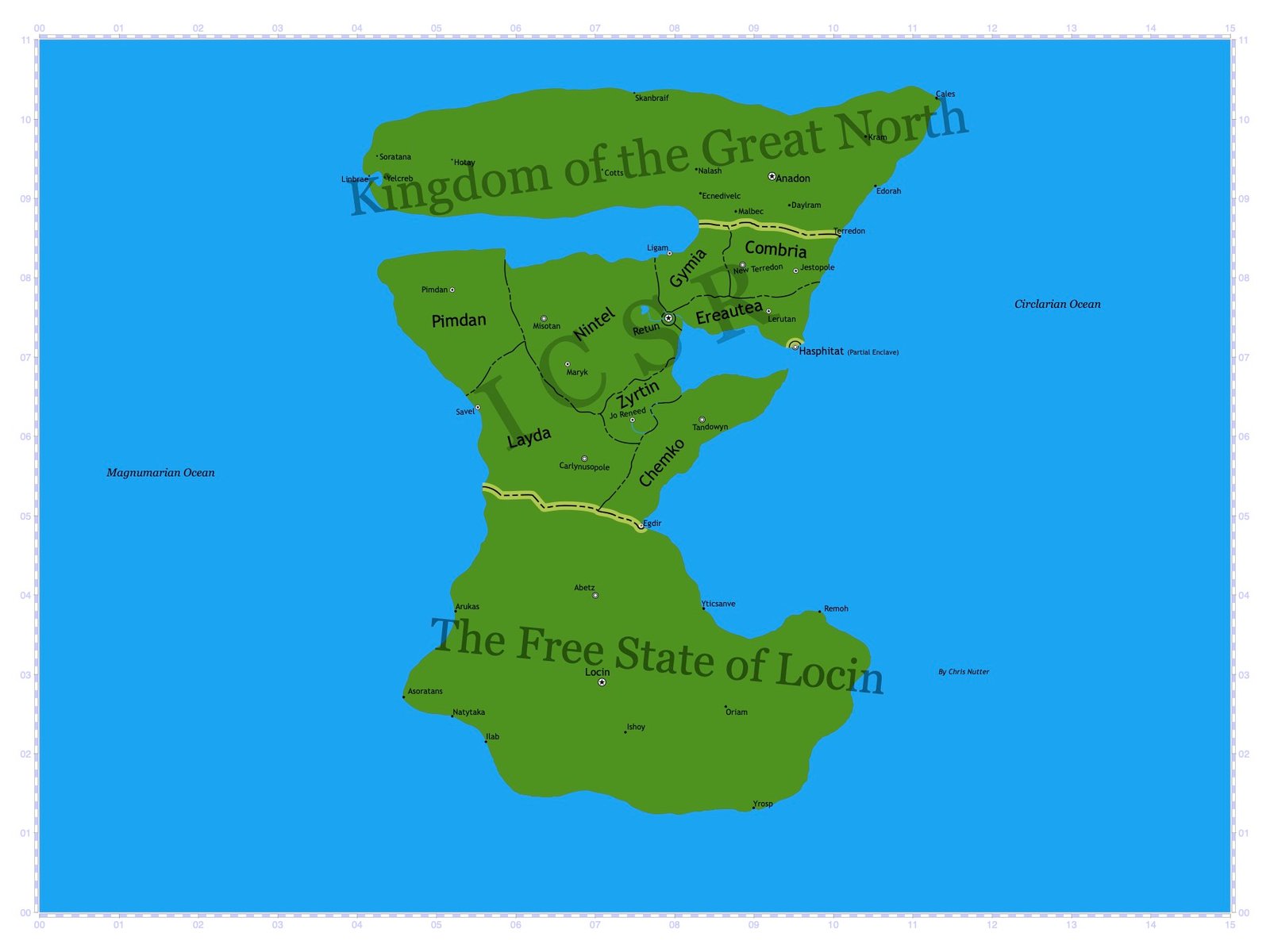
In the years leading up to 1467, the RAD Party maintained the Prime Minister role, a majority of Governorships in the Provinces, and a slight majority over both federal and Provincial Councils. However, such aforementioned majorities were very thin against the strong centrist-conservative minority held by the Commonwealth Democratic Party. The 1461 gubernatorial elections maintained such proportions as the Commonwealth Democrats held Provincial Governor seats in Ereautea and Pimdan.
However, the downfall of Eddard Teal, the end of House Maderon, and the rise of the Underworld Fad led a majority of the Retunian voting population to shift its favor toward Inlander Culture. Both Cultures were largely evenly split between left-leaning and right-leaning citizens. However, a very slight majority of the population adhering to Inlander Culture had, in recent years, shifted toward the RAD Party, owing to its late founder, Holz Finzi, pledging to have the Retunian Republic stand as a non-conformist society independent of international political dynamics. In contrast, the population in Middle Remikra adhering to Coastal Culture had a slight majority favoring the Commonwealth Democratic Party, as Coastal Culture populations began calling increasingly for the Retunian Commonwealth to rejoin the lightfire community and allies to House Maderon. The international House Maderon bloc held centrist-conservative views. Citizens also felt that the Commonwealth Democratic Party had policy ideals more favorable toward further integration of the Retunian Republic with the South Circlarian Trade Federation, whose other member-states held centrist and centrist-conservative views.
Prevailing sentiment, however, was that no matter the direction of negotiations and diplomacy, both international communities would place trade with the Retunian Commonwealth as second priority to other interests, a sentiment bolstered by the recent actions from the Tecaren State and South Circlarian Trade Federation. And so the 1467 gubernatorial elections yielded a sixty-percent "supermajority" for the RAD Party in both chambers of Retunian Council, while nearly all of the Provincial Governor seats, including Ereautea and Pimdan went to the RAD Party as well.
It is important to note, however, that an exception held true in the Mid-Westerlies, where the Commonwealth Democrats gained the Governor Seats and Provincial legislative majority. And this was due to increased influence from the Lesser House Coalition of Northeast Ancondria and the lightfire industry of Linbrae.
Meanwhile, the gubernatorial elections of 1473 would yield the same party proportions as the one in 1467.
Amendment Fourteen
It was mostly lingering fear stemming from the Esurchian War and grief from the fallout of the Marc Warren agenda sixty years later that had lead, initially, to the push for the ratification of Amendment Thirteen. Under Amendment Thirteen was the elimination of the mandate to have in existence the Retunian Deep-Trade Administration unless called for by a vote of the employed population for the deep-trade Motions in pursuit of a present interest. The purpose of Amendment Thirteen was to avoid the pitfalls of financial waste and excessive government bureaucracy as well as the dangers of deep-trade. With a majority of the Retunian population in full support, Amendment Thirteen was ratified in 1443 and had been in place until 1468.
In the years that followed, however, the Deep-Trade Administration would come into existence to serve interests surrounding the Lotumna Maritime State. And such a Deep-Trade Administration having formed in that time displayed extreme partisanship and instability on a scale never seen before Amendment Thirteen. It was during this time period that a realization emerged within the Retunian voting population that a Deep-Trade Administration already in existence per constitutional mandate would produce elected representatives who would have been able to compromise against such partisanship, and establish some degree of stability. There also was a realization emerging throughout the population that no nation was able to eradicate deep-trade in practical terms, even if the laws called for such eradication.
As a result, a call emerged, starting in the late 1450s, for another amendment to be added to the Retunian Constitution to repeal Amendment Thirteen. Ultimately, this new amendment would become Amendment Fourteen, and would largely reverse the stipulations of Amendment Thirteen with exception that all voters of each county selected each representative to the Deep-Trade Administration and not just the employees of certain businesses through a hierarchy like before.
Legislative protocol was therefore followed for Amendment Fourteen, which would be ratified by popular referendum on 24 September 1468. Members of the first resulting Deep-Trade Administration Council were elected by 16 September 1469 and began their tenures on 2 January 1470.
The 1470 Prime Minister Elections
The main issues present during the 1470 Prime Minister election cycle included the following: first, whether the federal government should allocate additional priority funding to Library of Circlaria for its long-overdue restructuring project, or if such investments should go toward conventional businesses seeking new trade opportunities; second, whether the Retunian Council should allocate additional funding toward the expansion of the darkfire industry in the Lake Maern Reserve, or if such investments should go toward the dymensional planecrafter and conventional trade industries; and third, whether the Retunian Commonwealth should move to exit the South Circlarian Trade Federation and join as a member of the Carricon Isles Federation Alliance, or if they should work to maintain diplomacy and try to gain more favorability within the South Circlarian Trade Federation.
Running for re-election was Prime Minister Kara Mackwell of the RAD Party, supporting the former option of each issue; and Eriya Noland of the Commonwealth Democratic Party ran to challenge Mackwell while supporting the latter option of each issue.
With regard to first issue, a majority of the Retunian voting population believed that the diversion of additional funding from Library of Circlaria toward conventional trade industries would push an agenda too costly toward the Library, and that the Library was in dire need of a restructure. Regarding the second issue, the population majority believed that diverting funds away from darkfire industry and toward "front-end" industries conflicted too much with the still-supported political interests behind Amendment Nine (which offered more specific protections for the Darkfire Community), while they believed that having said funds go toward the darkfire industry would do well to float the remainder of the Retunian economy. And regarding the third issue, the population majority decided that there was no hope to be had with regard to the South Circlarian Trade Federation due to hardened prejudice and resentment, and that though difficult with no clear path at the time, there was more hope, nonetheless, in attaining diplomacy and placement with the Carricon Isles Alliance.
Therefore, on 24 September 1470, Kara Mackwell was re-elected to the Prime Minister role while the RAD Party retained their supermajorities. However, it is important to note that 1471 would begin Mackwell's fourth and final term.
Library of Circlaria: The Restructure Agenda and the Herdon-Lorens Agreements
In the time leading up to the year 1471, Library of Circlaria, to the international community, was fraught with a myriad of paywalls and organizational inconsistencies in terms of its dymensional plane access ports. The called-for Restructure Agenda aimed to resolves these issues by re-organizing the access ports into "straight and simple categories" and removing the paywalls, which would be implemented for auxiliary Library of Circlaria platforms at a later time. This project, however, would incur costs beyond the organizational budget without additional federal funding.
Such funding would be approved by the OPEN Forum and Retunian Council on 8 January 1471. In turn, co-Head-Librarian Aydrya Herdon took initiative and implemented Restructure Phase I for the affected Nephina Platforms, an initiative that began 21 November 1471 and ended 24 November 1473. The resulting new structure exists to this day; and the next Phase is scheduled to occur in the future.
As a co-Head-Librarian, Herdon sought to establish all existing Library of Circlaria content as open-source, to implement consistent weekly production with full-time staff working toward organic quotas (quotas without specific deadlines), and to run a banner agenda in order to increase visibility of such open-source content. Most importantly, Herdon sought to establish a program for Library of Circlaria representatives to travel abroad and give audience to other emerging dymensional planecrafter platforms in order to establish and strengthen international ties.
During the downfall of Eddard Teal in 1465, Herdon, having begun her tenure in 1460, was a major dissenter against Teal's "destructive" secondary agenda and called for the end of Library of Circlaria's "capitalist approach." And during that time, Herdon voiced acknowledgement and respect toward a growing call within the membership to amend the organizational Statute of Principle to impose one-term limits to each of the three co-Head-Librarian roles.
However, on 8 September 1467, Herdon accepted an invitation by Rachel Lorens, who began her co-Head-Librarian tenure in 1466, to have tea at Lorens' residence. Speculation endures to this day that there was possibly a romantic interaction between the two co-Head-Librarians at that private meeting; and some Library of Circlaria members have viewed this to be scandalous owing to a very strong possibility of favoritism and quid-pro-quo terms mutually agreed upon during this meeting. Regardless, what is known is that during this meeting, Lorens expressed strong confidence in their mutually strong positions of leadership as well as the potentially strong agendas that could be achieved should the leadership exist for the long-term. Lorens, in the course of expressing this, voiced concern that having one-term limits for the three co-Head-Librarian positions could undermine such strong leadership potential for anyone with such a strong agenda, and also could pave the way for another pro-Teal candidate to gain power in the future.
Lorens had been vocal against setting such term limits while Herdon, focused on other matters, did not address the issue since the 1465-66 time period. Lorens also pointed out that polls suggested only 51 percent of Library of Circlaria membership supported the limits, and that enough people would vote for Herdon and Lorens even if Herdon spoke out against the limits. Herdon agreed to join with Lorens on her view and, on 10 September 1467, announced that she would no longer support the term limits. As predicted by Lorens, Aydrya Herdon was re-elected to her role on 24 September 1468.
Linda Gormann was very much against Teal's agendas, but was also against the mutual decision by Herdon and Lorens to oppose term limits. Regardless, Gorman succeeded Eddard Teal. But upon the start of her co-Head-Librarian tenure in January 1472, Gormann met with the anonymous member of Library of Circlaria who did not eavesdrop on the "Tea Party" between Herdon and Lorens but knew that it was happening, noting conversations before and after. Gormann used testimony from this source to bring the other co-Head-Librarians, Herdon and Lorens, under scrutiny by the Bookkeeper Committee. In response, Herdon and Lorens decried the move as an overextension of power, and claimed the Gormann had, back when she was only a member, dispatched the eavesdropper in order to pursue a long-term agenda to undermine organizational leadership. Gormann responded to this by saying that Herdon and Lorens fabricated such a story in order to intentionally spread misinformation. Regardless, the membership body voted "no-confidence" on the matter, and the Bookkeeper Committee tossed out the case.
In the wake of this failure, Gormann carried out her last act of moral integrity by vowing not to run for re-election to her incumbent position. Instead, she endorsed long-time Library of Circlaria member: Guy Kevins.
ICSR: The Veto of Foreign Action
Historically, warlords ruling the city of Berekan, located North of the Northern border of Nogliespe, had control of the Isle of the Tower. The Isle of the Tower became an independent kingdom on 15 October 1088. And since that time, the leaders of Berekan coveted to regain control, owing to Isle's resources and strategic advantages. Krylandia has repeatedly denied official recognition of Berekan as a sovereign power, and has repeatedly outlawed Berekan's agenda. Nevertheless, on 2 November 1454, Berekanian forces, now under commander-generals, invaded the Isle of the Tower. Thus began the War of the Tower Isle, which persists to this day.
Various warlords in the territory encompassing present-day West Nayde, throughout ancient history, fought each other over territorial claims as well as claims over the Isle of the Grey. The Isle of the Grey, to note, was home to a group of Ancondrians living as keepers of a darkfire quarry, and functioned as a government structure very similar to that of the Retunian Darkfire Community prior to 1309.
Beginning in the 1270s, however, political dynamics began to change. The nation-state of Nayde was established with its government in favorable terms with the Retunian lightfire company: West Horizon. Nayde carried the philosophy of abolishing Ancondrian practices deemed unethical. As a result, they began outlawing the domestication of drakes as well as any unfavorable interference with "pocket communities" such as the Isle of the Grey. Before long, nation-states in the Southern half of the Great Ancondrian River Basin, though having their jurisdictions established by West Horizon, declared war upon the Northern states, with the Southern states defending their traditions against perceived "modernization." This conflict, known as the Great Ancondrian War, began in the 1310s and would persist until the 1380s. West Horizon, in the 1350s, had seen a decline in investments and revenue toward its business, and so was forced to scale back on the wartime resources it was providing toward both sides of the conflict. Ancondrian States to the West began joining the alliance in the South, as a result. And the Southeastern Ancondrian States, hearing of shift in the West and the claims of political infiltration involved, resisted by joining forces with the Northern Ancondrian States. Thus, the Great Ancondrian War shifted from a North-versus-South conflict to a West-versus-East conflict. And during this shift, the territories in the West part of Nayde broke away and formed the Ancondrian State of West Nayde, which sought to defeat the North/East side of the conflict as well as attempt to take over the Isle of the Grey. In opposition, however, the Southwestern-most section of West Nayde seceded and formed the Ancondrian State of Osae, who dispatched forces around the Isle in order to protect it from West Nayde. West Naydan forces surrounded the Osaean forces and began to impose transit tolls in the years after the Great Ancondrian War. Such a conflict would end in the 1380s but, over the ninety years that followed, tension would grow between West Nayde and Osae. And though a treaty crafted by the United Confederation of Ancondria during that time was in effect, it was insufficient and weakened in its enforcement over the years.
Finally, on 5 March 1474, Osae and the Isle of the Grey joined forces and carried an attack against West Nayde, to which West Nayde responded with a declaration of war and a counter-attack. This began the West Ancondrian War, which is ongoing.
By the year 1475, the United Confederation of Ancondria had been under conservative leadership; however, 1475 was an election year for the Legislature and the Governor-General position, and polls showed favorability toward liberal parties.
On 24 May 1475, though, far-right factions within the nation united and overtook the capital, Providence, by force, purging its the national Legislature of left-leaning politicians. Conservative members then formed a new government and declared a national emergency, mandating for the elections to occur within Legislature and not with a popular vote. Such elections yielded conservative victories for Legislature and the Governor-General position; though numerous international entities considered this election to be illegitimate. Meanwhile, liberal opposition gathered in East Providence and formed an emergency government. Despite ensuing violence, they carried an election via a popular vote, which yielded major victories for liberal candidates including such a candidate for the Governor-General position. This was seen by numerous international entities as legitimate. However, the United Confederation of Ancondria has been in civil conflict since.
In September 1475, a bill was proposed in the Retunian Council for the Retunian Commonwealth to give aid to the democratic factions fighting in the three aforementioned conflicts. There were numerous smaller bills proposed on similar ventures during this time period. However, with both the major bill and the minor ones, each measure was deemed by a majority in Council to be too expensive, diverting too much funding from the economy and posing too much risk to Retunian society. Furthermore, the Retunian Commonwealth had lack of international support, and, in turn, intended to remain neutral. By the end of September 1475, the bill was voted down.
Deep-Trade: The Sayleronian Maritime State
Some time in the year 1032, Great Northerner expatriates settled on a strip of land along the Ancondrian Antarctic Plateau, never to return to the Greater Circlarian Realm. These settlers merged with two Native Ancondrian groups: the Maneraks and the Takriems, and, in March 1045, established the Maritime State of Sayleron. The time period between 1045 and 1165 was, for the Sayleronian Maritime State, considered the Foundational Era, during which there was an expansion in trade, an increase in the number of sea ships, and an expansion in territory to include the nearby Isle of the Heart. The time period between 1165 and 1237 was considered the First Era of Darkfire, during which the Sayleronian State expanded its darkfire industry and began constructing airships. The most notable period, however, was the Expansionist Era, between 1237 and 1369, during which more ports were built while there occurred diplomacy and conflict among Gamroan expatriates who had landed some time later. This era was also known for the rule of Bros Nalek, who, between 1273 and 1326, usurped democracy and ruled the Sayleronian State with an authoritarian regime. There was also the Great Sayleronian War, led by Nalek between March 1279 and March 1289; and there also passed the Reformation Years, occurring between 1326 and 1369, during which the Sayleronian State, after Nalek's death, successfully restored its democratic institutions. And the time period between 1369 and the present-day is considered to be the Second Era of Darkfire.
Since the late 1410s, the Retunian Commonwealth pursued trade relations with international partners in the Carricon Isles region. The Carricon Isles was, by that time, home to a growing network of international darkfire trading partners and those other trading partners serving as a potential for clientele toward Library of Circlaria.
There also stood prospective opportunities for deep-trade, which, despite the re-unification of the RAD Party in 1333, continued to be a long-debated topic in Retunian politics. Shortly after the ratification of Amendment Fourteen, however, a consensus formed across the political spectrum that though deep-trade cannot really be banned nor promoted, that there should stand a Deep-Trade Administration to serve any deep-trade interest that emerges on the international front.
It was during a Conventional Trade Forum held in the Carricon Isles Federation between 21 and 22 January 1476 that the Sayleronians, who had long expanded their trade relations to the region by this point, had proposed to conduct deep-trade transactions with representatives from the Retunian Commonwealth. By the evening of 22 January, a sufficient number of Retunian Deep-Trade Administration representatives initiated Motion I. There had initially been speculation that such a trade relation between the two States would not last long. However, said speculation would be proven wrong in the years to come.
Meanwhile, Motion II would pass on 6 February, followed by the passage of Motion III on 15 February 1476. Motion III has been in effect ever since.
An Exclusive Deep-Trade Forum was held between the Retunian Commonwealth and the Sayleronian State in the Carricon Isles between 13 and 14 March 1476. And afterward, during an Post-Forum Conference in Retun between 15 and 16 March, the Sayleronians introduced the concept of open-deep-trade during which three or more entities would partake in a deep-trade federation. The Retunian Deep-Trade Administration voted on and approved an amendment to Motion III on 15 March 1476 to fit this provision.
The 1476 Prime Minister Elections
For the 1476 Prime Minister election cycle, issues revolved mostly around diplomacy between the Tecarenian State and the South Circlarian Trade Federation. The foreign entities involved had been conducting business with the Retunian Commonwealth since the 1430s by renting piers along the Jo Reneed River and employing Retunian workers. The issue, however, had been with Tecarenian employers imposing rules regarding such things as pier upkeep and floor cleanliness, very much to a degree to which, a growing number of Retunians began to believe, constituted discrimination and exploitation. Thus, relations grew progressively frostier between the Retunians and the Tecarenians.
On 13 April 1465, the Tecarenians sent an official message declining to do business with Library of Circlaria, a decision that defied the last hope Retunian leaders had at maintaining fair relations with them. On 16 January 1466, Tecarenian business owners released a training video that openly ridiculed Retunian workers. The State Department in Retun issued a Letter of Consolation to all involved parties with the hope of calming tensions. However, there still was major backlash from the Retunian worker population while unions started discussing the idea of bargaining for more rights and protections. The latter fell under the de facto leadership of one emerging popular figure: John Dickens.
The other issues were largely the same, with the RAD Party and Commonwealth Democrats taking their respective sides, though the aforementioned issue between the Retunians and Taceranians drew the most attention. This contributed largely to the landslide victory of Dickens of the RAD Party over his Commonwealth Democratic challenger, Marlen Dormer, for the Prime Minister nomination on 16 September 1476.