320s-330s: The Remaining Fundaesian Population
During this time, there was still a Fundaesian population. These people, residing in the Correns, hunted deer and gathered berries, as tribes moved around in camps and traded with each other through barter. They became more civilized over the years, however, and utilized more sophisticated methods of spellcrafting. With such skills and movement of goods, Fundaesian merchants occasionally came into Edoran villages to trade; although, they did not adhere to Alconist beliefs.
Fundaesian Persecution
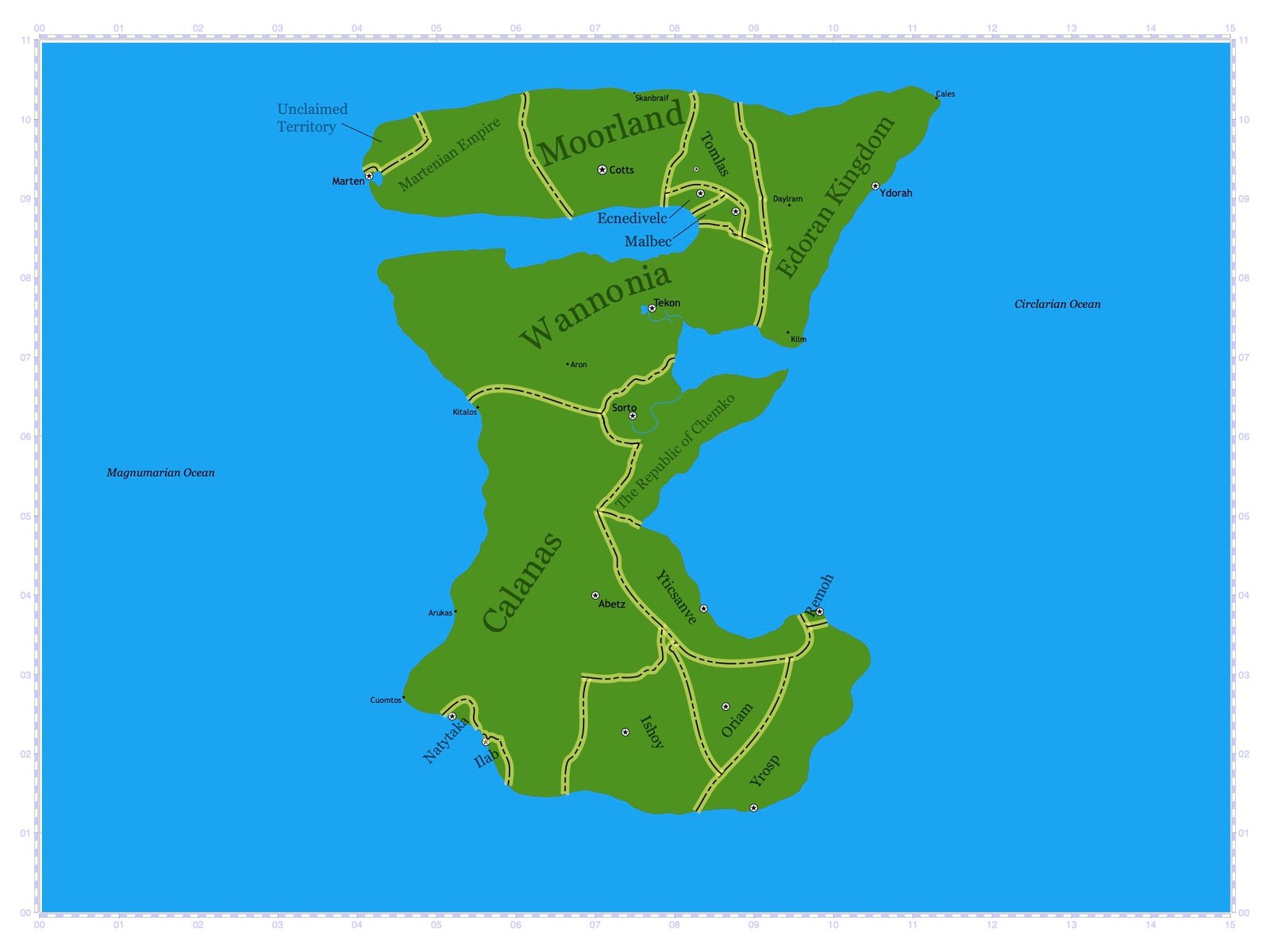
Since 322, the Edoran Kingdom was under the rule of Paul II, who began grouping the Fundaesians, along with the remaining Totian hermits, into demographics he deemed undesirable. He accused these groups of things such as "heresy" and "witchcraft." Soon, the King passed laws banning Fundaesian merchants from villages. And then he sent out envoys to hunt out and punish Fundaesian inhabitants, who were subjected to brutal acts such as stake-burning, stoning, crushing, beheading, and being shot by arrows. As the Fundaesians were killed in this manner, their encampments were looted for valuable items. In response to this, Fundaes began crossing into the Kingdom of Moorland, which they held to be a safe haven. Here, there were no natural barriers like the thick pines and tall Corren ridges to the East. To this, Fundaesian refugees adapted by constructing wooden walls. Instead of deer roamed bison, which were easier for the Fundaes to hunt. This, however, began to place a food burden on the Moorlandish hunters. Furthermore, the Fundaes were very protective of their encampments, and frequently launched unprovoked attacks against Moorlandish passerby. The Moorlanders grew quite unhappy with this; and King Temor began passing laws against the Fundaesians. Many of these ordinances restricted the amount of food and land each encampment could have. Further legislation limited the amount of warriors and weaponry each encampment could have, as well as limited their excessive practices of spellfire.
Rebellion Against King Temor
Before long, Fundaesians encountered marginalization similar to what they encountered in the Edoran Kingdom. They were banned from trading as merchants, from serving in Moorlandish knighthood, and from living, or even visiting, towns and cities, except under the supervision of guild owners, who employed them as underpaid serfs. Furthermore, large concentrations of the Fundaesian population were forced to live in small perimeters.
In September 336, Kymdorn, a leading figure of the Fundaesian community, posted a list of grievances upon the Southern gates of the city of Cotts, with some of these grievances including the restriction of movement granted to the Fundaesians, as well as their lack of voice in Moorlandish society and the imposition of serfdom. Such a document demanded for the allowance of Fundaesians to move freely within the Kingdom and live where they desired equal to the Moorlanders, the allowance to petition and, respectively, vote within local counties, the allowance to join Moorlandish knighthood, and the allowance to trade as merchants equal to the Moorlandish traders. Such demands were ignored by King Temor, initially; and Kymdorn was arrested. Kymdorn's followers rioted outside the walls of Cotts, to which King Temor responded by massacring them.
War Against King Temor
Very soon, the Fundaesian population came to a resolution: to overthrow King Temor. Fundaesian leaders violated Moorlandish laws by secretly training large numbers of Fundaesian warriors inside Fundaesian encampments and perimeters, while expanding Fundaesian weaponry. Along each of the five highways leading into the city of Cotts, they coordinated five warrior launch points. On 15 March 337, at high noon, against the first passing Moorlandish merchant caravan on each road, the Fundaesians attacked. First came the invisible archers, who shot at the caravan drivers, killing them. As the other caravan members rushed to help the stricken driver, they, too, were shot by the archers. Then, spellcrafters set the caravan carts ablaze, while Fundaesian infantry rushed at them with daggers, slaughtering them. More divisions of Fundaesian infantry blockaded the roads, while spellcrafters quenched the blazes. Meanwhile, burglars looted the carts and the bodies for valuable items. Cotts was placed under siege, with Fundaesians demanding the release of Kymdorn and the King's adherence to Kymdorn's demands.
In April 337, King Temor retaliated with two divisions of eagle riders, the first of which dropping spellcrafted firebombs on the Fundaesians and the second of which presenting archers who shot with incredible precision. Temor also dispatched divisions of infantry and cavalry, who attacked the Fundaesian front from the walls of Cotts. While the Fundaes had shorter daggers made of stone, primitive bows and arrows, and horde-like strategies, the Moorlanders had more organized strategies and weapons made of stronger, more consistent material. Such a discrepancy in resources quickly led to the defeat of the Fundaesian besiegers; and, by the end of the month, they surrendered.
Treaty with King Temor
Despite such defeat, King Temor released Kymdorn and showed pity and offered the Fundaesians consolation through a treaty in May 337. Such an agreement allowed for the freedom of movement of the Fundaesians in the Eastern regions of the Kingdom, allowed Fundaesians to trade as merchants but only under close supervision of Moorlandish guilds, allowed Fundaesians to serve as reserves for Moorlandish knighthood, and allowed Fundaesians to peacefully assemble and propose measures informally, but not directly, to the local county governments. Furthermore, they were still not allowed to vote in the respective counties that carried local elections. To this treaty, Kymdorn agreed.
King Embor
In May 339, King Temor died, and was succeeded by his son, Embor, who viewed the Fundaes as corrupt in their acts of "witchcraft." Furthermore, he believed that his father's allowance for them to roam freely in the East allowed them to pose a legitimate threat to the Kingdom. Very soon, he revoked his father's treaty, taking Fundaesian weapons and valuables and forcing the population into serfdom.
Meanwhile, the new King set his sights on Wannonia, which had been under the leadership of Alexia III since the year 312. Embor believed that the Alexia line was weak, and that the land and cities contained easily attainable wealth. His agenda was to conquer Wannonia and dominate Remikra.
The Two Battlefronts
Before attacking Wannonia, King Embor, between September and December of 339, carried out his agenda against the Fundaesians, where he had Kymdorn assassinated and the population attacked and divided. While many Fundaesians were forced into serfdom, just as many others, including Kymdorn's brother, Symdorn, escaped back into the Edoran countryside.
Then, the King wasted no time preparing the Moorlandish Navy along the South Coast and arming fresh new divisions of infantry and cavalry. In January 340, he launched his assault on the unsuspecting North Coast of Wannonia, succeeding in capturing its villages and towns, and making a sweep inland toward Tekon. However, it was here that the Moorlanders were greeted by Alexia III's reinforcements, who slaughtered them. Between September and October 340, having endured such heavy losses along the Wannonian front, King Embor drew from the seeming defeated Fundaesian region to the East to provide reinforcements.
The Fall of King Embor
However, the Fundaesians were not completely defeated. While some wandering Edoran travelers spotted a few Fundaesian runaways and began carrying out acts of persecution, most of the hiding Fundaesian warriors were able to conceal themselves, using such skills gained in Moorland. Between November 340 and February 341, Symdorn saw King Embor's withdrawal of Moorlandish soldiers as an opportunity to conquer territory. Under Symdorn's command, Fundaesian weaponry was enhanced with Moorlandish ideas, while divisions of eagle riders were recruited and trained. Meanwhile, Fundaesians secretly established hidden encampments around unsuspecting Moorlandish fortresses. In March 341, Symdorn's forces attacked, with infantry, eagle riders, cavalry, and archers descending upon the fortresses. The resulting lack of Moorlandish manpower led the strongholds to quickly fall under Fundaesian control. King Embor, in response to this, sent reinforcements, but, with the war in Wannonia being ever more costly, these reinforcements were too weak to overcome the relentless Fundaesians. Embor drew in more recruits to supplement the two battlefields, but this placed an increasing financial burden on the Kingdom, for which he attempted to compensate with higher taxes. In June 341, angry Moorlanders rose up and beheaded the King, instilling a successor: King Immiden.
King Immiden
In September 341, King Immiden ended the war with Wannonia, withdrawing all troops, and making peace arrangements with Alexia III. In October 341, he ended the war with the Fundaesians, instilling the same policies, as well as drawing a border to grant the Eastern regions as sovereign land for Symdorn and the Fundaesians. Thus, the nation of Tomlas was established.
The Formation of Tomlas
In November 341, Symdorn crowned himself King of Tomlas. In the years that would follow, King Symdorn would establish policies, where there were no nobles or social classes. No currency would exist, as all trade would be carried out through barter, while divisions of warriors and hunter-gatherers were established. Also under King Symdorn's policies, hierarchies of clans and sub-families would live in communes, sharing food, land, and resources. Furthermore, all merchants here were independent, as no guilds were established.