Charles of Awnings: A Peaceful Proposition
King Paul II of the Edoran Kingdom ruled until his death in March 345, being succeeded peacefully by King Paul III. Unknown to King Paul III, a period of revolution would ensue.
By the 340s, the Edoran serfs grew increasingly unhappy with the high taxes, the lack of choice in work occupation (many of them were forced to work the farmlands), and the lack of freedom of speech. Born to a family of servants to Lord Peter Dwellers, Charles of Awnings, early on, snuck into the Lord's personal library, where he came across letters concerning the uprisings in Moorland. He began reflecting on his own life, as his family, not well-paid, very often slept where they worked: in the lower cellars of the compound. Meanwhile, Charles' many friends, serfs who labored in the farmlands, were forced to work from dawn to dusk, being paid only two coppers per day. Meanwhile, they were told where to go, who to marry, and even with whom to communicate. One evening, in September 345, Charles of Awnings arranged a secret meeting with his fellow serfs, where they crafted a peaceful proposition to Lord Dwellings. The next day, Charles went to the entrance of the Lord's proper residence and posted upon his door a list of grievances and demands. Dwellers ignored the list, citing Charles for attempting to conspire against him. He then exiled Charles and sent his followers to other counties in the area.
The First Uprising
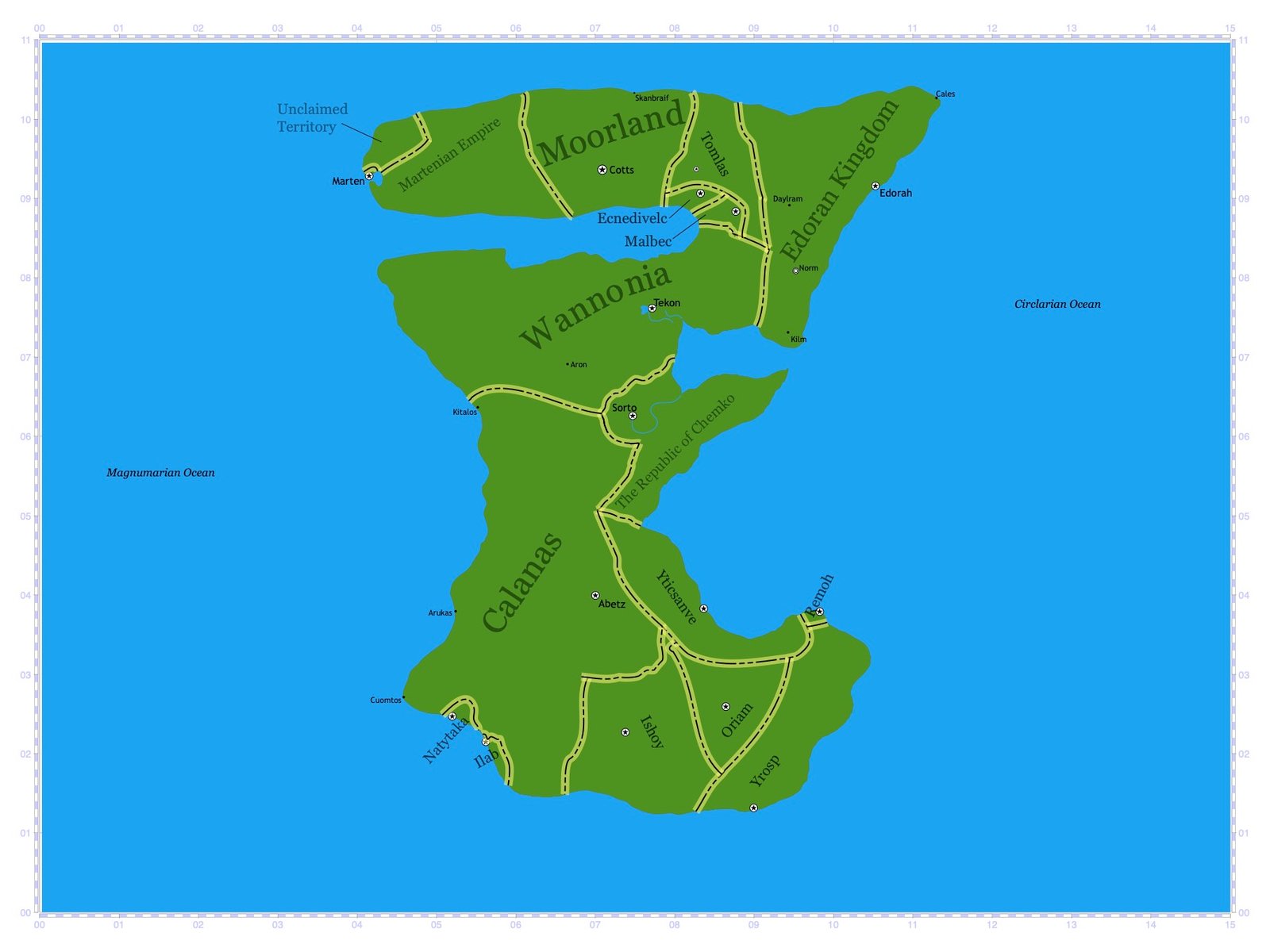
In the months and years that followed, Charles of Awnings would gather even more followers and carry out meetings even more secretive in nature. During this time, he met with Meric, and independent spellcrafter, who helped Charles to conceal himself and travel to the other counties where his original followers were sent. Very soon, a coordinated system of underground councils was established, which would come to be the Knights of the Common Peoples. Thousands of serfs joined the ranks of this organization. After a series of meetings, in June 349, the Knights launched a coordinated assault, which, by September, led to the successful overthrow of Edoran lords and their knights in Awnings and surrounding counties. After hearing of this, King Paul III, in November 349, called upon the lords and their divisions knights in the counties to the North to dispatch their forces to the South to restore order. Some of these dispatches met further South and constructed a makeshift wooden fortress, which would be named after its commander: William Norm. In October 351, Commander Norm launched a coordinated assault upon the rebelling serfs to the South. The resistance was soon dispelled; and Charles of Awnings was executed. Other rebelling serfs were further divided, distributed more thinly throughout the entire Kingdom. By the beginning of 352, the original Lords of the counties affected were given back their land, which was populated by loyal serfs from the North.
In September 360, King Paul III died, and was succeeded by his daughter, Queen Maria, who continued her predecessor's policies and paid for the construction of two layers of stone walls around Fort Norm.
The Second Uprising and the Council of Kilm
In the year 365, Fredrick Charles, the son of Charles of Awnings, met with Meric, who survived the defeat by King Paul III. Together, they recruited serfs and re-established the Knights of the Common People, setting up secret posts in every county of the Edoran Kingdom. Through these posts, underground escape routes helped to funnel resisting serfs to the city of Kilm. One night in November 370, they attacked, overthrowing the city watch and forcing its head, Lord Isaac, to flee. In May 371, Queen Maria sent reinforcements to restore order, but these forces could not penetrate city walls, where the rebelling serfs shut the gates. Furthermore, archers and spellfire wielders slaughtered large numbers of the Queen's forces, forcing the survivors to retreat. In October 371, the serfs organized a town council, appointed by election, thus establishing the city of Kilm as a democracy. They would appoint to the position of Head Consul Fredrick Charles, who dictated a letter to Queen Maria, demanding sovereignty within city walls and offering peace in exchange. Facing no other options, the Queen agreed. In December 381, Fredrick Charles retired from the Head Consul position, which would be succeeded by Sir Peter Banting.
Sir Peter Banting: The Edoran Insurrection
In May 385, Queen Maria died, and was succeeded by her nephew, King Samuel. King Samuel paid to have additional protections added to Fort Norm in anticipation of a conflict, for although he could not attack Kilm due to the treaty, he saw democracy as "corrupt and disorderly." In an effort to strain the city-state out of existence, he imposed heavy tariffs and road tolls against regional merchant traffic. Between September and October 390, Head Consul Banting established hidden routes, with the help of spellcrafters, to help some of the merchants circumvent the oppressive measures. However, an unknown defector relayed news of this to the King, who, in April 391, responded with a letter demanding repayment of monetary losses resulting from this. To provide pressure into obligation, the King sent soldiers to close down all roads leading into Kilm. Head Consul Banting considered this to be siege, an act of war; and, in May 391, the Council voted to attack the King's forces. First, dispatched archers shot down unsuspecting soldiers; and then, infantry troops dispatched by Banting eliminated the remainder of them. In November 391, King Samuel retaliated with a large army division, which used catapults to destroy structures within Kilm with spellfire-laced rock projectiles, as well as flaming arrows to set other structures ablaze. Nevertheless, the gates into Kilm were held shut, as Banting's forces held their ground. In March 392, Sir Banting launched even larger divisions of infantry and cavalry, which forced the King's troops into retreat. Banting's forces pushed further, capturing surrounding counties, as they swept toward Edora proper in a quest to eliminate King Samuel.
The Fall of Kilm
During this conflict, however, the King sent thousands of knights to Fort Norm, under the command of Sir William Paulson, who agreed to carry out the King's orders in exchange for his installation as Lord of Kilm. In November, soldiers from Fort Norm charged the supply lines and weak links along Banting's assault path, stopping the advancement. Other divisions from Fort Norm convened and, with enhanced catapults, destroyed the city walls of Kilm, storming its interior, and executing the Council members, including Sir Peter Banting. In the years that would follow, Kilm would be rebuilt under Edoran authoritarianism. However, an internal conflict had arisen within the palace of King Samuel, as five members of his immediate family quarreled over who Samuel's successor would be in the future. To diffuse possible civil conflict, King Samuel had five Great Houses built in Kilm, with each House occupied by one of the five family members, each of whom would command as a Lord over an equal share of the great city. Meanwhile, King Samuel re-assigned Sir Paulson to continue manning Fort Norm with the promise to have him succeed one of the five Lordships in Kilm when the time came.
The Second Edoran Insurrection
However, Sir Paulson saw this as a demotion and an act of monstrous betrayal. In May 393, he declared himself to be the King of the Edoran Kingdom. Promptly, he trained a fresh wave of recruits, and launched a surprise attack on neighboring counties, making a sweep toward Edora proper.
In September 393, King Samuel retaliated with a wave of defenders, who inflicted heavy casualties upon Paulson's forces and effectively slowed the advancement. While Paulson was distracted by this, King Samuel dispatched messengers secretly to have each of the five Lords in Kilm send a division of reinforcements. These attacked Fort Norm by surprise, penetrating the walls, and executing Sir William Paulson, himself. By November 393, all of his recruits on the battlefield surrendered.
In March 394, King Samuel instilled Sir Kenneth Donmar, deeply loyal to the King, to command Fort Norm.