Wannonian Exploitation
Early on, Wannonian courts ruled that the Wannonian government could not require people to join trade guilds. As a result, Wannonian guild owners traveled to the Calanasian capital of Abetz, where they promised large sums of money to Quesona XIII, the incumbent Queen, if she would pass laws forcing Calanasians to join. At the time, Plague resulted in a lack of workers to work the crop fields in Calanas. In 672, the remaining workers rose up against the owners, demanding higher payment. As the wealthy obliged to this demand, a period of economic growth followed, as the workers had more wealth; but such was accompanied by inflation, as the prices of food also increased. Nevertheless, a higher standard of living ensued, as an influx of Calanasians now desired more intellectual occupations. Such would be provided by the Calanasian guilds of a variety of trades and crafts; but these guilds adhered to a closed system of family membership. In contrast, the Wannonian guilds provided more open opportunities to the Calanasians.
However, by the end of the 680s, this economic arrangement became corrupt, as the Wannonian guilds charged staggeringly high membership fees. Calanasian merchants were skilled but quite poor. As a result, many of them migrated to Wannonia for a better life.
Wannonian Abandonment, Corruption in Calanasian Society
In 691, Wannonian Emperor Alexander V died, and was succeeded by his stepson, Jacon I, who disliked the incoming Calanasian population. Under Jacon I's policies, Wannonian guilds withdrew, with their attained wealth, from Calanas, presenting false promises to return. As a result, the nation of Calanas became impoverished, and its government near bankruptcy, leading Queen Queson XIII to raise taxes.
The poor workers yielded insufficient amounts of wealth even with the new taxes. Furthermore, a rebellion in 692 led the Queen to restore their provision of the original tax code. She then began taxing the farms and Calanasian guild owners, but such income was compromised by exceptional deals between themselves and the Queen, herself. She expanded taxation laws to include the merchants, who also generated insufficient wealth.
It was at this point that the Queen imposed taxes on the Reformed Norman Church.
The Rise of Citheros
Throughout the year of 693, various Reformed Church councils voted to take up arms and attempt to overthrow the Queen, who responded with traditional military forces of equal strength. She then dispatched companies of Braesianites, violating the Treaty of 578. Such forces were brutal, defeating local villages and subjecting them to a Second Inquisition involving interrogation and torture of suspected usurpers. Resistance against this system persisted throughout the period between 694 and 696, but all were met with defeat for the rebels.
Citheros was born in the year 672 to a Calanasian spellcrafter merchant family of the middle class. Upon reaching adulthood, Citheros witnessed as the Wannonian guilds withdrew, throwing his family into financial despair. Seeking redemption in that respect, Citheros managed to join one of the Calanasian spellcrafter guilds, but was angered to see his wealth become absorbed by the Queen's high taxes. He left the guild and joined one of the Reformed Churche militias fighting the Queen. It was after surviving a brutal defeat with this Church that Citheros conceived of a notion to better-organize the resistance.
In 697, Citheros convinced Reformed Church figures to ease on their contempt toward spellcrafters and utilizing such an art in methods to fight the Queen. He recruited large numbers of people, promising them that taxes would be eliminated and wealth brought back to them. Using invisibility and concealment, Citheros assembled seven large armies, which, in October, felled the city of Abetz and executed Queen Quesona XIII. Citheros then crowned himself King of Calanas.
The Resistance Against Citheros
Initially, King Citheros abolished the Queen's taxes. But instead of "bringing back wealth," he brought back the Wannonian guilds, with whom, in 699, he made a deal to send mercenaries to help Wannonia in various conflicts. Later, the King and the guilds would sign deals to split and share attained wealth, none of which went to the working classes. Furthermore, Citheros employed Braesianites to capture Calanasians and Tahns, forcing them to travel to Wannonia as mercenary recruits. Opponents to the regime were arrested, and their families separated.
Before long, there materialized a resistance, led by two figures: Mestana and Tolomae. Mestana, in 700, spoke out against the King and attempted to overthrow him. However, the plan failed; and she was forced to flee as the King's forces hunted for her. Luckily, Mestana located Tolomae, a spellcrafter who hid her. Tolomae provided refuge for defectors and outcasts, who had gathered to her as followers. Tolomae and those of her followers who were spellcrafters established an underground society, which employed other followers of various guilds and crafts, to protect others subject to Citheros' wrath.
In 701, this society formed a Council, led by Tolomae, which employed Mestana to build an army to overthrow Citheros' regime and drive out the Wannonians. Such an army would consist of archers, assassins, thieves, and blade-wielders. Solomae, sister of Tolomae, was employed to be a burglar to steal Citheros' crown.
The Fall of Citheros
In January 703, the agenda was carried out. At night, Solomae snuck into the King's personal chamber and retrieved the Crown, undetected. The next morning, Citheros awoke to find it missing and dispatched a search party. Against advisors' warnings, the King, himself, headed a search party, which ventured into a rural area. It was here that Mestana killed him with an arrow, and stole his Emblem. She then led seven armies, each of which larger than that of Citheros', into the city of Abetz, which fell within three days.
The Divide in the Resistance
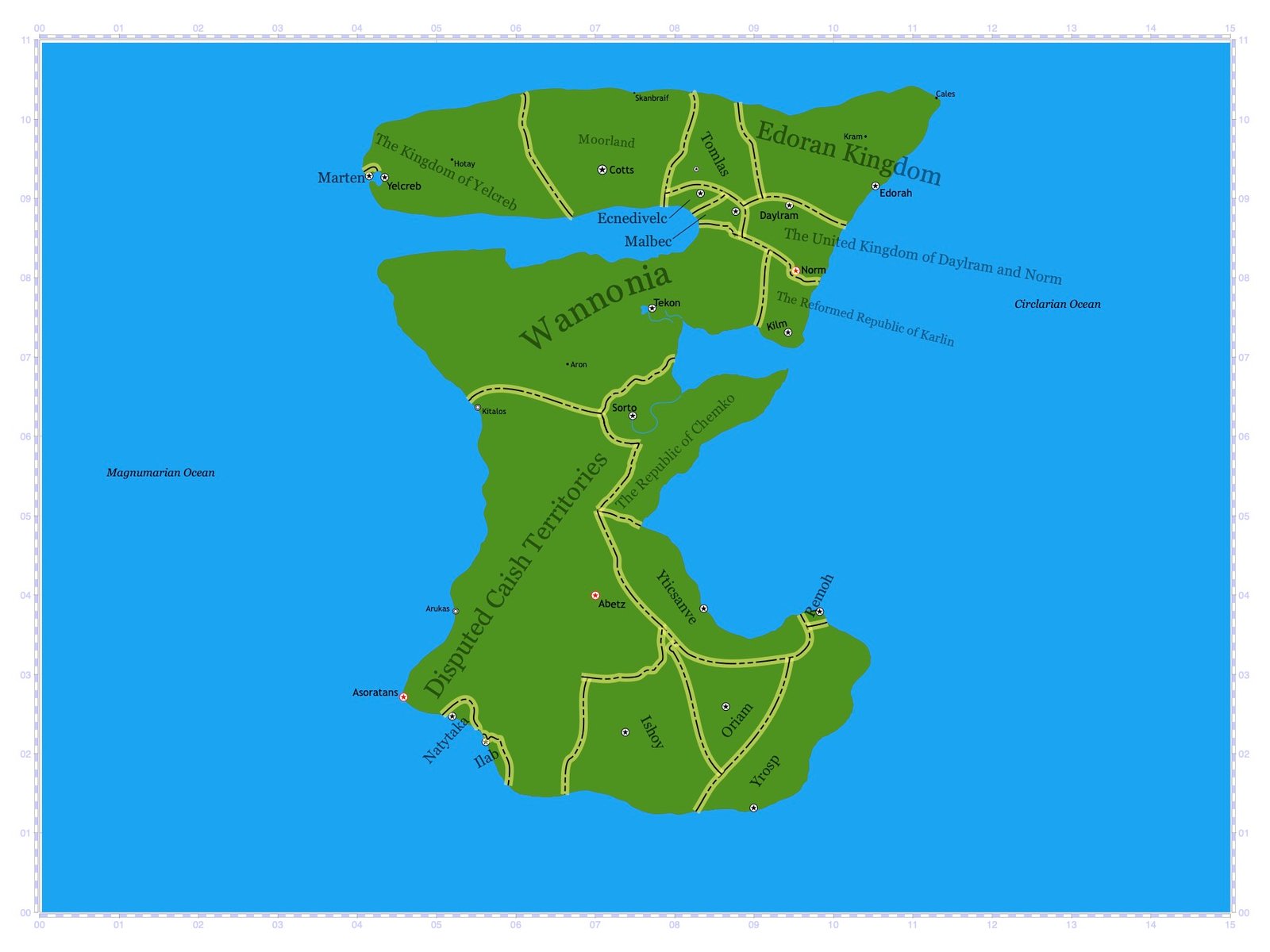
In February 703, the Council led by Tolomae established itself in Abetz, the members of which would subject their seats to a democratic election that June. In April of that year, Mestana came forward claiming that she was a better leader than Tolomae because of the invasion, and ran for a non-existent office: Council Leader, which was initially opposed by Tolomae and her supporters. Tolomae later decided to run the same office, concerned that Mestana was attempting to compromise democracy, and intent to keep her in check. In May, word reached the Council that Solomae, who had stolen the Crown of Citheros, arrived in the city of Asoratans and placed the Crown upon her own head, crowning herself Queen of Calanas. Such fear in the imbalance of power led Tolomae to win the election of the contested Council Leader seat in June; and she, with a majority vote in the Council, dispatched an army, to be led by Mestana, to topple her sister's regime.
Later that month, Mestana arrived in Asoratans, felling it and executing the Queen. But then, in September 703, like Solomae, Mestana placed the Crown of Citheros upon her own head, proclaiming herself to be the Queen of Calanas.
Tolomae and the Council were alarmed by news of this, and voted, once again, to send an army to topple the regime in Asoratans. This time, however, the army would be led, equally, by several commanders, in the hopes of preventing the resurgence of the "coronation right" mentality.
Meanwhile, Queen Mestana was prepared for retaliation. She had recruited a larger army than Solomae, and constructed a makeshift wall around the city. Such preparations resulted in favorable outcomes for the Queen in November of 703, as they held their ground against the army from Abetz. In December, the Queen dispatched an army division, which, concealed, made its way to Abetz to launch a surprise attack. Such an agenda, however, proved ineffective, as Abetz managed to remain infallible. In the time to come, numerous groups of soldiers outlining a patchwork of monarchy-supporting and democracy-supporting factions rivaled each other throughout the Calanasian territories, creating gridlock and perpetual civil conflict.