Mary and Philip: Marriage and the Union of Two Kingdoms
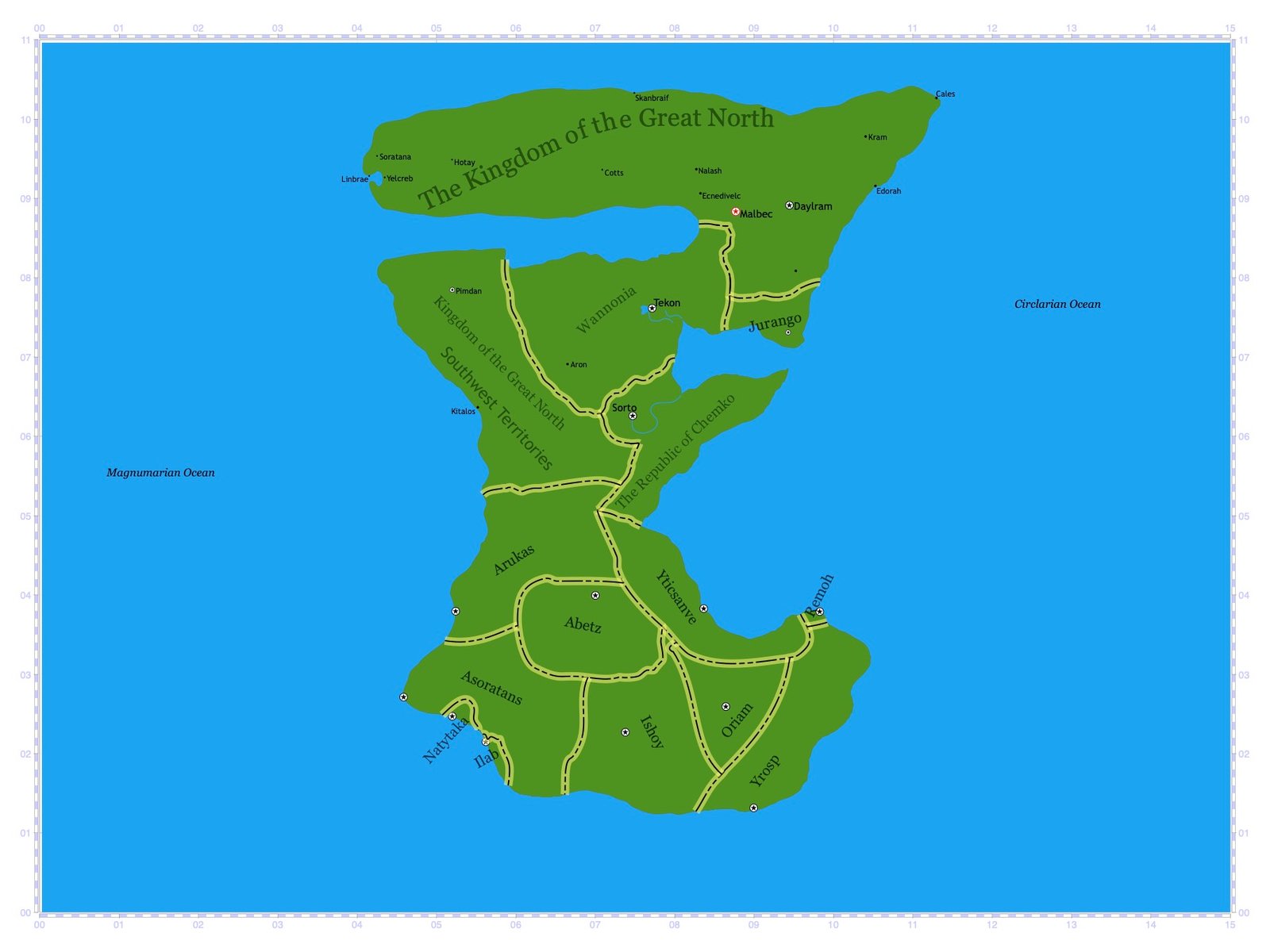
Philip Downing was born in the year 970 to a family of Edoran Nobility. After serving five years in the Edoran Navy and as a top commander in the Edoran takeover of Kilm from the Wannonians in the Four-Nations War, Downing was given honorable discharge and the title "Emeritus General." Mary Stellion, born in 971, was raised with a prominent family in the Gold-keepers' Guild in a small village near Soratana. In the 990s, she attained a representative position in the Guild of the Royal Treasury for the Kingdom of Linbrae, and was sent to the Edoran Kingdom to facilitate part of the deep-trade agreement between the Edorans and Linbraeans. It was in the city of Malbec that the two figures first met, as they, initially professional acquaintances, were both sent to Canticula to negotiate a branch trade deal with the Chokian Republic. After arrival in Canticula, they, for a period of time, went their separate ways. But afterward, they met again in the Canticulan nation of Nasem, where they began a romantic relationship. In the summer of 992, Philip Downing and Mary Stellion became engaged. News of their engagement spread to Edora and Linbrae as both Parliaments recognized this as an opportunity to unite the two Kingdoms into one.
In January 993, Philip and Mary returned to Remikra, calling for a Council between the Edoran and Linbraean Parliaments, as well as their respective Crowns, which took place in Cotts beginning in March. In exchange for the union of the two Kingdoms, the Edora and Linbrae would continue to have hierarchical sovereignties while the duchies below them had theirs. In the months that passed, boundary and power limitations were debated a great deal between the two Kingdoms; but then an agreement was reached. On 4 October 994, the Council of Cotts cast votes, which favored the union agenda. And on 5 March 998, Philip and Mary wed in the Great Cathedral of St. Eschel. On 6 April 998, the newlywed couple arrived in the city of Malbec, where they received a special religious sacrament known as the Seal of the Divine Right, which gave Mary royalty validations and the marriage extra protections from any civil diplomatic skirmishes that would arise. In that month, the Linbraean and Edoran Crowns signed an agreement consecrating the Church of Malbec as its own establishment, and one that would unite the two Kingdoms.
Philip and Mary then traveled to the city of Daylram, where, on 14 May 998, they were crowned King and Queen, and the new nation was officially established as the Kingdom of the Great North.
King Philip and Queen Mary, on that same day, proclaimed the city of Daylram as the official capital of the new Kingdom, and ordered the construction of its Palace and Parliamentary buildings. Later on, they approved the motion of Robert Holmes, the Governor-General supervising the Kingdom of Kitalos, as he reinstated his loyalty to the Great Northern Crown. Such a move would be considered an act of betrayal by some of the local Kitalans.
The Kitalan Uprising, 999
In March 999, Bustan, the leader of the Kitalan opposition, and, at one time, the promised recipient of great rewards from Wannonia during the Four-Nations War, staged a coup and overthrew the provisional Kitalan monarchy. Crowning himself King of Kitalos, Bustan then waged war on Governor-General Holmes, temporarily forcing him and his soldiers into retreat. Holmes sent urgent news of this to King Philip and Queen Mary, who, in June, authorized a division of Great Northern forces to launch the new nation's first wartime offensive. Such an attack, known as the Invasion of Kitalos, took place in October 999, where King Bustan implemented a "brutal charge" upon the Great Northerners in an attempt to drive them away and protect his regime. However, Great Northern cavalry reinforcements overwhelmed his forces, as the city of Kitalos was stormed. King Bustan, defeated, committed suicide. After the toppling of Bustan's regime, the Great North declared jurisdiction over the surrounding land by establishing it as the Southwest Territories, and re-instilled Holmes.
The Kingdom of the Great North: Industry and Establishment
During this period, the Crown and Parliament of the Kingdom of the Great North, as per the statements and agendas of King Philip and Queen Mary, were located in the city of Daylram, while the official Church of the Great North was located in the city of Malbec. While the Great Northern Crown presided, its powers were limited by statutes of hierarchical sovereignties held by its two Regiondoms: the Edoran and Linbraean Regiondoms. The Edoran Regiondom held its Crown and Parliament in the city of Edora proper, while it had sovereignty over all land East of the city of Cotts, as well as land in Hobland to the North, Tandeiyah, Canticula, and the Meredythian Islands. The duchies under the Edoran Regiondom were Malbec, Ecnedivelc, Skanbraif, Cales, Nalash, and Kram, each of which had their own Crowns and Parliaments. The Linbraean Regiondom had its Crown and Parliament situated in the city of Linbrae proper and sovereignty over all land West of Cotts, as well as Pimdan and Monassa. The Linbraean duchies were Yelcreb, Hotay, Cotts, and Soratana.
No single constitution ever governed the Kingdom of the Great North. However, the Edoran Bill of Rights and the Bill of the Crown Authority governed the functions of the Great Northern Crown and Parliament, a fact still true to this day. With a complex code dealing with civil conflict and strife, duchies had priority sovereignty over their respective counties, while counties not included within a specific duchy were either subject to the respective Regiondom or the Great Northern Crown. The Great Northern Crown, as well as the Edoran and Linbraean Regiondoms and their respective Duchies, each had a Parliament, which elected a fifth of its seats every year. Such seats were voted in by the people of the respective counties under the respective sovereignties.
Steam engines were initially used on compound aerovehicles. But in the 990s, the first application of the steam engine on land in times of peace was via a special cart-and-pully system. In 997, large reserves of blue-diamond coal sands were discovered throughout the Great North, especially in the Moorlands, providing a large source of fuel, and, therefore, plentiful industrial opportunities. In the year 1000, a man named Charles Miller perfected the steam engine contraption that drove a locomotive. His first device, named the Millennium Locomotive was launched, setting the precedent for steam-engine trains. Before long, railroad networks developed along the East Coast and between major Great Northern cities.
Large steam engines were then employed to drive factories and mills, giving birth to a major industrial boom. Beginning in the 1010s, steam-engine ships sped up sea trade between continents. And by the 1020s, industrial infrastructure, including railroad networks and factories, sprung up in nations surrounding the Circlarian Ocean.