The Rise of Henshale
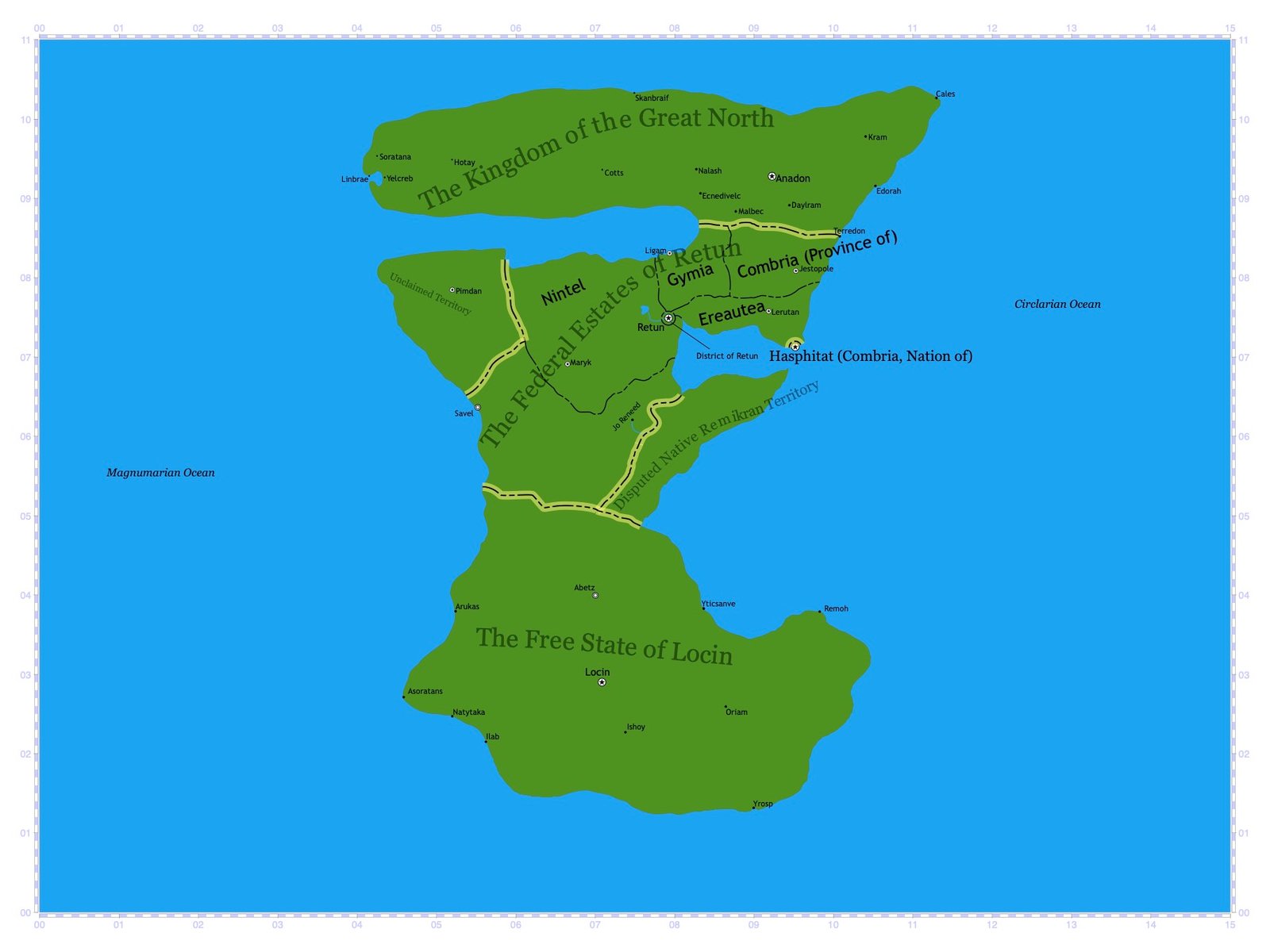
After the defeat of General Zeyk, the city of Hetia was in the process of rebuilding, as it was renamed Ligam. Meanwhile the surrounding region was heavily patrolled by the Federal Estates Armed Forces. Within a year, 117 bases, including 57 air bases, were established, and carried out frequent military and air drills as part of reserve training. These operations used large amounts of hubstone energy, raising prices for civilians.
Philip Olington, with an extensive background in spellcrafting, had, during the war, worked for the Federal Estates in helping the construction of the bases. And it was a combination of these skills that led to his discovery.
In April 1243, a heavy thunderstorm caused a landslide near Olington's residence, where he noted the sudden eruption of a large fire. Upon investigation, Olington determined that the fire was started by sparks from a damaged electrical wire igniting a mysterious natural gas deposit. Olington collected and tested this substance, and determined its economic potential. He named it henshale, after George Henn, a long-dead professor known for his mineral research studies. In the days and weeks that followed, Olington theorized that more henshale deposits were bound to exist in the area, and utilized a special drill machine for his own backyard. This hit a rich henshale deposit and triggered an explosion. Although he survived and noted this as an important find, Olington encountered the population of the town of Esterson, who fearfully speculated upon the sound and sight of the incident. The local police department questioned Olington, and subsequently instructed him to obtain a zoning permit from the town before continuing his operations. In response, Olington made important fixes and safeguards to his drilling machinery and developed an effective system for piping the material. In May 1243, he gained approval from the Council of Esterson before installing a system that successfully powered his own home without the use of hubstone energy. By the end of the month, he produced replicas of his drilling machine and piping units, and began selling commercially to other local businesses.
The East Wannonia Conspiracy Trial
And thus, the henshale industry was established.
The Zeyne family, in June, moved from their home in Combria to the Ligamian territory, where they were encouraged by locals to switch to Olington's henshale infrastructure. The Zeynes, however, were wealthy beneficiaries of the hubstone industry, and saw henshale as a business threat. They successfully planted widespread speculation that Philip Olington and his clients were plotting to promote the henshale in order to re-establish East Wannonia.
Such false accusations were brought to the attention of the authorities; and, in September 1243, Philip Olington was put on trial. During this time, an investigation was carried out while Olington was threatened with arrest for treason. Military aircraft implemented numerous flyovers of the region while hundreds of people were questioned and properties searched. However, they found no evidence of an East Wannonian conspiracy. The Federal Court found Philip Olington innocent; and Olington was given allowance to continue henshale operations.
Numerous citizens in the Ligamian territory sided with the Zeynes, who were upset with the court verdict, and filed a petition to establish the region as its own province. In the process, an official House was established in the city of Ligam, where the measure was formally proposed. However, by October 1243, it failed to pass, as those loyal to Olington, fearing the demise of the henshale industry, voiced fierce and relentless opposition.
The Combria-Nintel Proposal
In April 1244, a measure in the Combrian Council in Jestopole was proposed to forward a bill to the Federal Estates Council for the acquisition of large portions of Ligamian territory. The agenda, carried out by prominent figures in the hubstone industry, was to heavily tax and regulate the henshale industry. Citing potential tax revenue, the province of Nintel voiced a bid in the deal. So representatives from both Provincial Councils collaborated and formed a compromise to fairly divide the territory between their jurisdictions. However, the province of Ereautea had also written for a share of the land, prompting the deal to be amended to evenly divide the land between the three Provinces. It was this version of the proposition that reached the Federal Estates Council.
The Establishment of the Province of Gymia
Locals in the Ligamian territory, adamantly against the ramifications of this measure, carried out protests in the Basin District as calls for the establishment of the territory as its own province became a locally bipartisan deal. The House of Ligam passed a measure to designate the territory an official flag, as the territory, itself, was formally named Gymia. Initially, though, neither this proposition, nor the proposition to divide Gymia between Combria, Nintel, and Ereautea had a potential majority vote in the Federal Estates Council, leaving both issues in a state of uncertainty.
However, on 18 April 1244, the Council of Combria passed a bill to raise its sales tax on hubstone batteries, prompting a voice of opposition from Councillor Arnold Stone, who called for Gymia to provide a compromise to gain Council votes. In response, the House of Ligam passed a measure to ban sales taxes on henshale and to grant henshale only to property owners solely for the material extracted from their respective properties. This was what gained enough votes in the Federal Estates Council, who passed the measure on 21 April, establishing the province of Gymia on 1 May 1244.