The Three Battlefields
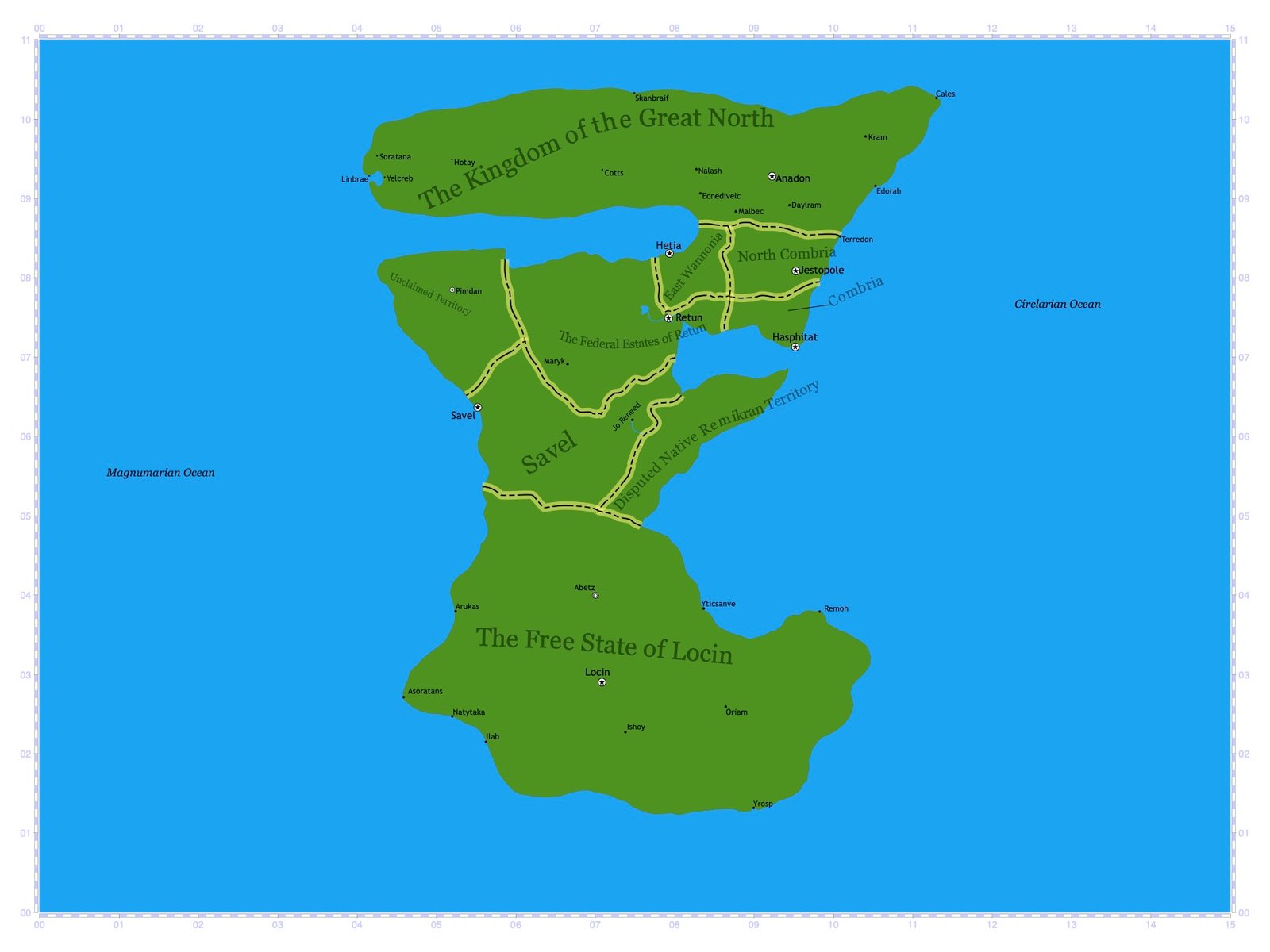
In the wake of the assault on 7 June, President Henry dispatched reinforcements to restore order in North Combria. However, this counterattack was overwhelmed by the Hetians, who had advantage over the battlefield with their numerous small-unit divisions, better methods of concealment, and better accuracy with their infantry. As a result, Henry's forces sustained high casualties. Meanwhile, in Retun, clipper aircraft, which could fly higher and faster than Henry's bulky low-winged equivalents, as well as similar advancements in infantry, gave the Retunians the strategic advantage.
In September 1238, President Henry surrendered Savel to its occupying insurgents, withdrawing troops. He concentrated these forces on the two remaining battlefields, Retun and North Combria, and supported them with reinforcements via the greatest recruitment of soldiers in the nation's history. With so many soldiers deployed, food requirements were high, prompting Henry to impose rations on the farmlands in Nintel.
The Reaction of Maryk
Established in 1203, the city of Maryk was initially presided over by Governor Karl George, who, ultimately, had jurisdiction over the farmlands of the District of Nintel. Governor George implemented a "cash crop" policy, wherein George's Council would approve a yearly quota of farm yields to be sent to markets along the Circlarian Coast while the farmers would be left to manage the remainder of their food supply between subsistence and sales. Such a policy was not popular, and, on 3 October 1210, the ensuing economic hardship prompted farmers to rise up and unseat the Governor. In George's place was instilled Henry Marks, a popular figure in the farming community, as Maryk's unofficial Governor. That November, President Henry dispatched martial law officers, who unseated Marks and restored order in the region. As a gesture of consolation, though, Henry instilled Kornell Shaw as the new Governor on 2 December. Shaw's policies required a minimum crop yield standard to be set to ensure a reliable food supply for the farmers, themselves, while establishing food drives to serve as an emergency supply in the case of crop failure. Shaw's Council would then determine the portion of the remaining yields would be sent to the Circlarian Coast markets while a guarantee was made of yield left for farmers to sell.
However, President Henry's food rations in the autumn of 1238 overrode Shaw's policies, forcing farmers to surrender most of their yields to the war effort. As a result, farmers lost business revenue and underwent a food shortage. In October 1238, these farmers began protesting in the streets of Maryk, as they demanded a reduction in the rations as well as payment in compensation for damages by the rations already imposed. President Henry ignored these demands and dispatched martial law forces to arrest the protestors. On 2 November, the farmers gathered and struck back at Henry's forces, overthrowing the government in Maryk in the process. President Henry promptly dispatched armed soldiers, leading the resistance to contact the Federal Estates for assistance. The Federal Estates obliged, sending the farmers more resources, and dispatching army divisions to invade the region. By 12 November, Retunian forces swept the Central plains, inflicting high casualties upon President Henry's divisions and taking all of the land. President Henry, despites numerous calls to do so, refused to surrender. But nevertheless, he concentrated more troops on Combria and East Wannonia, noting the greater concern.
Marren's Failed Deal
Shortly thereafter, Richard Marren and General Zeyk approached Arnold Stone with a request to join in a coordinated assault upon Hasphitat, during which they would take the remaining territories of President Henry and assassinate President Henry, himself. Such land would then be divided equally between North Combria, East Wannonia, and the Federal Estates. Stone, however, opposed this, owing to his distrust for both figures, who he determined were too obsessed with military power and authoritarianism. General Zeyk condemned Stone's response and vowed wrath upon the new Republic in the years to come.