The Labor Rehabilitation Act
Inflation and failed investments abroad resulted in decreased labor and production for the Independent Commonwealth between 1314 and 1318. In 1319, with a stimulus in the darkfire industry employed methods to increase the quality of darkfire floans. Such approaches proved successful as more wealth was generated, giving incentive to the emergence of a dymensional plane industry. Basically, dymensionalism consists of an abstract plane that imitates reality, a product created by spellcrafters of special expertise. The practice originated in the 1240s, but existed in a fragmented state. By 1319, though, there was more unity in the dymensional plane industry.
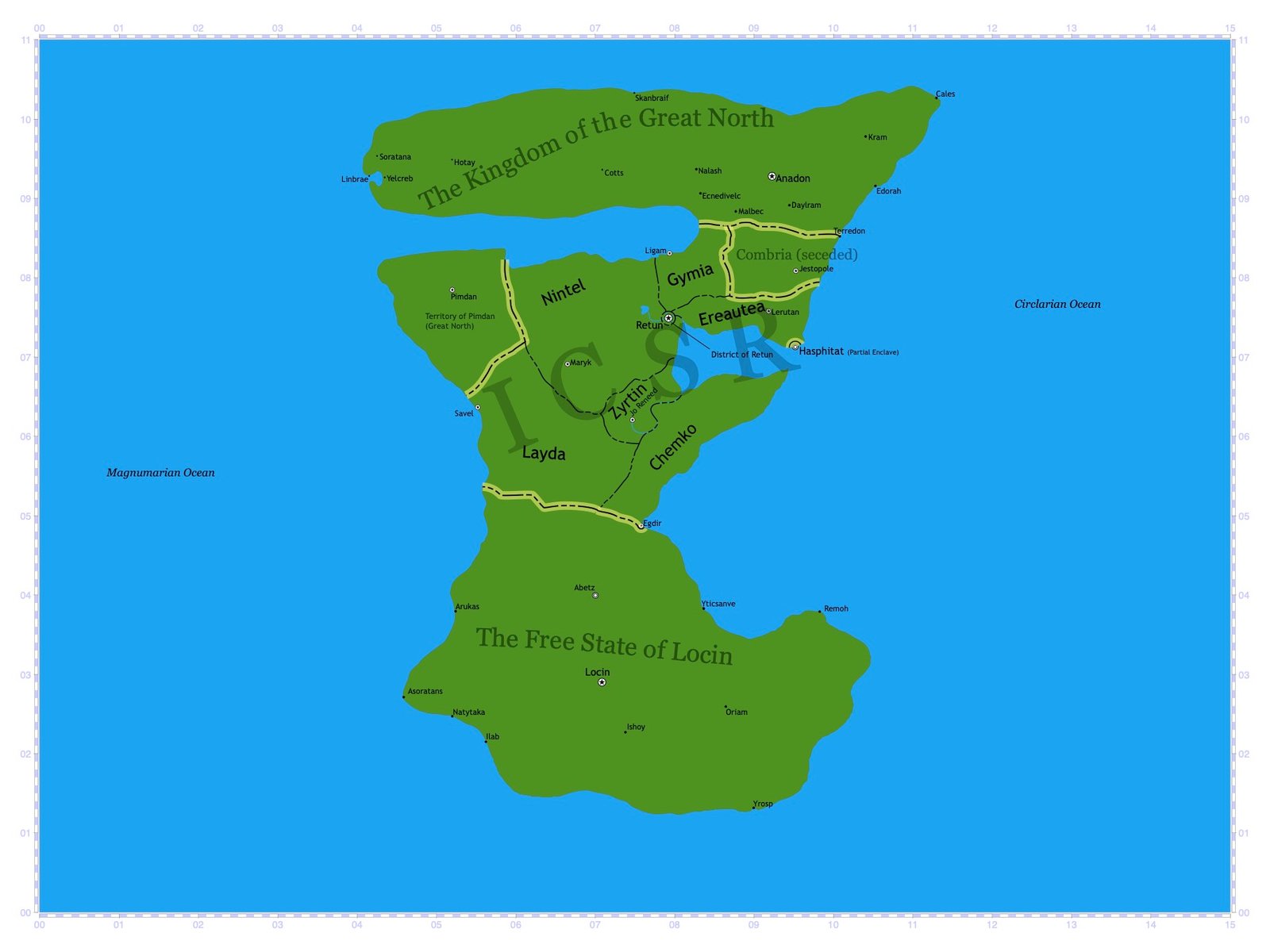
Peter Quora, a leading spellcrafter in the profession, made a proposition for additional government funding in order to establish an industrial-sized dymensional plane in South Masonia. On 4 March 1319, the Commonwealth Council passed the measure, along with additional provisions in the darkfire industry, all of which amounted to the Labor Rehabilitation Act. In the spring and summer of that year, the rural area surrounding South Masonia developed in Quora's business, as laborers were pulled in from mostly Gymia and West Combria to work on the sites.
Combrian Nationalism
Previously, these laborers had lived in the rural areas between New Terredon and Ligam, where they were very thinly spread out over a large area. When they arrived in South Masonia to work on the dymensional plane facility, they were suddenly placed in close proximity with one another; and with the rural areas of South Masonia zoned for Quora's business, many of these laborers lived close together in the Combrian cities and towns, especially Jestopole, where they had quite an influence on political demographics.
These laborers upheld a strong belief in traditionalism and Combrian sovereignty. Previously, when they lived far apart to the West, little communication and networking existed between them; so their beliefs had not effectively propagated. But with these people in close proximity with one another, Combrian nationalist ideals began to spread more quickly. Within a few short weeks, their philosophies, influential in nature, dominated the political landscape of the Combrian cities.
As a result, many Combrian city dwellers, swayed by the new sentiment, turned toward Combrian nationalism, displaying the Combrian flag on numerous properties and even businesses. Combrian nationalist parades became the popular trend as well, as Combrians decried Prime Minister Finzi over his apparently "corrupt and overreaching government."
The uprising would be intensified by the onset of the Benjamin Arnold Syndrome Pandemic.
Benjamin Arnold Syndrome
In September 1319, Robert Carr, the son of Daniel Carr, a lower-ranking spellcrafter in Quora's project, began exhibiting panic symptoms. He was initially turned away from medical care after it was determined that he was simply displaying "hypochondria." But as time went on, the symptoms began to worsen. After losing complete perception of reality, Carr was taken to Dr. Benjamin Arnold in urban South Masonia, where Arnold discovered that Carr had significant and rapid decay of brain tissue. Explaining to the family that Carr's condition was untreatable and terminal, Arnold referenced a similar case involving Peter Umbol.
Known for being the unofficial founder of the Realist Party, Peter Umbol had fought on behalf of Finzi during the 1309 resistance in the Basin District. However, after the War of 1311-12, Umbol decried Finzi's tendency to craft policies echoing too much of that of the Early Republic, and, between 1312 and 1317, staged numerous peaceful protests throughout the regions. In 1317, Umbol ran for a seat in Council, and won such a position, along with his colleagues, in that year's gubernatorial election. He then announced his candidacy for the Prime Minister position.
However, beginning in 2 December, Umbol exhibited strange memory and emotional lapses. Over the next two weeks, his symptoms worsened before he became mentally and physically incapacitated. Umbol died on 17 December 1317.
In light of this, Dr. Arnold administered his best known therapies to Robert Carr. However, they were ineffective; and Carr died on 18 September 1319. In the first week of October, two of Carr's three siblings would come down with the same disorder, now known as Benjamin Arnold Syndrome, and die, as neighbors and Carr's coworkers also began exhibiting symptoms. In the second week of October, numerous communities in the area fell ill with the disease, as nearly 600 people died. And by the end of the month, over 1000 victims were claimed.
Combrian Resistance
Combrian nationalists blamed the disease on Dr. Arnold, alleging that he failed to provide effective treatment, and proceeded to accuse him of conspiring with the "Finzi Regime" to create the illness in order to wipe out the Combrian resistance. In groups, they began attacking the office of Dr. Arnold, prompting Finzi to impose martial law on the area. On 3 November 1319, Combrian nationalists assembled into the First Combrian Coalition, and stormed the Building of the Provincial Capital in Jestopole. Despite Finzi's efforts to break the coup, the Combrian nationalists held sway. And on 15 November 1319, they coerced provincial lawmakers, both conservative and liberal, to pass a measure rendering the Province of Combria to be an independent nation.