War and Disease
In 1330, Drs. Eric Rengold and Mary Finbar provided contributions that effectively contained the Neurovirus Pandemic. Rengold studied the virus that caused the disease and devised an institutionalization method to prevent its spread. Finbar, meanwhile, formed a drug to halt the damage. There was no way, at the time, to reverse the damage already done. It was Finbar, though, who devised a way to detect the disease early on. The two practices were combined to form what became known as the Rengold-Finbar Treatment, which was tried, with very high success, at Cabotton University and surrounding communities in Gentry County. However, there was a political hold involved, as Rengold made a deal with Alexander Schraber, who made a bid for the Commonwealth Prime Minister position, to not submit a formal proposition of the treatment to the Commonwealth government until Schraber won the election.
Meanwhile, a gridlock continued in the ensuing conflict between the Commonwealth and the Combrian Confederation. Their agendas, however, were limited by weaknesses in their forces.
Meanwhile, the Ancondrian State of Likatus approached Commonwealth business figures for deep-trade transactions, to which the businesses obliged. On 8 February 1331, however, the Likatus Guild announced a delay for the Commonwealth government to sign an official deep-trade agreement. Suspicious, Prime Minister Finzi carried out an investigation, which revealed shady business between the Likatus Guild and other Ancondrian entities. And on 24 February, Finzi made a public demand for Likatus to withdraw all of its "squatters" from select housing developments within Commonwealth Ancondrian territories but very close to the Likatus border, stating that there would be an air raid drill on these locations. When Likatus failed to oblige, Finzi dispatched military aircraft and carried out the drill. Though official figures allege no casualties, sources from Likatus claimed that there were fatalities, leading to political tension between the two nations.
Alexander Schraber: the 1332 Election Campaign
Running on behalf of the Realist Party, Alexander Schraber carried his 1332 election campaign on the promises to employ the Rengold-Finbar treatment, to contain Commonwealth Qors inflation rates with the ending of darkfire-based currency production, and to implement economic policies reflecting the wants of the National Establishment Party. The leaders of the Combrian Confederation were attracted to these agendas and promised to hand jurisdiction over to the Commonwealth in the event that Schraber became the Prime Minister. In the Commonwealth, itself, the notion that Schraber would end the war and implement his economic policies, as well as the Rengold-Finbar Treatment, attracted a lot of people. And thus, on 16 September 1332, Schraber won the election.
Prime Minister Schraber: 1333 to 1338
Prime Minister Schraber began his term on 1 January 1333, according to constitutional protocol, and wasted no time implementing his agendas. With the nationwide administration of the Rengold-Finbar Treatment, the Neurovirus Pandemic was contained. As promised, Schraber eliminated the darkfire-based production of the Commonwealth Qors, as he set certain economic thresholds for "back-reserve" Commonwealth Qor mint production, and handed the responsibility for welfare redistribution from the national government to provincial governments.
George Henry of the Combrian Confederation signed an agreement with Prime Minister Schraber to return the provinces of Gymia and Combria back over to Commonwealth jurisdiction, a measure approved by the Commonwealth Council shortly thereafter. As a measure of exchange, Prime Minister Schraber signed the Schraber Hubstone Tax Codes, which would benefit the industry. In compensation, temporary federal funding triggered the emergence of private darkfire businesses, as Schraber ended public ownership of that industry.
Instability remained in the Commonwealth; so Schraber, unknown to the public at the time, formed a three-way deal, in which assets were purchased off of the Ancondrian state of Angwe and sold for funds to pay Robert List for former KCG recruits to keep order.
An issue arose, however, when List discovered that due checks were for accounts that paid in the form of worthless Combrian Qors, a discontinued currency. He demanded repayment within two weeks, to which Schraber responded with silence.
On 6 January 1334, leadership in Angwe announced the opening of an investigation into the Schraber administration, citing that they were short-changed in due checks as well. Upon receiving word of this, Robert List activated a trigger that detonated bombs, having found to be placed by Edward Jackson's administration years previously, inside the Chadwick Building, which was destroyed, killing approximately 1500 people. Between February and March of that year, the KCG, associated with List, continued attacks on Commonwealth infrastructure, with the worst attack on 12 February, where a hijacked gyroplane crashed into and destroyed the old Council Building in Retun. It was during this time that the Commonwealth Department of Justice revealed the secret three-way deal. Thus, Schraber was accused with conducting business deals with government funds and collaborating with the KCG, a terrorist organization; and impeachment charges were filed against him. The impeachment trial took place in April of that year. But the measure failed in the uppermost chamber of Retunian Council by one vote.
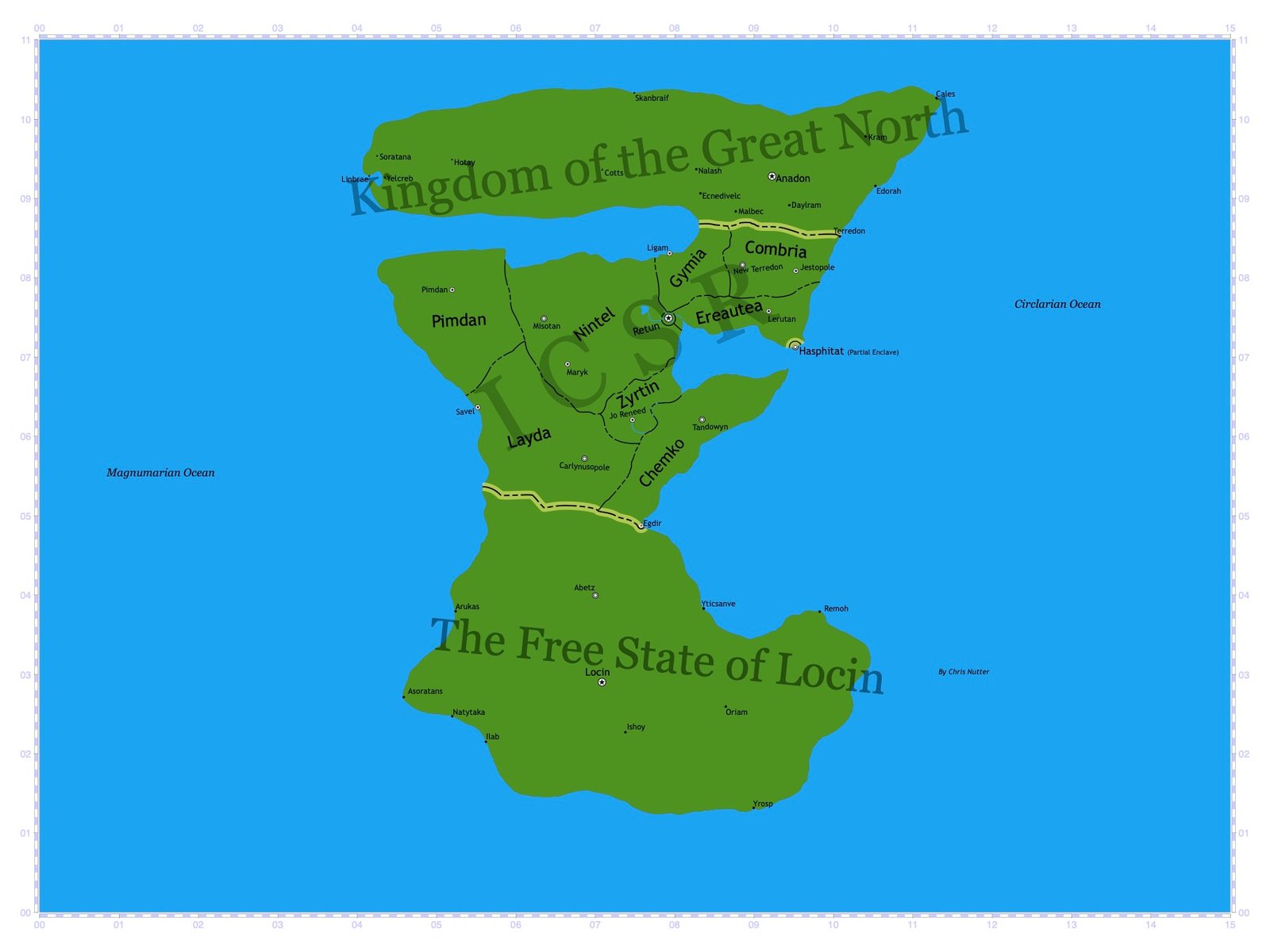
Between 1335 and 1336, more fallouts with the state of Angwe and other Ancondrian entities continued to erode the Commonwealth economy, prompting continuous "back-reserve" productions. Further trouble ensued between 1337 and 1339, when Locin and the Commonwealth dueled in the continuing Petty Wars over Remikran Union resource allocations, the land boundaries making up the Southern Chemkan border, and the ramifications of sea travel and maritime claims.
Joseph Woll, running against Schraber on behalf of the RAD Party, carried the 1338 election campaign with the agenda to restore public ownership of the darkfire industry, to restore national responsibility for welfare redistribution measures, and to exit the Remedial Academy trade relations while investing more in the Global Academy and seeking out more trade contracts. However, Schraber's solid advocation for national partisanship won him re-election on 24 September.
Prime Minister Schraber: 1339 to 1344
In March 1339, Prime Minister Schraber revoked a fleet of ships from Locinian maritime boundaries without Locinian knowledge and permission to favor the Thomas Brothers Firm. In accordance with Remikran Union protocol, Locin filed a grievance to the Remikran Union. And the Edoran Regiondom made a demand for Schraber to hand back the ships. On 22 March, when Schraber refused, the Edoran Regiondom dispatched bombers to attack the headquarters of the Thomas Brothers Firm in Uhlstead, a very controversial act. A motion was introduced in the Commonwealth Council to sue the Remikran Union over this; but Schraber stayed it, fearing further political retaliation. Further conflict arose between the Commonwealth and the Linbraean Regiondom, in April, when the latter withheld volumes of important spellbooks. On 6 April, Commonwealth troops stationed there shot at the Linbraean troops, prompting the Remikran Union to issue an immediate cease-fire.
Between 1340 and 1341, more fallouts with Silba and the Global Academy prompted Schraber to launch an agenda that blamed such misfortunes on opposing political parties. This succeeded as Realists gained more seats in the gubernatorial election held on 24 September 1341.
On 18 June 1342, an audit exposed a two-million-credit discrepancy in account holdings in Hywater Bank. Aron Moore, the account keeper, who was responsible for monitoring the amount of money in accounts relative to statements issued, had devised a plan to sneak unnoticeable amounts of money out of these accounts. This went unnoticed for a period of five years. But it was a failed attempt by a client to make a withdrawal that had prompted the audit. Moore, found to be responsible, fled to Linbrae, where he was nonetheless arrested and extradited. The ensuing investigation revealed the amount of money stolen and Aron Moore's involvement in the matter, but could not find evidence pointing to the method or intention of the theft.
Meanwhile, Prime Minister Schraber decried the unexpected establishment of an unscheduled lightfire forum by the Silba Council, sowing public speculation of a setup against the Commonwealth and their businesses. Such speculation was worsened on 15 May 1343, when Commonwealth businesses lost out on tradestone revenue from this. Schraber affirmed corruption in the Council of Silba and called for a popular uprising, which took place between 18 May and 23 June of that year. This event was noted notoriously as the Breaking of Glass, which, having took place on 14 June, involved Retunian protestors breaking windows and looting the properties of Ancondrian businesses outside of Commonwealth jurisdiction, and unleashing violence upon Ancondrian locals. On 23 June, Commonwealth workers staged a mass walkout from an important lightfire forum in Silba, and clashed violently with anti-protestors.
In Remikra, opposition began to grow against Prime Minister Schraber, as a growing number of Commonwealth citizens saw his policies and conduct in Ancondria as too rash. The resulting economic fallouts prompted numerous "back-reserve" mint productions, which returned inflation rates to nearly equal those before Prime Minister Schraber took office. As it would become noticed, Schraber's policies failed to address the growing disparity between the rich rural areas and poor urban ones; and between 1343 and 1344, factions in the latter began forming coup organizations. As protests ensued, Schraber's supporters confronted them, while Schraber implemented martial law forces.
Prime Minister Schraber: Resignation
On 6 March 1344, another fallout with the state of Angwe triggered the threat of further economic instability. Prime Minister Schraber publicly threatened Angwe with a war, which prompted a petition in the Commonwealth for Schraber and numerous other colleagues to resign from their government positions. Fearing a coup, Schraber followed suit; and according to constitutional protocol, George Borwell was sworn in as the Interim Prime Minister.